17
When to Call 911 vs Contact Your Doctor About Medication Reactions
Medication Reaction Emergency Checker
This tool helps you determine if your medication reaction symptoms require an immediate 911 call or if you can safely contact your doctor. Based on CDC guidelines and medical best practices, select any symptoms you're experiencing.
Select any symptoms you're experiencing:
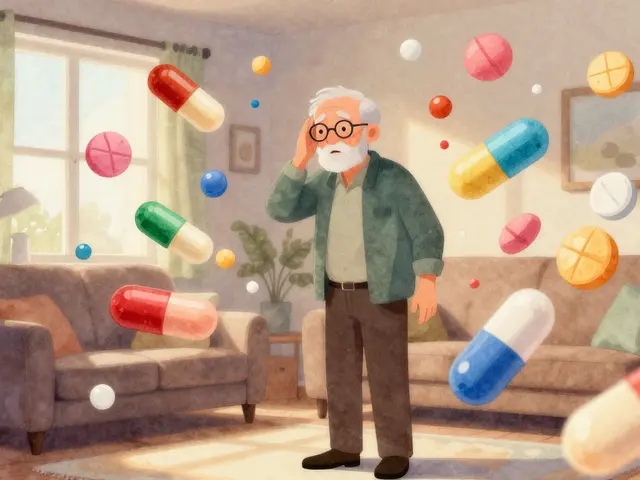
It’s not rare to feel off after taking a new medication. Maybe your stomach feels funny. Maybe you’re itchy. But how do you know if it’s just a side effect-or something that could kill you in minutes?
The difference between calling 911 and calling your doctor isn’t about being dramatic. It’s about timing. One choice buys you hours. The other buys you minutes-or maybe nothing at all.
What Counts as a Serious Medication Reaction?
Not all bad reactions are emergencies. Some drugs cause nausea, drowsiness, or a mild rash. These are common side effects. They’re annoying, but they’re not life-threatening. You can call your doctor the next day and get advice.
But when symptoms involve more than one body system at once? That’s the red flag.
For example: if you get hives and vomiting after taking a pill, that’s not just a stomach upset. That’s your immune system going into overdrive. The American College of Allergy, Asthma, and Immunology says this combination is a strong sign of a true drug allergy-not just a side effect. Isolated nausea? Probably fine. Nausea with a rash and trouble breathing? Call 911 now.
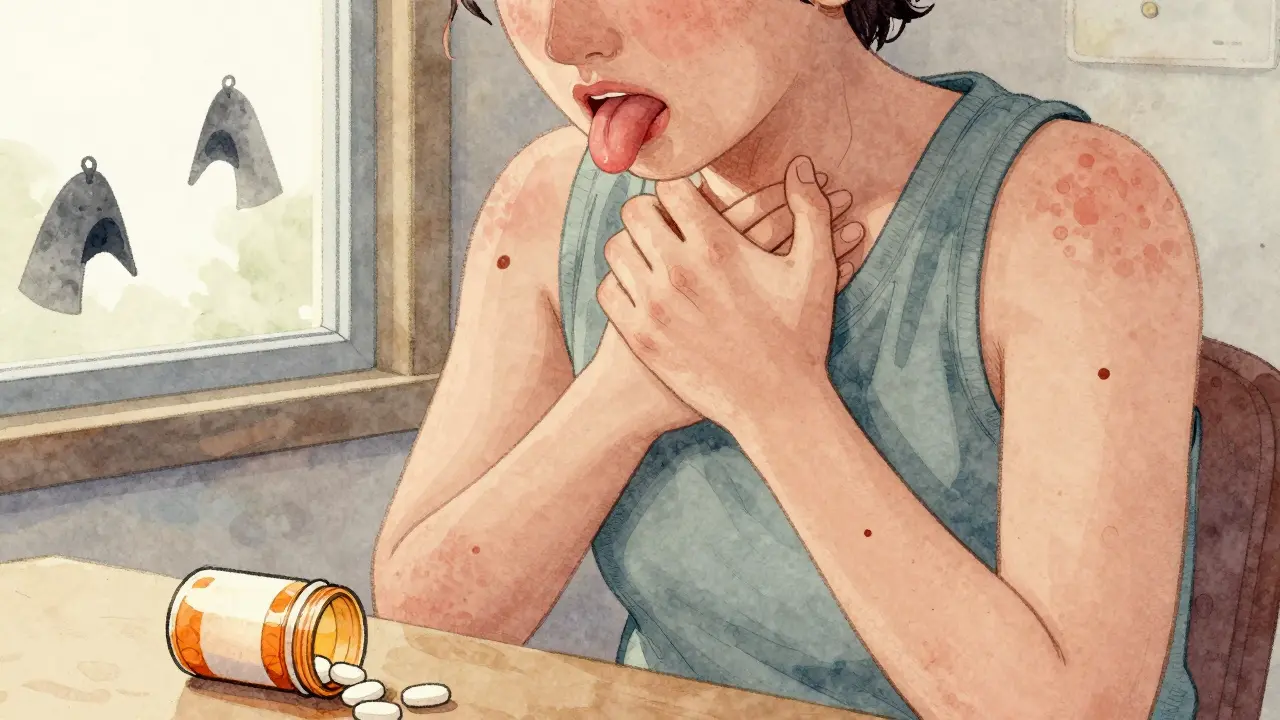
Same goes for itching with swelling. If your lips, tongue, or throat start puffing up, you’re not dealing with a simple rash. That’s airway swelling. It can block your breathing in under 10 minutes. Dr. Mathai at Regional Hospital describes the sound of airway obstruction as a ‘squeaky kind of breathing’-that’s stridor. If you hear it in yourself or someone else, don’t wait. Don’t text your doctor. Don’t Google it. Call 911.
When to Call 911 Immediately
If you or someone else has any of these symptoms after taking a medication, dial 911 right away:
- Difficulty breathing, wheezing, or feeling like your throat is closing
- Swelling of the tongue, lips, or throat
- Weak, fast, or pounding pulse
- Dizziness, fainting, or feeling like you’re about to pass out
- Low blood pressure (you might feel cold, clammy, or confused)
- Vomiting or diarrhea along with hives, rash, or swelling
- Seizure or loss of consciousness
These are signs of anaphylaxis-a full-body allergic reaction that can kill within minutes. The Mayo Clinic calls it ‘tightening of the airways and throat, causing trouble breathing; nausea or belly cramps; vomiting or diarrhea; dizziness or lightheadedness; weak, fast pulse; drop in blood pressure; seizure; or loss of consciousness.’
And here’s the thing: you don’t need all of these to call 911. Just one or two, especially if they come on fast, is enough. The Food Allergy Research & Education organization says: ‘When in doubt, use epinephrine and call 911.’
Epinephrine auto-injectors (like EpiPens) are designed for exactly this. If you’ve been prescribed one, use it at the first sign of trouble. But even if you use it, you still need to call 911. One shot might not be enough. Symptoms can come back hours later. You need to be monitored in the ER.
When to Call Your Doctor Instead
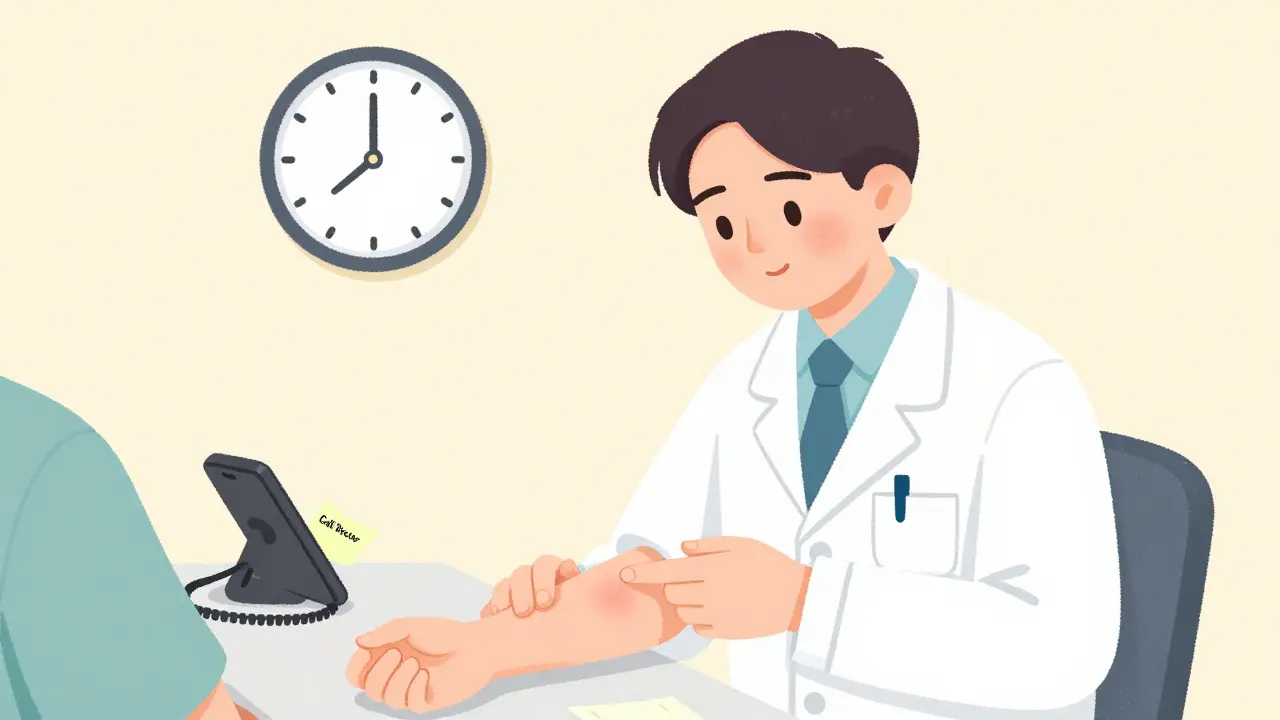
If your reaction is limited to just one thing-like a mild rash without swelling or breathing issues-you can usually wait to call your doctor. Same if you’re just itchy, or have a little upset stomach, or feel a bit tired.
Dr. Mathai at Regional Hospital says: ‘If you have a simple rash and you’re itching, you can probably go to urgent care.’ That’s the threshold: single system, slow onset, no danger signs.
Some reactions take time to show up. DRESS syndrome (Drug Reaction with Eosinophilia and Systemic Symptoms) can appear days or even weeks after starting a new drug. It starts with a rash, then fever, swollen lymph nodes, and organ involvement. That’s serious-but not an emergency. Call your doctor within 24 hours. Don’t wait a week. But you don’t need 911 unless breathing or heart symptoms appear.
Another common scenario: a mild rash after antibiotics. About 15% of all drug allergies involve antibiotics like penicillin. But not every rash is an allergy. If it’s flat, pink, not spreading fast, and you’re not having trouble breathing? It’s probably a non-allergic reaction. Still, tell your doctor. They might switch your medication.
Why Waiting Is Dangerous
People often delay calling 911 because they think, ‘It’s not that bad yet.’ Or ‘Maybe it’ll go away.’ Or ‘I don’t want to waste their time.’
That’s how people die.
CPR Seattle warns that allergic reactions can go from mild to fatal in under 10 minutes. Breathing becomes harder. Blood pressure drops. The heart struggles. By the time someone realizes it’s an emergency, it’s too late to save them.
And here’s the hard truth: half of all fatal anaphylaxis cases happen because epinephrine was given too late. Not because it wasn’t available. Not because people didn’t know. But because they waited.
Dr. Payel Gupta from ACAAI puts it bluntly: ‘If you experience any of these more severe symptoms, immediately use your epinephrine auto-injector and call 911.’ There’s no ‘wait and see’ in anaphylaxis.
What to Do If You’re Unsure
Here’s the simplest rule: if you’re not sure, call 911.
CPR Seattle says: ‘If you aren’t sure if symptoms are severe enough to warrant a 911 call, then you should err on the side of caution and assume that they will be worsening quickly.’
That’s not overreaction. That’s survival.
Emergency dispatchers are trained to ask the right questions. They’ll help you decide if you need an ambulance. They can even talk you through using an epinephrine pen if you have one.
And if it turns out to be nothing? That’s fine. Emergency crews see hundreds of false alarms every year. They’d rather come for a false alarm than miss a real one.
What to Do After Calling 911
When you call, say clearly: ‘I think I’m having a severe allergic reaction to a medication.’ Tell them if you’ve used epinephrine. Ask them to send an ambulance with epinephrine on board.
Even if your symptoms improve after using epinephrine, you still need to go to the hospital. The reaction can rebound. Your body can crash hours later. ER doctors will monitor your heart, blood pressure, and oxygen levels for several hours.
Bring your medication bottle with you. That helps doctors figure out what caused it. Write down the name of the drug, when you took it, and when symptoms started. That’s information they’ll need.

Preventing Future Reactions
After a serious reaction, you’ll likely be referred to an allergist. They can do tests to confirm what caused it. Once you know, you can avoid that drug-and any similar ones.
Some people carry an epinephrine auto-injector after a reaction. If your doctor prescribes one, keep it with you at all times. Don’t leave it in your car. Don’t store it in a drawer. If you’re allergic to penicillin, tell every doctor, dentist, and pharmacist you see. Put it in your phone’s medical ID.
Also, consider wearing a medical alert bracelet. In an emergency, paramedics check for these. It can save your life if you’re unconscious.
How Common Are These Reactions?
Medication reactions are more common than most people think. The FDA received 1.8 million reports of adverse drug reactions in 2022. Experts say that’s just the tip of the iceberg-many go unreported.
About 7% of all adverse drug events are allergic reactions. That’s millions of people every year in the U.S. alone. Around 700,000 end up in emergency rooms because of them.
Antibiotics, painkillers like ibuprofen and aspirin, and chemotherapy drugs are the most common culprits. But any medication can cause a reaction-even ones you’ve taken before without issue.
Your immune system can change. What was safe last year might be dangerous this year.
Final Rule: Don’t Guess. Act.
There’s no room for hesitation when your airway is closing or your blood pressure is crashing.
Here’s your quick decision guide:
- Call 911 if: Trouble breathing, swelling, weak pulse, dizziness, vomiting with rash, or loss of consciousness.
- Call your doctor if: Mild rash, itching, nausea, or drowsiness-with no other symptoms.
- Use epinephrine and call 911 if: You have a known allergy and symptoms appear-even if you think it’s mild.
If you’re ever unsure, call 911. It’s not a waste of time. It’s the smartest thing you can do.
Medications save lives. But they can also end them-if you don’t know when to act.
Can I just wait to see if my reaction gets worse before calling 911?
No. Severe allergic reactions can worsen in minutes. Waiting increases the risk of death. If you have symptoms like swelling, trouble breathing, or dizziness, call 911 immediately. Don’t wait to see if it gets worse-by then, it might be too late.
I used epinephrine. Do I still need to go to the ER?
Yes. One dose of epinephrine may not be enough. Symptoms can return hours later in what’s called a biphasic reaction. Emergency rooms can monitor your vital signs and give more treatment if needed. Never skip the ER after using epinephrine.
Is it safe to use epinephrine if I have heart problems?
Yes. While epinephrine can raise heart rate, the risk of dying from anaphylaxis is far greater than any risk from the medication. The Food Allergy Research & Education organization says: ‘Use epinephrine to treat anaphylaxis even in elderly patients or those with heart disease.’ The danger of not using it is much higher.
Can a mild rash turn into anaphylaxis later?
It’s rare, but possible. Most anaphylaxis happens within minutes to an hour after taking the drug. However, some delayed reactions-like DRESS syndrome-can appear days later and involve multiple organs. If a rash spreads, is accompanied by fever, or you start feeling unwell, contact your doctor immediately. Don’t assume a mild rash is harmless forever.
What if I don’t have an epinephrine pen and I’m having a severe reaction?
Call 911 immediately. Stay calm. Try to sit or lie down with your legs elevated if you feel dizzy. Do not try to drive yourself. Emergency responders are trained to handle anaphylaxis and can give epinephrine on the way to the hospital. Your priority is getting help, not finding a medication you don’t have.




Zoe Brooks
January 18, 2026 AT 05:49Just read this and immediately texted my mom to check if she’s still keeping that old penicillin bottle in her medicine cabinet. 😅 Seriously though, this is the kind of info everyone needs to see-especially people who think ‘it’s probably fine’ until they can’t breathe.
Kristin Dailey
January 19, 2026 AT 16:57Call 911. No excuses. America’s got the best EMS in the world-use it.
Wendy Claughton
January 20, 2026 AT 03:09I can’t believe how many people wait… like, literally wait… until they’re turning blue?? 🤯 I had a cousin who almost died because she ‘didn’t want to bother anyone.’ She’s fine now-but she carries two EpiPens and wears a medical bracelet. And so do I. 💪❤️
Aysha Siera
January 20, 2026 AT 11:42Who really controls what drugs get approved? I’ve seen people react to stuff they’ve taken for 10 years. Something’s not right here…
rachel bellet
January 22, 2026 AT 10:28Let’s be clear: anaphylaxis is a Type I hypersensitivity reaction mediated by IgE cross-linking on mast cells, resulting in degranulation and systemic histamine release. Delayed intervention correlates directly with mortality. The data is unambiguous. If you’re uncertain, you’re already in the danger zone.
Pat Dean
January 22, 2026 AT 18:48People these days think they’re too busy to die. Guess what? Death doesn’t care about your schedule.
Eric Gebeke
January 22, 2026 AT 22:41I took ibuprofen for 15 years without issue. Then one day my throat swelled. Turns out my immune system just… changed its mind. Now I carry an EpiPen everywhere-even to the gym. Don’t be that guy who thinks ‘it won’t happen to me.’
Jake Moore
January 23, 2026 AT 20:26Just want to add-don’t wait for a rash to spread before acting. If you’re on antibiotics and get any kind of hive, even one tiny one, and you feel even slightly off-call 911. I’m a nurse. I’ve seen people die because they waited for ‘the next symptom.’ There is no next symptom. There’s only now.
Joni O
January 25, 2026 AT 05:27thank you for this. i just started a new med last week and i’ve been second-guessing every little burp and itch. this helped me know when to panic and when to chill. also… i’m gonna buy an epipen even though i don’t have a prescription yet. better safe than sorry.
Dayanara Villafuerte
January 26, 2026 AT 10:53Meanwhile in India, people take 12 pills at once and call it ‘Ayurveda.’ 😅 But seriously-this is gold. I showed this to my abuela. She now knows not to ‘wait and see’ if her blood pressure drops after a new statin. 🙏
Jodi Harding
January 27, 2026 AT 06:17My dad died from this. Didn’t call 911. Thought it was ‘just a rash.’ Took 17 minutes. He never made it to the hospital. Don’t be him.
Selina Warren
January 28, 2026 AT 05:04They say ‘when in doubt, call 911’-but what if you’re poor and don’t have insurance? What if you’re scared of the bill? That’s not a ‘doubt,’ that’s a system failure. This info is lifesaving-but only if you can afford to live after.
Robert Davis
January 28, 2026 AT 14:57Interesting how the article assumes everyone has access to an EpiPen. What about people in rural areas? Or those on Medicaid who can’t afford the $300 copay? This reads like a PSA for the upper middle class.
Naomi Keyes
January 28, 2026 AT 16:34While the intent of this post is commendable, the lack of nuance regarding differential diagnoses-such as vasculitis, serum sickness, or non-allergic drug reactions-may lead to unnecessary emergency department utilization and potential over-treatment. Furthermore, the conflation of ‘mild rash’ with ‘non-life-threatening’ ignores the potential for delayed multi-organ involvement. Clinical judgment must be exercised, not algorithmic decision-making.
Danny Gray
January 30, 2026 AT 03:15You know what’s more dangerous than waiting? Trusting a medical article written by someone who thinks ‘squeaky breathing’ is a clinical term. I’ve been to three ERs. No one ever said ‘squeaky.’ They said ‘stridor.’ And no one told me to ‘call 911’-they told me to stop taking the drug and get to a specialist. This article is fear-mongering dressed as advice. I’ve had hives and nausea from penicillin for 20 years. Never called 911. Never died. You don’t need to be a hero. Just be informed.