3
How to Keep Medications Safe from Children and Pets at Home
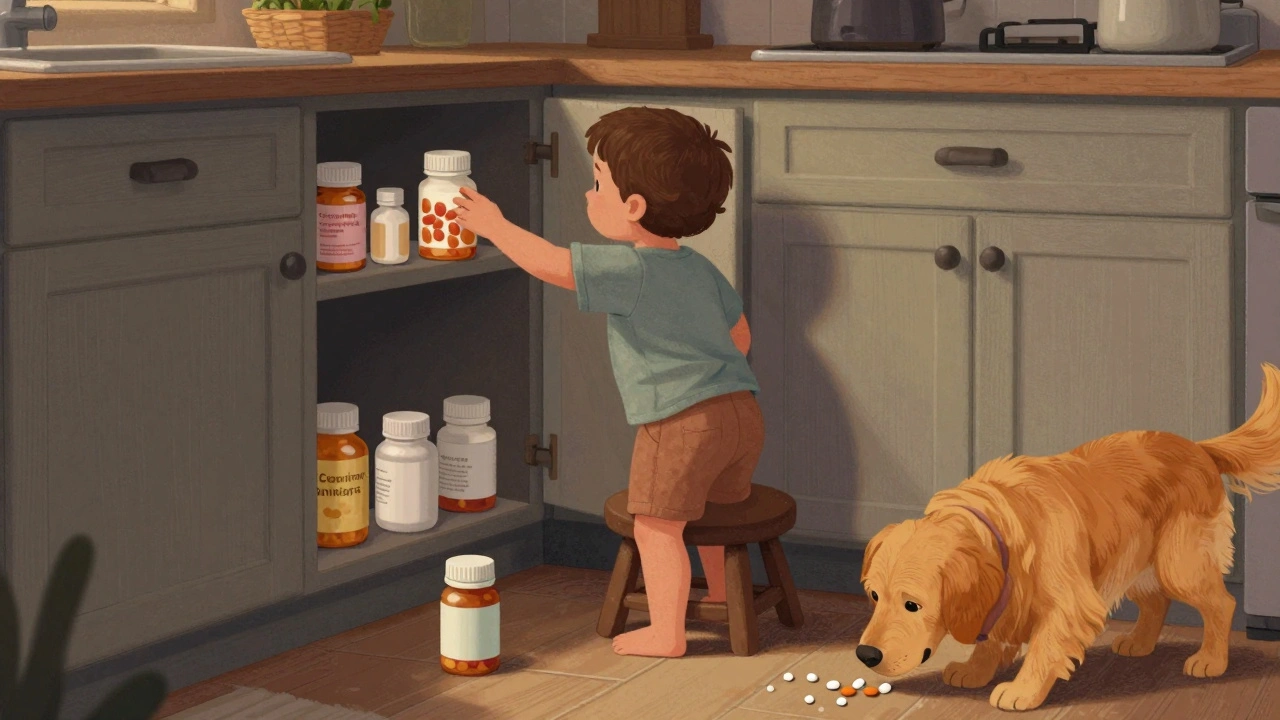
Every year, 60,000 children under five end up in emergency rooms after swallowing medicine they found at home. Pets aren’t safe either-dogs alone account for nearly 80% of accidental medication poisonings in animals. This isn’t rare. It’s happening in kitchens, bathrooms, and living rooms where people think they’re being careful. The truth? If your medicine isn’t locked up, it’s not safe.
Why Your Medicine Cabinet Isn’t Enough
Most families store medications in the bathroom. It’s convenient. The sink’s right there. But that cabinet is a death trap. Humidity from showers and baths degrades pills, making them less effective. More importantly, kids can reach it. By age two, most children can climb onto chairs, pull open drawers, and open child-resistant caps-especially if they’ve seen you do it. A 2023 study from Children’s Mercy Hospital found that 65% of childhood poisonings came from over-the-counter meds left in purses, on countertops, or in unlocked cabinets during use. Pets are even more dangerous. Dogs have noses that can detect a single ibuprofen tablet through plastic. Cats, though more cautious, will still lick gummy vitamins off the floor. And here’s the kicker: human meds can kill pets. A single dose of a blood pressure pill can cause a dog’s heart to fail. Meanwhile, pet meds like arthritis tablets are often flavored to look like treats-and if you leave them out, your kids might eat them too.Where to Store Medications: The 5-Foot Rule
The CDC’s Up and Away campaign says it plainly: store medicine higher than 5 feet. That’s not just a suggestion-it’s based on real data. Children under five can typically reach up to 4 feet. Anything above that is out of their natural range. But height alone isn’t enough. Clear cabinets? Kids see them. Open shelves? They climb. Even if you think your child can’t reach it, they might learn to use a stool. The best spot? A locked cabinet in a bedroom closet, a high kitchen cabinet with a child lock, or a dedicated medication safe. Avoid the kitchen counter, the nightstand, the purse, the car console, or anywhere you might leave a pill while distracted. A 2023 Seattle Children’s Hospital study showed that 78% of pediatric poisonings happened because meds were left out temporarily-like while giving a dose or packing a bag.Lock It Down: What Works
Child-resistant packaging? It helps-but it’s not foolproof. The ASTM D3475 standard requires caps to resist opening by 80% of children aged 42-51 months. That means one in five kids can still open them. And pets? They don’t care about caps. They’ll chew through plastic. Use a lockable box. Simple ones cost under $20. Look for ones with combination locks or biometric fingerprint access. One popular model, the VADIC Safe Storage Bag, is 11” x 6” and designed specifically for this use. It’s been adopted by state health departments and works for both human and pet meds. Some newer models even send alerts to your phone if someone opens them. If you’re using a pill organizer, choose one with a lock. Weekly or monthly organizers with separate compartments help you stay on track-but only if they’re locked after use. A 2023 survey found 68% of parents were satisfied with lockable organizers, but 32% struggled managing multiple people’s meds in one box. Solution? Use separate boxes for each person and label them clearly.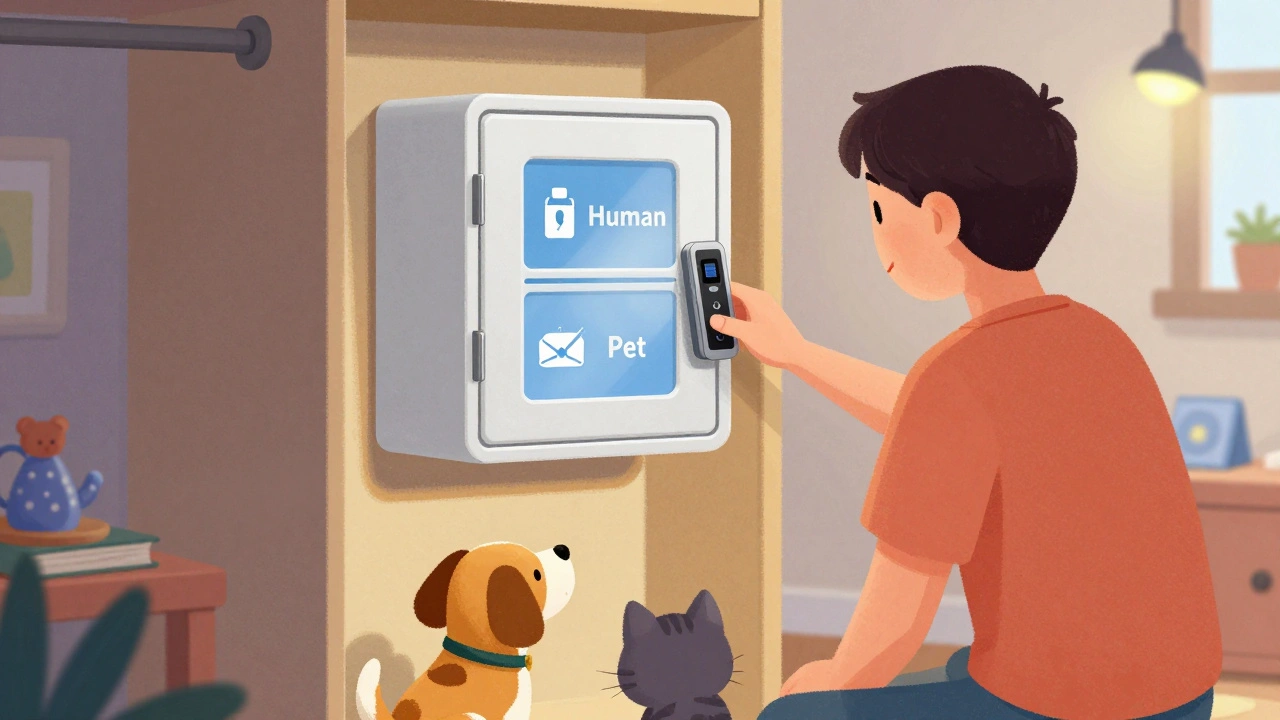
Separate Human and Pet Medications
Never store pet meds next to human meds. It’s not just about confusion-it’s about danger. The FDA says 25% of pet medication incidents involve owners accidentally taking their dog’s or cat’s pills. A dog’s painkiller can cause kidney failure in a cat. Human NSAIDs like ibuprofen can kill a dog in hours. Veterinary experts recommend a three-zone system:- Zone 1 (Immediate Use): Only the current dose, placed on a flat surface while administering. Never leave it on the counter.
- Zone 2 (Short-Term): Locked container, at least 5 feet high, for meds you use daily.
- Zone 3 (Long-Term): Separate, labeled containers for human meds, dog meds, and cat meds. Store them in different rooms if possible.
How to Dispose of Old or Unused Meds
Don’t flush them. Don’t throw them in the trash loose. Don’t pour them down the sink. The EPA says improper disposal contaminates water and puts wildlife at risk. And if someone finds them in the trash? They could be reused or accidentally ingested. Here’s the right way:- Remove pills from bottles.
- Mix them with something unappetizing-used coffee grounds, cat litter, or dirt. Use at least a 1:1 ratio.
- Seal the mix in a plastic bag.
- Put the bag in your regular trash.

What to Do If Something Goes Wrong
If a child or pet swallows medicine, don’t wait. Don’t try to make them vomit. Don’t Google it. Act immediately. For children: Call Poison Control at 13 11 26 (Australia). Have the medicine bottle ready. Tell them what was taken, how much, and when. For pets: Contact your vet or the Animal Poison Control Center at 1300 869 738 (Australia). Bring the packaging if you can. Time matters. Many toxins act fast. Keep these numbers saved in your phone. Don’t rely on memory.Real Stories, Real Risks
One parent on Reddit shared how their 3-year-old opened a “childproof” cabinet and swallowed six melatonin gummies. The child was fine, but the parent switched to a biometric safe. “It adds 10 seconds to my routine,” they wrote. “But it stops disaster.” Another user on the American Kennel Club forum described how their Labrador dug a pill out from between couch cushions. The dog had swallowed a dog’s heart medication. They rushed to the vet. The dog survived-but only because they noticed quickly. These aren’t outliers. They’re common. And they’re preventable.What’s Changing in 2025
By the end of 2024, the FDA required all pet medication labels to include clear warnings about separate storage. That’s new. More pharmacies are offering lockable pill dispensers. Some smart homes now integrate medication safes with voice alerts: “Medication cabinet unlocked.” The National Safety Council estimates that if every household followed the layered approach-locked, elevated, separated-pediatric medication poisonings could drop by 89%, and pet incidents by 76%. That’s not theory. That’s data. It’s not about being paranoid. It’s about being smart. Medicine saves lives. But only when it’s kept where it belongs: out of reach, locked away, and properly disposed of.Can child-resistant caps really protect my kids?
No. Child-resistant caps are designed to slow down kids-not stop them. About 20% of children under five can open them within minutes, especially if they’ve seen adults do it. These caps are a backup, not a solution. Always lock medicine in a secure container, even if it has a child-resistant cap.
Is it safe to store medicine in the fridge?
Only if the label says so. Some insulin, liquid antibiotics, and suppositories need refrigeration. But never store them in the main fridge where food is kept. Use a small, locked container inside the fridge, labeled clearly. This prevents kids or pets from finding them, and stops cross-contamination.
What if I have both kids and pets in the house?
You need double protection. Store human and pet meds in separate locked containers. Keep them both at least 5 feet high and out of sight. Pets have strong noses and can smell medicine through plastic. Kids are curious climbers. Don’t risk it. Use different cabinets or even different rooms if you can.
Are gummy vitamins safer to leave out?
No. Gummy vitamins and supplements are one of the top causes of childhood poisonings. They look like candy, taste sweet, and are often stored in open jars or on counters. The CDC says they account for 30% of all supplement ingestions in kids-even though they make up only 15% of the market. Treat them like prescription drugs: lock them up.
How often should I check my medicine storage?
Once a month. Check for expired pills, broken locks, or signs that someone accessed the container. Discard anything outdated. Kids and pets don’t care about expiration dates-they’ll eat anything they can reach. A quick monthly review takes five minutes but could save a life.
Start today. Lock it up. Separate it. Dispose of it right. Your child, your pet, and your peace of mind are worth it.



Dematteo Lasonya
December 4, 2025 AT 14:49Just switched to a locked cabinet after my niece got into my anxiety meds. She was fine, but I haven't slept the same since.
Now everything stays in the bedroom closet. No exceptions.
val kendra
December 5, 2025 AT 19:56Lockable pill organizers changed my life. I used to leave my weekly meds on the counter while making coffee. Now? Locked, labeled, and out of reach. My dog still tries to sniff them but can't get in. Win.
Also started storing my kid's gummy vitamins in the same box. They're not candy, they're medicine. Period.
Ben Choy
December 7, 2025 AT 16:56My lab once ate a dog's arthritis pill. Took 45 minutes to get to the vet. They said if it had been 15 minutes later, we'd have lost him.
Now everything's in a biometric safe. Costs $25. Worth every penny. Even my cat knows not to go near it anymore 😅
Emmanuel Peter
December 7, 2025 AT 21:32Stop pretending childproof caps work. They're a scam. I've seen toddlers open them in under 30 seconds. The real solution? Don't keep meds in your house at all. Just get prescriptions delivered in single-dose, sealed, tamper-proof containers. Problem solved.
Also, why are we still using pill organizers? They're just another place to lose stuff.
Chad Handy
December 7, 2025 AT 23:52I used to think I was being careful. I kept my meds on the nightstand so I wouldn't forget. Then my 4-year-old climbed up, opened the drawer, and swallowed three of my blood pressure pills. We were lucky. He didn't even throw up.
Now I have three separate locked boxes. One for me, one for my husband, one for the dog. My wife calls me paranoid. I call it surviving.
I haven't slept without checking the locks since. Every night. Even when I'm drunk. Even when I'm tired. Even when I'm mad. I check. Because I can't afford to make that mistake again. And I won't. Not ever. Not after what happened. Not after seeing him in the ER, hooked up to machines, crying because he didn't know why his stomach hurt. That's not a memory you forget. That's a scar. And I wear mine every day.
Ollie Newland
December 9, 2025 AT 20:32The 5-foot rule is legit. But here's the kicker: most cabinets labeled 'childproof' are actually just waist-high. Kids climb. Pets sniff. The real win is vertical storage + lock. I use a ceiling-mounted lockbox in my laundry room. Out of sight, out of reach. No one even thinks to look up there.
Also, dispose of old meds like you're disposing of biohazard waste. Coffee grounds + seal + trash. No exceptions.
Rebecca Braatz
December 11, 2025 AT 09:55If you're not locking your meds, you're gambling with your child's life. No, it's not 'overkill.' It's basic parenting. And if you think your pet won't get into it, you haven't met a dog with a nose. I used to leave my insulin on the counter. Now? Locked in a safe that beeps if opened. My kid doesn't even ask for it anymore. He knows it's off-limits. That's not fear. That's safety.
Start today. Don't wait for a tragedy to wake you up.
Benjamin Sedler
December 13, 2025 AT 00:46Everyone's acting like this is new. Newsflash: kids have been eating pills since the 1950s. The real problem? We've normalized dangerous behavior. Why do we even keep meds in the bathroom? It's humid, it's accessible, it's a trap. And don't get me started on 'gummy vitamins.' They're candy with a label. Stop pretending they're harmless.
Also, who the hell stores pet meds next to human meds? That's not negligence, that's a biohazard.
Heidi Thomas
December 13, 2025 AT 01:46You're all missing the point. The real issue isn't storage. It's overprescribing. Why do we have so many unused meds in the first place? Why are we giving people 30 pills for a 7-day course? That's not care, that's profit. Locking it up doesn't fix the system. It just hides the problem.
Also, gummy vitamins? They're not even regulated. They're candy with vitamins. Stop treating them like medicine. Just stop selling them.
Alex Piddington
December 14, 2025 AT 20:49Thank you for this comprehensive guide. I have implemented the three-zone system in my home. Human medications are stored in a locked cabinet above the refrigerator. Pet medications are in a separate locked box in the garage. All gummy supplements are treated as controlled substances. Monthly audits are conducted. I encourage all households to adopt this protocol. Safety is not optional.
Libby Rees
December 16, 2025 AT 18:28My mom used to keep all her pills in a drawer next to her bed. One day, my cousin ate five of them. She was fine, but my mom cried for days.
Now she uses a small lockbox. Simple. Cheap. Effective.
I wish more people knew this stuff.
Ashley Elliott
December 18, 2025 AT 07:10Just wanted to add: if you have a toddler, don't forget the car. I once found my son's vitamins in the cup holder after a trip to the park. They were half-eaten. I didn't even know they were there. Now everything goes straight into the locked cabinet when I get home. No exceptions. Not even for 'just a minute.' Not even for 'I'll put it back right after this.' It's never 'just a minute.' It's always too long.
Jenny Rogers
December 19, 2025 AT 04:08It is not merely a matter of physical containment, but a profound ethical imperative rooted in the ontological responsibility of caretakers toward the vulnerable. The home is not a neutral space-it is a moral arena wherein the sanctity of life is either upheld or compromised through mundane, habitual negligence. To leave pharmaceuticals unsecured is not merely an oversight; it is a metaphysical failure of stewardship. One must ask: if we cannot safeguard the substances that sustain life, how can we claim to value life itself?
Chase Brittingham
December 19, 2025 AT 18:03My sister didn't lock her meds. Her 2-year-old got into them. She's fine now, but the guilt? That never leaves.
I told her to get a lockbox. She said it was too much hassle.
So I bought her one. And I showed her how to use it. And I put it in her kitchen. And I didn't say another word.
She called me last week. Said it was the best $20 she ever spent.
Just do it. Don't wait. Don't think. Just lock it.