2
Acromegaly: Understanding Excess Growth Hormone and Effective Treatment Options
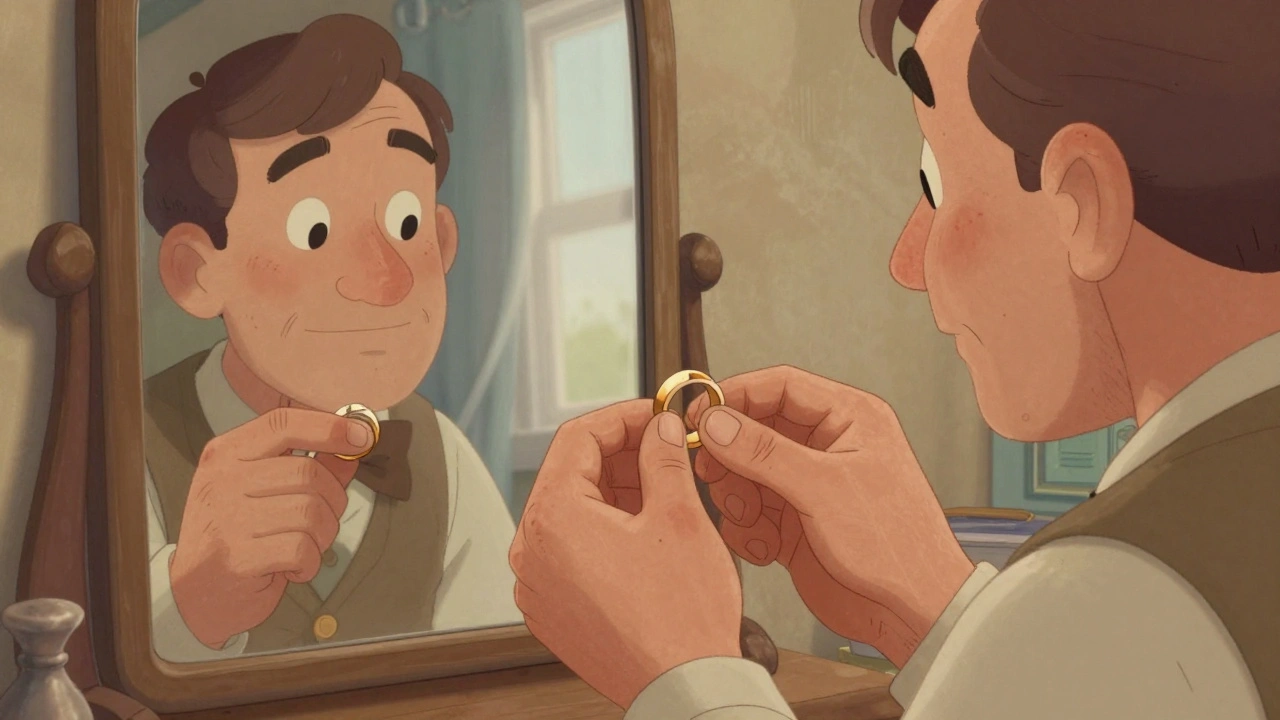
Acromegaly isn’t something you wake up with overnight. It creeps in slowly-your rings don’t fit anymore, your shoes feel tighter, your jaw seems to jut out more than it used to. By the time you notice, the changes are already advanced. This rare condition, affecting about 60 people per million, is caused by too much growth hormone in your body after your bones have stopped growing. It’s not gigantism-that’s what happens in kids. Acromegaly happens in adults, usually between 30 and 50, and it’s almost always caused by a benign tumor on the pituitary gland at the base of your brain.
What Acromegaly Actually Does to Your Body
The real problem isn’t just how you look. It’s what’s happening inside. Excess growth hormone pushes your liver to make too much IGF-1, a protein that tells your tissues to grow. In adults, bones can’t get longer, so they thicken instead. Your hands swell. Your feet grow. Your jaw sticks out. Your tongue gets bigger. Your voice drops. Skin gets oily and thick. These aren’t just cosmetic changes-they’re signs your organs are changing too.
Up to 90% of people with acromegaly have enlarged hands and feet. About 85% develop facial changes-brow ridges become more prominent, the nose broadens, the lower jaw juts forward. You might not notice these shifts yourself, but friends and family often do. That’s why diagnosis is often delayed-by an average of 7 to 10 years. One patient on a support forum said it took 11 doctors and seven years before someone finally said, “This isn’t just aging.”
Beyond appearance, acromegaly attacks your health from within. About 30 to 50% of patients develop high blood pressure. More than half have heart muscle thickening, which can lead to heart failure. About one in three develop type 2 diabetes because excess growth hormone makes your body resistant to insulin. Joint pain affects nearly 8 out of 10 people. Carpal tunnel syndrome is common-47% of patients deal with numbness and tingling in their hands. Sleep apnea hits about 60%, making rest impossible and worsening fatigue. Thyroid problems, headaches, and vision loss from the tumor pressing on nerves are also frequent.
How It’s Diagnosed-And Why It Takes So Long
Most doctors don’t see a case of acromegaly in their entire career. That’s why it gets missed. Blood tests are the first step. IGF-1 levels are checked because they’re more stable than growth hormone, which spikes and drops throughout the day. But IGF-1 must be interpreted based on your age and sex-what’s normal for a 25-year-old isn’t normal for a 55-year-old.
The gold standard test is the oral glucose tolerance test. You drink a sugary solution, and your growth hormone levels are measured over two hours. In a healthy person, sugar suppresses growth hormone. In someone with acromegaly, it doesn’t. If levels stay above 1 μg/L after the drink, that’s a strong indicator.
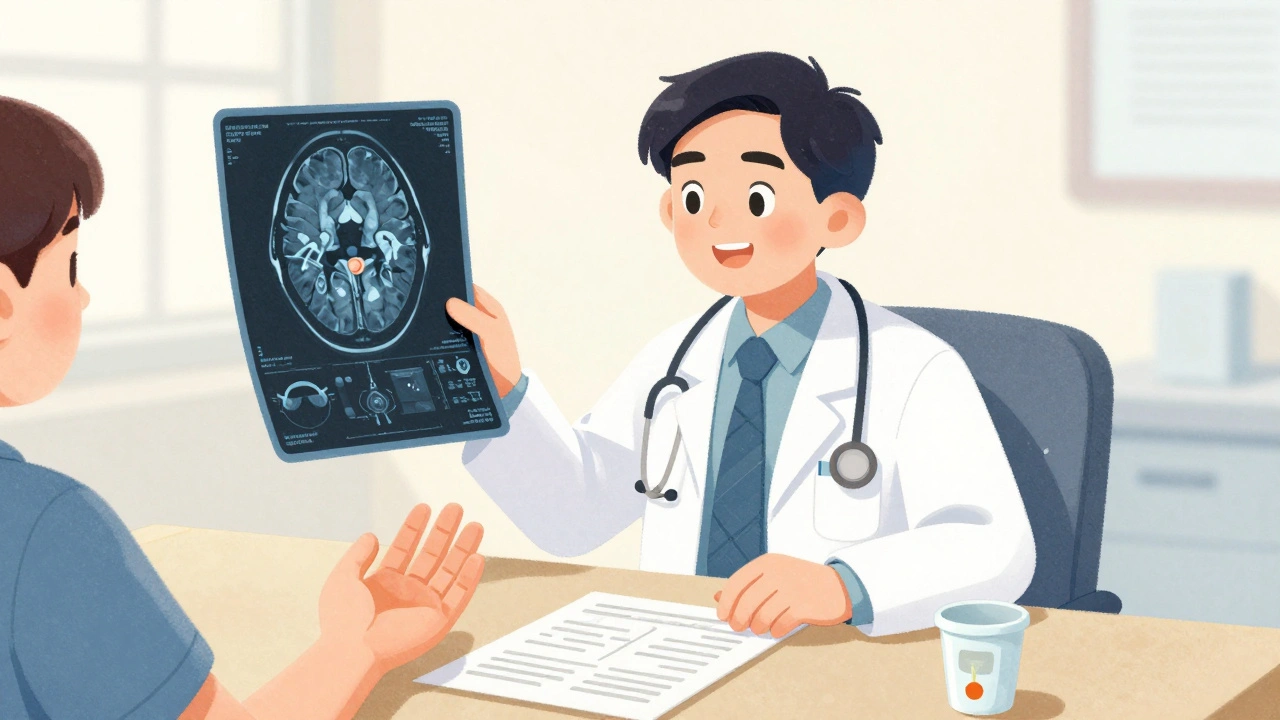
Then comes the MRI. About 90% of cases show a pituitary tumor. These tumors are classified as microadenomas (under 10 mm) or macroadenomas (10 mm or larger). Macroadenomas are more likely to press on the optic nerve, causing vision problems. That’s why a visual field test is often done alongside the MRI.
But here’s the catch: even when tests are done, they’re not always ordered. Many patients are told they have arthritis, sleep apnea, or carpal tunnel-and treated for those alone. The real issue stays hidden. A 2023 survey by Seeing Differences UK found that 68% of patients saw at least five doctors before getting the right diagnosis. One man in Birmingham thought his swollen feet were just from standing all day as a delivery driver. He didn’t connect it to his growing jawline until his daughter pointed it out.
First-Line Treatment: Surgery
If you’re diagnosed early and your tumor is small, surgery is your best shot at a cure. The procedure-called transsphenoidal surgery-is done through the nose. No scalpels, no visible scars. An experienced neurosurgeon removes the tumor in about an hour. Recovery takes 2 to 4 weeks. Most people go home the next day.
Success rates depend on tumor size. For microadenomas, remission happens in 80 to 90% of cases. For larger macroadenomas, it’s 40 to 60%. That’s why early detection matters. If the tumor is too big or has grown into nearby structures, complete removal isn’t always possible. Even then, surgery often reduces tumor size enough to make other treatments more effective.
After surgery, your hormone levels are checked again within 3 months. If they’re normal, you’re in remission. If not, you move to medical therapy. But even if surgery doesn’t fully cure you, it often improves symptoms-like reducing headaches, restoring vision, or shrinking the jaw enough to fit dentures again.
Medications When Surgery Isn’t Enough
Not everyone can have surgery. Some tumors are too risky to remove. Others come back. That’s where drugs come in. There are three main types:
- Somatostatin analogs (octreotide LAR, lanreotide): These mimic a natural hormone that suppresses growth hormone. Given as monthly injections, they normalize IGF-1 in about 50 to 70% of patients. A new version, Signifor LAR, only needs quarterly shots. Cost? Around $6,200 to $7,800 per month in the U.S.-a major barrier for many.
- Dopamine agonists (cabergoline): Less effective than somatostatin analogs, but cheaper-$150 to $300 a month. Best for patients with mild hormone excess or those who also have high prolactin levels.
- Growth hormone receptor antagonist (pegvisomant): This blocks growth hormone from working at the tissue level. It doesn’t shrink the tumor, but it lowers IGF-1 in over 90% of patients. Monthly cost? $12,000 to $15,000. Insurance often requires months of prior authorization.
Many patients use a combination. For example, pegvisomant to control IGF-1 levels, plus a somatostatin analog to shrink the tumor. Clinical trials are now testing this combo for stubborn cases. One patient in Manchester told me: “The injections hurt, and the cost is insane-but when I saw my ring size drop from 13 to 10 in 18 months, I knew it was worth it.”
Radiation: The Last Resort
Radiation is usually saved for when surgery and drugs fail. It uses focused beams to destroy tumor cells over time. It works-but slowly. It can take 5 to 10 years to see full results. And it’s not without risk. Between 30 and 50% of patients develop permanent hormone deficiencies after radiation, meaning they’ll need lifelong replacements for cortisol, thyroid hormone, estrogen, or testosterone.
It’s also not ideal for younger patients. The long-term risk of brain injury or secondary tumors, though rare, is real. Still, for someone who can’t tolerate drugs or isn’t a surgical candidate, radiation can be the only way to stop progression.

Living With Acromegaly-Beyond the Numbers
Normalizing IGF-1 levels is the goal. But that’s not the whole story. Many patients still feel exhausted, even when their blood tests look perfect. Joint pain lingers for years. Sleep apnea doesn’t always vanish. Depression and anxiety are common-partly from the physical changes, partly from the long road to diagnosis.
Dr. Beverly Burke, an endocrinologist, warns that focusing only on lab numbers can miss what matters most: quality of life. One woman in Birmingham, after five years of treatment, said: “My GH is normal now. My IGF-1 is fine. But I still can’t climb stairs without stopping. My knees ache. My skin still breaks out. No one talks about that.”
That’s why multidisciplinary care is key. You need an endocrinologist, a neurosurgeon, a sleep specialist, a cardiologist, and a primary care doctor all on the same page. Regular check-ups every 3 to 6 months are non-negotiable. You need eye exams, heart scans, and bone density tests. You need to know the signs of low cortisol-dizziness, nausea, fainting-because if you’ve had surgery or radiation, you might be at risk for adrenal insufficiency.
The Future: Faster Diagnosis, Better Drugs
There’s hope on the horizon. A 2023 study called AcroPEARL showed that AI-powered facial recognition software can detect acromegaly with 89% accuracy just by analyzing photos. Imagine a phone app that flags subtle changes in your jaw or nose over time. That could cut diagnosis time in half.
New drugs are coming too. Biosimilars of somatostatin analogs are now available in Europe and could lower costs in the U.S. soon. Clinical trials are testing oral versions of these drugs-no more monthly injections.
And the most encouraging news? Life expectancy. Ten years ago, people with uncontrolled acromegaly lived 10 to 15 years less than average. Now, with early diagnosis and proper treatment, survival rates match those of the general population. One 2023 review in The Lancet called it “a triumph of modern endocrinology.”
But only if you catch it early.
Frequently Asked Questions
Can acromegaly be cured?
In some cases, yes-if the pituitary tumor is small and completely removed by surgery, hormone levels can return to normal and stay there. For larger tumors or those that can’t be fully removed, long-term management with medication is needed. Even then, many patients live normal lifespans with proper care.
Is acromegaly hereditary?
Almost always, no. Over 95% of cases are sporadic, meaning they’re not passed down in families. Rare genetic syndromes like MEN1 or McCune-Albright can increase risk, but these are extremely uncommon. If you have acromegaly, your children are not at higher risk.
What happens if acromegaly is left untreated?
Untreated acromegaly leads to serious, often irreversible damage. Heart disease, high blood pressure, diabetes, and arthritis become more severe. The risk of dying early doubles or triples. Vision loss, breathing problems during sleep, and spinal deformities can become disabling. The longer it goes unchecked, the harder it is to reverse the damage-even with treatment later.
Can I still work and live normally with acromegaly?
Absolutely-many do. With treatment, most people return to work, drive, travel, and enjoy daily life. Fatigue and joint pain can linger, but physical therapy, good sleep habits, and managing other conditions like diabetes help. Support groups and regular follow-ups make a big difference. The biggest barrier isn’t the disease-it’s the delay in diagnosis.
Why do some people still feel tired after treatment?
Even when hormone levels normalize, the body takes time to recover from years of overgrowth. Joint damage, sleep apnea, and muscle weakness don’t reverse overnight. Some patients develop new hormone deficiencies after surgery or radiation, like low thyroid or cortisol, which cause fatigue if not replaced. It’s not always about the GH-it’s about the whole system needing time to heal.
Are there any new treatments on the horizon?
Yes. Oral versions of somatostatin analogs are in late-stage trials. AI tools that detect facial changes from photos could help diagnose acromegaly faster. New combination therapies are being tested for patients who don’t respond to single drugs. And biosimilar versions of expensive drugs are expected to lower costs in the U.S. within the next few years.






Colin Mitchell
December 2, 2025 AT 15:20Man, I never realized how sneaky this disease is. My uncle went through this and no one caught it until his jaw was so big he couldn’t wear his favorite hat anymore. Took seven years and three ER visits before someone said, ‘Hey, maybe it’s not just aging.’
Stacy Natanielle
December 2, 2025 AT 15:52While the clinical data presented is largely accurate, I must emphasize the economic disparity in access to care. The cost of pegvisomant exceeds $144K annually-untenable for 43% of U.S. households without premium insurance. Furthermore, the reliance on MRI and IGF-1 testing assumes universal healthcare access, which remains a structural flaw in American medicine. 🤔💸
kelly mckeown
December 3, 2025 AT 11:56i just wanted to say thank you for writing this. my mom was diagnosed last year after 8 years of being told it was ‘just arthritis’ and ‘you’re getting older.’ she’s on lanreotide now and her hands are finally shrinking… but the fatigue? still there. i wish more doctors listened to patients instead of just labs. 🫂
Tom Costello
December 5, 2025 AT 00:05Great breakdown. One thing I’d add: the facial recognition AI tools are promising but still need validation across diverse ethnic populations. Most training datasets are based on Caucasian features-could lead to underdiagnosis in darker-skinned individuals where bone structure changes are subtler. Important to keep equity in mind as tech scales.
dylan dowsett
December 6, 2025 AT 07:10Akash Sharma
December 7, 2025 AT 10:52Interesting read. In India, diagnosis often takes even longer due to lack of endocrinologists in rural areas. I know a man in Jaipur who was misdiagnosed with osteoarthritis for nine years. He finally got tested only after his daughter saw a documentary on acromegaly. The cost of somatostatin analogs is prohibitive here-we rely on donated drugs or go without. I hope biosimilars reach us soon.
Justin Hampton
December 8, 2025 AT 12:26Let’s be real-this is just another way for hospitals to make money. Tumor? Remove it. Drug? Charge $15K. Radiation? Bill it as ‘specialized therapy.’ Meanwhile, people are dying from stress and debt. The real cure? Stop pretending medicine is about health. It’s about billing codes.
Chris Jahmil Ignacio
December 9, 2025 AT 04:46They don’t want you to know this but pituitary tumors are caused by EMF radiation from cell phones and 5G towers. The FDA won’t admit it because they’re paid off by telecom giants. Look at the rise in cases since 2010-coincidence? No. It’s a cover-up. And those drugs? They’re not treating you-they’re poisoning your liver to keep you dependent. I’ve seen the documents.
Paul Corcoran
December 9, 2025 AT 17:45Just wanted to say-this is the kind of post that saves lives. If you’re reading this and your rings don’t fit or your shoes feel tight, don’t wait. Go to an endocrinologist. Bring this article. You’re not crazy. You’re not just aging. Your body is screaming. Listen. And if you’re a doctor reading this-don’t dismiss the subtle signs. A 7-year delay is a lifetime of damage.
Susan Haboustak
December 11, 2025 AT 09:21How is it possible that people are still getting misdiagnosed in 2025? If you’re over 30 and your jaw is changing, that’s not ‘genetics’-it’s a tumor. Stop blaming arthritis. Stop taking ibuprofen. Get an MRI. This isn’t hard. If you’re reading this and you’ve been told it’s normal-get a second opinion. Or third. Or tenth.
Chad Kennedy
December 11, 2025 AT 18:35ugh i hate when people make this sound so complicated. just cut out the tumor. done. why are there 5 different drugs? why is it so expensive? i just want it to be simple.
Siddharth Notani
December 13, 2025 AT 00:26Excellent summary. I would like to add that in many developing nations, access to IGF-1 assays remains limited. Point-of-care testing and tele-endocrinology initiatives are urgently needed. Furthermore, patient education campaigns in local languages can significantly reduce diagnostic delays. 🙏
Cyndy Gregoria
December 14, 2025 AT 13:59My sister had this. After surgery, she started doing yoga and eating clean-and her energy came back more than any drug did. Don’t underestimate the power of movement and sleep. Hormones matter, but so does your daily rhythm. You’re not just a lab result.
Mindy Bilotta
December 15, 2025 AT 22:17just wanted to say thank you for this. i’ve been living with this for 4 years and no one ever explained what the side effects really felt like. you just described my life. also, sorry for the typos-my hands still hurt too much to type well.