4
Allergy Action Plan: Essential Medications to Carry and When to Use Them
Epinephrine Dosing Calculator
Calculate Your Epinephrine Dose
Determine the correct epinephrine dose based on weight. Always follow your doctor's specific instructions.
Your Recommended Dose
0.00 mg
Epinephrine Dose
0.00 mg
Epinephrine Dose
Important Instructions
Use epinephrine immediately for:
- Two or more body systems reacting
- Any breathing difficulty
- Dizziness or fainting
- Babies with unusual lethargy
Carrying the right medications for an allergic reaction isn’t just a good idea-it’s life-saving. If you or someone you care for has severe allergies, knowing exactly what to carry and when to use it can make the difference between a minor incident and a medical emergency. An allergy action plan isn’t a suggestion. It’s a medical directive, written by your doctor, that tells you exactly what to do when symptoms start. And at the heart of every serious plan? Epinephrine.
Epinephrine: The Only Medication That Can Stop an Anaphylactic Reaction
Epinephrine is not optional. It’s the first and only medication that reverses the dangerous drop in blood pressure, opens up swollen airways, and stops the body’s runaway allergic response. Antihistamines like Benadryl? They help with itching or hives-but they do nothing for breathing trouble or shock. If you wait to give epinephrine until you’re sure it’s "really bad," you’re risking death.
Every allergy action plan must list the correct epinephrine dose based on weight:
- 0.10 mg for children 7.5-13 kg (16.5-28.7 lbs)
- 0.15 mg for children 13-25 kg (28.7-55.1 lbs)
- 0.30 mg for anyone over 25 kg (55.1 lbs or more)
These doses are standardized by the American Academy of Pediatrics and the UK’s BSACI. Auto-injectors like EpiPen, Adrenaclick, or generic equivalents are the most common delivery method. Some newer options, like Neffy (an intranasal spray), are now FDA-approved and may be used as an alternative-but only if your doctor has approved it and trained you on how to use it properly.
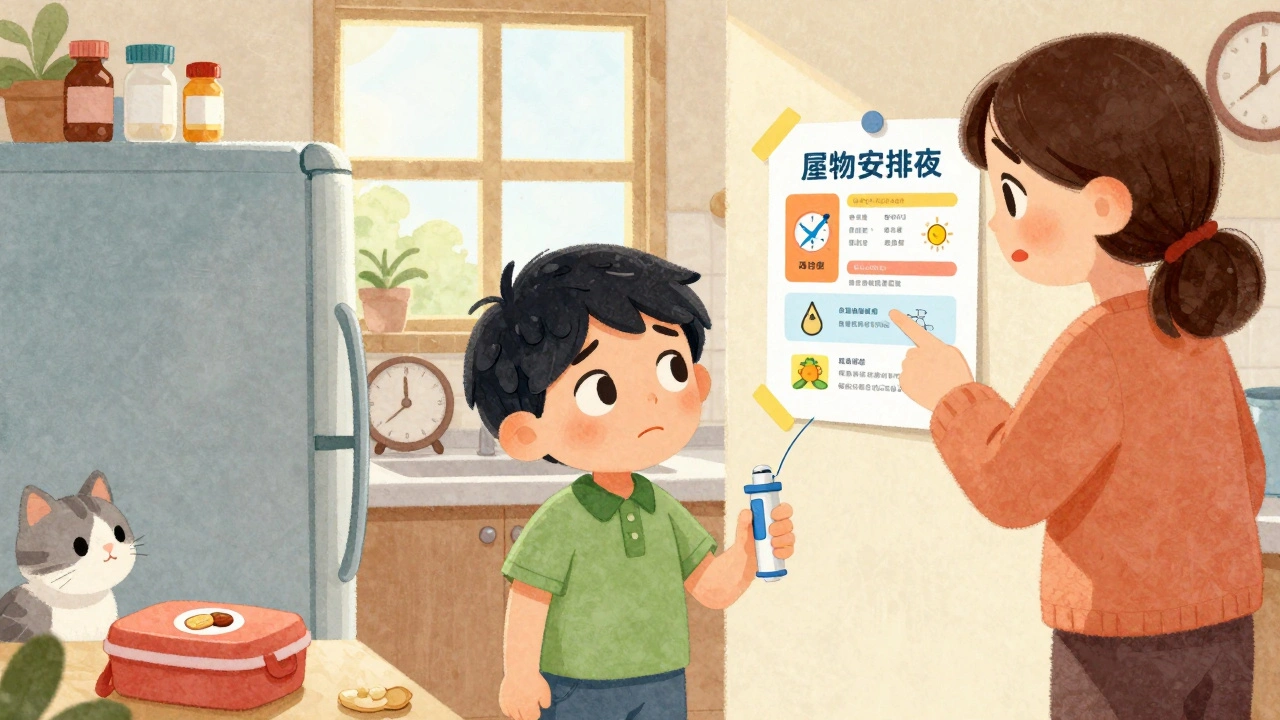
Never keep epinephrine in a hot car, a sunlit drawer, or a backpack left outside. Heat and light can ruin it. Check the expiration date every three months. If it looks cloudy, brown, or has particles in it-replace it immediately. FARE’s 2023 survey found 32% of households had expired or damaged injectors. That’s not negligence-it’s preventable.
When to Use Epinephrine: The Rules Are Simple
You don’t need to wait for a checklist to be complete. If someone has a known allergen exposure and shows any sign of a serious reaction, give epinephrine right away.
Here’s what counts as a trigger for immediate use:
- Two or more body systems reacting at once (e.g., hives + vomiting + trouble breathing)
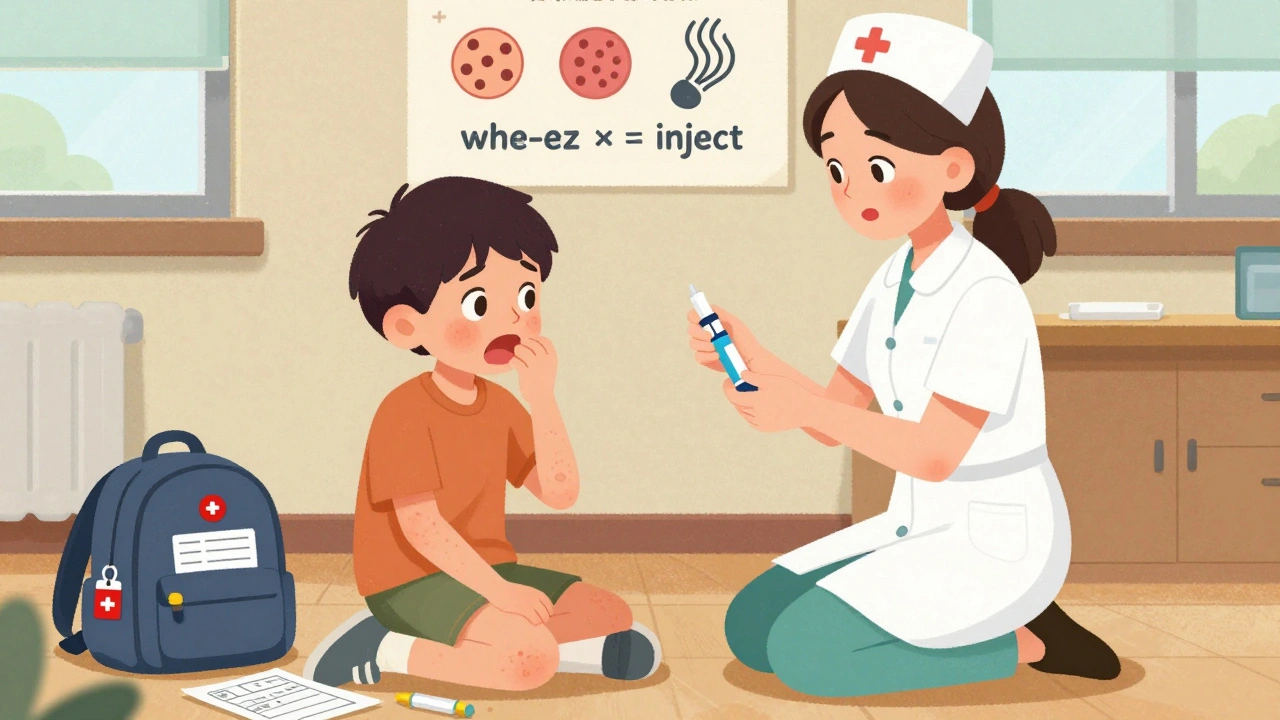
- Any breathing difficulty-wheezing, tight throat, hoarse voice
- Dizziness, fainting, pale skin, or weak pulse (signs of low blood pressure)
- In babies or toddlers: sudden hives, persistent cough, or unusual lethargy
Don’t wait for vomiting to happen before acting. Don’t hope the hives will go away on their own. If the person has a history of anaphylaxis or asthma, even mild symptoms after exposure should trigger epinephrine. Asthma increases the risk of a fatal reaction by 300%. That’s not a statistic-it’s a warning.
Studies show that giving epinephrine within five minutes of symptom onset reduces the chance of death by 94%. Delaying it-even by 10 minutes-can turn a treatable reaction into a fatal one. A 2021 study found that in school settings, antihistamines were often given first, delaying epinephrine by an average of 22 minutes. That’s 22 minutes too long.
What About Antihistamines? They Have a Role-But Not the One You Think
Antihistamines like diphenhydramine (Benadryl) or cetirizine (Zyrtec) are not replacements for epinephrine. They’re support players.
Use them only if:
- There’s a mild reaction-just hives or a runny nose-with no breathing or circulation problems
- You’ve already given epinephrine and are waiting for emergency help
The dose for diphenhydramine is 1 mg per kilogram of body weight, up to a maximum of 50 mg. But never give it before epinephrine. Never give it instead of epinephrine. And never assume it will stop a reaction from getting worse. It won’t.
Doctors in the UK and US agree: antihistamines don’t treat airway swelling or low blood pressure. They only ease itching and sneezing. Relying on them to "hold off" a reaction is dangerous. In fact, giving antihistamines first can make people feel falsely safe-delaying the one treatment that saves lives.
Other Medications That Belong in Your Allergy Kit
Depending on your history, your doctor might recommend additional items:
- Albuterol inhaler: If you have asthma or wheezing during reactions, this helps open airways. Use it after epinephrine if breathing is still tight.
- Corticosteroids (like prednisone): Sometimes prescribed to prevent a delayed or "biphasic" reaction-where symptoms come back hours later. These are taken orally, not injected, and are not for immediate use.
Never carry a steroid inhaler or nasal spray as your main defense. They don’t work fast enough. Epinephrine is the only thing that works within seconds.
What to Do After Giving Epinephrine
Calling 999 is not optional. Even if the person seems fine after the shot, they still need to go to the hospital.
Why? Because 1 in 5 people have a second wave of symptoms-called a biphasic reaction-up to 12 hours later. That’s why medical observation for 4 to 6 hours is standard. You can’t predict who it will happen to.
Also, you may need a second dose of epinephrine. If symptoms return or worsen after 5-10 minutes, give another injection. It’s safe. Multiple doses are common in severe cases. Don’t hesitate because you think you’ve "used it all up." You’re not running out of life-saving medicine-you’re running out of time.
Sharing Your Plan: Schools, Daycares, and Caregivers
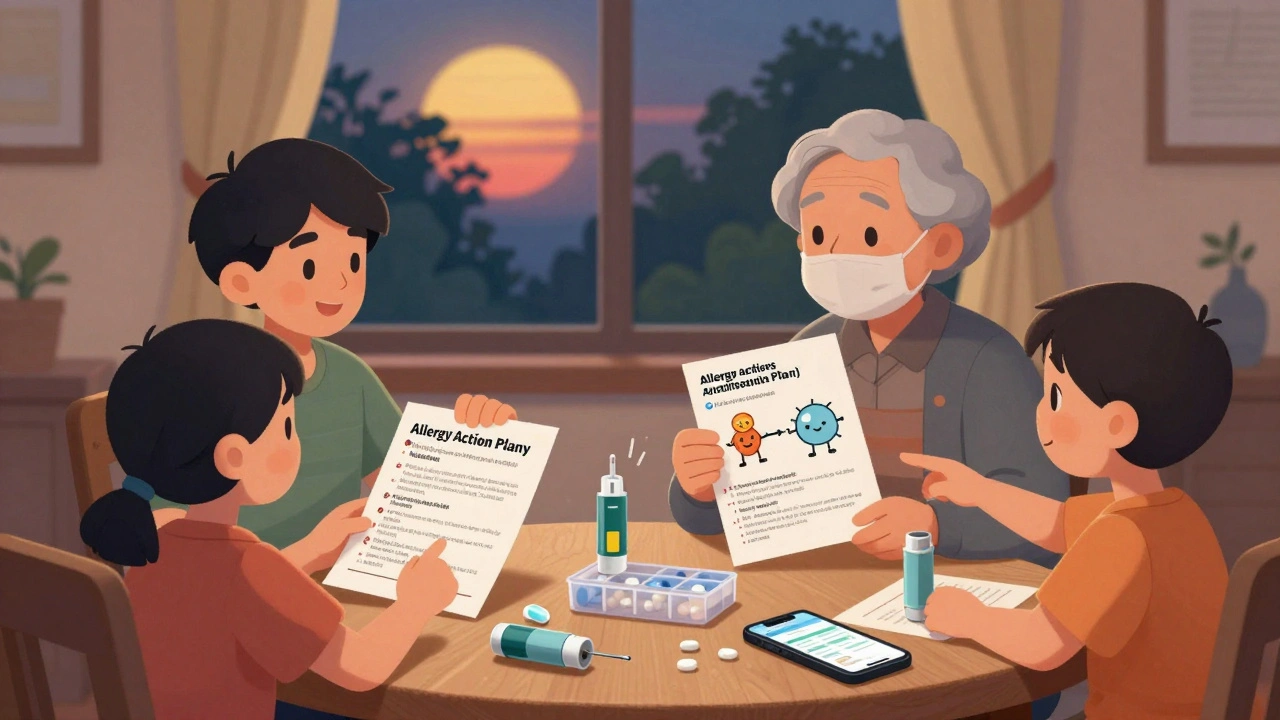
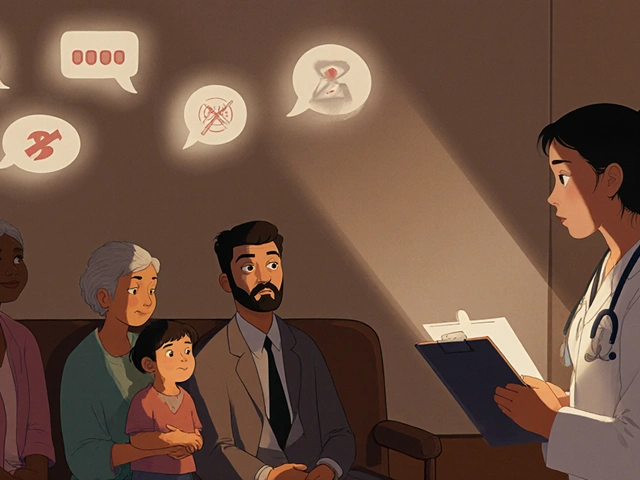
An action plan is useless if no one else knows how to use it. If you have a child with allergies, give a copy to their school, after-school program, babysitter, and grandparents. Make sure the school nurse has a copy on file and that at least two staff members are trained to use the auto-injector.
Many schools in the UK and US now require individualized health plans for students with allergies. But here’s the problem: a 2023 study found only 38% of teachers could correctly identify anaphylaxis symptoms without a visual guide. That’s why FARE recommends including photos on the plan-like a picture of the child’s reaction or the auto-injector in use.
Even adults with allergies should carry a printed copy of their plan. Keep it in your wallet, phone case, or bag. Emergency responders don’t know your history. Your plan tells them what to do.
Digital Plans Are Here-But Paper Still Matters
FARE launched a mobile app in March 2024 that stores your action plan, alerts emergency contacts, and reminds you when your epinephrine expires. Over 142,000 people are using it. That’s great. But don’t rely on your phone alone. Batteries die. Phones get lost. In an emergency, you need something you can hand to someone without fumbling for a screen.
Keep a printed copy in your bag, your child’s backpack, and your car. Update it every year. If your weight changes, your dose might need adjusting. If your doctor changes your plan, get a new copy signed and dated.
Final Rule: When in Doubt, Inject
There’s no such thing as "overusing" epinephrine in a true emergency. The side effects-racing heart, shaking, feeling anxious-are temporary. The consequences of not using it? They’re permanent.
78% of fatal anaphylaxis cases involved delayed or missed epinephrine. That’s not because people didn’t care. It’s because they didn’t know when to act. Your allergy action plan removes that guesswork. It turns panic into action. It turns fear into safety.
Don’t wait for a near-death experience to get one. If you have allergies, ask your doctor for a written plan today. Carry your epinephrine. Know the signs. Use it fast. And never, ever wait for someone else to make the call.
Can I use antihistamines instead of epinephrine for a mild allergy reaction?
No. Antihistamines like Benadryl can help with itching or hives, but they do not stop anaphylaxis. If you have a known allergen exposure and any breathing trouble, swelling, dizziness, or vomiting, epinephrine is the only treatment that works. Giving antihistamines first can delay life-saving treatment by over 20 minutes. Always use epinephrine first if there’s any chance of a severe reaction.
How do I know if I need a higher dose of epinephrine?
Your epinephrine dose is based on your weight. For adults and children over 25 kg (55 lbs), the standard dose is 0.30 mg. If your weight has changed significantly-especially if you’ve gained or lost more than 5 kg-you should talk to your doctor about whether you need a different auto-injector. Dosing is not based on age, but on body weight. Using the wrong dose can be ineffective or unsafe.
What if I’m not sure whether it’s an allergic reaction?
If you’ve been exposed to a known allergen and someone is showing any unusual symptoms-especially trouble breathing, swelling, or dizziness-give epinephrine. It’s better to use it and be safe than to wait and risk death. Even if it turns out to be something else, epinephrine is safe to use in low-risk situations. The risk of side effects is minimal compared to the risk of doing nothing.
Can I reuse an epinephrine auto-injector after one use?
No. Auto-injectors are single-use devices. Once activated, they cannot be reused, even if some liquid remains. The needle is designed to lock after one use. Always carry two injectors at all times. If one is used, call emergency services immediately and use the second one if symptoms return or worsen.
Do I need to carry an allergy action plan even if I’ve never had a severe reaction?
Yes. Allergic reactions can become worse with each exposure. Just because you’ve had mild hives before doesn’t mean the next one won’t be life-threatening. Many people who have fatal reactions had only mild symptoms in the past. A written plan helps you and others recognize early signs and act fast. It’s not about past history-it’s about preparing for what could happen next.






Ada Maklagina
December 6, 2025 AT 05:28Epinephrine isn’t optional. If you’re allergic, you carry it. Period. No excuses.
Lynette Myles
December 6, 2025 AT 19:46Did you know the FDA approved Neffy only after lobbying from pharmaceutical lobbyists? The real reason they pushed it? Profit margins. Epinephrine auto-injectors are a $2B industry. And they don’t want you to know you can buy generic epinephrine vials and syringes for $15.
They scare you into buying branded devices. But if you’re trained, you can self-administer with a vial. The FDA doesn’t tell you that. FARE doesn’t mention it. Why? Because they’re funded by the same companies.
Check your injector’s expiration date? Sure. But also check who funds the ‘awareness’ campaigns. Big Pharma. Always.
I’ve carried vials and syringes for 12 years. No issues. No ‘dangerous’ delays. Just common sense and a $20 kit. They want you dependent. Don’t be.
They’ll say ‘it’s unsafe.’ But it’s not. It’s just not profitable. Your doctor won’t tell you this. The school nurse won’t either. Because they’re trained by the same people who profit from your fear.
Epinephrine is life-saving. But the system that sells it? That’s the real threat.
Harry Nguyen
December 8, 2025 AT 09:45So now we’re supposed to trust a piece of plastic that costs $600 and expires in three months? In America, where you can’t even get insulin without a loan? This isn’t medicine. It’s a racket. And you people act like it’s a miracle.
My cousin died because his EpiPen didn’t work. The hospital said it was ‘degraded.’ He had it in his jacket pocket. In December. In Michigan. But no one’s blaming the system. Just him.
Meanwhile, the same companies that make these things are lobbying to block generic alternatives. And you’re all over here nodding like it’s divine intervention.
It’s not a medical directive. It’s a corporate hostage situation.
Katie Allan
December 10, 2025 AT 02:46Thank you for writing this with such clarity. I’ve seen too many parents freeze when their child breaks out in hives, thinking they should wait for ‘worse symptoms.’
My son had his first anaphylactic reaction at age 3. We were at a birthday party. Someone brought cake with peanuts. He didn’t even have time to cry before his throat closed.
We gave the epinephrine. Called 999. Got to the hospital. They said we saved his life. Not because we were doctors. Because we had a plan. And we trusted it.
I now carry two injectors. I’ve trained every babysitter, teacher, and grandparent. I keep a printed copy in his lunchbox, his coat, and my purse.
It’s not fear. It’s responsibility. And if you’re reading this and you haven’t gotten your plan yet-do it today. Not tomorrow. Today.
You’re not being dramatic. You’re being prepared. And that’s the bravest thing you can do.
James Moore
December 11, 2025 AT 05:46Let’s be clear: the entire ‘epinephrine-first’ paradigm is a product of over-medicalization and fear-based marketing-fueled by the confluence of pharmaceutical interests, regulatory capture, and the pathological anxiety of modern parenting.
Yes, epinephrine saves lives-but so does common sense, vigilance, and environmental control. Why are we not talking about eliminating allergens from public spaces? Why are we not mandating nut-free schools as standard policy, rather than turning every child into a walking pharmacy?
And why, oh why, do we accept that a $600 device-often rendered useless by heat, light, or poor storage-is the only ‘solution’?
Furthermore, the notion that ‘any symptom’ warrants epinephrine is dangerously reductive. What about psychosomatic reactions? What about stress-induced hives? What about the child who develops a rash after eating a new food-because they’re 4 and their immune system is still learning?
We’re creating a generation of children who believe every sneeze is a death sentence. And we’re rewarding corporations who profit from this manufactured panic.
Yes, anaphylaxis is real. But so is the over-reliance on pharmaceutical quick-fixes. We need systemic change-not just better injectors.
And if you think I’m being ‘alarmist,’ ask yourself: why are we the only country in the developed world where parents are expected to carry emergency injectors just to send their kids to school?
Kylee Gregory
December 13, 2025 AT 03:15I think what’s missing from this conversation is the emotional weight behind carrying this stuff every day.
It’s not just about the medicine. It’s about the constant low hum of anxiety-the checking of expiration dates, the conversations with teachers, the guilt when you forget the injector at home.
I used to feel like I was being paranoid. Like I was overreacting. But after seeing what happened to my friend’s daughter-after watching her go into shock at a restaurant and knowing we had the shot but didn’t use it fast enough-I realized: this isn’t about fear. It’s about love.
It’s about showing up for the people you care about-even when no one’s watching.
So yes, carry the epinephrine. Use it fast. Tell people how to use it. Don’t wait for someone else to act.
And if you’re reading this and you’re scared? You’re not alone. We’re all just trying to keep each other safe.
Laura Saye
December 14, 2025 AT 02:19The pharmacokinetics of epinephrine are well-documented: alpha-1 agonism induces vasoconstriction, beta-1 stimulation increases cardiac output, and beta-2 activation mediates bronchodilation-all critical in counteracting the histamine-mediated vasodilation and bronchoconstriction of anaphylaxis.
Antihistamines, in contrast, only modulate H1 receptor activity, offering no hemodynamic or respiratory stabilization.
Furthermore, biphasic anaphylaxis occurs in 15–20% of cases, necessitating prolonged observation, as the mast cell degranulation cascade can reinitiate hours post-initial intervention.
And while Neffy offers a non-invasive alternative, its bioavailability profile is still being evaluated in pediatric populations, and its efficacy in severe hypotensive episodes remains less predictable than intramuscular epinephrine.
What’s often overlooked is the cognitive load placed on caregivers during acute events: under stress, even trained individuals experience tunnel vision and working memory suppression, which is why standardized, visualized action plans-preferably with pictograms-are not merely helpful, but neurocognitively essential.
Therefore, the emphasis on immediate epinephrine administration isn’t alarmism-it’s neurophysiological pragmatism.
luke newton
December 14, 2025 AT 10:31You people are pathetic. You’re so scared of your own shadows you turn every sneeze into a death sentence. My kid ate peanut butter at school once. Got a rash. They gave him Benadryl. He was fine. Now he’s got an EpiPen like he’s a walking bomb.
It’s not medicine. It’s a cult. You’re raising kids to think the world is out to kill them.
And don’t get me started on the cost. $600 for a plastic needle? That’s not healthcare-that’s extortion.
Stop feeding the fear machine.
Ali Bradshaw
December 15, 2025 AT 07:54I used to think I was overreacting too. Then my nephew went into anaphylaxis at a BBQ. No one knew what to do. He had the injector in his bag-but no one knew how to use it.
We got him to the hospital. He’s fine now. But that moment? It changed everything.
Now I carry two injectors. I’ve trained every adult in my family. I made a simple one-page plan with pictures. I keep one in my car, one in my bag.
It’s not about fear. It’s about being ready. And if you’re not ready-you’re not just risking your life. You’re risking someone else’s.
You don’t need to be a doctor. You just need to care enough to learn.