5
Causality Assessment for Adverse Drug Reactions: The Naranjo Scale Explained

Naranjo Scale Calculator
Naranjo Scale Calculator
Determine the causality of an adverse drug reaction using the Naranjo Scale. Answer 10 questions to calculate the score and determine if the reaction is definite, probable, possible, or doubtful.
When a patient gets sick after taking a new medication, how do you know if the drug actually caused the problem? It’s not always obvious. Maybe it was the infection they already had. Or their other meds. Or just bad luck. That’s where the Naranjo Scale comes in. It’s not a fancy machine or a high-tech app. It’s a simple 10-question checklist used by doctors, pharmacists, and researchers to figure out if a side effect really came from a drug-or if something else is to blame.
How the Naranjo Scale Works
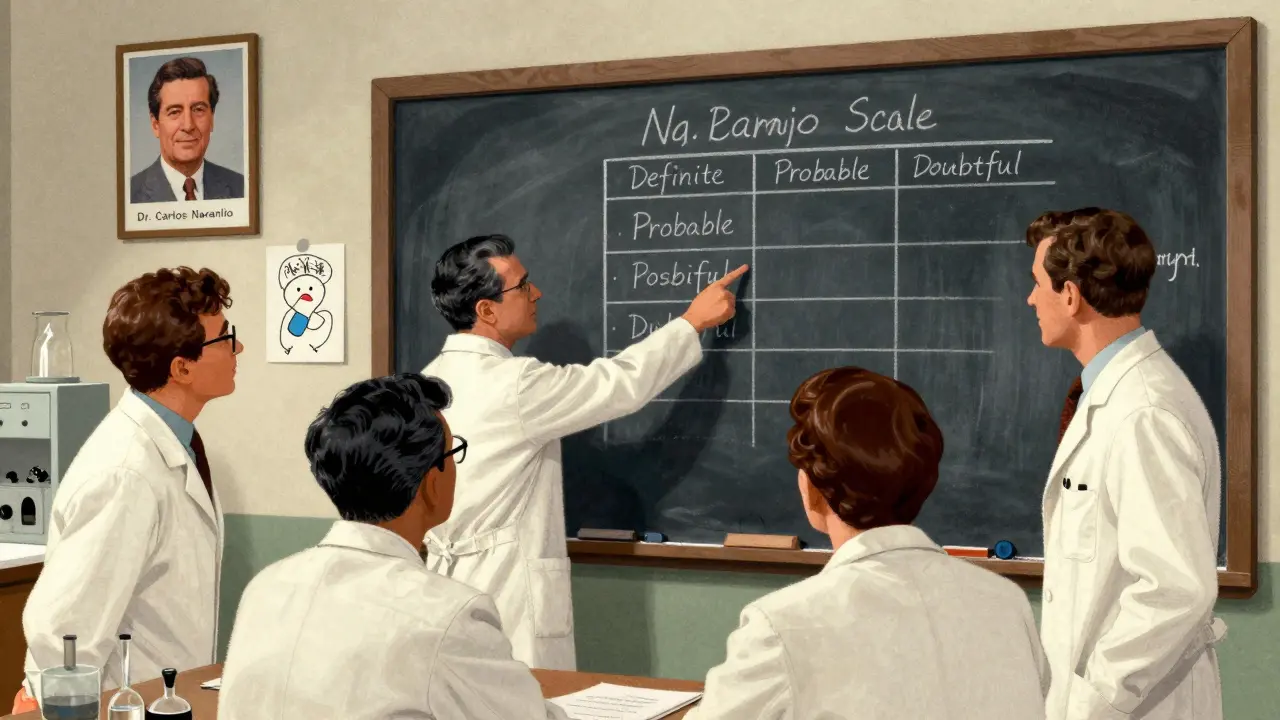
The Naranjo Scale was created in 1981 by a team of researchers led by Dr. Carlos Naranjo. Back then, drug safety reporting was messy. After the thalidomide disaster in the 1960s, where thousands of babies were born with severe birth defects linked to a morning sickness drug, the world realized we needed a better way to link drugs to side effects. The Naranjo Scale was built to bring order to that chaos.
It works by asking 10 yes-or-no questions about the patient’s situation. Each answer gives you points: +1, +2, 0, or even -1. Add them up, and you get a total score that tells you how likely the drug caused the reaction.
Here’s how the scoring breaks down:
- 9 or higher = Definite ADR. The timeline matches perfectly, the reaction stopped when the drug was stopped, and there’s no better explanation.
- 5 to 8 = Probable ADR. The drug likely caused it, but maybe not 100% confirmed.
- 1 to 4 = Possible ADR. The drug might be involved, but other factors could explain it.
- 0 or lower = Doubtful ADR. Almost certainly not the drug’s fault.
These aren’t guesses. Each question is based on real medical evidence. For example:
- Did the reaction happen after the drug was started? (Timing matters-+2 points if it fits)
- Did symptoms improve when the drug was stopped? (+1 point)
- Did the reaction come back when the drug was given again? (+2 points-but this is rarely done today for safety reasons)
- Could something else, like another illness or drug, have caused it? (-1 point if yes)
It’s not perfect, but it forces you to think systematically. Without it, clinicians often rely on gut feelings. The Naranjo Scale turns intuition into evidence.
Why It’s Still Used Today
Even in 2026, the Naranjo Scale is the most used tool for ADR assessment in clinical research. A 2022 study found it was used in 78% of published drug safety case reports-far more than any other method. Why? Because it’s simple, free, and works anywhere. You don’t need special software. Just a printed form or a PDF on a tablet.
It’s built into major systems too. The FDA’s Adverse Event Reporting System (FAERS) and the World Health Organization’s global drug safety program both accept Naranjo scores as valid evidence. In North America, 92% of pharmacovigilance teams use it. In Europe, it’s 85%. Even in places with fewer resources, it’s still the go-to because it doesn’t require expensive tech.
And it’s not just for researchers. Hospitals use it daily. A pharmacist at Massachusetts General Hospital told a Reddit thread: “We use it every day. It stops us from just assuming the drug caused it. We have to check the facts.”
Where It Falls Short
But here’s the truth: the Naranjo Scale was designed in 1981. Medicine has changed a lot since then.
First, it struggles with polypharmacy. Most patients over 65 take five or more drugs. The scale can only assess one drug at a time. If someone takes eight medications and develops a rash, the Naranjo Scale can’t tell you which one did it. That’s why newer tools like the Liverpool ADR Probability Scale were created-they can handle multiple drugs.
Second, some questions are ethically tricky. Question 6 asks: “Did the reaction happen when a placebo was given?” In other words, should we re-expose the patient to a harmless substance to see if the reaction repeats? That’s not done anymore. Giving placebos to trigger a dangerous reaction? That’s not ethical. So most clinicians just skip it or mark “don’t know,” which lowers their score and makes the result less reliable.
Third, it doesn’t work well for modern drugs. Think about immunotherapy for cancer, gene therapies, or biologics. These drugs don’t act like old-school pills. Their side effects can show up weeks or months later. The Naranjo Scale assumes reactions happen quickly. That’s not always true.
And then there’s the problem of interpretation. A 2022 study found that 35% of clinicians disagreed on how to answer Question 5: “Are there other possible causes?” One doctor might say a UTI explains the fever. Another might say no-it’s too late after the drug was started. That inconsistency means two people using the same form can get different scores.
How People Are Fixing It
Instead of replacing the Naranjo Scale, people are upgrading it.
Some built digital tools. A 2023 study showed a Python-based calculator reduced assessment time from 11 minutes to 4.2 minutes and cut errors from 28% to just 9%. That’s huge. You can now plug in patient data, and the app auto-fills the score.
Electronic health records like Epic have started integrating Naranjo questions directly into their systems. If a patient’s lab results or medication history match certain criteria, the system auto-checks boxes. It doesn’t replace the clinician, but it saves time and reduces mistakes.
There’s also talk of updating the scale. In June 2024, the International Council for Harmonisation (ICH) proposed replacing the placebo question with a new one about therapeutic drug monitoring-checking if drug levels in the blood were high enough to cause the reaction. That’s more realistic and safer.
And for kids? The old scale doesn’t account for pediatric differences. That’s why the Paediatric ADR Assessment Tool (PADRAT) was developed in 2015. It’s not a replacement-it’s a specialized version for children.
What You Should Do
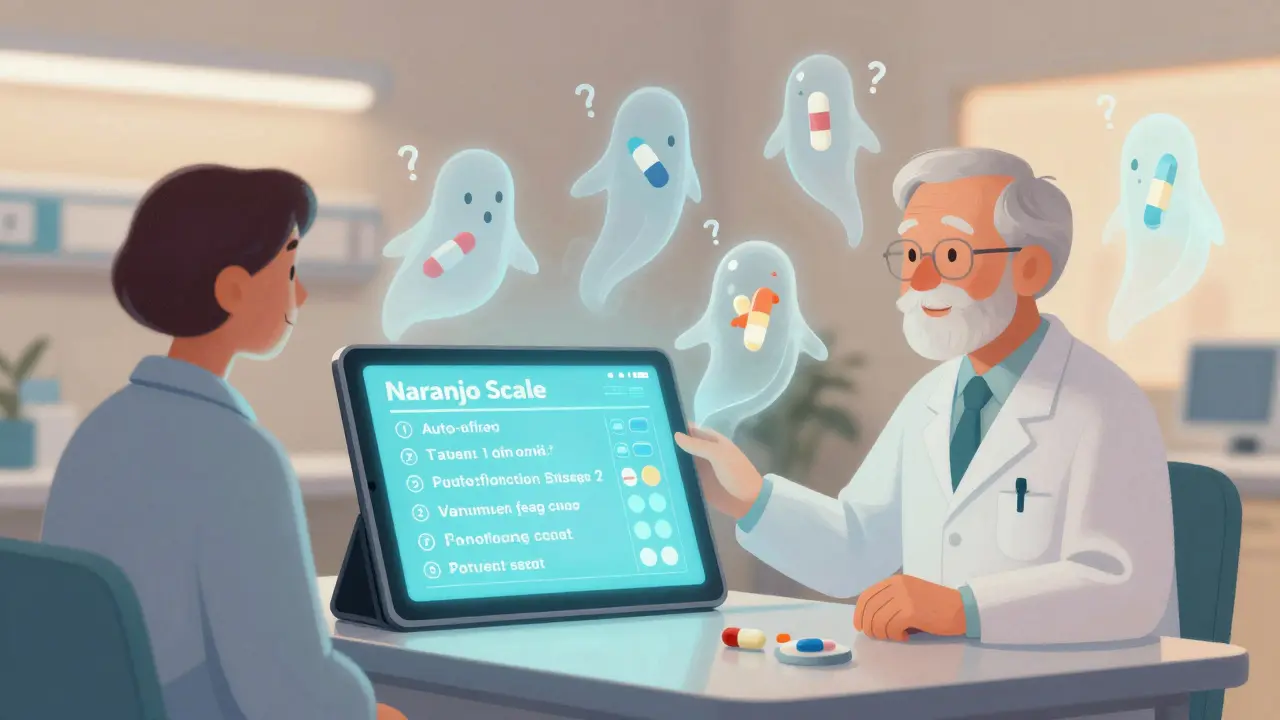
If you’re a clinician, use the Naranjo Scale-but don’t rely on it alone. Treat it as a starting point. Combine it with your clinical judgment. If a patient is on five drugs and has a strange reaction, look at newer tools like ALDEN or the Liverpool Scale. They’re better for complex cases.
If you’re a student or trainee, practice with real cases. Fiveable, a popular learning platform, has 12 free interactive cases. Most nursing and pharmacy students master it after 3-5 cases. Don’t memorize the scores. Learn how to think through each question.
And if you’re a patient? Understand that side effects aren’t always the drug’s fault. Sometimes, it’s the illness itself. The Naranjo Scale exists to protect you-not to blame medications. It helps ensure only real dangers get flagged for further study.
The Bigger Picture
The global market for pharmacovigilance tools is worth over $1.2 billion and growing fast. The Naranjo Scale isn’t the flashiest tool in that space. But it’s the one most people still use. Why? Because it’s transparent. You can see every step. You don’t need to trust an algorithm. You can check the math yourself.
Experts like Dr. David Nierenberg at Harvard call it the “gold standard.” Even critics agree: it’s not perfect, but it’s the best we’ve had for over 40 years. The future isn’t about replacing it. It’s about layering on better tech-digital calculators, AI-assisted reviews, updated questions-to make it more accurate without losing its clarity.
As long as people take drugs, we’ll need a way to tell which side effects are real. The Naranjo Scale isn’t going away. It’s evolving. And for now, it’s still the most reliable tool we have to keep patients safe.




Ian Kiplagat
March 6, 2026 AT 04:38Amina Aminkhuslen
March 7, 2026 AT 22:01amber carrillo
March 9, 2026 AT 15:01Tim Hnatko
March 11, 2026 AT 05:51Aaron Pace
March 11, 2026 AT 15:11Roland Silber
March 11, 2026 AT 16:16Patrick Jackson
March 12, 2026 AT 07:09Adebayo Muhammad
March 13, 2026 AT 00:09Joe Prism
March 14, 2026 AT 14:35Bridget Verwey
March 14, 2026 AT 22:15Andrew Poulin
March 16, 2026 AT 07:58