22
Diabetes Technology: CGMs, Smart Pens, and Apps That Help Manage Blood Sugar Daily
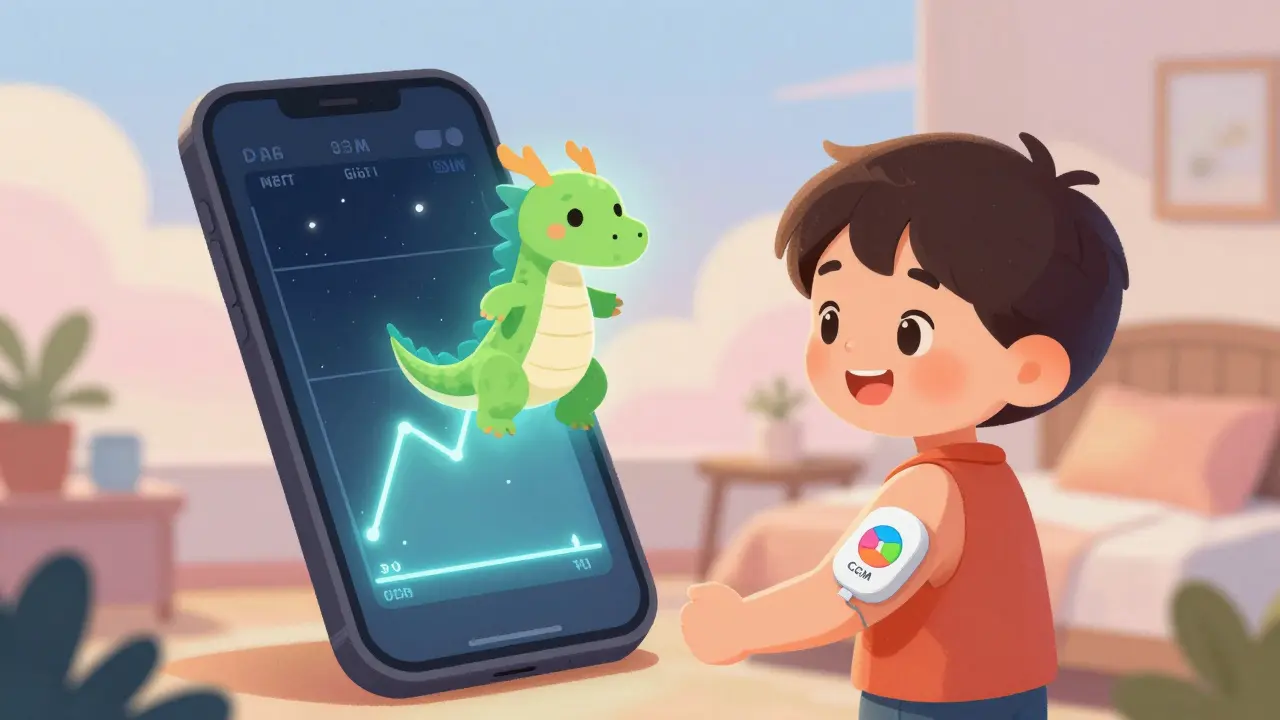
For people managing diabetes, the daily routine used to be simple: prick your finger, test your blood, guess what to do next. But that’s not the reality anymore. Today, CGMs are changing everything. These small sensors don’t just give you a number-they show you how your blood sugar moves throughout the day, night, and even during sleep. No more waking up shocked because your sugar crashed while you were unconscious. No more guessing if that snack was a good idea. The data is real, continuous, and personal.
How CGMs Work and Why They’re Different
A continuous glucose monitor (CGM) is a tiny sensor worn on your arm or belly. It doesn’t measure blood directly-it reads glucose in the fluid between your cells. That means there’s a 5- to 15-minute delay compared to a fingerstick. But here’s the catch: that delay doesn’t matter as much as you think. What you gain is far more valuable: trends. You see if your sugar is rising fast after lunch, dipping overnight, or staying steady after a walk. That’s something a single fingerstick can never show. The three biggest CGMs on the market today are Dexcom G7, Abbott FreeStyle Libre 3, and Medtronic Guardian 4. Each sends readings every five minutes to your phone or a small receiver. The Libre 3 is the thinnest and most discreet-it’s about the size of two quarters stacked. Dexcom G7 has the longest battery life and strongest app integration. Medtronic’s system works best if you’re already using their insulin pump. Accuracy matters. All of them are within 8-9% of lab results on average, measured by something called MARD. The newer Glucotrack implantable sensor, still in trials, promises even better accuracy at 7.7% because it measures glucose straight from your blood-not the fluid around it. That could eliminate lag entirely. But it’s not available yet. For now, the current CGMs are already life-changing.What CGMs Actually Do for Real People
A 2025 study from the University of Miami showed that people using CGMs had fewer hospital visits for heart problems. That’s huge. But the real wins happen in daily life. People on Reddit’s r/diabetes community say they sleep better because their CGM alarms when their sugar drops at night. One user wrote, “I used to wake up dizzy every morning. Now I know why-and I fix it before I even get out of bed.” The American Diabetes Association now says CGMs should be used by everyone with Type 1 diabetes, anyone on insulin for Type 2, pregnant women, older adults at risk of low blood sugar, and children from diagnosis. That’s not a suggestion-it’s the new standard. Why? Because CGMs show something HbA1c tests can’t: time in range. That’s the percentage of the day your glucose stays between 70 and 180 mg/dL. Each 10% increase in time in range cuts your risk of nerve, eye, and kidney damage by 64%. Users who stick with CGMs average 12.7 hours in range per day. Those who don’t? Only 9.2 hours. That’s over three extra hours a day where your body isn’t being stressed by high or low sugar. And 82% of users say they’d never go back to fingersticks.Smart Pens: The Quiet Helper
A smart insulin pen isn’t flashy. It looks like a regular pen. But inside, it records every dose you give-time, amount, even the type of insulin. Some, like Medtronic’s InPen, sync with your CGM. If your sugar is climbing, the pen suggests how much insulin to take. It doesn’t decide for you-it just gives you data you didn’t have before. Only 15% of insulin users use smart pens. Why? They’re not as visible as CGMs. You don’t wear them. You don’t get alarms from them. But they’re powerful. If you forget how much insulin you took last night, the pen remembers. If you’re trying to lose weight on Ozempic and your insulin doses keep changing, the pen tracks it all. It’s like having a diary for your insulin.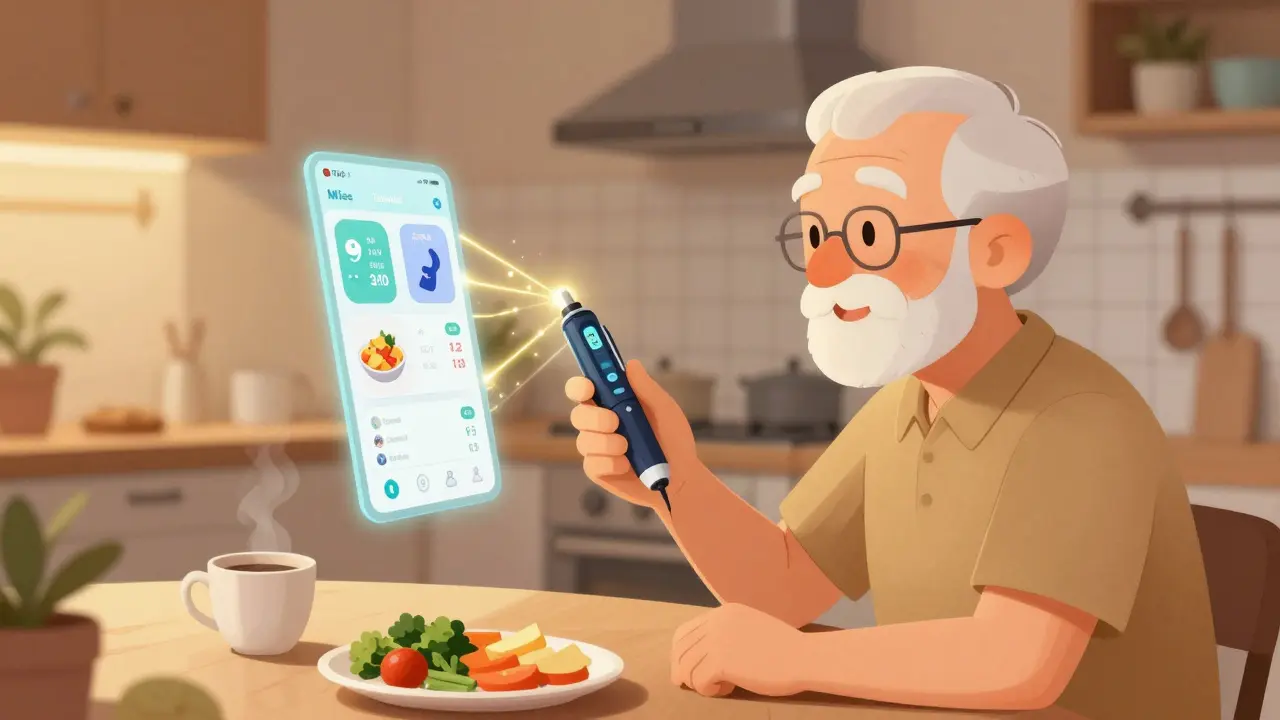
Apps That Tie It All Together
Your CGM and smart pen don’t work in isolation. They feed data into apps. mySugr, One Drop, and Glucose Buddy are the most popular. But not all apps play nice with all devices. Only 43% of third-party apps connect with every major CGM. That’s a problem. You don’t want to juggle three apps just to see your numbers in one place. The best apps don’t just show graphs-they help you understand them. They flag patterns: “Your sugar spikes every time you eat rice.” “You’re low every morning after gym class.” They let you log meals, exercise, stress, and sleep. Then they show you what actually matters: what changes your numbers. Some apps even predict your next drop. Dexcom and EarlySense are launching a feature in mid-2026 that uses machine learning to warn you 30 minutes before your sugar crashes. That’s not science fiction-it’s coming next year.The Hidden Problems
It’s not all perfect. Sensor adhesion is a nightmare for many. If you sweat a lot, swim often, or live in a humid place like Sydney, your sensor might peel off after five days instead of 14. Abbott and Dexcom both offer extra adhesive patches-but they’re not foolproof. Then there’s cost. Even with insurance, a CGM sensor can cost $200-$300 every two weeks. That’s $4,000-$6,000 a year. Uninsured patients pay full price. Medicare expanded coverage in 2024, and usage among seniors jumped from 2% to nearly 30%. But 41% of low-income patients still can’t get one. That’s not just a financial problem-it’s a health justice issue. Data security is another concern. A 2025 JAMA study found 63% of CGM systems had vulnerabilities. Someone could, in theory, hack your device and change your glucose readings. It’s rare-but it’s possible. Manufacturers are fixing it, but it’s not solved yet.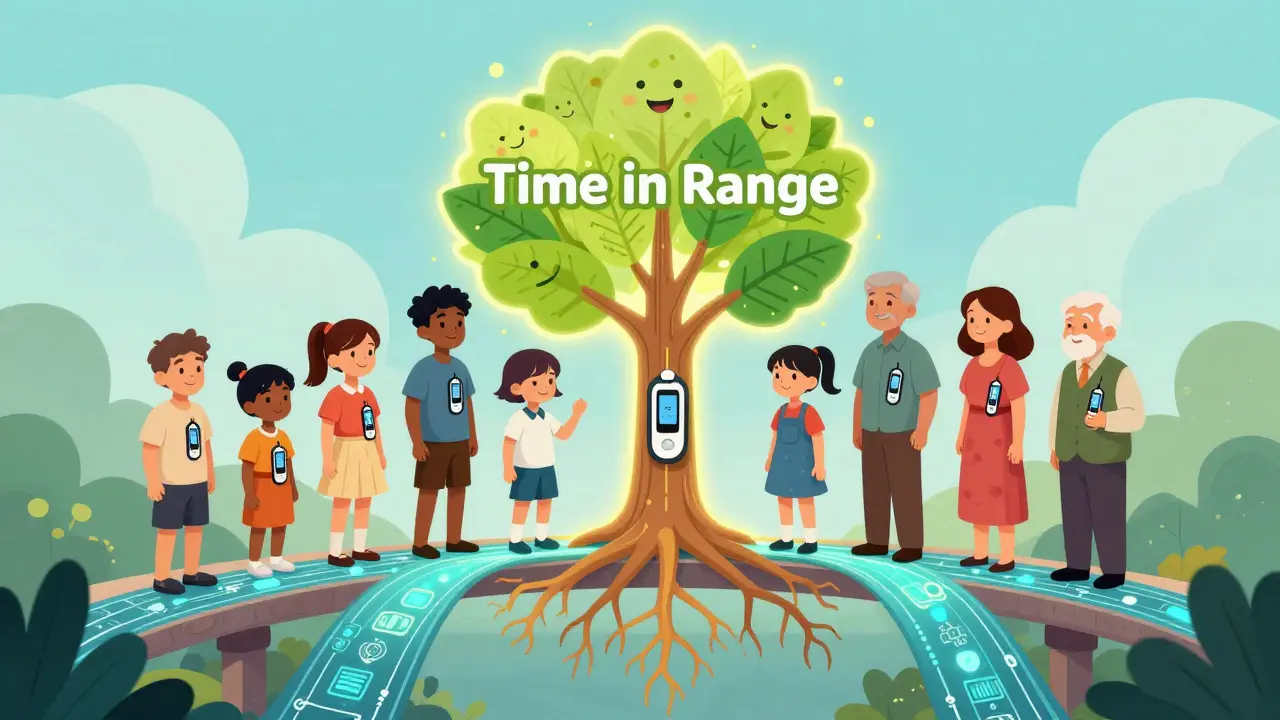
Getting Started: What You Actually Need to Do
If you’re thinking about trying a CGM, here’s what works:- Ask your doctor for a prescription. Even if you can buy one over-the-counter, a prescription helps with insurance.
- Get trained. 78% of people who stick with CGMs had formal training. Don’t skip this. Learn how to interpret trends, not just numbers.
- Customize your alerts. Default settings are too loud. Set your low alarm at 70, not 60. Set your high alarm at 180, not 200. You’ll stop ignoring them.
- Sync your app. Make sure your CGM talks to your phone and your insulin pen (if you have one).
- Give it 30 days. The first week is overwhelming. The second week is confusing. By day 30, you’ll wonder how you lived without it.
What’s Next?
The future is merging. Imagine a CGM that talks to your smart pen, which talks to your insulin pump, which talks to your phone, which talks to your doctor’s system-all automatically. That’s already happening in clinics with systems like Tandem’s Control-IQ. One study showed people using Control-IQ with Ozempic lost 18 pounds in six months without more lows. Vaxess is testing a needle-free patch for semaglutide that could replace daily injections. Glucotrack’s implantable sensor could be approved by 2028. It’s tiny-three nickels thick-and lasts three years. No more changing sensors. No more tape. Just a small bump under your skin that never stops working. The goal isn’t just to manage diabetes. It’s to make it invisible. To stop living in fear of the next spike or crash. To sleep through the night. To eat without guilt. To live without being defined by your numbers.Frequently Asked Questions
Are CGMs accurate enough to replace fingersticks?
Yes, for most daily decisions. Modern CGMs like the FreeStyle Libre 3 and Dexcom G7 are accurate within 8-9% of lab results. They’re not perfect during rapid changes-like right after eating or exercising-but they’re far better at showing trends. You still need a fingerstick if your CGM reads very high or very low, or if you feel symptoms that don’t match the number.
Can I use a CGM if I have Type 2 diabetes and don’t take insulin?
The American Diabetes Association recommends CGMs for people with Type 2 diabetes on insulin. But many non-insulin users benefit too-especially if they’re on GLP-1 medications like Ozempic or have trouble controlling their sugar. A CGM can show you how food, stress, or sleep affects your levels, even without insulin. Some doctors prescribe them off-label for this reason.
How long do CGM sensors last?
Most last 10 to 14 days. Dexcom G7 and Abbott Libre 3 are approved for 14 days. Medtronic Guardian 4 sensors last 7 days. Some users stretch them to 17-21 days, but accuracy drops after the labeled time. Always follow manufacturer guidelines.
Do smart pens replace insulin pumps?
No. Smart pens record and suggest doses but don’t deliver insulin automatically. Insulin pumps do. Smart pens are for people who prefer injections but want better tracking. They’re simpler, cheaper, and easier to use than pumps. Many people use both-a smart pen for daily doses and a pump for basal insulin.
What if my insurance denies my CGM?
Denials are common, especially for Type 2 patients not on insulin. Ask your doctor to write a letter of medical necessity. Cite the ADA 2025 guidelines. If that fails, contact patient advocacy groups like the Diabetes Patient Advocacy Coalition-they help with appeals. Some manufacturers offer patient assistance programs for low-income users.
Can I swim or shower with a CGM?
Yes. All current CGMs are water-resistant. You can shower, swim, and sweat. But avoid saunas or hot tubs longer than 15 minutes-heat can affect accuracy. If your sensor starts peeling, use medical-grade adhesive patches or tape. Some users wrap the sensor in a waterproof bandage before swimming.
Are CGMs safe for kids?
Absolutely. The ADA recommends CGMs for children from diagnosis. Many parents say their child’s school life improved dramatically-teachers get alerts if sugar drops during class, and kids feel less singled out. Sensors are small, painless, and designed for active kids. Some even come in fun colors.
Will CGMs help me lose weight?
Not directly. But they help you see how food affects your sugar-and that’s powerful. If you notice your sugar spikes after pasta but not after vegetables, you’ll naturally choose better foods. When paired with GLP-1 drugs like Ozempic, CGMs help people lose weight without more lows. One study showed an average 18-pound loss over six months when CGMs were used with the drug.






Sharon Biggins
January 23, 2026 AT 10:39Just got my Libre 3 last week and I swear it's like having a personal health bodyguard. I used to wake up at 3am panicked, now I just check my phone and go back to sleep. Life changed.
Vatsal Patel
January 25, 2026 AT 07:29Oh great, another tech bro miracle cure. So now we’re supposed to trust a plastic sticker on our arm that ‘shows trends’? Last time I checked, glucose is still a molecule, not a vibe. You think your app knows your body better than your instincts? LOL. You’re just outsourcing your anxiety to Silicon Valley.
Helen Leite
January 27, 2026 AT 03:30THEY’RE HACKING OUR CGMS!!! I read this one post where a guy’s numbers went wild because someone remotely changed his readings!! I’m not wearing one until they fix the ‘security’ 😱📱💀
John McGuirk
January 28, 2026 AT 22:50Yeah right. The real reason CGMs are pushed so hard is so Big Pharma can sell you more insulin and apps. They don’t want you cured-they want you dependent. And don’t get me started on the cost. You’re paying $5k a year to be monitored like a lab rat. This isn’t medicine. It’s surveillance capitalism with a glucose sensor.
Kat Peterson
January 30, 2026 AT 01:47Okay but can we talk about how the Dexcom app looks like it was designed in 2012? 🤮 I’m crying. I need a CGM that matches my aesthetic. Also, why is everyone so obsessed with ‘time in range’? I just want to eat tacos without a panic attack 😭
Sushrita Chakraborty
January 31, 2026 AT 13:06While the technological advancements are indeed commendable, one must not overlook the socio-economic disparities in access. In India, where insulin costs are already prohibitive, the addition of CGMs as a ‘standard’ creates a two-tiered healthcare system. The ADA guidelines, though well-intentioned, lack global equity in implementation.
Husain Atther
January 31, 2026 AT 13:27Interesting read. I’ve been using Libre for two years now. The biggest change? I stopped blaming myself for every spike. The device doesn’t judge-it just shows. That’s peace of mind you can’t buy.
Josh McEvoy
February 2, 2026 AT 07:41smart pens are kinda lame tbh. why not just use your phone to log it? also why do they look like regular pens? like i just wanna know how much i took not pretend im a spy
Sawyer Vitela
February 2, 2026 AT 14:30MARD 8-9%? That’s 15mg/dL error at 180. That’s dangerous if you’re relying on it for dosing. Fingersticks still win for accuracy. Don’t be fooled.
Michael Camilleri
February 4, 2026 AT 00:01People think this tech is helping them but they’re just becoming slaves to data. You’re not your glucose number. You’re not your trend line. You’re not your app’s prediction. You’re a human being trying to live. And now you’ve outsourced your intuition to a screen that beeps at you every time you eat bread. Congrats. You’ve become a statistic with a Bluetooth connection.
Jamie Hooper
February 5, 2026 AT 17:30imagine if your sensor just fell off during a date 😭 like you’re holding hands and suddenly your arm is just… sticky tape and a little plastic thing? i need a better adhesive or a new life
Marlon Mentolaroc
February 6, 2026 AT 20:55My CGM told me my sugar was 240 after pizza. I took 2 units. 45 mins later it was 190. That’s the kind of real-time feedback you can’t get from a fingerstick. No magic, just math. And it works.
Shelby Marcel
February 8, 2026 AT 19:49wait so can the app predict my crash before it happens? like how? does it read my mind?? i need this