Danshen and Warfarin: Risks, Interactions, and What You Need to Know
When you take Danshen, a traditional Chinese herb used for heart health and circulation. Also known as Salvia miltiorrhiza, it's often taken as a supplement to support blood flow and reduce inflammation. Many people assume natural means safe—especially when it’s been used for centuries. But warfarin, a prescription blood thinner used to prevent clots in people with atrial fibrillation, artificial heart valves, or a history of stroke doesn’t play well with many herbs, and Danshen is one of the riskiest. Mixing them can throw your INR levels off balance, turning a controlled treatment into a life-threatening situation.
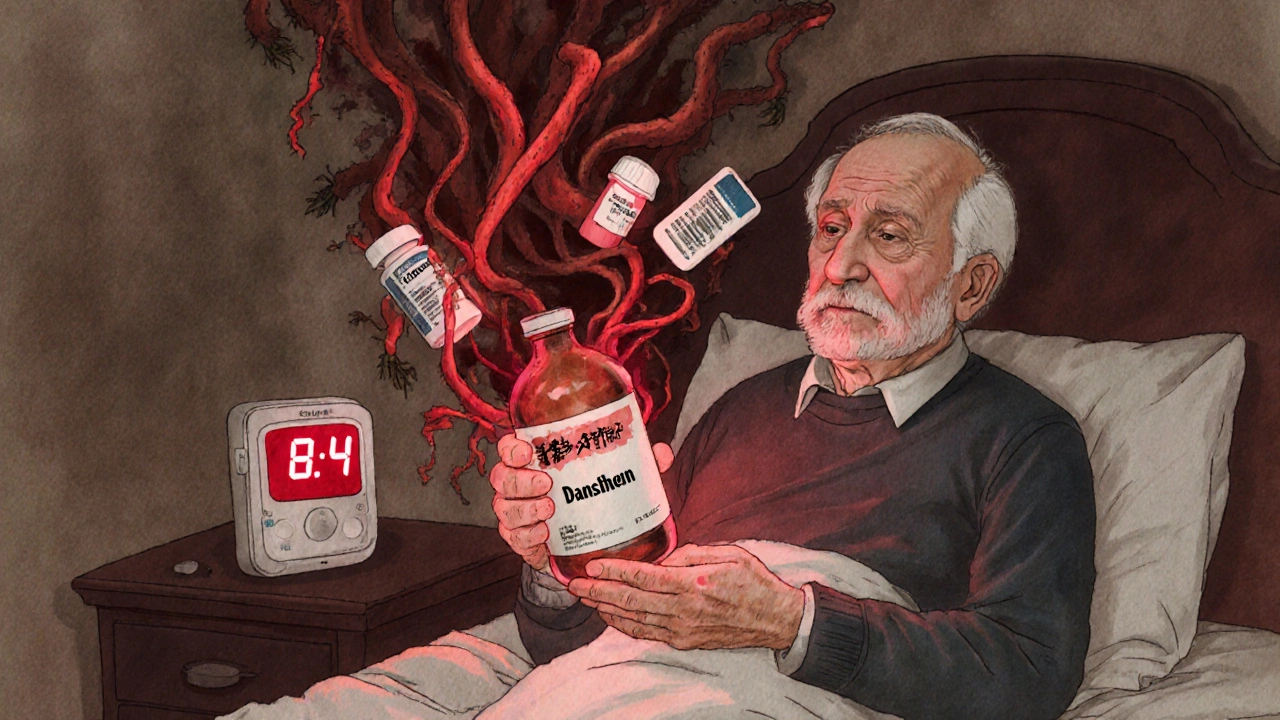
The problem isn’t just theoretical. Studies show Danshen can boost the effect of warfarin by slowing how fast your liver breaks it down. That means more warfarin stays in your system longer, increasing your chance of internal bleeding—bruising easily, nosebleeds that won’t stop, blood in urine or stool. One case report described a 72-year-old man on stable warfarin who started taking Danshen for chest pain. Within days, his INR jumped from 2.5 to 8.9. He ended up in the ER with a gastrointestinal bleed. He wasn’t taking high doses. He wasn’t reckless. He just didn’t know.
This isn’t about blaming supplements. It’s about awareness. Danshen is sold in health food stores, online, and even some pharmacies as a "heart-healthy" product. No label warns you it could interfere with your blood thinner. Meanwhile, warfarin has narrow margins—you need just the right dose. Too little, and you risk a clot. Too much, and you risk bleeding. Add Danshen into the mix, and you’re playing Russian roulette with your health.
Other herbs like ginkgo, garlic, and ginger can also affect warfarin, but Danshen stands out because it doesn’t just thin the blood—it directly interferes with how warfarin is processed. Even if you’ve been on warfarin for years without issues, adding Danshen changes the game. And stopping it suddenly isn’t always safe either. Your body adapts. Sudden changes can cause rebound clotting.
If you’re on warfarin, the only safe approach is to tell your doctor and pharmacist about every supplement you take—no matter how "natural" it seems. Don’t assume they’ll ask. Don’t wait for a warning label. Bring your bottle or list to your next appointment. Ask: "Could this interfere with my blood thinner?" If your provider isn’t sure, they can check databases or consult a pharmacist who specializes in drug interactions. There are safer ways to support heart health without risking bleeding. Exercise, a low-sodium diet, and quitting smoking all help more than any herb.
What you’ll find in the posts below are real, practical stories and science-backed guides on how medications and supplements interact. From how dairy blocks osteoporosis drugs, to why rifampin ruins birth control, to what happens when you mix antibiotics with other pills—these aren’t hypotheticals. These are situations real people face every day. The same care you take with your prescription matters just as much with what you buy off the shelf. Your health isn’t a guessing game. It’s a conversation—with your body, your meds, and your care team.
25
Danshen and Heart Medications: Serious Interaction Risks You Can't Ignore
Danshen, a popular herbal supplement for heart health, can dangerously interact with blood thinners like warfarin and rivaroxaban, causing life-threatening bleeding. Learn why this interaction is so risky and what to do if you're taking both.