25
Danshen and Heart Medications: Serious Interaction Risks You Can't Ignore
Danshen Interaction Risk Calculator
What is INR?
INR measures blood clotting time. Normal range for most patients on blood thinners is 2.0-3.0. Levels above 4.0 indicate dangerous bleeding risk. Danshen can cause INR to spike unexpectedly.
Every year, thousands of people take Danshen thinking it’s a safe, natural way to support heart health. But what they don’t realize is that this herbal supplement can turn life-saving heart medications into dangerous combinations - sometimes with deadly results.
What Is Danshen, Really?
Danshen, also known as Salvia miltiorrhiza or red sage, isn’t some new-age trend. It’s been used in Traditional Chinese Medicine for over 1,800 years. Its roots are dried and made into teas, pills, or injections - especially in China, where it’s officially approved for treating angina, heart attacks, and stroke recovery.
But here’s the catch: Danshen isn’t one single chemical. It’s a mix of at least 20 active compounds, including tanshinones and salvianolic acids. These work together to thin the blood, widen arteries, and lower blood pressure. Sounds good, right? Not when you’re already on heart meds.
Unlike pharmaceuticals, Danshen supplements vary wildly in strength. One bottle might have 0.05% tanshinone; another might have 5.2%. That’s more than a 100-fold difference. There’s no standard dose. No reliable way to know what you’re actually swallowing.
Why Danshen Is a Hidden Danger with Blood Thinners
If you’re taking warfarin (Coumadin), rivaroxaban (Xarelto), apixaban (Eliquis), or any other blood thinner, Danshen is not optional to avoid - it’s a red flag.
Here’s how it works: Danshen blocks the liver enzymes that break down these medications. Specifically, it shuts down CYP2C9, the same enzyme warfarin relies on. That means your blood thinner stays in your system longer - and stronger.
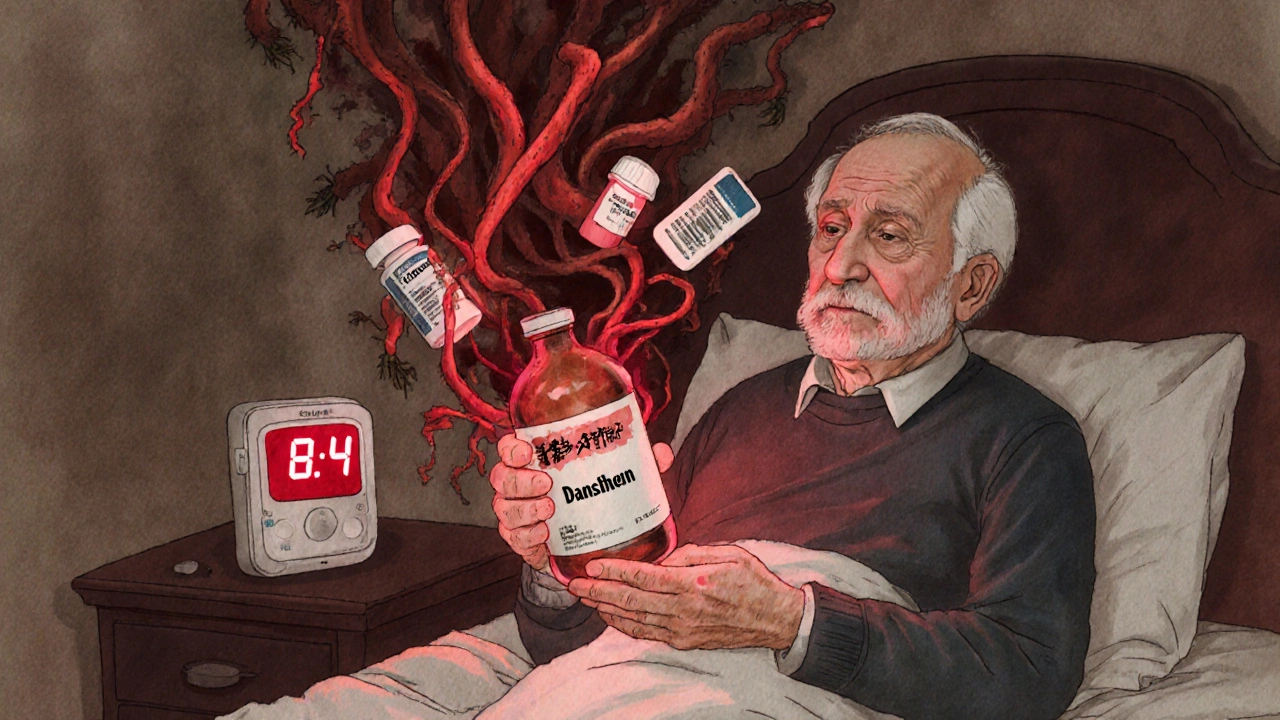
The results? Dangerous spikes in INR levels. INR measures how long your blood takes to clot. Normal for someone on warfarin? Between 2.0 and 3.0. Anything above 4.0 is risky. Above 6.0? That’s a medical emergency.
Case after case proves this isn’t theoretical:
- A 62-year-old man on warfarin for a mechanical heart valve took Danshen for two weeks. His INR shot to 8.4. His hemoglobin dropped to 7.6 g/dL - a sign of severe internal bleeding.
- A 48-year-old woman saw her INR jump from 2.5 to 5.6 after taking Danshen every other day for a month. She needed hospitalization.
- In Taiwan, researchers tracked 17 patients over four years. All were on warfarin. All took Danshen. Their INR levels jumped from an average of 2.3 to 5.8 - without changing their warfarin dose.
And it’s not just warfarin. Newer drugs like rivaroxaban are also at risk. Studies show Danshen slows down how fast your body clears rivaroxaban - meaning higher drug levels, higher bleeding risk, and no easy way to reverse it.
No Reversal Agent. No Safety Net.
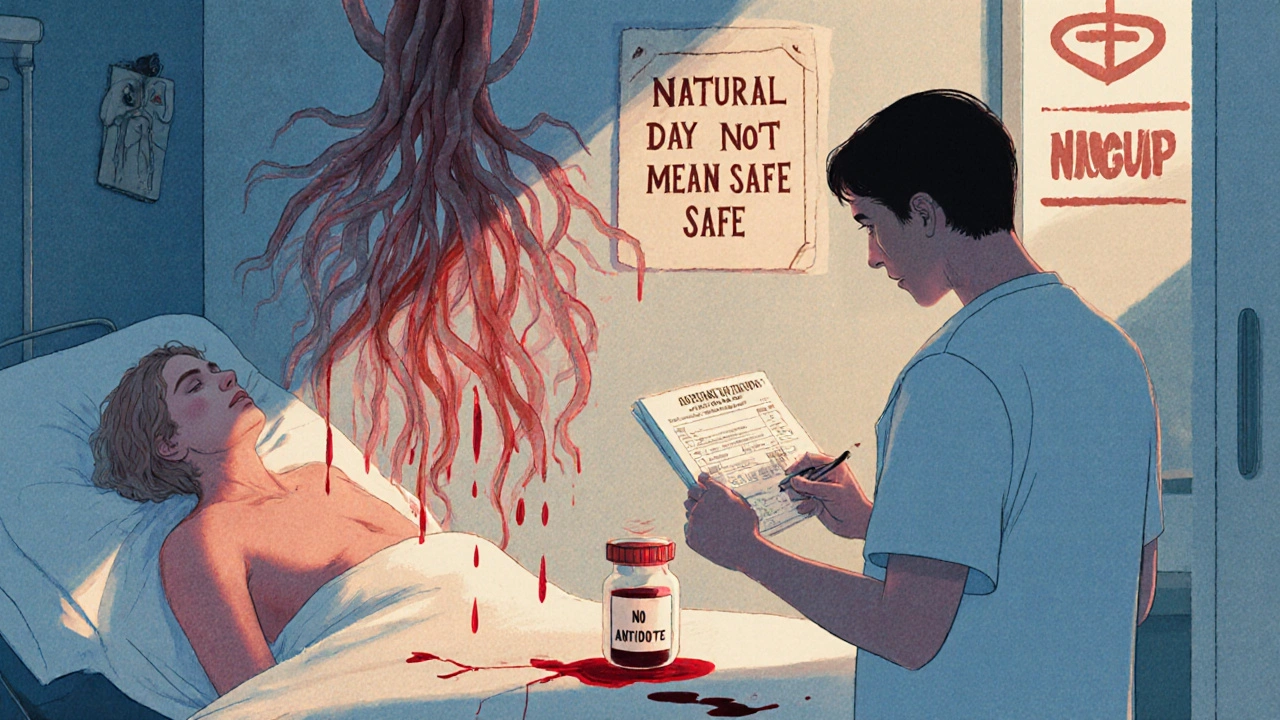
When someone overdoses on warfarin, doctors have vitamin K. For Xarelto or Eliquis, there’s andexanet alfa. But if Danshen causes dangerous bleeding? There’s no antidote.
That’s not a minor inconvenience. That’s a life-threatening gap in medical care. Emergency rooms aren’t equipped to reverse Danshen’s effects. No lab test can tell you how much is in your system. No drug can undo it.
And here’s the worst part: most people don’t even tell their doctors they’re taking it.
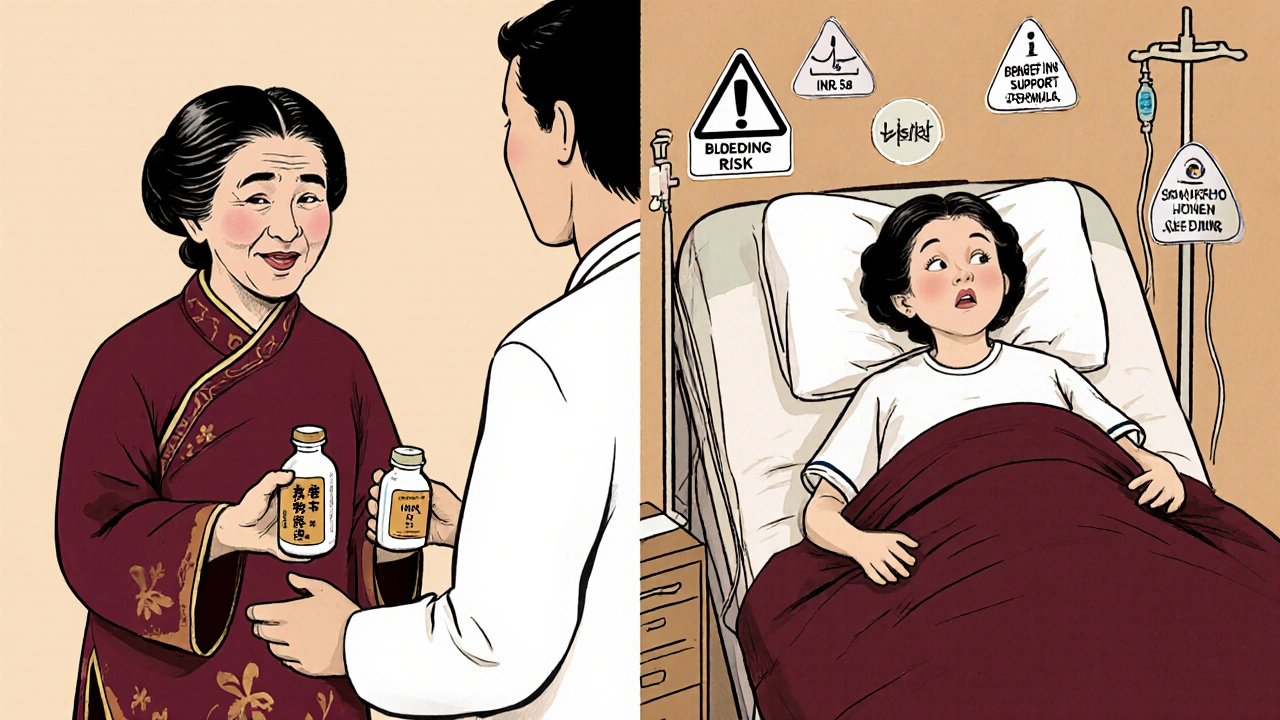
A 2019 study found only 28% of people using herbal supplements mentioned them to their physician. Why? They think it’s “natural,” so it’s safe. Or they’re afraid their doctor will judge them. Or they were told by a “TCM practitioner” it’s fine to mix with prescriptions.
It’s not fine.
What the Experts Say - No Minimizing It
Let’s be clear: this isn’t a debate. This is a consensus.
- The Cleveland Clinic says: “It is contraindicated to use warfarin and Danshen concurrently.”
- WebMD labels the interaction as “Major - Do not take this combination.”
- The Natural Medicines Comprehensive Database gives it the same warning.
- Dr. Edward Phillips at Mayo Clinic says: “Danshen can interact strongly with some heart medicines... and may raise your risk of bleeding.”
- The American Heart Association warns: “Natural does not mean safe.”
Even the European Medicines Agency requires warning labels on Danshen products sold in Europe. China approves it as a prescription medicine - but only in controlled hospital settings with monitoring. In the U.S.? It’s sold over the counter, with no warning labels required.
Who’s Most at Risk?
Anyone on anticoagulants is at risk. But certain groups are more vulnerable:
- Chinese immigrants or those with cultural ties to TCM - 41.7% use Danshen regularly, and only 32% tell their doctor.
- Older adults with atrial fibrillation, mechanical heart valves, or a history of stroke.
- People taking multiple medications - Danshen doesn’t just clash with blood thinners. It can interfere with beta-blockers, statins, and even some blood pressure pills.
- Those who buy supplements online - no regulation means you could be getting anything from pure Danshen to heavy metal contamination.
And the market is growing. The global Danshen supplement industry was worth $1.23 billion in 2022. By 2027, it’s projected to hit $1.84 billion. More people are buying it. More people are getting hurt.
What Should You Do?
If you’re taking any heart medication - especially a blood thinner - here’s your action plan:
- Stop taking Danshen immediately. Don’t wait. Don’t “try a little.” Even small doses can trigger a reaction.
- Tell your doctor - even if you think they’ll dismiss it. Your life depends on this conversation. Bring the bottle with you.
- Get your INR checked. If you’ve taken Danshen in the last 2 weeks, ask for an urgent INR test. Don’t wait for your next routine checkup.
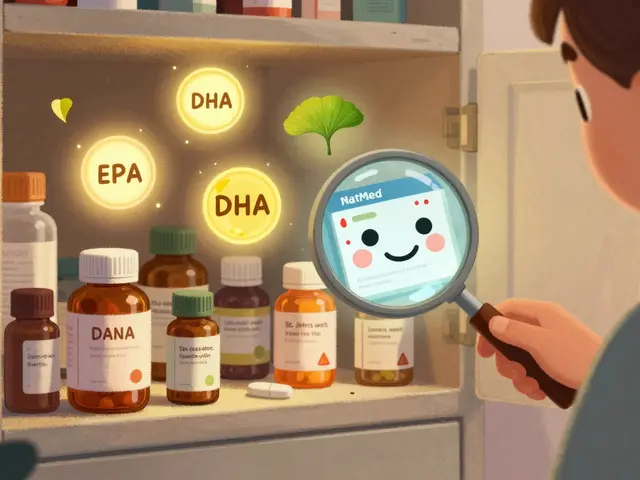
- Check every supplement label. Danshen might be listed as “Salvia miltiorrhiza,” “Red Sage,” “Dan Shen,” or hidden in multi-ingredient formulas labeled “Heart Support” or “Circulation Formula.”
- Don’t trust “natural” claims. The FDA doesn’t test supplements for safety or interactions before they hit shelves. What’s natural isn’t always safe - arsenic is natural, too.
If you’re considering Danshen for heart health, talk to your cardiologist first. There are proven, regulated treatments with known risks and benefits. Herbal supplements don’t offer that clarity.
The Bigger Problem: We’re Missing the Warning Signs
This isn’t just about Danshen. It’s about how we treat supplements.
We treat them like vitamins - harmless, harmless, harmless. But they’re not. They’re powerful plant extracts with complex chemistry. They interact. They accumulate. They hide in plain sight.
Doctors aren’t trained to ask about herbs. Patients aren’t trained to report them. The system is broken.
The American College of Cardiology now recommends routine screening for Danshen use in all patients on anticoagulants - especially those of Asian descent. That’s a start. But it needs to be standard everywhere.
Until then, the only person who can protect you is you.
Frequently Asked Questions
Can I take Danshen if I’m not on blood thinners?
Even if you’re not on blood thinners, Danshen can lower your blood pressure and affect your heart rhythm. If you have any heart condition - high blood pressure, arrhythmia, or a history of heart attack - it’s not safe to take without medical supervision. There’s no proven benefit that outweighs the risk for healthy people.
How long does Danshen stay in my system?
There’s no clear answer. Because Danshen isn’t standardized, we don’t know how long its active compounds last in the body. Some studies suggest effects can linger for days. If you’ve taken it and need surgery or start a new medication, wait at least 2 weeks - and tell your doctor you took it.
Are there safer herbal alternatives for heart health?
There’s no herbal substitute that’s been proven as safe and effective as prescribed heart medications. Some, like hawthorn or garlic, have mild benefits - but they also carry interaction risks. The safest approach is to stick with treatments your doctor has approved, monitored, and adjusted for your specific needs.
Can Danshen interact with other heart meds besides blood thinners?
Yes. Danshen can interfere with beta-blockers like metoprolol, calcium channel blockers like amlodipine, and even statins like atorvastatin. It affects liver enzymes that process many drugs. If you’re on any heart medication, assume Danshen could interfere - until proven otherwise by your doctor.
Why is Danshen sold in the U.S. if it’s so dangerous?
The FDA doesn’t approve dietary supplements before they’re sold. It only steps in after harm is reported. Danshen is sold as a “dietary supplement,” so it doesn’t need safety or interaction studies. That’s why you see it on shelves - not because it’s proven safe, but because the system allows it.
What should I do if I’ve already taken Danshen with my heart medication?
Stop taking Danshen immediately. Contact your doctor or go to the ER if you notice unusual bruising, bleeding gums, nosebleeds, dark stools, or sudden weakness. Get your INR tested as soon as possible. Don’t wait for symptoms - the damage can be silent until it’s severe.
Next Steps: Protect Yourself
Keep a list of every supplement, herb, and vitamin you take. Bring it to every doctor’s appointment. Ask: “Could this interact with my heart meds?” Don’t assume your doctor knows. Don’t assume it’s safe because it’s natural.
Heart disease is serious. Medications save lives. But supplements like Danshen can undo that protection - quietly, suddenly, and without warning. You don’t need to guess. You don’t need to risk it. Just say no - and talk to your doctor.






Gina Banh
November 25, 2025 AT 23:59Danshen isn't some herbal fairy dust. It's a potent pharmacological agent with zero regulation, and people are dying because they think 'natural' means 'no consequences.' If you're on warfarin and you're still taking this crap, you're not being holistic-you're being reckless.
Deirdre Wilson
November 26, 2025 AT 11:30I used to take Danshen ‘for circulation’-felt like my fingers tingled less, y’know? Then my grandma had a stroke on Xarelto and I dug into this stuff. Holy hell. I didn’t realize my ‘natural remedy’ could turn my blood into soup. I threw out every bottle. No regrets.
Damon Stangherlin
November 27, 2025 AT 09:31Hey, I’m a big fan of natural healing, but this post really opened my eyes. I’ve been taking fish oil and garlic for heart health-maybe I should check if those interact too? Thanks for the wake-up call. I’ll bring my supplement list to my next appt. 🙏
Ryan C
November 27, 2025 AT 15:09Actually, the CYP2C9 inhibition is well-documented in Pharmacogenomics Journal 2021, Vol. 12(3), pp. 204–218. Also, tanshinone IIA has a half-life of ~8.7 hours in humans, but its metabolites persist for up to 72 hours. So ‘wait 2 weeks’? That’s conservative. Try 14–21 days pre-op. And yes, the FDA’s DSHEA loophole is a national disgrace. 🚩
Dan Rua
November 27, 2025 AT 20:49Thanks for laying this out so clearly. I’ve got a cousin in China who swears by Danshen after her bypass. I’m gonna send her this. She trusts her TCM doctor more than her cardiologist-but if she sees this from a U.S. doc, maybe it’ll click. We need more of these bridges between traditions and evidence.
Mqondisi Gumede
November 29, 2025 AT 15:28Douglas Fisher
November 30, 2025 AT 08:55I just… I just want to say thank you. This post made me cry. My mom took Danshen for ‘heart support’ after her angioplasty. She didn’t tell anyone. She had a GI bleed last winter. We thought it was stress. Turns out… it was this. I’m so angry at myself for not asking. I’m sharing this with everyone I know.
Albert Guasch
December 1, 2025 AT 20:09It is imperative to underscore the clinical significance of herb-drug interactions within the context of cardiovascular pharmacotherapy. The absence of standardized dosing, coupled with the non-linear pharmacokinetics of tanshinone derivatives, renders the concurrent administration of Danshen and anticoagulants a contraindicated practice of unacceptable risk. Regulatory reform is not merely advisable-it is a moral imperative.
Vanessa Carpenter
December 3, 2025 AT 13:21My dad’s on Eliquis. He started taking Danshen after his friend’s acupuncturist said it was ‘gentle.’ I didn’t yell. I just printed this post and put it on his fridge next to his pill organizer. He read it. He stopped. We’re both breathing easier now.
Bea Rose
December 4, 2025 AT 15:58Michael Collier
December 5, 2025 AT 11:46As a healthcare administrator, I’ve reviewed dozens of adverse event reports tied to herbal supplements. The pattern is consistent: lack of disclosure, lack of provider education, lack of regulatory oversight. This is not an isolated case-it’s systemic. We need mandatory supplement disclosure forms in EHRs. Every clinic. Every hospital. Now.
Shannon Amos
December 7, 2025 AT 04:59So let me get this straight… you’re telling me I can’t take the ‘heart hero’ herb my Chinese auntie swears by… because science? 😭 I mean… fine. But can I at least take it on Tuesdays? Just for vibes?
stephen riyo
December 7, 2025 AT 08:36Wait… so if I take Danshen, and I’m on blood pressure meds, and I also take magnesium… does that mean I could… like… die? Like, right now? I think I just panicked. I’m going to check my bottle right now. Oh my god. It’s in my ‘Circulation Boost’ blend. I’m calling my doctor. I’m so scared.