24
Antiretroviral Generics in Africa: How Local Production Is Transforming HIV Treatment Access
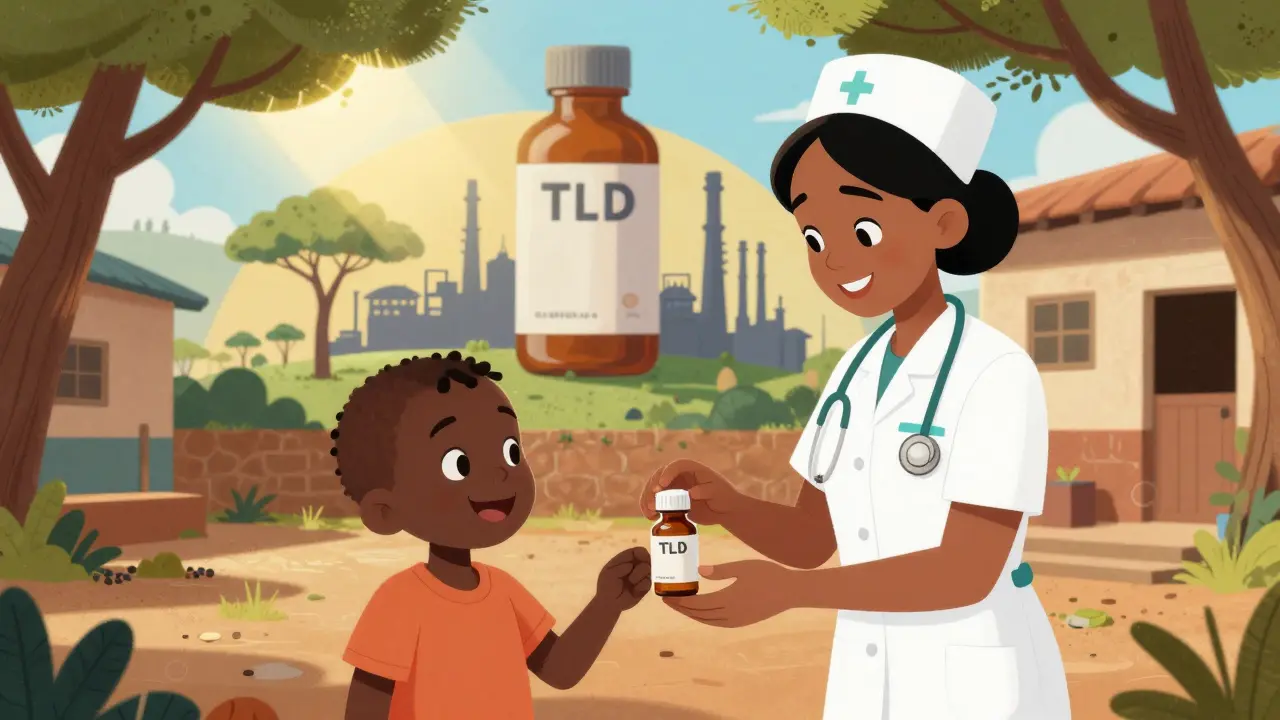
For decades, African countries relied on medicines shipped from India, Europe, and the U.S. to treat HIV. Even though antiretroviral drugs saved millions of lives, the system was fragile. When global supply chains broke during the pandemic, clinics ran out of pills. Patients missed doses. Viral loads rose. The cost wasn’t just medical-it was human.
The Turning Point: African-Made HIV Drugs Arrive
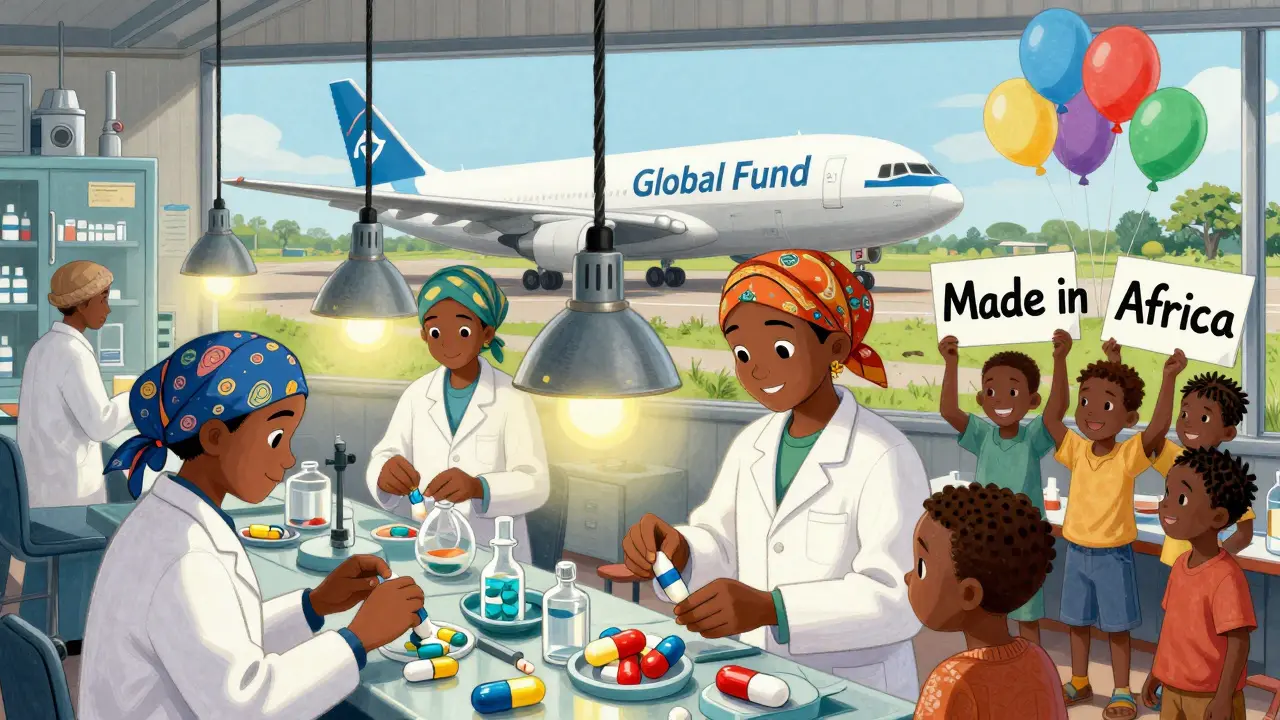
On May 6, 2025, something historic happened. The Global Fund delivered its first shipment of antiretroviral generics made in Africa. The medicine? TLD-a single pill combining tenofovir, lamivudine, and dolutegravir. It was produced by Universal Corporation Ltd in Kenya, the first African company to earn WHO prequalification for this first-line HIV treatment. The pills went to Mozambique, enough to treat over 72,000 people each year.This wasn’t just another drug shipment. It was a shift in power. For the first time, African manufacturers weren’t just suppliers-they were trusted partners in global health. WHO prequalification meant the pills met the same quality, safety, and effectiveness standards as those made in the U.S. or Switzerland. No compromises. No shortcuts.
Why TLD Matters More Than Ever
TLD isn’t just another HIV drug. It’s the current gold standard for first-line treatment in low-resource settings. Compared to older regimens, dolutegravir works better, causes fewer side effects, and makes it harder for the virus to become resistant. That’s critical in places where patients can’t easily switch drugs if one fails. A single pill taken once a day. No refrigeration. No complex dosing. That’s the kind of simplicity that saves lives in rural clinics with no lab, no pharmacy, and sometimes no electricity.Before TLD, many African countries still used older drugs like efavirenz. Those had more side effects-dizziness, nightmares, depression. Some patients stopped taking them. Now, with TLD, adherence is higher. Viral suppression rates are climbing. In Eastern and Southern Africa, 78% of people on treatment now have an undetectable viral load. That’s up from just 30% in 2010.
From 80% Imports to Local Production
Until recently, African nations imported about 80% of their medicines. That meant delays, price spikes, and vulnerability to global shocks. When COVID hit, countries scrambled for masks, tests, and drugs. Some waited months. Others paid triple the price.Now, that’s changing. Kenya, Nigeria, Rwanda, South Africa, and Ethiopia are building new manufacturing plants. The African Union’s Pharmaceutical Manufacturing Plan for Africa (PMPA) aims to raise local production from just 2-3% of the continent’s needs to 40% by 2040. That’s ambitious. But it’s not fantasy. It’s already happening.
The Global Fund isn’t just buying drugs-it’s shaping the market. By committing to buy African-made ARVs, they’re giving manufacturers the confidence to invest in factories, hire engineers, train technicians, and upgrade labs. Predictable demand = sustainable business. That’s how you build an industry, not just a project.
More Than Pills: Diagnostics and Long-Acting Shots
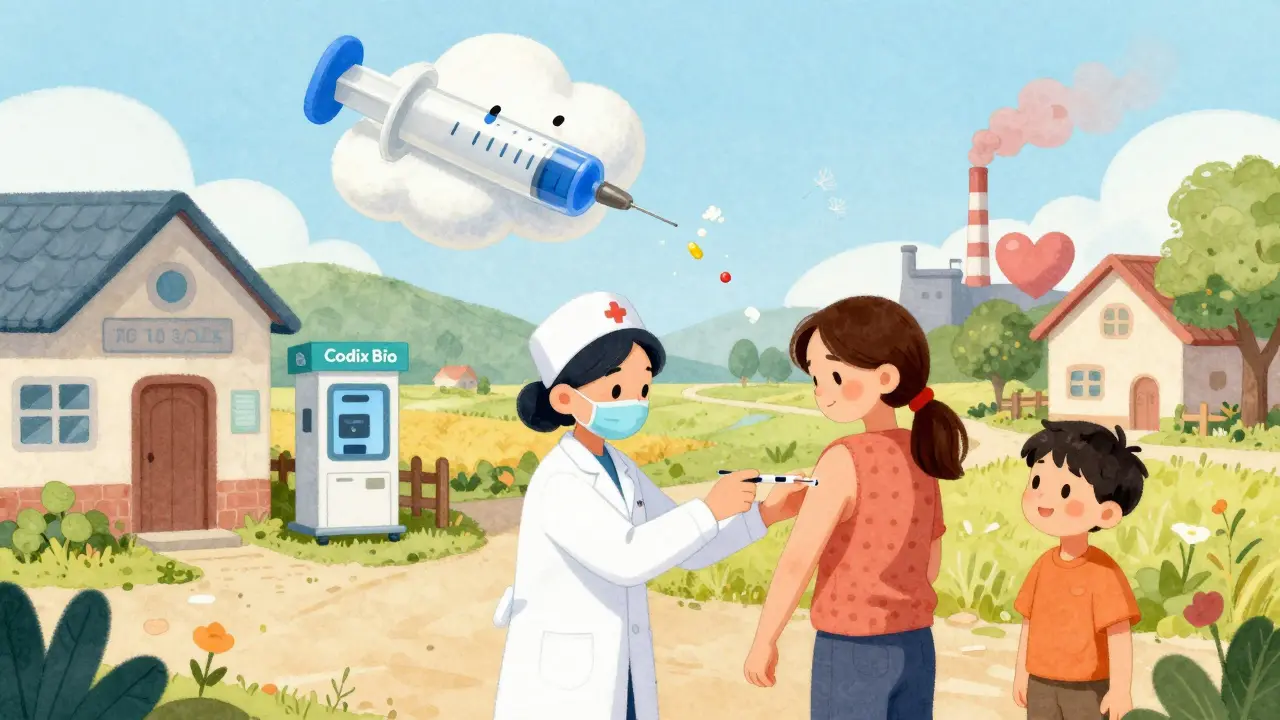
Treatment isn’t just about pills. You need to know who has HIV. You need to test them fast. That’s why Codix Bio in Nigeria, with support from WHO and the Medicines Patent Pool, is now making HIV rapid diagnostic tests locally. No more waiting weeks for results. In remote villages, a nurse can get a result in 20 minutes. That’s life-changing.And now, the future is arriving in syringes. In October 2025, South Africa became the first African country to register the twice-yearly HIV injection, cabotegravir long-acting (CAB LA). No daily pills. Just two shots a year. For people who struggle with adherence, this is revolutionary. Gilead has already licensed six African companies to make generic versions. Experts say prices could drop 80-90% below the brand name. That’s not just affordable-it’s accessible.
Even more promising: lenacapavir, a new long-acting drug for prevention (PrEP). Gilead is supplying it at no profit to 18 high-burden countries through PEPFAR and the Global Fund. Regulatory submissions are underway. By 2026, these drugs will be rolling out across Sub-Saharan Africa. This isn’t science fiction. It’s policy in action.
The Numbers Don’t Lie
Sub-Saharan Africa has 65% of the world’s HIV cases but only 17% of the global population. In 2010, 1.3 million people died from AIDS. In 2022, that number dropped to 630,000. Why? Because more people got treatment. More people stayed on it. More people lived.But demand is huge. Africa needs about 15 million person-years of first-line ARV treatment every year. Right now, African manufacturers can supply maybe 1-2 million of those. That’s a gap. But it’s closing. New factories are set to open by late 2025. By 2030, African-made generics could cover 20-30% of the continent’s needs. That’s not enough yet-but it’s a start.
Challenges Still Remain
This isn’t a fairy tale. There are still roadblocks.Regulatory systems vary wildly. In some countries, approval takes years. In others, it’s fast-like South Africa, which approved CAB LA in record time. Harmonizing standards across 54 nations is a massive task. The NextGen market-shaping approach is trying to fix that-aligning regulators, reducing duplication, and speeding up approvals.
Financing is another issue. Building a pharmaceutical plant costs hundreds of millions. Most African governments can’t pay alone. That’s why partnerships matter. Unitaid, the Gates Foundation, CIFF, and the Global Fund are all investing. But they need African governments to match that commitment-with policy, with infrastructure, with political will.
And then there’s the question of R&D. Most drugs were invented in the West. African scientists are rarely leading trials for drugs tailored to African strains of HIV or co-infections like TB. Calls for ‘Africanizing research’ are growing. Why? Because what works in New York might not work in Nairobi. Local science needs local leadership.
What’s Next? The Road to Self-Reliance
The goal isn’t just to make more pills. It’s to build health sovereignty. To stop being a customer and become a creator. To turn a crisis into a catalyst.The Global Fund’s Grant Cycle 7 (GC7) will soon announce which countries qualify for this new African-made ARV procurement model. That’s the next step. More countries. More factories. More jobs. More control.
When a Nigerian company makes an HIV test, when a Kenyan factory bottles TLD, when a South African clinic gives a two-shot injection instead of 365 pills-it’s not just medicine changing. It’s dignity changing. It’s power shifting.
For too long, Africa was seen as a recipient. Now, it’s becoming a producer. And that’s the most powerful medicine of all.
Are African-made antiretroviral drugs safe and effective?
Yes. All African-made antiretroviral drugs approved for Global Fund procurement must pass WHO prequalification. This means they meet the same strict quality, safety, and efficacy standards as drugs made in the U.S., EU, or Japan. Universal Corporation Ltd’s TLD regimen, for example, was tested in multiple clinical trials and reviewed by independent experts before approval. There is no difference in performance between WHO-prequalified generics made in Africa and those made elsewhere.
Why is local production better than importing from India?
While Indian generics cut costs dramatically in the 2000s and 2010s, they still rely on long, fragile supply chains. Shipping from India to Mozambique can take 6-8 weeks. Local production cuts delivery time to days, reduces shipping costs, and builds resilience. If a crisis hits-like a pandemic or conflict-African countries won’t be left waiting. Local manufacturing also creates jobs, builds technical skills, and keeps money circulating within the continent.
How many people in Africa are currently on antiretroviral therapy?
As of 2023, approximately 28 million people in Sub-Saharan Africa were receiving antiretroviral therapy. That’s up from just 3 million in 2010. Eastern and Southern Africa have the highest coverage, with 83% of people living with HIV on treatment. Western and Central Africa lag behind at 76%, but progress is accelerating thanks to new access programs and local manufacturing.
What is the 95-95-95 target for HIV, and is Africa on track?
The 95-95-95 target means 95% of people living with HIV know their status, 95% of those diagnosed are on treatment, and 95% of those on treatment have suppressed viral loads. In 2023, Eastern and Southern Africa reached 93%-83%-78%. Western and Central Africa reached 81%-76%-70%. While not yet meeting the goal, progress has been dramatic. In 2010, only 30% of people in Sub-Saharan Africa were on treatment. Today, it’s over 80% in many areas.
Will generic long-acting HIV injections be available in Africa soon?
Yes. South Africa already registered the twice-yearly cabotegravir injection in October 2025. Six African manufacturers have licenses to produce generic versions, and pricing is expected to drop by 80-90% compared to the brand. The first generic versions are expected to reach clinics in 2026. This will be a game-changer for people who struggle with daily pills, especially in remote areas with limited healthcare access.






Josh josh
January 25, 2026 AT 05:11bella nash
January 27, 2026 AT 02:06SWAPNIL SIDAM
January 28, 2026 AT 07:33Geoff Miskinis
January 29, 2026 AT 09:49Sally Dalton
January 29, 2026 AT 15:05Betty Bomber
January 30, 2026 AT 02:59Mohammed Rizvi
January 30, 2026 AT 12:55eric fert
January 31, 2026 AT 14:49Curtis Younker
February 1, 2026 AT 17:04Shawn Raja
February 2, 2026 AT 16:07Ryan W
February 4, 2026 AT 13:13Allie Lehto
February 5, 2026 AT 00:53Henry Jenkins
February 6, 2026 AT 21:53Dan Nichols
February 7, 2026 AT 03:56Renia Pyles
February 7, 2026 AT 13:21