24
Anaphylaxis from Medications: How to Spot and Stop a Severe Reaction

Medication Reaction Assessment Tool
Instructions: Select all symptoms currently being experienced after taking a medication. This tool uses the ABCD mnemonic and AAAAI guidelines to help gauge the severity of the reaction.
Symptom Checklist
Disclaimer: This tool is for educational purposes and is not a substitute for professional medical diagnosis or treatment. If you suspect a severe allergic reaction, seek emergency medical attention immediately.
Imagine sitting in a clinic chair, receiving a routine IV medication, when suddenly your throat feels tight and your heart starts racing. For most, it's a scary moment; for some, it's a life-threatening emergency. Anaphylaxis is a severe, systemic allergic reaction that can cause the body to go into shock. When triggered by medications, it can happen in minutes, often catching both patients and medical staff off guard. While it sounds terrifying, the reality is that if you can spot the signs early and act fast with the right medication, it is a highly preventable tragedy.
What Exactly Happens During a Medication Reaction?
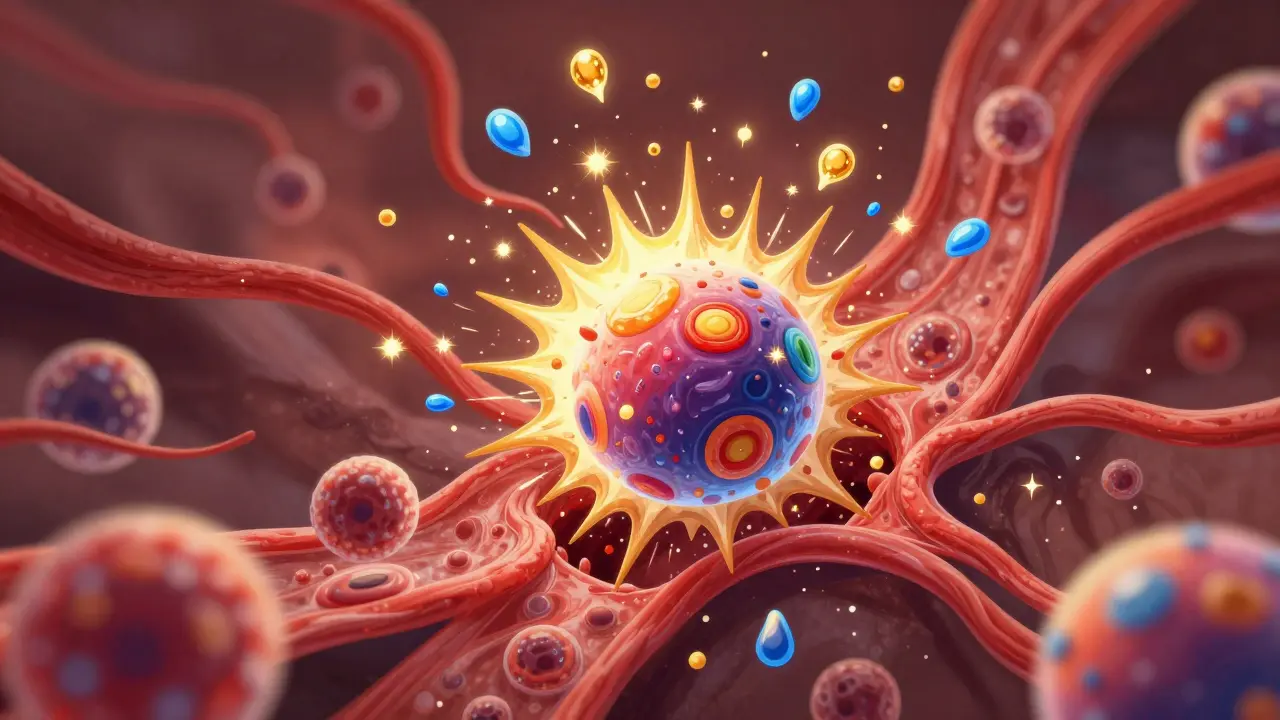
When your body decides a medicine is a threat, it triggers a massive chemical release. Specifically, IgE-mediated mast cell degranulation is a process where immune cells release a flood of chemicals like histamine and tryptase into the bloodstream. These chemicals cause your blood vessels to leak and your airways to narrow.
Unlike a simple rash, this is a multi-system failure. Your blood pressure can plummet (hypotension), your throat can swell shut (angioedema), and your lungs can seize up. According to the 2023 American Academy of Allergy, Asthma & Immunology (AAAAI) guidelines, a reaction is likely anaphylaxis if you experience acute onset of skin issues plus respiratory distress, or if two or more body systems (like the gut and the heart) are affected after taking a drug.
Common Medication Triggers and Their Timing
Not all drugs carry the same risk, and the speed of the reaction often depends on how the medicine enters your body. IV medications typically hit faster, with a median onset of 12 minutes, while oral meds might take closer to 28 minutes. In some rare cases, delayed reactions can surface up to 6 hours later.
The most frequent culprits include:
- Antibiotics: These are responsible for nearly 70% of drug-induced cases, with Penicillin being the most common trigger.
- NSAIDs: Nonsteroidal anti-inflammatory drugs (like aspirin or ibuprofen) cause about 15% of reactions.
- Monoclonal Antibodies: Modern biologics like rituximab are increasing in use and account for about 5.8% of cases.
- Chemotherapy agents, particularly those containing platinum.
| Symptom/Feature | Medication Trigger | Food Trigger |
|---|---|---|
| Hives/Skin Rash | 72% of cases | 89% of cases |
| Wheezing/Respiratory | 71% of cases | 54% of cases |
| Low Blood Pressure | 58% of cases | 39% of cases |
| Mortality Rate | Higher (approx 1.8%) | Lower (approx 0.7%) |
The Danger of Misdiagnosis: "Is it Just Anxiety?"
One of the scariest parts of medication-induced anaphylaxis is that it is frequently mistaken for something else. In a medical setting, a drop in blood pressure is often written off as a "vasovagal response" (fainting), or a patient's shortness of breath is dismissed as a panic attack. One patient reported that during a vancomycin infusion, nurses initially thought their distress was anxiety until their oxygen levels crashed to 82%.
There is also the "Red Man Syndrome" caused by rapid vancomycin infusion. This looks like an allergic reaction-flushing and itching-but it isn't true anaphylaxis because it doesn't typically cause the lungs to fail or blood pressure to drop. Mistaking the two can lead to unnecessary treatment halts or, worse, ignoring a real emergency.
How to Recognize and Respond: The Action Plan
If you suspect a reaction, don't wait for "all" the symptoms to appear. Use the ABCD mnemonic to assess the situation quickly:
- Airway: Is there swelling in the throat? Is the voice becoming hoarse?
- Breathing: Is the person wheezing or struggling to catch their breath?
- Circulation: Is the skin pale or clammy? Is the pulse weak or very fast?
- Dermatologic: Are there hives, itching, or swelling of the lips and tongue?
The gold standard treatment is Epinephrine, which is a synthetic version of the body's adrenaline that reverses airway constriction and raises blood pressure. Experts warn that delaying this shot beyond 30 minutes can increase the risk of death by 300%. The correct dose for adults is typically 0.3 to 0.5mg, injected into the mid-outer thigh.

Preventing Future Episodes
Once you've had a severe reaction, the goal is to make sure it never happens again. This starts with a rigorous allergy history. Many hospital errors occur simply because a patient's allergy list in the electronic record was incomplete. Be your own advocate: always tell your doctor the specific drug that caused the reaction and exactly what the symptoms were.
For those taking high-risk biologics, doctors often use premedication protocols. This might involve taking a corticosteroid or an antihistamine before the drug is administered to dampen the immune response. If you are high-risk, you should also carry an epinephrine auto-injector (like an EpiPen) at all times and know exactly how to use it.
How quickly does a medication reaction happen?
Most immediate reactions occur within 5 to 30 minutes after exposure, especially with IV drugs. However, some delayed reactions can take up to 6 hours to manifest. If you feel strange hours after a new medication, notify a provider immediately.
Can I take a medication if I've had a mild reaction before?
Never assume a mild reaction (like a few hives) means the next one will also be mild. Allergic sensitivity can increase over time, and a second exposure can trigger full-blown anaphylaxis. Consult an allergist for a safe alternative or a desensitization plan.
What is the difference between an allergy and a side effect?
A side effect is a known, predictable response to a drug (like nausea from an antibiotic). An allergy is an immune system overreaction. Anaphylaxis is the most extreme version of an allergic reaction, affecting multiple organs simultaneously.
Where is the best place to inject epinephrine?
The mid-outer thigh (vastus lateralis muscle) is the preferred site. It allows for the fastest absorption into the bloodstream and is the safest area to avoid hitting major nerves or blood vessels.
Do I still need to go to the ER if the EpiPen worked?
Yes. Epinephrine is a short-term rescue. Some people experience a "biphasic reaction," where the symptoms return hours after the initial dose wears off. Medical observation is essential to ensure the reaction is fully resolved.
What to do next
If you have experienced a medication reaction, your first step is to request a formal allergy test from a board-certified allergist. This removes the guesswork and prevents you from avoiding medications you might actually need. Next, update your medical records at every clinic you visit. Finally, if you've been prescribed an auto-injector, practice with a trainer device so that if an emergency happens, your muscle memory takes over and you can act without hesitation.