19
Out-of-Pocket Costs: How Generics Cut Your Drug Bills - and When They Still Hurt
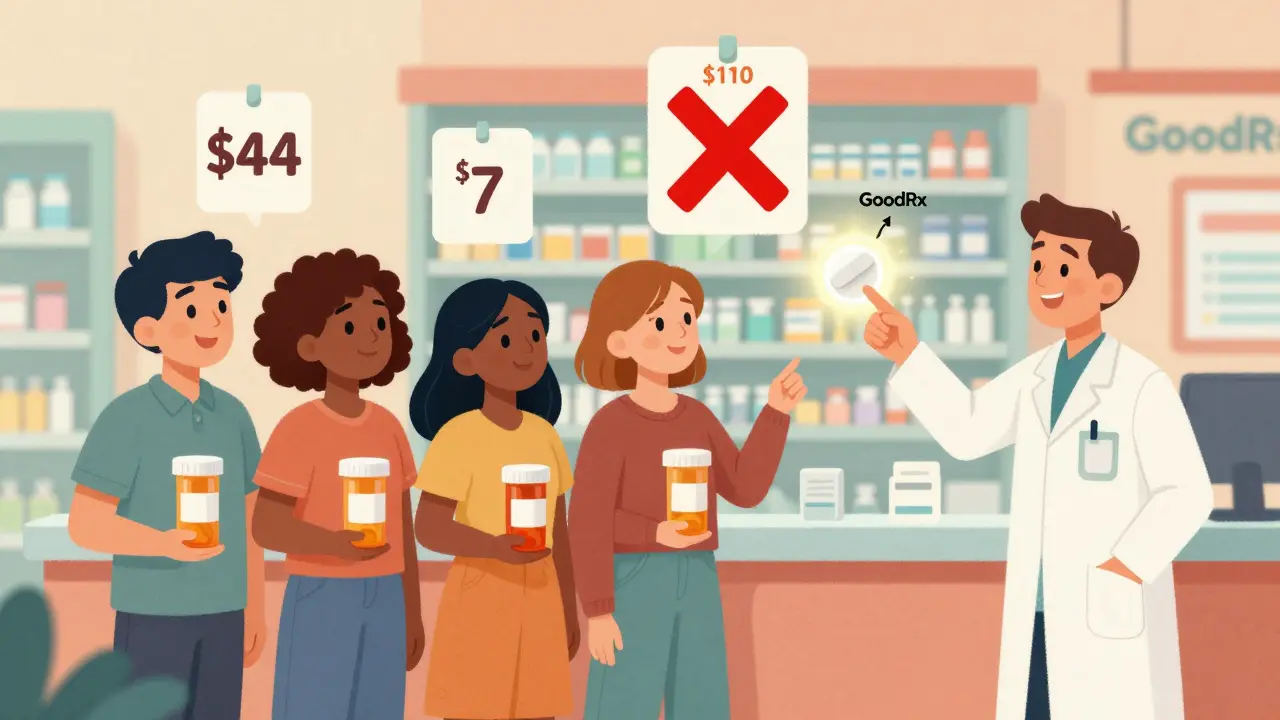
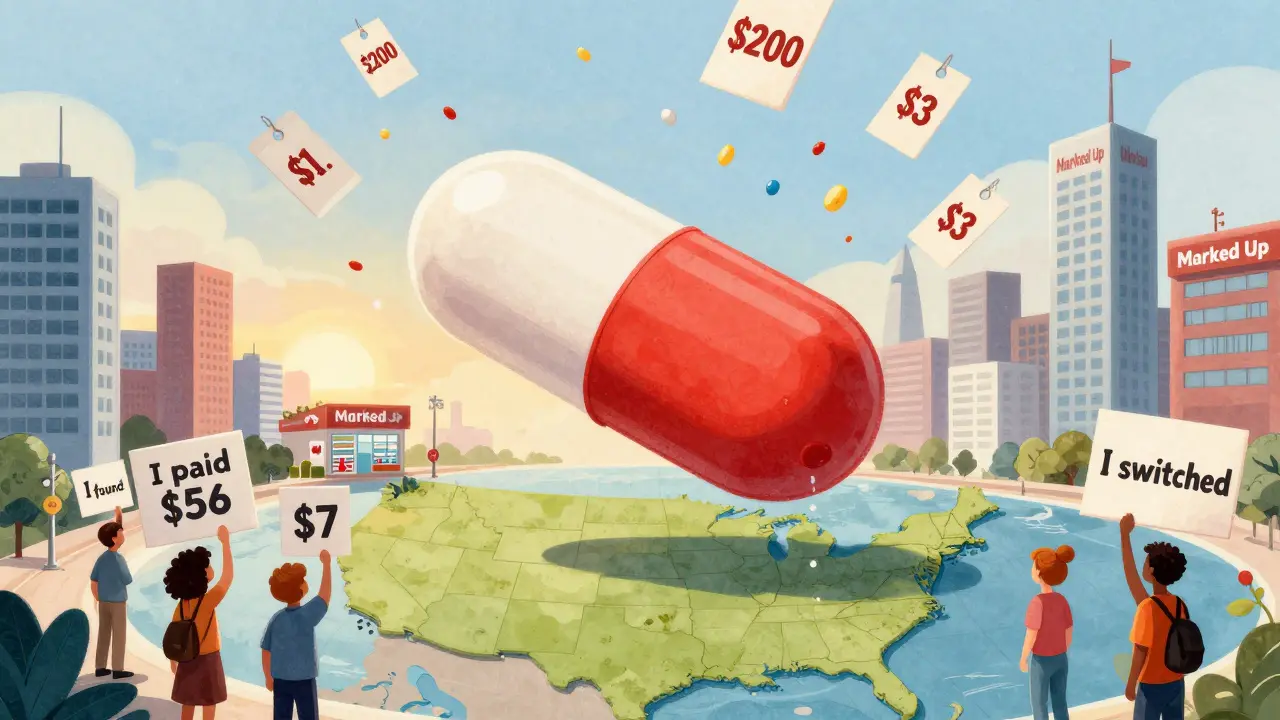
Think your prescription is cheap because it’s generic? Think again. In the U.S., generic drugs are supposed to save you money - and they do, usually. But too many people still pay way more than they should, even when generics are available. The difference between paying $7 and $56 for the same medicine isn’t just a number - it’s whether you skip your next dose, choose food over pills, or just keep paying because you don’t know there’s a better way.
How much do generics really save?
In 2023, the average out-of-pocket cost for a generic prescription was $7.05. For the brand-name version of the same drug? $27.10. That’s nearly four times more. But those numbers don’t tell the whole story. Some generics cost less than $5. Take Pantoprazole a common acid-reducing medication: at a direct-to-consumer pharmacy, you can get 30 tablets for $9.20. Walk into Albertsons? You’ll pay $44. That’s 79% less by just switching where you buy it.
And it’s not just one drug. Emtricitabine/Tenofovir a key HIV treatment used to cost $1,000 a month before generics. Now? Around $65. Sildenafil Citrate the generic for Viagra dropped from $49.90 to $3.07. That’s a 94% drop. These aren’t outliers - they’re the rule. In fact, 93% of all generic prescriptions cost $20 or less. Eighty-two percent cost under $20.
Why do people still overpay?
If generics are this cheap, why do so many still pay $50, $100, even $200 for them? The answer isn’t that the drugs are expensive - it’s that the system is broken.
Most people get their meds through retail pharmacies like Walgreens, CVS, or local drugstores. But those pharmacies don’t always charge the lowest price. Take Rosuvastatin a cholesterol drug: at Walgreens, it’s $110. At Health Warehouse, a direct-to-consumer pharmacy, it’s $7.50. Same pill. Same manufacturer. Same FDA approval. Just a different place to buy it.
A 2023 NIH study found that using direct-to-consumer pharmacies cuts the cost of generics by 75% on average. For expensive drugs, that’s $231 saved per prescription. For common ones? Still $19. That’s money you can put toward rent, groceries, or gas.
Insurance isn’t always helping
You’d think insurance makes things cheaper. But sometimes it makes them worse.
Many insurance plans put generics on higher cost tiers - the same ones reserved for expensive brand-name drugs. That means even though the drug itself costs $7, your copay jumps to $40 or $50 because your plan treats it like a premium product. A 2024 report from the Association for Accessible Medicines found this practice increased annual patient spending by 135%, even as drug prices fell.
And then there’s Medicare Part D. In 2018, Medicare overspent by $2.6 billion on prescriptions compared to what Costco charged. Why? Because many patients paid more for a 90-day supply through their Medicare plan than they would’ve paid out of pocket at Costco. In fact, 53% of 90-day fills cost more than Costco’s member price. That’s not a glitch - it’s systemic.
Even more troubling: patients paid 41.8% of the cost of generic drugs themselves - higher than the 32.1% they paid for brand-name drugs. That’s backwards. Why are people paying more out of pocket for the cheaper option?
The hidden middlemen
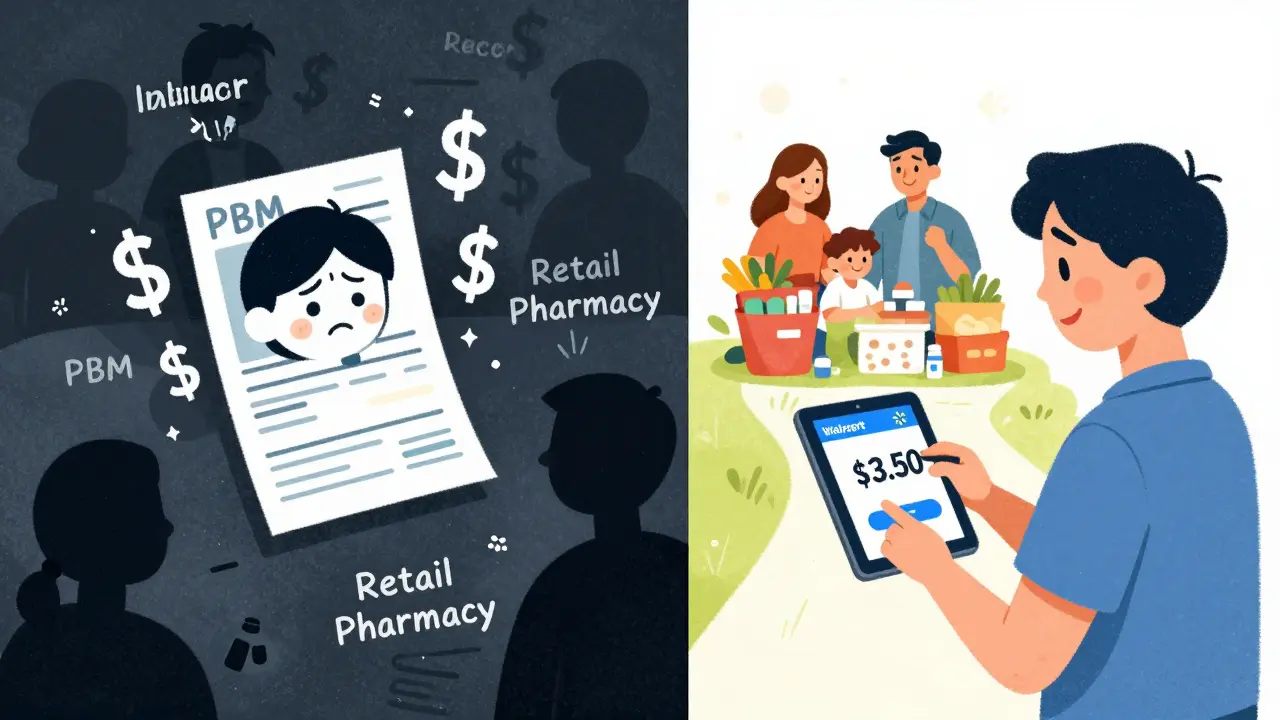
Who’s making money off this mess? Not the manufacturers. Not the pharmacists. It’s the middlemen - pharmacy benefit managers (PBMs), insurers, and rebate systems that don’t pass savings to patients.
Between 2011 and 2019, the total cost of drugs (what insurers + patients paid together) fell by 38%. But out-of-pocket costs for patients only dropped by 50%. That means somewhere along the line, $1.2 billion in savings disappeared - not into patient pockets, but into corporate profits.
The USC Schaeffer Center calls this a "lack of price transparency and supply chain inefficiencies." In plain terms: no one knows what drugs really cost. Pharmacies charge one price. Insurers negotiate another. PBMs take a cut. And you? You just get a bill.
What’s the global picture?
The U.S. isn’t just expensive - it’s an outlier. In 2022, the Department of Health and Human Services found U.S. drug prices were nearly three times higher than in 33 other developed countries. Yet, PhRMA claims generics are "often cheaper here than in other countries." That’s misleading. Yes, generics here are cheap compared to brand names. But in countries with price controls, even brand-name drugs cost less than U.S. generics.
Canada, the UK, Germany - they don’t have $110 statins. They don’t have $44 proton-pump inhibitors. Their systems negotiate prices upfront. Here? We let the market decide - and the market favors profit over patients.
What can you do right now?
You don’t need to wait for policy changes to save money. Here’s how to start today:
- Ask for the cash price - even if you have insurance. Sometimes the cash price at CVS or Walmart is lower than your copay.
- Use direct-to-consumer pharmacies - sites like HealthWarehouse, Blink Health, or GoodRx Care. They cut out the middleman and pass savings to you.
- Check GoodRx or SingleCare - these apps show you the lowest price within 10 miles of your location.
- Switch to 90-day fills - if your plan allows it. You’ll pay less per pill and avoid repeat copays.
- Ask your doctor for alternatives - sometimes a different generic version (same active ingredient, different manufacturer) costs far less.
One woman in Alabama told her pharmacist she couldn’t afford her blood pressure pill. He showed her a $3.50 cash price at Walmart. She’d been paying $48 with insurance. That’s not luck - it’s information.
What’s next?
More drugs will go generic in the next few years. That means more savings. But unless we fix how prices are set, patients will keep overpaying. The system isn’t broken because generics don’t work - it’s broken because we don’t use them the way they were designed.
Generics aren’t just cheaper. They’re the standard of care. They’ve saved $445 billion over the last decade. But that money didn’t all go to patients. A lot of it went to middlemen. Your job isn’t to fix the system. It’s to find the best price - before you pay.
Are generic drugs as effective as brand-name drugs?
Yes. The FDA requires generic drugs to have the same active ingredient, strength, dosage form, and route of administration as the brand-name version. They must also meet the same strict standards for quality, purity, and performance. Studies show generics work just as well. The only differences are in inactive ingredients - like color or filler - which don’t affect how the drug works.
Why do two pharmacies charge different prices for the same generic?
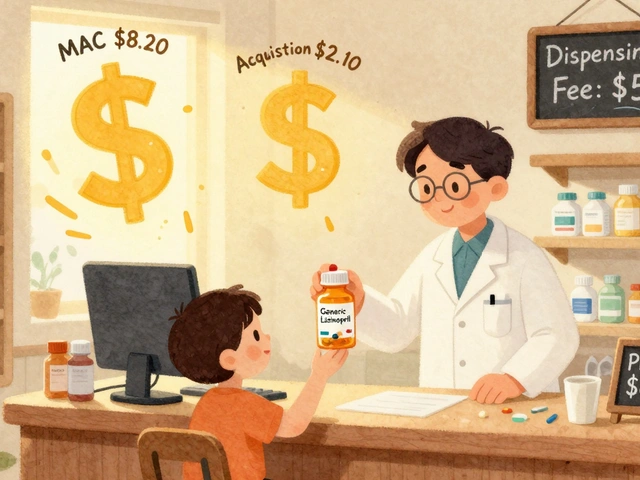
Pharmacies negotiate different prices with pharmacy benefit managers (PBMs) and wholesalers. Some have contracts that let them buy at bulk rates. Others pay list price and mark it up. Direct-to-consumer pharmacies skip PBMs entirely, buying directly from manufacturers and passing savings to customers. Retail pharmacies often charge more because they’re tied to insurance networks that don’t prioritize low cash prices.
Can I use GoodRx if I have insurance?
Yes. GoodRx isn’t insurance - it’s a discount card. You can compare the price on GoodRx with your insurance copay and choose the lower one. Sometimes the cash price is cheaper than your copay, especially for generics. Just hand the GoodRx coupon to the pharmacist instead of your insurance card.
Why do some generics cost more than others?
There are often multiple generic manufacturers for the same drug. One might be cheaper because they produce in bulk, have lower overhead, or sell directly online. For example, one version of metformin might cost $5, while another - same active ingredient - costs $25. Always check multiple sources. Your pharmacist can help you switch to the cheaper version.
Do generics take longer to work than brand-name drugs?
No. The FDA requires generics to be bioequivalent - meaning they enter your bloodstream at the same rate and amount as the brand-name drug. Studies have shown no meaningful difference in how fast or how well generics work. If you notice a change in how you feel after switching, talk to your doctor - it might be a different inactive ingredient, not the active drug.
Why do some insurance plans make me pay more for generics?
Some plans put generics on higher tiers to control costs - but that backfires. They assume patients won’t switch, so they charge more. Others do it because PBMs profit from higher prices. If your plan treats a $7 drug like a $50 drug, ask if you can switch to a different plan or ask your doctor to request a tier exception. You have rights under federal law to appeal.



Davis teo
February 19, 2026 AT 18:03Jeremy Williams
February 21, 2026 AT 15:44Marie Crick
February 22, 2026 AT 08:07John Cena
February 24, 2026 AT 08:03Hariom Sharma
February 26, 2026 AT 07:09Greg Scott
February 27, 2026 AT 01:10Scott Dunne
February 27, 2026 AT 14:37Ashley Paashuis
February 27, 2026 AT 16:03Oana Iordachescu
March 1, 2026 AT 09:52Liam Crean
March 1, 2026 AT 15:27madison winter
March 3, 2026 AT 00:10Ellen Spiers
March 3, 2026 AT 08:14Irish Council
March 4, 2026 AT 10:01Freddy King
March 5, 2026 AT 02:01Laura B
March 6, 2026 AT 11:49