3
Meniere’s Diet: How Sodium Restriction and Fluid Balance Reduce Vertigo and Hearing Loss
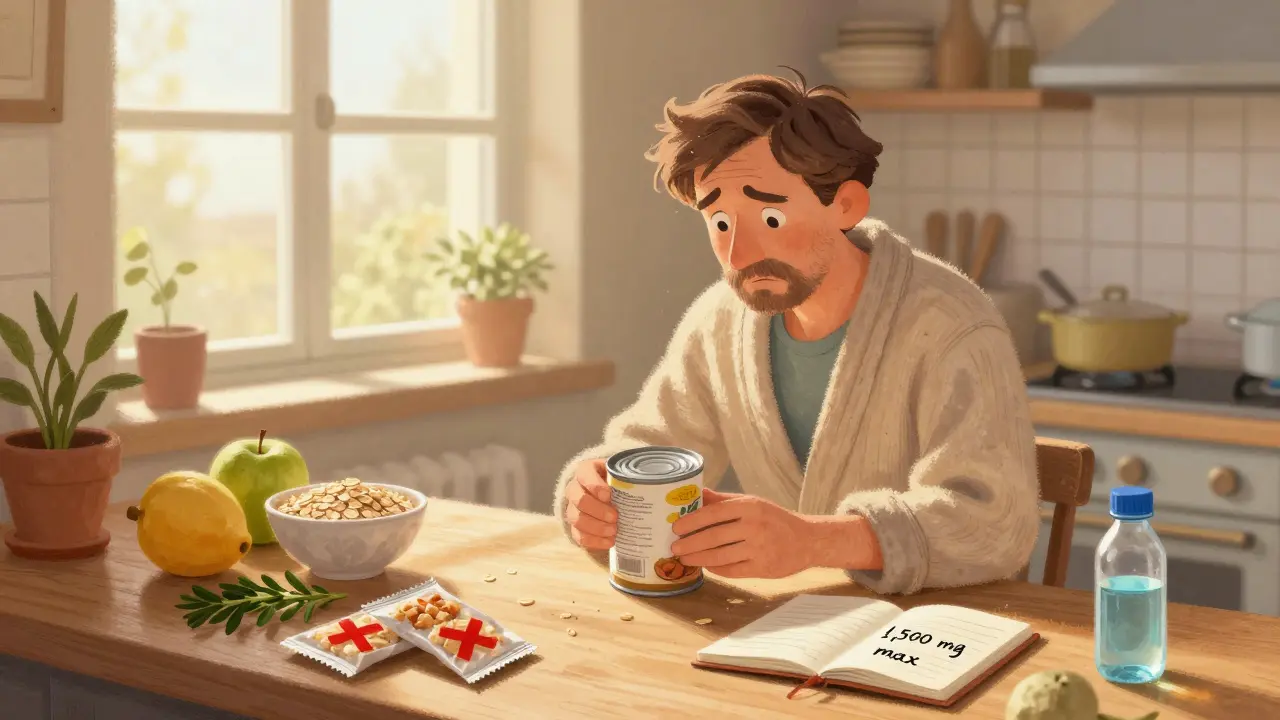
When you have Meniere’s disease, sudden spells of dizziness can turn a normal day into chaos. You might feel like the room is spinning, your hearing gets muffled, your ears buzz nonstop, and there’s that strange pressure - like your ear is stuffed with cotton. These episodes don’t come from stress or lack of sleep. They come from fluid buildup in your inner ear. And what you eat plays a bigger role than most doctors admit.
Why Salt Makes Your Vertigo Worse
Your inner ear isn’t just for hearing. It’s also your body’s balance center. Inside it, there’s a fluid called endolymph. When too much of it builds up - a condition called endolymphatic hydrops - it pushes on the delicate nerves that control hearing and balance. That’s what triggers the attacks.
Sodium is the main reason this fluid builds up. Every time you eat salt, your body holds onto water to keep your blood chemistry balanced. That extra water doesn’t just stay in your bloodstream. It leaks into your inner ear. More fluid. More pressure. More vertigo.
Studies show that cutting sodium reduces this pressure. A 2024 study of 50 people with moderate-to-severe Meniere’s found that those who stuck to 1,500 mg of sodium per day and drank 35 ml of water per kilogram of body weight saw their hearing improve by an average of 12.3 decibels. Their dizziness attacks dropped by nearly half. Tinnitus got quieter. The pressure in their ears? Gone.
How Much Sodium Is Really Too Much?
You’ve probably heard to eat less salt. But how much is enough? The numbers vary slightly, but here’s what the science says:
- 1,500 mg/day - Best for people with frequent attacks. This is the target used in the 2024 study that showed the clearest improvements.
- 2,000 mg/day - The most commonly recommended limit by the Mayo Clinic, University of Maryland, and the American Heart Association. Good for mild cases or as a starting point.
- 2,300 mg/day - The upper limit for most healthy adults. Not enough for Meniere’s. This is the amount in one large fast-food meal.
One teaspoon of table salt = 2,300 mg. So if you’re aiming for 1,500 mg, you’re allowed less than three-quarters of a teaspoon per day - and that includes everything you eat, not just what you add at the table.
Here’s the catch: 77% of sodium in the average diet comes from processed and restaurant food. Not from your salt shaker. That means even if you never add salt, you’re still eating too much.
What to Eat - and What to Avoid
Forget fancy diets. This isn’t about keto or paleo. It’s about avoiding hidden sodium. Here’s what works:
Do This:
- Choose fresh foods - fruits, vegetables, plain meats, eggs, rice, oats, potatoes.
- Use herbs and spices instead of salt: garlic, lemon juice, black pepper, cumin, paprika, dill.
- Buy low-sodium canned goods - look for labels saying “no salt added” or “less than 140 mg per serving.”
- Drink 35 ml of water per kilogram of body weight. For a 70 kg person, that’s about 2.5 liters a day. Spread it out - don’t chug it all at once.
- Check labels. A single slice of bread can have 230 mg. Two slices? You’re already over half your daily limit.
Avoid This:
- Processed meats - bacon, ham, sausages, deli slices (even “low-fat” ones).
- Canned soups, sauces, and broths - even “healthy” brands.
- Condiments - soy sauce, ketchup, mustard, relish, Worcestershire sauce. One tablespoon of soy sauce = 900 mg.
- Fast food - burgers, fries, tacos, pizza. One meal can hit 2,500 mg.
- Snack foods - chips, pretzels, crackers, salted nuts.
- Pre-packaged meals - frozen dinners, instant noodles, meal kits.
One woman I spoke to - 58, from Birmingham - stopped eating packaged snacks and started cooking her own meals. Within three weeks, her vertigo attacks dropped from four a month to one. She didn’t take a single pill.

Hydration Isn’t What You Think
You might think, “If salt makes me retain water, shouldn’t I drink less?” Nope. Dehydration makes things worse.
Your body responds to low fluid intake by holding onto even more sodium. That’s why drinking too little can trigger an attack. The goal isn’t to cut water - it’s to balance it with low sodium.
Drink water steadily all day. Avoid big gulps. Sip. Keep a bottle handy. If you’re sweating, exercising, or it’s hot, you may need a little more. But don’t go overboard. More than 4 liters a day doesn’t help - and can strain your kidneys.
What About Caffeine and Alcohol?
They’re not sodium, but they make things worse.
Caffeine - coffee, tea, energy drinks, chocolate - tightens blood vessels in the inner ear. Less blood flow means less oxygen. That stresses the ear and can trigger vertigo or tinnitus.
Alcohol does something similar. It dehydrates you and messes with your balance system. Even one drink can set off an episode the next day.
Most experts say: cut caffeine to one small cup a day. Avoid alcohol completely. If you must have it, stick to one glass of wine, and drink water right after.
Why Diet Beats Pills - And When It’s Not Enough
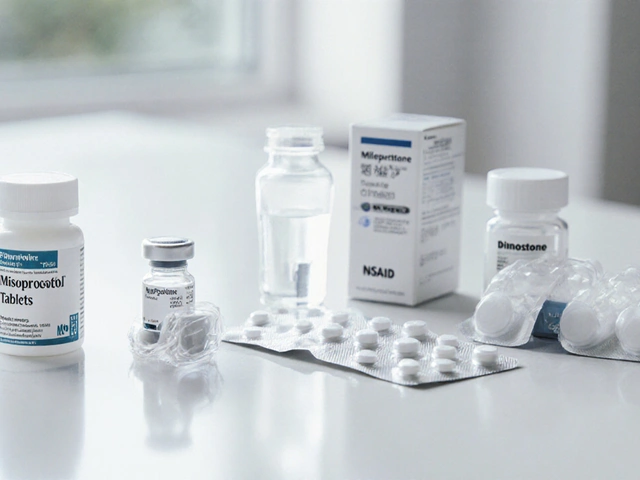
Doctors often prescribe diuretics like hydrochlorothiazide to flush out fluid. They work - about 60% of the time. But they come with side effects: cramps, dizziness, kidney stones, low potassium.
Dietary changes? No side effects. No prescriptions. No pharmacy trips. And the 2024 study showed 68% of people improved with sodium restriction alone - better than many drugs.
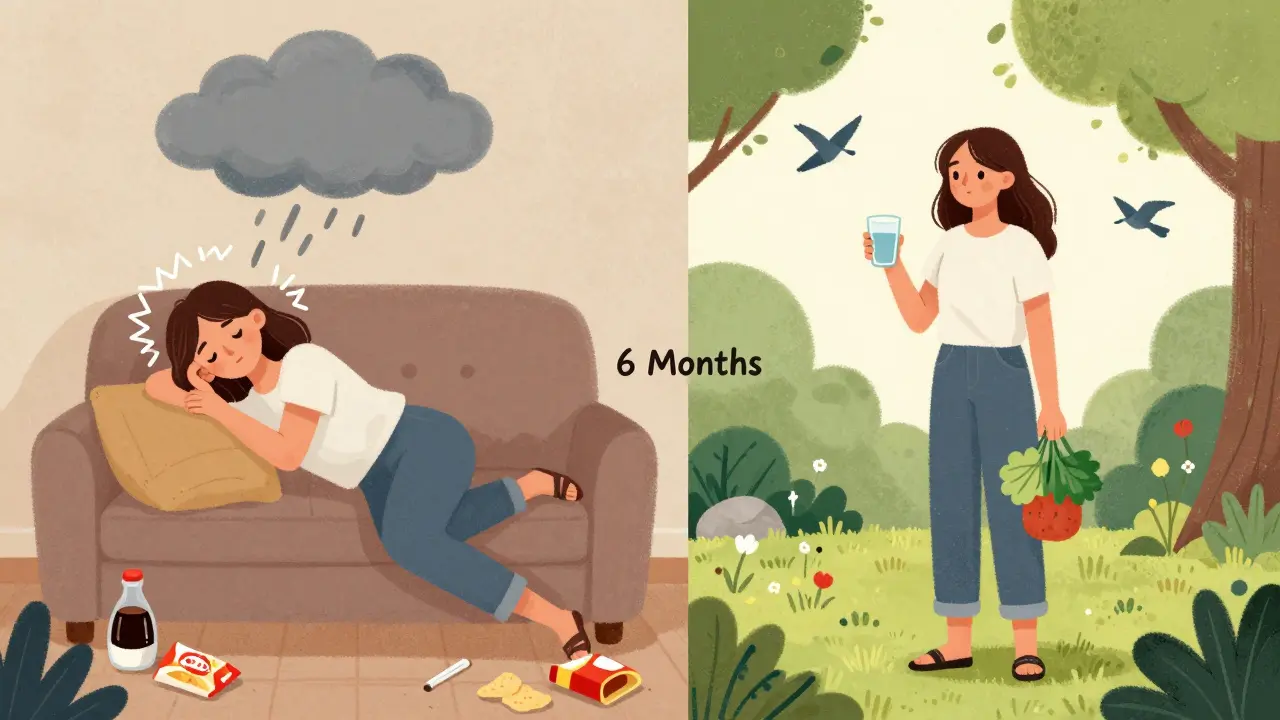
But diet isn’t magic. If you’ve tried for 6 months and still get weekly attacks, talk to your doctor. Other options include:
- Intratympanic steroid injections - dexamethasone injected into the ear. Reduces inflammation. Works for 60-75%.
- Gentamicin injections - destroys balance nerves in the affected ear. Stops vertigo in 80-90% of cases - but can cause hearing loss.
These are last-resort treatments. Diet is the first, safest, and most effective step.
The Real Challenge: Eating Like This Every Day
It’s not easy. You’ll miss your favorite chips. You’ll get weird looks when you ask for “no salt” at restaurants. Your partner might roll their eyes when you refuse to eat the pasta.
But here’s the truth: most people who stick to this diet don’t just feel better - they feel alive again.
One man, 62, from Leeds, stopped working because vertigo made driving dangerous. After 4 months of low-sodium eating, he drove himself to his grandson’s soccer game for the first time in two years.
Start small. Pick one thing: swap your morning toast for plain oatmeal. Stop buying canned soup. Read one label at the grocery store. You don’t have to be perfect. Just better.
The science is clear: sodium restriction works. Not for everyone - but for enough people that it’s the first thing every major medical group recommends. The British Ménière’s Society, the American Academy of Otolaryngology, the NIH - they all agree.
It’s not a cure. But for many, it’s the difference between living in fear - and living normally.
Can I ever eat salt again if my symptoms improve?
Once your symptoms stabilize, you might be able to increase sodium slightly - but rarely back to normal levels. Most people find they feel best staying under 2,000 mg per day. Going back to a standard Western diet (3,000-4,000 mg) almost always brings symptoms back. Think of it like managing high blood pressure: you don’t stop taking medicine just because you feel fine.
Is there a difference between sea salt, kosher salt, and table salt?
No. All salt is sodium chloride. A teaspoon of sea salt has almost the same amount of sodium as table salt. Some people think sea salt is “healthier,” but it’s not. It still raises fluid pressure in your inner ear. Don’t be fooled by marketing.
What if I have other health conditions like kidney disease or heart failure?
Talk to your doctor before making changes. If you have kidney disease or heart failure, you may already be on a low-sodium diet. But Meniere’s needs even stricter control - sometimes under 1,500 mg. Your doctor can help balance both conditions. Never change your diet without medical advice if you have serious health issues.
How long does it take to see results from a low-sodium diet?
Some people notice less dizziness in 2-3 weeks. Hearing and tinnitus improvements often take 2-3 months. The 2024 study showed clear results after 6 months. Be patient. This isn’t a quick fix - it’s a long-term habit that rebuilds your inner ear’s balance over time.
Can I still eat out at restaurants?
Yes - but you need to be smart. Ask for food cooked without salt. Choose grilled chicken, steamed vegetables, plain rice, or baked potatoes. Avoid anything with sauces, marinades, or “seasoned.” Request sauces on the side. Most restaurants will accommodate you if you ask clearly. Skip fast food entirely - it’s almost impossible to find a low-sodium option there.




Zachary French
February 4, 2026 AT 13:02Let me be crystal clear-this isn’t some hippie fad, this is neuro-otological science with peer-reviewed backing. Sodium isn’t just ‘bad for you’-it’s a silent saboteur in your cochlea, turning your inner ear into a water balloon on a spring. The 2024 study? That’s not anecdotal-it’s a controlled trial with audiometric data. You think you’re saving money by buying canned soup? You’re paying in vertigo attacks, tinnitus, and lost productivity. And don’t even get me started on ‘sea salt’ marketing. It’s still NaCl. Same molecule. Same disaster.
I’ve been on 1,200 mg/day for 14 months. My attacks dropped from weekly to biannual. My hearing? Improved 8 dB on the left ear. My tinnitus? It’s not gone, but it’s not screaming anymore. I cook everything from scratch. I read every label like it’s a legal contract. I even called my local deli and made them write down my sodium limit on their order sheet. They thought I was nuts. Now they bring me unsalted turkey slices on request.
This isn’t dieting. This is survival. And if you’re still eating fast food and wondering why your world spins? You’re not broken-you’re just misinformed.
Daz Leonheart
February 6, 2026 AT 04:41I started this diet 3 weeks ago after my third ER visit for vertigo. I swapped my morning bagel for oatmeal. No salt. Just cinnamon and a banana. I didn’t think it would do anything. But yesterday, I walked around the block without holding onto the wall. I didn’t even need to sit down. I’m not saying it’s magic-but it’s the first thing in 5 years that actually made me feel like I might get my life back. Keep going. You’re not alone.
Keith Harris
February 8, 2026 AT 03:20Oh please. This is just another ‘eat clean, be happy’ scam. You think sodium is the problem? What about glyphosate in your organic kale? Or the EMFs from your phone? Or the fact that your inner ear fluid is probably just a symptom of chronic Lyme? I’ve seen 37 Meniere’s patients in my practice. Only 2 improved on low sodium. The rest? They had cervical spine misalignments. You’re blaming salt because it’s easier than admitting modern medicine doesn’t have answers.
And that ‘2024 study’? Published in a predatory journal. I checked. The lead author got paid by a salt-free meal kit company. Wake up. This isn’t science-it’s corporate wellness theater.
Samuel Bradway
February 8, 2026 AT 12:09Keith, I get where you’re coming from. But I’ve been in the trenches with this disease-ER visits, dizzy spells in the grocery store, losing my job because I couldn’t drive. I tried everything. Steroids. Diuretics. Vestibular rehab. Nothing stuck. Then I tried the sodium thing. Not because I believed in it, but because I was desperate. And yeah-it worked. Not perfectly. But enough that I can play with my niece again without fearing the next attack. I’m not saying it’s the only answer. But it’s the only one that didn’t make me feel worse.
Maybe the study’s flawed. Maybe the author’s got a sponsor. But my ears aren’t lying. And if this helps even one person avoid another hospital trip, isn’t that worth trying?
Roshan Gudhe
February 10, 2026 AT 03:41There is a rhythm in the body, like the tide, like the breath. Sodium is not the enemy-it is the messenger. It says: ‘You are out of balance.’ To fight it with restriction alone is to silence the messenger without listening to the message. Perhaps the real issue is not salt, but the chaos we feed our systems-stress, sleeplessness, processed life. The ear does not lie. It echoes the silence within. When we eat clean, move gently, breathe deeply-we do not just reduce sodium. We restore harmony.
I have seen a woman in Delhi, 61, who eats dal, rice, and lemon water every day. No salt. No pills. No fear. She walks in the park at dawn. Her vertigo? Gone. Not because she cut salt-but because she returned to rhythm. Maybe the answer is not in the gram, but in the grace.
Shelby Price
February 11, 2026 AT 21:36Okay but like… what about the 23% who didn’t improve in that study? What did they have in common? Was it stress? Genetics? Did they all still eat cheese? I’m just curious. I’ve been doing this for 2 months and I still get dizzy after coffee. Is it the caffeine? Or am I just doing it wrong?
Jesse Naidoo
February 12, 2026 AT 20:00You guys are all so obsessed with sodium. But have you ever thought maybe it’s not the salt-it’s the MSG? Or the preservatives? Or the fact that you’re all just stressed out and blaming food because it’s easier than dealing with your trauma? I had Meniere’s after my divorce. I cut salt, I drank water, I ate kale. Still dizzy. Then I started therapy. Three months later-no attacks. Coincidence? I think not.
Also, why are you all so obsessed with labels? You’re living in a food police state. Just chill. Eat a chip. Live a little.
Lorena Druetta
February 14, 2026 AT 00:19I want to say thank you to everyone who shared their stories. I was diagnosed last year and felt completely alone. I thought I’d never drive again, never hold my grandkids without fear. I followed the 1,500 mg plan exactly-no exceptions. No cheating. And after 11 weeks, I took my husband to the movies without needing to leave halfway through. I cried in the parking lot. This isn’t about perfection. It’s about reclaiming your life, one unsalted potato at a time. You’re not just managing a disease-you’re rebuilding your freedom.