17
Spinal Cord Injury: Understanding Function Loss, Rehabilitation, and Assistive Devices
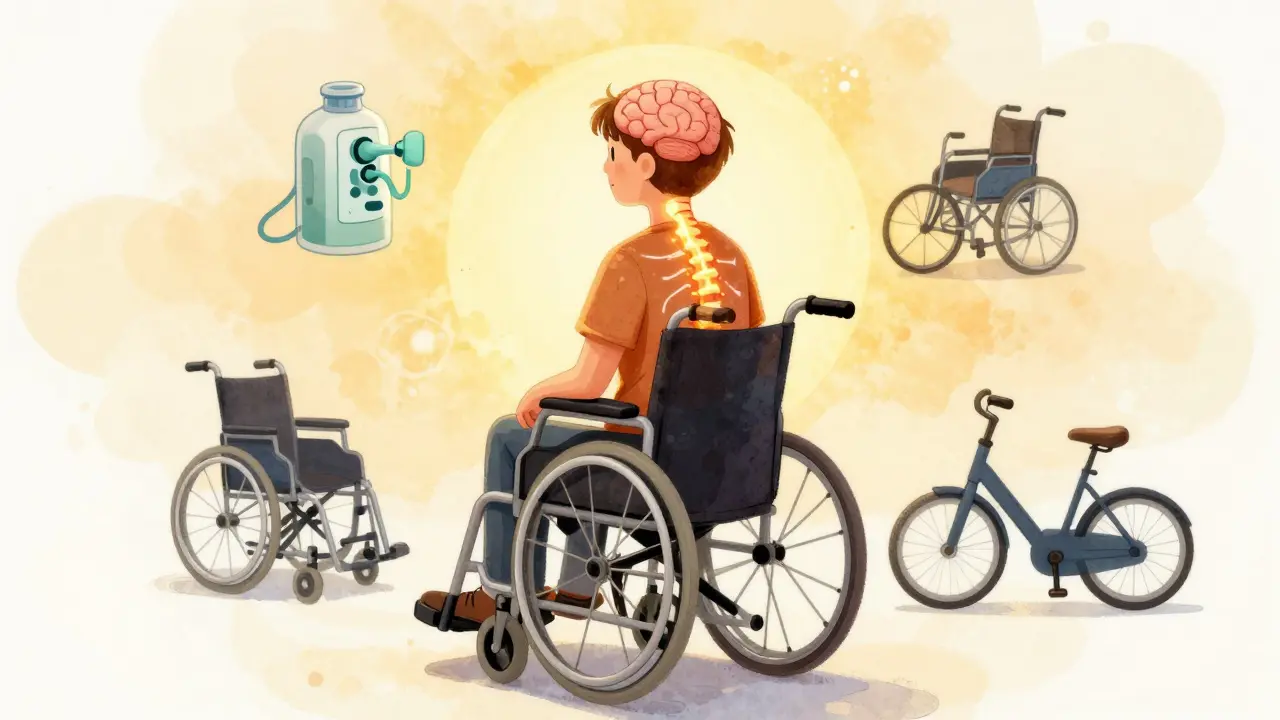
When a spinal cord is damaged, the effects aren’t just physical-they change how you move, feel, and live. A spinal cord injury (SCI) doesn’t just break bones; it interrupts the signals between your brain and the rest of your body. That means loss of movement, sensation, and even control over bladder or bowel function. The location and severity of the injury determine what you can still do-and what you’ll need help with. But recovery isn’t about going back to how things were. It’s about building a new normal, one step, one device, one therapy at a time.
What Happens When the Spinal Cord Is Injured
The spinal cord is your body’s main communication line. It carries signals from your brain to your muscles, organs, and skin. When it’s damaged-whether by a car crash, a fall, or violence-those signals get cut off below the injury site. The higher the injury, the more of your body is affected. A C1-C4 injury might leave you unable to breathe without a ventilator. A T12 injury might mean paraplegia, where legs don’t work but arms do. Not all injuries are the same. Complete injuries mean no signals get through at all. Incomplete injuries mean some signals still pass, which opens the door for recovery. About 302,000 people in the U.S. are living with SCI today, and nearly 18,000 new cases happen every year. Motor vehicle crashes cause almost 40% of them. Falls are close behind, especially for people over 65.Rehabilitation Starts the Day You’re Stabilized
Rehab doesn’t wait. It begins within 24 to 72 hours after your injury is stabilized. The goal? Prevent complications before they start. That means daily passive stretching to keep joints flexible, turning you every two hours to avoid pressure sores, and breathing exercises to keep your lungs clear. If you have a high cervical injury, you’ll need help with coughing and clearing mucus-without it, pneumonia risk jumps. Inpatient rehab programs are intense. You’ll get at least three hours of therapy, five days a week. A team of specialists works with you: physical therapists, occupational therapists, nurses, psychologists, and social workers. No one does this alone. You’ll learn how to transfer from bed to wheelchair, how to manage bowel and bladder routines (which can take up to 90 minutes a day), and how to handle spasticity-those sudden, painful muscle spasms that affect 65% to 78% of people with SCI.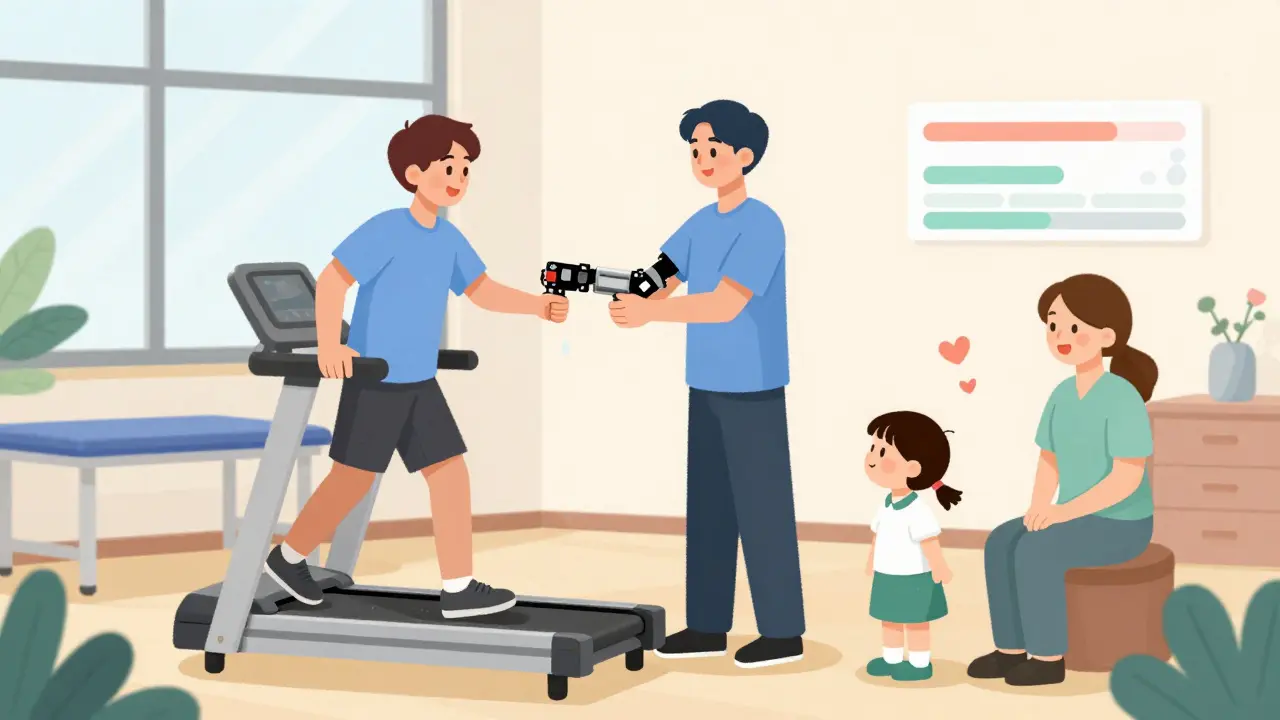
Therapies That Make a Difference
Modern rehab uses proven tools to rebuild function. One of the most effective is functional electrical stimulation (FES). FES sends small electrical pulses to paralyzed muscles, making them contract. FES cycling, for example, helps people with lower-body injuries ride a stationary bike using their own muscles. Studies show it boosts oxygen use by 14.3%, far more than regular arm cycling. Another game-changer is body weight-supported treadmill training. Instead of walking on the floor, you’re supported by a harness while a treadmill moves your legs. This trains your nervous system to relearn walking patterns. One study found it improved walking speed 23% more than regular walking therapy. For those who need mobility help, robotic exoskeletons like Ekso and ReWalk let people with paraplegia stand and take steps. But they’re not magic. Each session lasts 30 to 45 minutes because they’re exhausting. They also need two or three therapists to operate safely. And while they give emotional wins-like taking your first steps in years-they’re not yet proven to restore long-term walking ability.Assistive Devices: Tools That Restore Independence
Your wheelchair isn’t just a chair-it’s your mobility system. Specialized seating with pressure-relieving cushions can prevent sores that lead to hospitalization. Custom wheelchairs with tilt and recline features help manage spasticity and improve breathing. But they’re expensive. Medicare covers 80% of standard models, but you’re still on the hook for $1,200 to $3,500 for high-end seating or controls. For hand function, devices like the Armeo robotic arm help people with cervical injuries reach, grasp, and hold things. FES gloves can stimulate finger movement. These tools don’t cure paralysis, but they restore dignity. One user on Reddit shared that using an Ekso exoskeleton gave them their first steps in three years. But they also said the 25-minute session limit made progress feel slow. For those with high cervical injuries, new tech is life-changing. In 2022, the FDA approved an implantable diaphragm pacing system. It replaces ventilators for many, cutting dependence by 74%. It’s not perfect-it requires surgery and ongoing maintenance-but for some, it means breathing on their own again.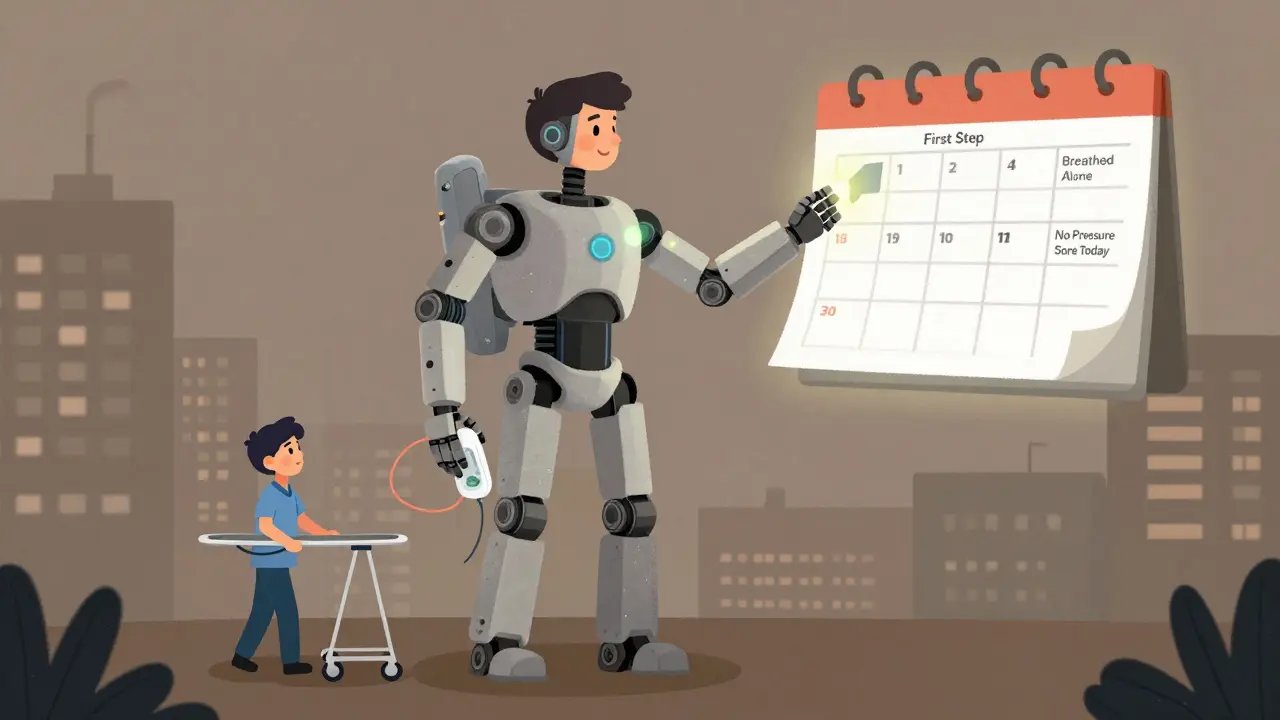
The Real Challenges Nobody Talks About
The biggest barrier to recovery isn’t the injury-it’s access. Many rehab centers don’t offer advanced therapies. Only 32% of general hospitals have full SCI programs. The best care is at specialized Model System centers, which serve just 12% of patients nationwide. Insurance is another wall. FES bikes cost $5,000 out-of-pocket. Exoskeletons aren’t covered at all by most plans. And even when therapy ends, support doesn’t. A 2022 survey found 68% of people quit home exercises within six months because they had no follow-up, no motivation, and no one to hold them accountable. Caregivers face their own struggles. Improper transfers cause 32% of shoulder injuries in family members. Learning safe lifting techniques isn’t optional-it’s essential. That’s why peer counseling matters. At Spaulding Rehabilitation, 82% of patients said talking to someone who’d been through it made their adjustment easier.What’s Next? The Future of SCI Recovery
The field is moving fast. Brain-computer interfaces are now being tested to let people control robotic arms just by thinking. Early trials show 38% improvement in hand function for those with cervical injuries. AI is also stepping in. By 2025, 65% of top rehab centers plan to use AI to personalize therapy plans based on your progress, not just your injury level. But innovation doesn’t mean equity. These tools are expensive. The SCI rehab market is growing to $2.64 billion by 2028, but most patients can’t afford the latest tech. Medicare pays only 83% of actual rehab costs. That gap leaves families choosing between therapy and rent. The truth is, recovery isn’t linear. Some people gain function for years. Others plateau. But every step forward-whether it’s using a new exoskeleton, mastering a transfer, or breathing without a ventilator-counts. Rehab doesn’t promise a cure. But it gives you control back. And in SCI, that’s everything.Can you walk again after a spinal cord injury?
It depends on whether the injury is complete or incomplete. Only 1-3% of people with complete paraplegia regain the ability to walk. But among those with incomplete injuries, up to 59% can regain some walking ability with intensive rehab. Tools like robotic exoskeletons and treadmill training help, but they don’t restore natural movement. The goal is functional mobility, not a full return to pre-injury walking.
How long does spinal cord injury rehab last?
Rehab happens in phases. Acute rehab starts within days and lasts 6-12 weeks. Subacute rehab continues for several months with daily therapy. Most people transition to outpatient care at 3-6 months, with sessions 2-3 times a week. But recovery doesn’t stop. Many continue therapy for years, especially as new technologies become available. Functional gains can keep improving for up to two years after injury.
What are the most common complications after a spinal cord injury?
The top complications include pressure sores from sitting or lying too long, urinary tract infections from catheter use, spasticity (uncontrolled muscle spasms), and pneumonia-especially with high cervical injuries. Shoulder injuries in caregivers are also common, often from improper transfers. Managing bowel and bladder function takes up to 90 minutes daily and requires strict routines to avoid emergencies.
Are exoskeletons worth the cost for SCI patients?
For some, yes. Exoskeletons like Ekso and ReWalk let people stand and take steps, which improves circulation, bone density, and mental well-being. But they’re not for everyone. Sessions are short (30-45 minutes), require multiple therapists, and cost tens of thousands of dollars. Insurance rarely covers them. They’re most useful in rehab settings for motivation and physical conditioning-not as daily mobility aids.
How do you prevent pressure sores after a spinal cord injury?
Pressure sores are preventable. Change position every 2 hours if you’re in bed. Use pressure-relieving cushions in your wheelchair. Check your skin daily for redness or warmth, especially over hips, tailbone, and heels. Keep skin clean and dry. Avoid wrinkles in clothing or bedding. If you notice a sore forming, get help immediately-what looks like a red spot can turn into a deep wound in hours.
Can spinal cord injury rehab be done at home?
Yes, but not alone. Home rehab requires a structured plan, proper equipment (like resistance bands, FES devices, or a transfer board), and caregiver training. Most people start at a facility, then continue at home with weekly outpatient visits. The biggest challenge is staying consistent. Without professional oversight, people often stop exercises within six months. Telehealth follow-ups and peer support groups help keep motivation high.
What role does mental health play in SCI recovery?
It’s critical. Depression and anxiety affect nearly half of people with SCI in the first year. Rehab programs now include neuropsychologists who help patients adjust to their new reality. Peer counseling is one of the most effective tools-82% of patients say talking to someone who’s been through it improves their outlook. Recovery isn’t just about the body. It’s about rebuilding identity, purpose, and hope.



Jonathan Ruth
February 18, 2026 AT 14:47Let me get this straight - we’re spending billions on exoskeletons that 99% of people can’t afford while Medicare covers 83% of costs? That’s not rehab, that’s a luxury subscription service for the rich. You think a paraplegic in rural Ohio is gonna get an Ekso? Nah. They’re lucky if their wheelchair doesn’t fall apart. This whole system is rigged. We don’t need more tech - we need universal access. And stop pretending this is about recovery. It’s about profit.
Also - ‘functional mobility’? That’s corporate speak for ‘you’re never walking again but here’s a fancy chair so you feel better about it.’
Oliver Calvert
February 19, 2026 AT 07:15Functional electrical stimulation is seriously underrated. I worked in rehab for 12 years and FES cycling was the one thing that actually made patients light up. Not because they were ‘getting better’ - but because they could feel their legs moving again. Even if it’s just for 20 minutes. That’s not just physical. It’s psychological. And yeah, it boosts oxygen use by over 14% - which means less fatigue, better heart health, fewer secondary complications. It’s cheap compared to exoskeletons too. Why aren’t more clinics using it? Politics.
Also - pressure sores? Prevention is 100x easier than treatment. Change position every 2 hours. Period. No excuses.
Liam Earney
February 21, 2026 AT 00:44Oh my god… I just read this entire thing… and I’m crying… I didn’t even know about diaphragm pacing… I had a cousin who spent 7 years on a ventilator after a diving accident… he used to tell me how he dreamed of breathing on his own… and now… now this exists…
It’s not just about technology… it’s about dignity… about the right to take a deep breath without a machine… I mean… I just… I can’t…
And the part about caregivers? My aunt broke her shoulder lifting him… and she never complained… never… but I know… I know she felt like a failure…
Why isn’t this on the news? Why isn’t this in every medical school? Why are we letting people choose between therapy and rent? I’m so angry… and so hopeful… at the same time…
guy greenfeld
February 22, 2026 AT 12:14Let’s be real - this whole ‘rehab revolution’ is a distraction. The real issue? The military-industrial complex funnels billions into spinal cord research because it’s cheaper than treating veterans with PTSD. You think they care about your exoskeleton? No. They care about the data. About neural mapping. About weaponizing BCI tech for soldier augmentation.
And don’t get me started on AI personalizing therapy - that’s just surveillance with a smiley face. Who’s training the AI? What biases are baked in? What happens when your ‘progress’ doesn’t match the algorithm’s expectations? You’re cut off.
This isn’t healing. It’s optimization. And we’re all just beta testers.
Sam Pearlman
February 23, 2026 AT 09:47Okay but have y’all seen the TikTok videos of people using exoskeletons to dance at their weddings? I swear I cried watching one girl take her first steps to ‘A Thousand Years’ - her whole family was screaming. That’s not rehab. That’s magic.
Yeah, they’re expensive. Yeah, insurance sucks. But you know what? People *do* get them. Through GoFundMes. Through community fundraisers. Through sheer stubbornness. And honestly? That’s the real story. Not the stats. Not the policy. The human moments.
Also - FES gloves? My uncle’s using one. He can hold his grandkid’s hand now. That’s worth more than a million dollars.
Brenda K. Wolfgram Moore
February 23, 2026 AT 12:27I’m a PT who works with SCI patients daily. I’ve seen the same 3 things make the biggest difference: 1) consistent home exercises, 2) peer support, 3) a therapist who doesn’t treat you like a case file. Most people quit because they’re isolated. Not because they’re lazy. We need more community-based programs. Not just fancy hospitals.
And yes - mental health is the backbone. You can have the best exoskeleton in the world, but if you don’t believe you’re worth the effort? You won’t use it.
Also - if you’re a caregiver, please, please, please learn proper lifting. Your shoulder will thank you. And so will your loved one.
Prateek Nalwaya
February 24, 2026 AT 16:28There’s something profoundly beautiful about how science is slowly learning to listen to the body’s own language - not to fix it, but to collaborate with it. FES isn’t forcing movement - it’s whispering to dormant nerves. Treadmill training isn’t just physical - it’s reteaching the spinal cord to remember what walking feels like. And diaphragm pacing? That’s not a machine replacing breath - it’s the body reclaiming its autonomy.
We’ve spent too long treating the spine like a broken wire. Maybe it’s not broken. Maybe it’s sleeping. And we’re finally learning how to wake it up - gently - with patience, not power.
This isn’t just medicine. It’s poetry written in electricity.
Agnes Miller
February 24, 2026 AT 17:43just wanted to say i used an fes bike for 6 months and it changed my life. not because i walked again, but because my legs stopped feeling like dead weight. also - pressure sores are the worst. i got one and it took 4 months to heal. check your tailbone daily. seriously. it’s not glamorous but it’s life or death.
also - my wheelchair cushion cost $800. insurance paid $200. i had to sell my guitar. worth it.
Linda Franchock
February 26, 2026 AT 08:26Oh honey, you really think a $50,000 exoskeleton is gonna fix systemic neglect? Sweetie. The real miracle is when someone in a small town gets a decent wheelchair that doesn’t squeak and a therapist who doesn’t roll their eyes when you ask for help.
And don’t even get me started on ‘AI personalizing therapy’ - I’ve seen the algorithms. They’re trained on data from people who can afford rehab. So if you’re poor? You’re invisible to the AI. Congrats. You’re now a data ghost.
But hey - at least you can take 25 steps while your insurance denies coverage. #blessed
Tony Shuman
February 27, 2026 AT 06:22Let’s cut the crap. This whole post reads like a corporate brochure for a rehab startup. Real talk: 80% of SCI patients never see a Model System center. They’re stuck in county hospitals where the PTs are overworked and the cushions are 10 years old. The tech? It’s a glittery distraction. The real solution? More funding. More staff. More time. Not another robot.
Also - ‘breathing without a ventilator’? Cool. But what about the 60% of people who can’t even afford catheters? You don’t need a BCI to fix that. You need a social worker. And a government that doesn’t treat disability like a charity case.