31
State Variation in Generic Prices: Why Costs Differ by Location
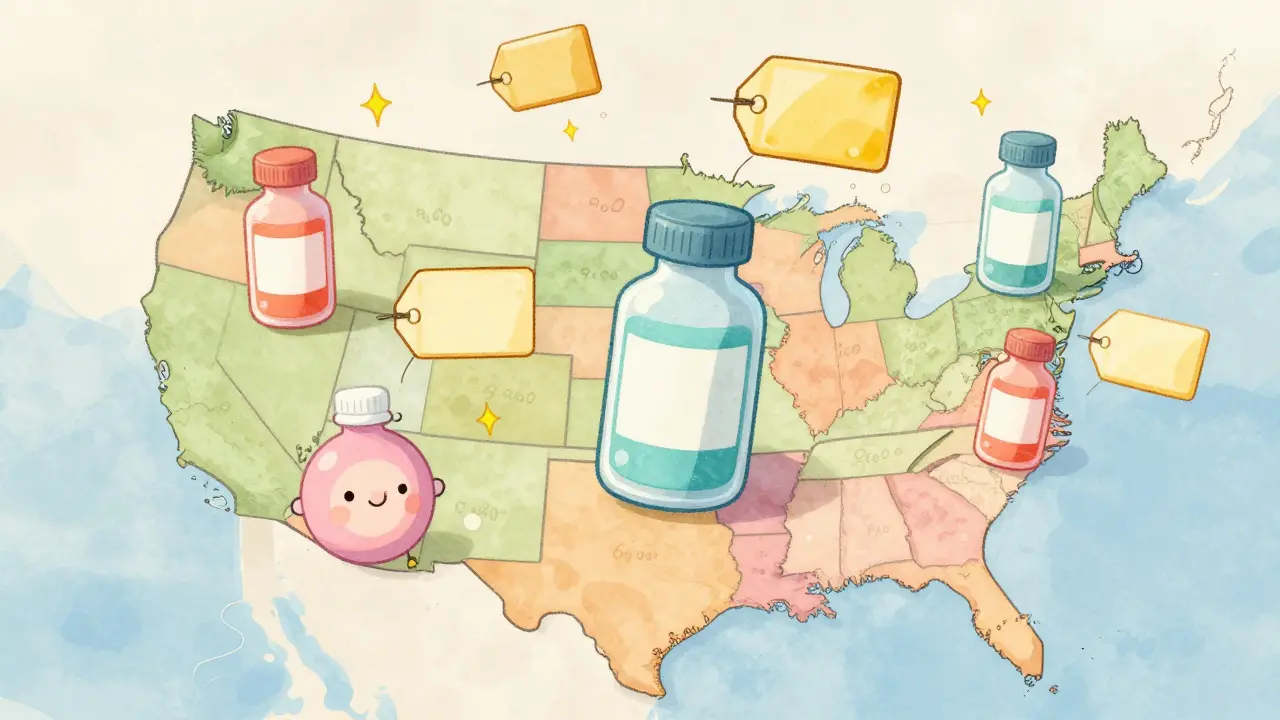
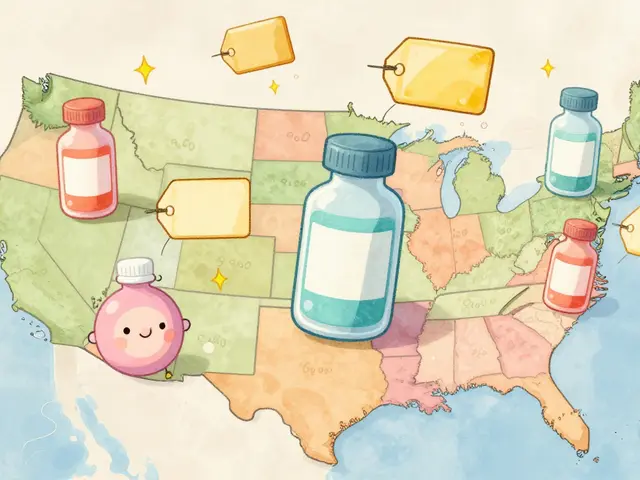
Generic Drug Pricing can feel like a guessing game. You might pick up a prescription for affordable, off-patent medications that cost significantly less than brand-name alternatives, but why does that price change depending on whether you live in California, Texas, or Maryland? It isn't just inflation or supply chains. There is a complex web of rules and players making the price jump from one state line to another. In fact, studies show consumers often pay between 13% to 20% more for generics than they actually should because of how these systems are set up locally.
The Invisible Hand of PBMs
One of the biggest reasons prices shift by location is the role of the Pharmacy Benefit Manager. A PBM acts as an intermediary between health insurance companies, pharmacies, and patients to manage drug benefits. These organizations negotiate the rates for prescriptions across different networks. In some states, there is high concentration, meaning a few large PBMs control most of the market. When competition among these managers drops, the leverage shifts away from the patient and the consumer pays more.
Consider a scenario where you buy the exact same generic blood pressure medication. In Texas, your insurance plan might contract with a PBM that has aggressive rebates negotiated, keeping your copay low. In a neighboring state, a different PBM might have opaque pricing structures where they charge the insurer a hidden fee that gets passed onto you through higher deductibles or less favorable formulary placement. Research from the USC Schaeffer Center found that in markets with less competition among these benefit managers, patients overpay significantly.
State Laws and Transparency Rules
Legislation varies wildly across the country, creating distinct regulatory environments for drugs. Vermont was a trailblazer here, passing transparency legislation back in 2016 that required manufacturers to report pricing. California followed suit. However, other states lack these guardrails. Without these laws, pricing remains a trade secret known only to the companies moving the pills.
There have also been attempts to stop "price gouging" directly. For instance, Maryland once enacted a law specifically targeting unjustified price hikes for generics. But courts have sometimes struck these down, citing constitutional issues regarding interstate commerce. As of 2026, this legal landscape means that while some states actively monitor drug costs, others rely purely on market forces, which doesn't always favor the wallet.
| Factor | Impact on Price | State Variance |
|---|---|---|
| PBM Concentration | Higher concentration = Higher cost | Varies widely; some states dominated by one manager |
| Transparency Laws | Disclosure leads to lower prices | High in CA/Vermont, low elsewhere |
| Medicaid Reimbursement | Formula dictates what government pays | Uses NADAC or AMP benchmarks differently |

Medicaid Formulas and Reimbursement Models
If you rely on public assistance, the math changes again. Most states determine how much they reimburse pharmacies for generic drugs using specific benchmarks. A common standard is the National Average Drug Acquisition Cost (NADAC), which updates every month. However, not all states use the same calculation method.
Some states utilize a three-month moving average, smoothing out short-term volatility but potentially lagging behind real-time market discounts. Others use different wholesale price surveys. This affects the pharmacy's bottom line. If a state reimburses below the acquisition cost, pharmacies may refuse to fill the prescription or transfer it to a chain that accepts the rate. This indirectly drives patients toward providers who accept the terms, often resulting in price hikes for those outside the preferred network.
Cash Prices Versus Insurance Copays
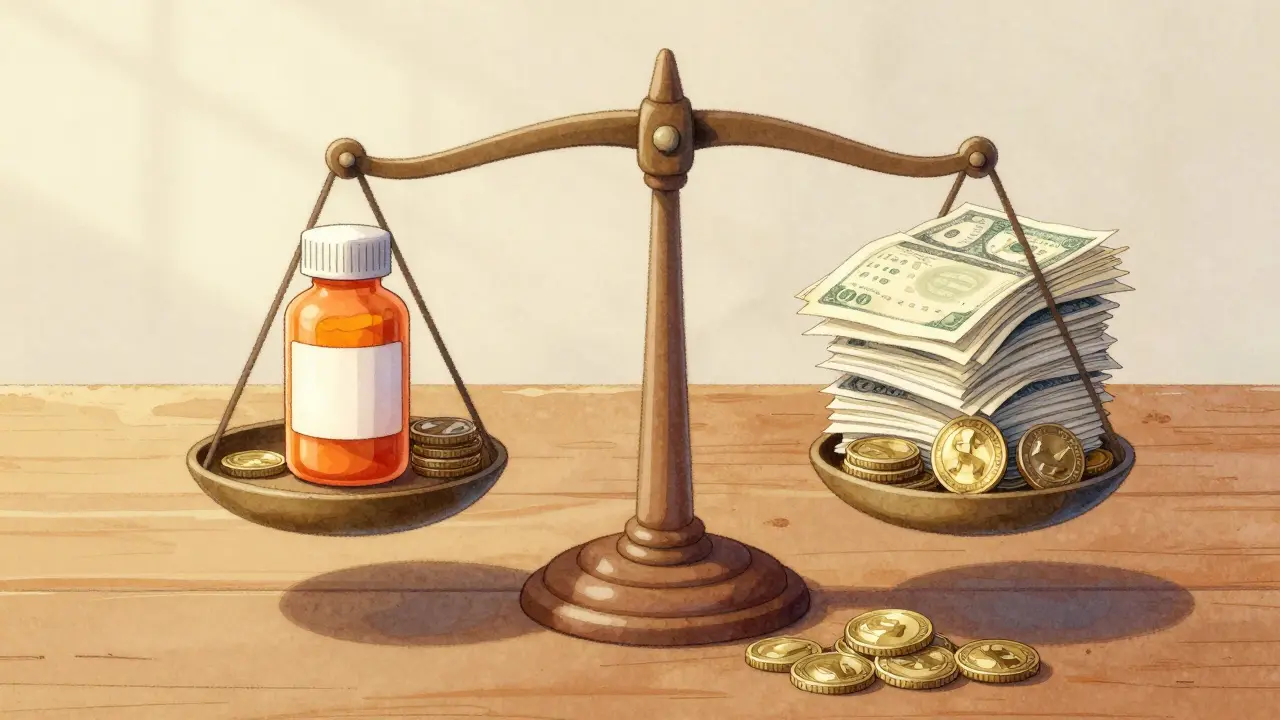
This is where many people get tripped up. Your insurance company negotiates a "negotiated price," but your copay might still be higher than simply paying cash. We've seen cases where a patient paid $120 for a prescription in Texas while someone in California paid $45 for the exact same bottle with insurance. That disparity is roughly 266%, driven entirely by local contracting.
Interestingly, when patients bypass insurance and pay cash, prices often drop by 50% because PBMs remove their administrative fees and rebate structures from the equation. Services like GoodRx allow you to tap into cash discount networks that aren't bound by state-specific insurance plans. For generics, which make up 90% of all U.S. prescriptions, this route is often viable. If you live in a state with fewer transparency protections, checking the cash price via apps can reveal massive savings that your standard insurance card hides.
The Role of Competition and Retail Density
Rural areas generally see higher prices. Fewer pharmacies mean less competition for customers. A local independent pharmacy in a rural district has little incentive to undercut competitors if no one else is nearby. Conversely, in dense urban zones in New York or Chicago, multiple chains compete for foot traffic. They may offer store-branded generics or instant coupons to grab your business.
Furthermore, the presence of discount pharmacies-often referred to as single-source direct sellers-has grown recently. These businesses sell generics at near-wholesale costs without markups. Their success varies by region, often thriving in states where regulations allow them to operate flexibly and consumers have learned to ask for these options.
Federal Impact and Future Trends
Looking forward, federal policy plays a role too. The Inflation Reduction Act, enacted in 2022, began impacting spending patterns by 2025. For Medicare beneficiaries, this introduced a $35 monthly cap on insulin and a $2,000 annual out-of-pocket maximum. While this stabilizes costs for seniors, commercial insurance holders (those under 65 with employer insurance) don't have these automatic limits yet.
By 2026, actuarial projections suggest these federal provisions will reduce out-of-pocket drug spending significantly nationwide. However, the benefit depends on how many people in your state qualify. For non-Medicare patients, the battle for lower generic prices continues to be fought at the state legislative level, with 18 states having established drug affordability boards to review excessive price increases.
Do generic drug prices really differ by state?
Yes, prices vary significantly due to state-specific laws, PBM contracts, and insurance negotiation strategies. Research shows variations of up to 300% for the same medication between neighboring states.
Is it cheaper to pay cash for generics?
Often, yes. Paying cash can save 30-70% compared to insurance copays because it avoids PBM processing fees and inflated negotiated rates. Discount cards or cash-only pharmacies are key tools here.
What impact did the Inflation Reduction Act have on 2026 prices?
It capped insulin costs and set an annual out-of-pocket limit for Medicare enrollees. However, for younger consumers with private insurance, impact varies largely by employer plan design.
Can I check my state's drug pricing transparency?
Only in states with specific transparency laws (like California or Vermont). These laws require manufacturers to disclose price justification. Other states do not mandate this release of information publicly.
Why are rural prices often higher?
Lower pharmacy density reduces competition. With fewer stores competing for your business, pharmacies are less pressured to lower shelf prices or offer aggressive coupon discounts.