13
Mandatory vs Permissive Substitution: Key State Law Differences in Pharmacy Practice
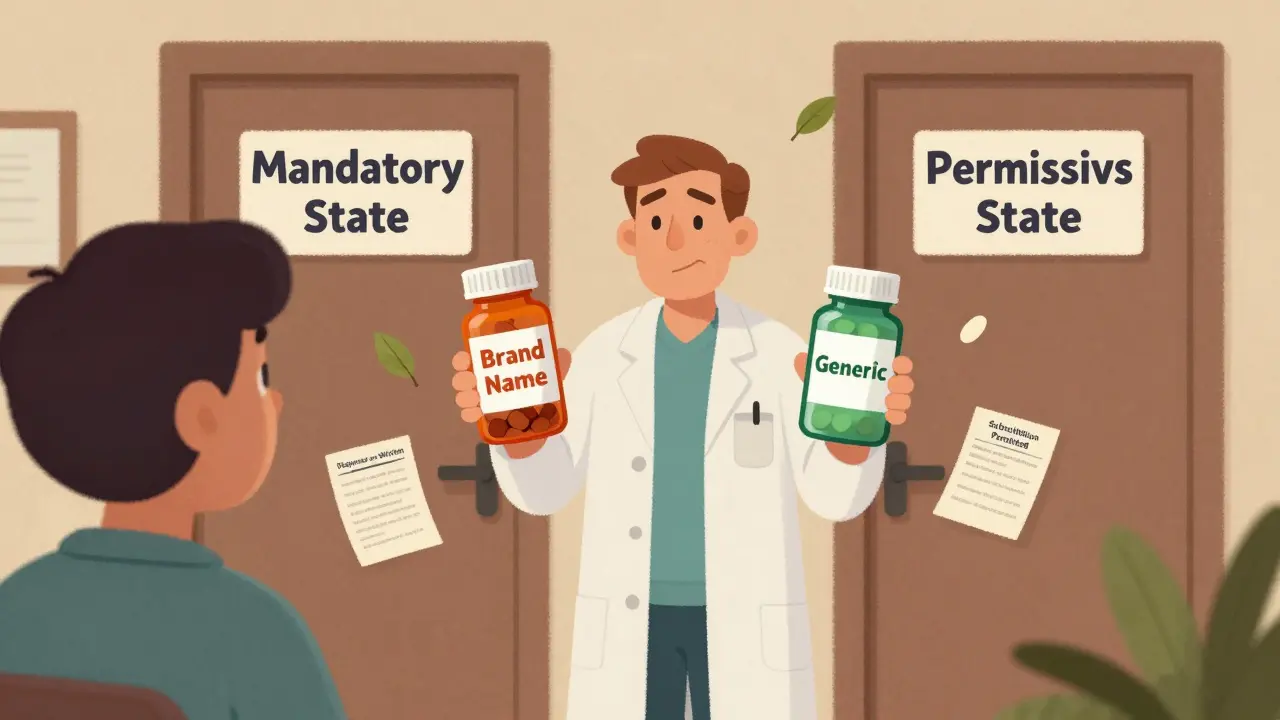
When you pick up a prescription, you might assume the pharmacist will always give you the cheapest version of your medicine - but that’s not true everywhere. In some states, pharmacists are required to swap your brand-name drug for a generic. In others, they can only do it if they choose to - and sometimes only if you say yes. These differences aren’t just paperwork. They affect how much you pay, whether you stick with your treatment, and even how safe your medicine is.
What’s the Real Difference Between Mandatory and Permissive Substitution?
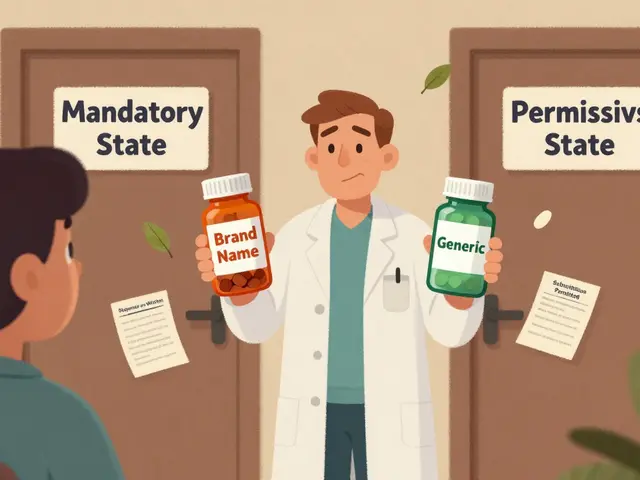
Mandatory substitution means the law forces pharmacists to give you a generic drug whenever it’s available and approved as equivalent by the FDA. Unless your doctor writes "Dispense as Written" or "Brand Medically Necessary," the pharmacist has no choice. They must substitute.
Permissive substitution? That’s the opposite. Pharmacists can substitute if they want to - but they don’t have to. In these states, even if a generic exists, the pharmacist might still give you the brand-name drug unless you specifically ask for the cheaper version. Some permissive states even require your written consent before making the switch.
It’s not just about choice. It’s about what the law says pharmacists must do versus what they’re allowed to do. And the difference in outcomes is huge.
Which States Force Substitution? Which Let Pharmacists Decide?
As of 2020, 19 states - including Alabama, Alaska, Arizona, Arkansas, Colorado, Connecticut, Delaware, Idaho, Indiana, Kentucky, Louisiana, Maine, Maryland, Massachusetts, Mississippi, Montana, New Hampshire, North Dakota, and West Virginia - have mandatory substitution laws.
In the other 31 states and Washington, D.C., substitution is permissive. That means the decision is up to the pharmacist, and often depends on whether they’ve been trained to recommend generics, whether the pharmacy’s system prompts them, or whether you’ve ever asked for a cheaper option.
But here’s the catch: even in mandatory states, things get complicated. If your doctor writes "Do Not Substitute," the pharmacist can’t switch - no matter what the law says. And in some places, if the brand-name drug costs the same as the generic, substitution isn’t required at all. That’s because the law isn’t just about cost - it’s about incentive.
How Patient Consent Rules Change Everything
Not all mandatory substitution laws are the same. Some require the pharmacist to ask you for permission before switching. Others don’t. And that tiny detail changes outcomes dramatically.
A 2011 study on simvastatin - a common cholesterol drug - found that in states with no patient consent requirement, 98.1% of prescriptions were filled with the generic version within six months of its release. In states that required your signature before substitution? Only 32.1% of prescriptions used the generic.
Why? Because asking for consent slows things down. Pharmacists might not bring it up. Patients might not understand the question. Or they might say no out of fear, even if the generic is just as safe. In one survey, pharmacists in mandatory states with consent rules were nearly twice as likely to avoid substituting drugs with narrow therapeutic indexes - like seizure medications or blood thinners - even when they were technically equivalent.
That’s not just a policy gap. It’s a safety gap.
Liability: Who Gets Blamed If Something Goes Wrong?
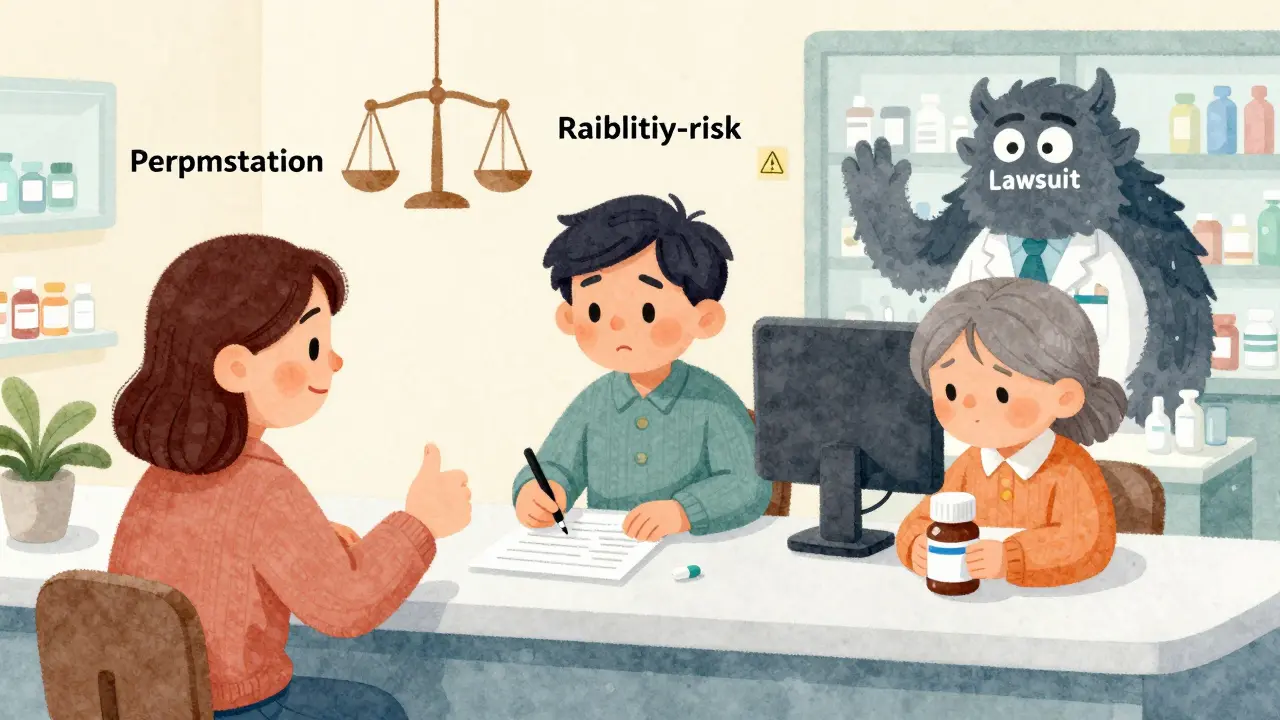
Pharmacists aren’t just following rules - they’re worried about lawsuits. In 24 states, there’s no legal protection for pharmacists who substitute generics. If a patient has a bad reaction, even if the generic is FDA-approved and identical to the brand, the pharmacist could be held liable.
This creates a chilling effect. In those states, pharmacists often default to giving the brand-name drug - even if it’s more expensive - just to avoid legal risk. It’s not about what’s best for the patient. It’s about what’s safest for the pharmacist.
Compare that to states with clear liability protections. There, pharmacists feel confident making substitutions. They know the law backs them up. And patients get cheaper meds without extra steps.
Notification Rules: Do You Even Know You Got a Generic?
In 31 states and Washington, D.C., pharmacists must tell you - separately from the drug label - that you’re getting a generic. That might sound harmless. But think about it: if you’re not told, you might think you got the brand. You might not notice a change in pill shape, color, or size. And if you have side effects, you might blame the medicine - not realize it was switched.
Some states require notification only if the generic isn’t from the same manufacturer. Others require it every time. A few don’t require it at all. This inconsistency means your experience depends entirely on where you live - even if you’re taking the same drug.
Formularies and Prescription Formats: The Hidden Rules
Some states use what’s called a "positive formulary" - a list of drugs that can be substituted. Others use a "negative formulary" - a list of drugs that can’t be substituted. Most, though, just follow the FDA’s Orange Book, which lists drugs as therapeutically equivalent.
Prescription formats vary too. In some states, doctors must use two-line prescription pads: one line for the drug name, another line for "Substitution Permitted." If the doctor doesn’t sign the second line, substitution is allowed. In other states, doctors must write "Dispense as Written" in clear handwriting to block substitution.
That means a doctor in Texas might need to write a phrase to prevent substitution, while a doctor in Maine doesn’t have to do anything - substitution happens by default. It’s not just about the law. It’s about how the system is designed.

Biosimilars: Why Substitution Gets Even More Complicated
For traditional pills, substitution rules are messy but manageable. For biologics - like insulin, rheumatoid arthritis drugs, or cancer treatments - it’s a whole new level of complexity.
Only 9 states and Washington, D.C., have the same substitution rules for biosimilars as they do for regular generics. In 45 states, there are extra layers: mandatory physician notification, stricter recordkeeping, or even bans on automatic substitution.
Why? Because biosimilars aren’t exact copies. They’re highly complex molecules made from living cells. While they’re proven to be safe and effective, doctors and regulators are cautious about switching patients between them - especially if they’ve been stable on one product.
As a result, even in mandatory substitution states, biosimilars rarely get swapped in without explicit approval. That means patients often pay full price for years longer than they should.
Why This Matters: Cost, Adherence, and Outcomes
Generic drugs cost 80-85% less than brand-name versions. That’s not a small savings. In Medicaid programs alone, a 2011 study found that states with mandatory substitution filled 48.7% of simvastatin prescriptions with generics. In permissive states? Only 30.0%.
That’s an 18.7 percentage point gap - and that gap translates to millions in extra spending. The Congressional Budget Office estimated that just a 1% increase in generic use saves Medicare Part D $160 million a year.
But cost isn’t the only issue. Adherence matters too. When patients get cheaper meds, they’re more likely to take them. Studies show that switching to generics improves refill rates and reduces hospitalizations. And when substitution is automatic - no consent needed, no extra steps - those benefits are strongest.
On the flip side, when patients are asked to consent, or when pharmacists fear liability, substitution drops. And patients pay more - and sometimes don’t get the care they need.
What You Can Do
Know your state’s rules. If you’re on a chronic medication, check whether substitution is mandatory or permissive where you live. If you’re paying full price for a drug that has a generic, ask your pharmacist: "Can I get the generic?" If they say no, ask why.
If your doctor hasn’t specified "Dispense as Written," you might already be eligible for the cheaper version - even in permissive states. And if you’re switching to a biosimilar, make sure your provider knows the rules. In some states, you need written approval just to get the switch.
It’s not just about money. It’s about access. And the law plays a bigger role in that than most people realize.
What’s the difference between mandatory and permissive substitution?
Mandatory substitution means pharmacists are legally required to give you a generic drug when it’s available and approved, unless your doctor blocks it. Permissive substitution means pharmacists can choose to substitute, but aren’t required to - and sometimes need your permission first.
Which states require pharmacists to substitute generics?
As of 2020, 19 states require mandatory substitution: Alabama, Alaska, Arizona, Arkansas, Colorado, Connecticut, Delaware, Idaho, Indiana, Kentucky, Louisiana, Maine, Maryland, Massachusetts, Mississippi, Montana, New Hampshire, North Dakota, and West Virginia. The rest allow substitution only at the pharmacist’s discretion.
Do I need to give consent before getting a generic drug?
It depends on your state. Seven states plus Washington, D.C., require explicit patient consent before substitution. In most other states, consent isn’t needed - especially in mandatory substitution states. If you’re unsure, ask your pharmacist or check your state’s pharmacy board website.
Why do some pharmacists refuse to substitute even when generics are available?
Three main reasons: 1) Their state doesn’t require substitution, so they don’t have to; 2) They fear legal liability - 24 states don’t protect pharmacists from lawsuits after substitution; 3) They’re required to get your consent, and you said no. In some cases, they’re just following old habits.
Can I ask for a generic even if my state is permissive?
Yes. You always have the right to ask. In permissive states, pharmacists are allowed to substitute - they just don’t have to. If you say "I’d like the generic," most will comply. If they refuse, ask why - and consider asking your doctor to write "Substitution Permitted" on the prescription.
Do biosimilars follow the same substitution rules as regular generics?
No. In 45 states, substitution rules for biosimilars are stricter than for traditional generics. Many require physician notification, patient consent, or detailed records. Only 9 states and Washington, D.C., treat them the same. This reflects ongoing caution around switching patients between biologic products.