25
Insulin Biosimilars: What You Need to Know About Cost, Safety, and Market Options
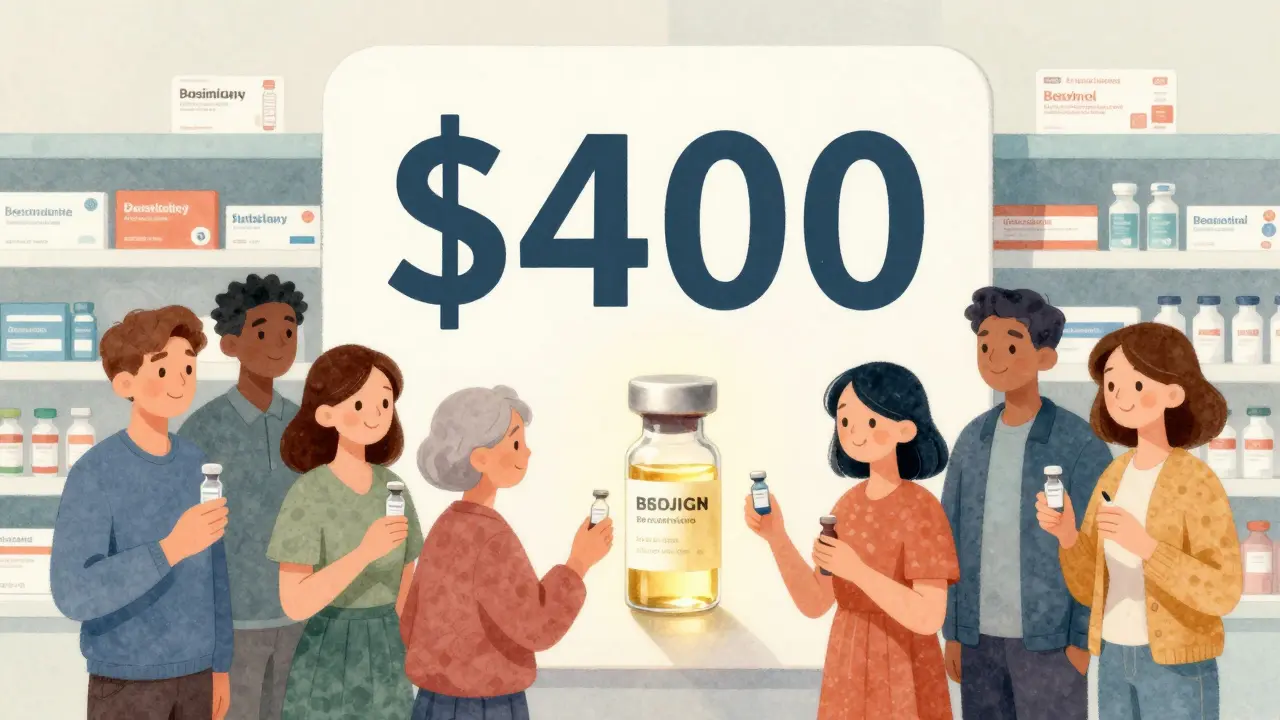
Diabetes affects over 500 million people worldwide. For many, insulin isn’t just a medication-it’s a lifeline. But the cost? It’s crushing. In the U.S., some patients pay more than $400 a month for a single vial of insulin. That’s why insulin biosimilars aren’t just a medical innovation-they’re a necessity. Unlike generic pills, which are exact chemical copies, insulin biosimilars are highly similar versions of complex biological drugs. They’re not identical, but they work the same way. And they’re saving lives by cutting prices in half-or more.
What Makes Insulin a Biosimilar, Not a Generic?
Think of a generic drug like a photocopy. You take a simple chemical, replicate it exactly, and you’ve got your copy. Insulin? It’s not that simple. Insulin is a protein made by living cells. Even tiny changes in how it’s grown, purified, or packaged can change how it behaves in your body. That’s why you can’t just copy it like you would aspirin.
Insulin biosimilars are made to match the original insulin as closely as science allows. Manufacturers must prove, through dozens of lab tests and clinical trials, that their version works the same way in the body. No meaningful difference in safety, effectiveness, or side effects. The European Medicines Agency (EMA) and the U.S. FDA both require this level of proof before approval.
But here’s the catch: the FDA doesn’t automatically call them interchangeable. Only if a biosimilar gets an extra approval-called “interchangeable”-can a pharmacist switch your brand-name insulin for the biosimilar without asking your doctor. As of early 2025, only a few insulin biosimilars in the U.S. have that status. Most still require a new prescription. In Europe, it’s simpler. Once approved, they’re treated as interchangeable by default.
Market Examples: Who’s Making Them and Where?
The insulin biosimilar market is crowded, but dominated by a few big players. Semglee, a biosimilar to Lantus (insulin glargine), was the first interchangeable insulin biosimilar approved in the U.S. in 2021. It’s made by Biocon and Viatris. Since then, it’s become one of the most widely used alternatives-especially in Medicaid and Medicare plans.
Basaglar, made by Eli Lilly, is another major player. It’s not interchangeable, but it’s been on the market since 2015 and is priced 15-30% lower than Lantus. Many patients report no difference in how it controls blood sugar. One user on the American Diabetes Association forum wrote: “Switched to Basaglar and my A1C dropped from 7.8 to 7.2. My monthly cost went from $450 to $90.”
Sanofi, the maker of Lantus, hasn’t sat still. They now sell an unbranded version of Lantus at the same price as biosimilars. It’s not a biosimilar-it’s still the original-but they’ve lowered the price to stay competitive. It’s a smart move. In 2025, Sanofi still held the largest share of the U.S. insulin market, even with biosimilars available.
Outside the U.S., the story’s different. In India, where insulin costs can be 70% lower with biosimilars, doctors report that nearly half of their patients now use them. In China, with over 140 million people living with diabetes, biosimilars are being pushed hard by the government as part of a national cost-control strategy. By 2025, China’s insulin biosimilar market hit $261 million.
Why Are Insulin Biosimilars Still Slow to Catch On?
Despite the savings, adoption is lagging. In oncology or rheumatology, biosimilars often hit 80% market share within five years. For insulin? It’s stuck around 26%. Why?
First, fear. Patients and doctors worry about switching. What if my blood sugar gets unpredictable? What if I have more lows? Some patients do report adjustments-22% of those surveyed in 2025 needed small dose changes after switching. But 68% saw no difference at all.
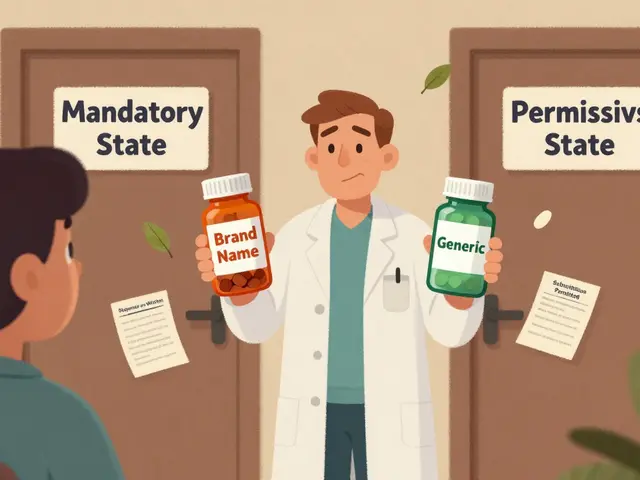
Second, policy. In the U.S., only 17 states let pharmacists switch insulin biosimilars without a new prescription. The rest require the doctor’s OK. That creates friction. A patient walks in, gets their prescription filled, and the pharmacy gives them the biosimilar. But if they’re in Texas or Florida, they might not even know it’s different until they get the bill-or worse, until their blood sugar acts up.
Third, education. Many endocrinologists still think of biosimilars as “second-tier.” That’s outdated. Studies show no increased risk of hypoglycemia, no higher immune response, no drop in effectiveness. The American Association of Clinical Endocrinologists recommends a 3-6 month monitoring period after switching, but that’s just to be safe-not because biosimilars are risky.
Cost Savings: How Much Are Patients Really Saving?
The numbers speak for themselves. In 2025, the average price of a biosimilar insulin was $1,840 per year. The original reference product? Around $2,600. That’s a 30% drop. For patients on Medicare, the savings are even bigger. The Centers for Medicare & Medicaid Services (CMS) now pays pharmacies 8% above the biosimilar’s average selling price. That means pharmacies have a financial incentive to stock and push them.
But savings vary. In Germany, where the government negotiates prices directly, biosimilar insulins cost 40% less than the brand. In the U.S., out-of-pocket costs depend on insurance. Some patients pay $90 a month. Others still pay $300. It’s not automatic. You have to ask. You have to check your formulary. You have to push back if your doctor doesn’t mention biosimilars.
And it’s not just about the vial. When insulin costs less, patients refill more consistently. A 2025 study in Diabetes Care showed that patients on biosimilars were 22% more likely to stay on their insulin long-term. That means fewer hospital visits, fewer emergencies, fewer complications.
What Should You Do If You’re Considering a Switch?
If you’re on insulin and paying more than $100 a month out of pocket, you should ask your doctor about biosimilars. Here’s how to start:
- Check your current insulin: Is it Lantus, Levemir, Humalog, or another brand? That tells you which biosimilar might match.
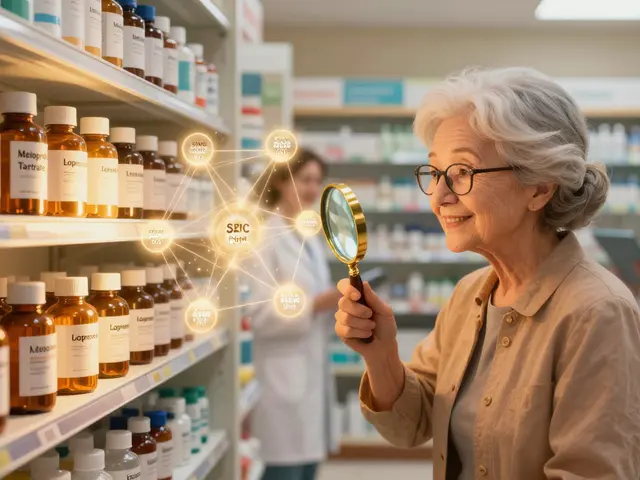
- Ask your pharmacy: What biosimilars do they carry? Are they interchangeable in your state?
- Ask your insurance: What’s covered? What’s your copay for the biosimilar vs. the brand?
- Ask your doctor: Can we try a switch? Will you monitor my blood sugar closely for the first few months?
Don’t assume your doctor knows all the options. Many still think biosimilars are experimental. They’re not. They’ve been used safely in Europe since 2014. Over 10 million people have switched. The data is solid.
Keep a log. Track your blood sugar for the first 4-6 weeks after switching. Note any lows, highs, or unusual symptoms. Bring it to your next appointment. Most patients adjust without issue. A few need a small tweak-maybe 5-10% more or less insulin. That’s normal. It’s not a failure. It’s fine-tuning.
The Future: What’s Coming Next?
The next wave is coming fast. Biosimilars for Toujeo and Tresiba-two long-acting insulins with no real competition yet-are expected to launch in 2026. That could drive prices down even further. Companies are also investing in smart pens and connected devices that work with biosimilar insulins. By 2030, analysts predict insulin biosimilars will make up 35-40% of the market in wealthy countries and 60-65% in places like India and Brazil.
Regulatory bodies are starting to align. The FDA and EMA are working on shared standards to cut approval times. That means more products, faster. And with diabetes rates still rising, the pressure to make insulin affordable isn’t going away.
Insulin biosimilars aren’t perfect. But they’re the best shot we’ve had at making life-saving treatment accessible. They’re not a compromise. They’re a correction.
Frequently Asked Questions
Are insulin biosimilars safe?
Yes. Over a decade of real-world use in Europe and the U.S. shows insulin biosimilars are as safe as the original products. Clinical trials and post-market studies have found no increased risk of allergic reactions, hypoglycemia, or immune responses. The FDA and EMA require extensive testing before approval, and ongoing monitoring continues after launch.
Can I switch from my current insulin to a biosimilar on my own?
No. Always consult your doctor before switching. Even if your pharmacy offers a biosimilar, you need medical guidance. Your dose might need adjustment, and your blood sugar should be monitored for the first 4-6 weeks. Some patients adapt quickly; others need small changes. Never switch without supervision.
Why is my pharmacy giving me a different insulin without telling me?
In 17 U.S. states, pharmacists can substitute an interchangeable biosimilar for the brand-name insulin without telling you or your doctor. In other states, they can’t. If you didn’t consent to a switch and your insulin looks different or costs less, ask your pharmacist what you received. You have the right to the original if you prefer it.
Do insulin biosimilars work as well as the originals?
Yes. Multiple studies, including those published in The Lancet Diabetes & Endocrinology and Diabetes Care, show no clinically meaningful difference in blood sugar control, HbA1c reduction, or hypoglycemia rates. Patients using biosimilars have the same outcomes as those using the brand-name versions-when properly managed.
Are insulin biosimilars covered by insurance?
Most U.S. insurance plans, including Medicare Part D and Medicaid, cover insulin biosimilars-often at lower copays than the brand. Some plans require prior authorization. Always check your formulary. If your plan doesn’t cover it, ask your doctor to appeal. Many have successfully switched coverage after demonstrating cost savings and clinical equivalence.
What’s the difference between interchangeable and non-interchangeable biosimilars?
An interchangeable biosimilar has been proven to produce the same clinical result as the original and can be substituted by a pharmacist without the prescriber’s involvement. A non-interchangeable biosimilar is still safe and effective, but you need a new prescription to switch. Only a few insulin biosimilars have interchangeable status in the U.S. as of 2025.
Next Steps
If you’re paying over $100 a month for insulin, start today. Call your pharmacy. Ask if they carry a biosimilar for your brand. Check your insurance plan’s formulary online. Talk to your doctor about switching. You don’t need to settle for high prices. The science is there. The options are there. The savings are real.





josue robert figueroa salazar
December 26, 2025 AT 15:05jesse chen
December 28, 2025 AT 01:17Joanne Smith
December 28, 2025 AT 16:24Meanwhile, real people are still choosing between insulin and groceries. And let’s not pretend this is about ‘cost savings’-it’s about profit margins getting a little less obscene. The fact that only 17 states allow automatic substitution? That’s not policy. That’s corporate lobbying in a suit.
Prasanthi Kontemukkala
December 29, 2025 AT 01:20Shreyash Gupta
December 29, 2025 AT 23:30They’re just rebranded insulin with less marketing. I switched. My sugar went nuts. Now I’m back on Lantus. 💸
Ellie Stretshberry
December 30, 2025 AT 06:19no more crying in the pharmacy aisle
Zina Constantin
December 31, 2025 AT 01:21Dan Alatepe
December 31, 2025 AT 10:08God help us all.
Angela Spagnolo
December 31, 2025 AT 19:14Sarah Holmes
January 2, 2026 AT 07:21