26
Migraine Medications: Preventive and Abortive Treatments for Chronic Headaches

Chronic migraines aren’t just bad headaches. They’re disabling neurological events that can knock you out for hours-or days. If you’ve ever been trapped in a dark room, nauseous and sensitive to sound, you know this isn’t something you can just ‘push through.’ About migraine affects 1 in 7 people globally, with women three times more likely to suffer than men. And for many, over-the-counter painkillers don’t cut it. That’s where understanding the difference between abortive and preventive medications becomes life-changing.
What Are Abortive Medications?
Abortive medications are your first line of defense when a migraine hits. Their job is simple: stop the attack in its tracks. But timing matters. If you wait too long, the migraine’s chemical cascade is already rolling, and the meds won’t work as well. Studies show taking these drugs within an hour of the first sign of pain cuts recurrence rates in half.For mild to moderate migraines, NSAIDs like ibuprofen (400mg), naproxen sodium (550mg), or aspirin (900-1000mg) are often the go-to. They block inflammation-causing enzymes and can bring relief in under an hour. Even better, combining acetaminophen, aspirin, and caffeine (like in Excedrin Migraine) works better than any single ingredient alone, according to multiple clinical trials.
For moderate to severe attacks, triptans are the gold standard. Drugs like sumatriptan, rizatriptan, and zolmitriptan target serotonin receptors in the brain to shut down the migraine process. They come as pills, nasal sprays, or injections-useful if nausea makes swallowing hard. Around 42-76% of people get pain-free results within two hours, depending on the drug and dose.
But not everyone responds to triptans. And if you have heart disease, high blood pressure, or a history of stroke, triptans aren’t safe for you. That’s where newer options come in.
The Rise of CGRP Medications
The biggest breakthrough in migraine treatment in decades is the development of CGRP inhibitors. CGRP (calcitonin gene-related peptide) is a molecule that spikes during a migraine attack, causing blood vessels to swell and nerves to fire pain signals. Blocking it stops the migraine at its source.Two oral CGRP blockers-ubrogepant (Ubrelvy) and rimegepant (Nurtec ODT)-are now approved for acute treatment. Rimegepant is especially popular because it’s an orally disintegrating tablet, so you don’t need water. People report relief in as little as 30 minutes. In clinical trials, about 20-25% of users were pain-free at two hours, compared to 10-12% on placebo. It also has fewer side effects than triptans, especially for people with cardiovascular risks.
Then there’s lasmiditan (Reyvow), a serotonin 5-HT1F agonist. It doesn’t constrict blood vessels, so it’s safe for people who can’t take triptans. It’s not a painkiller-it’s a brain reset button. In studies, 31% of users were pain-free at two hours, and 54% had their worst symptoms reduced. But it can cause dizziness or sedation, so don’t drive after taking it.
In November 2023, the FDA approved zavegepant (Zavzpret), the first CGRP blocker in nasal spray form. It works fast-24% of users were pain-free at two hours. For people who can’t swallow pills during a migraine, this is a game-changer.
When Abortive Medications Fail
Many people try triptans, NSAIDs, and even the newer CGRP drugs-and still get no relief. That’s when intravenous (IV) treatments in emergency rooms or infusion centers come into play. In a 2022 analysis of IV options, acetaminophen (Tylenol) actually outperformed sumatriptan for early pain reduction. Magnesium sulfate, haloperidol, and prochlorperazine also showed strong results.But here’s the problem: too many people end up getting opioids or narcotics for migraine pain. That’s a trap. Narcotics don’t treat migraines-they just numb the pain. Worse, they increase the risk of medication-overuse headaches (MOH), where taking painkillers too often turns occasional migraines into daily ones. Studies show triptan users can develop MOH after 10 doses a month; NSAID users after 15. Opioids? Even less.
And yet, data from U.S. emergency visits between 2006 and 2013 found that 15.2% of migraine patients were given narcotics, while only 18.9% got evidence-based treatments like triptans or NSAIDs. That’s a massive gap between what works and what’s actually prescribed.
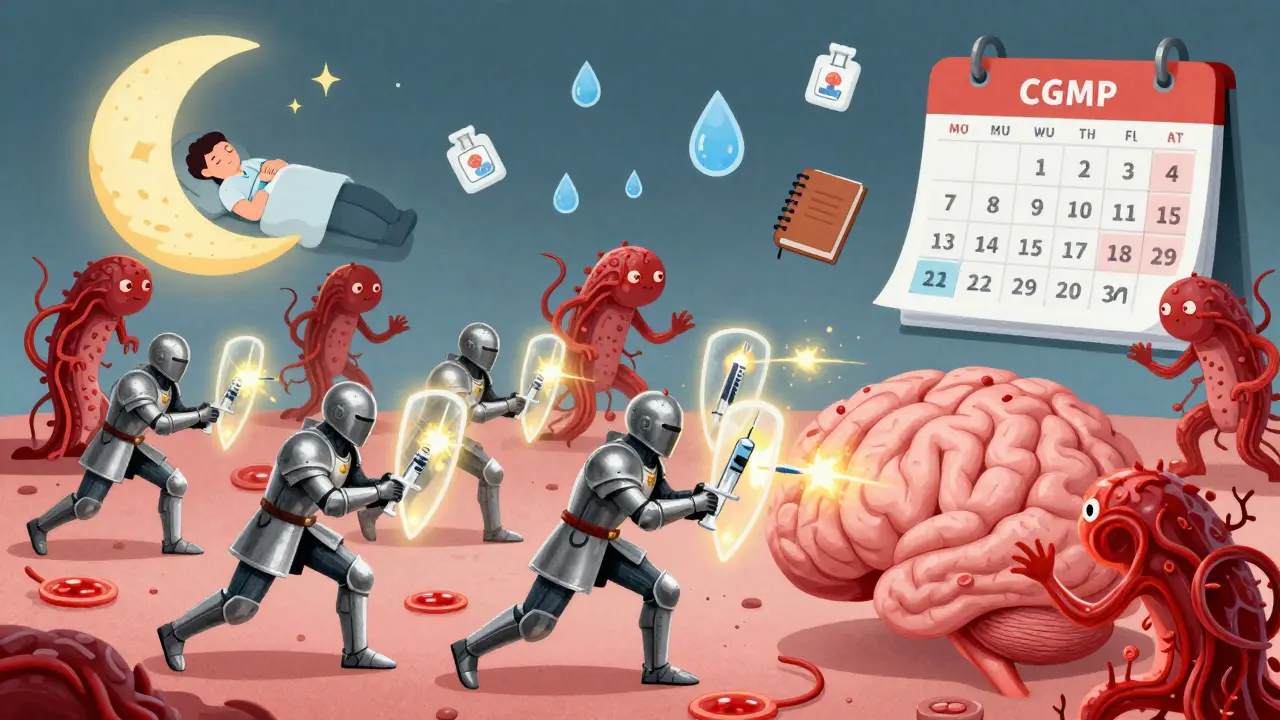
Preventive Medications: Stopping Migraines Before They Start
If you’re having 4 or more migraine days a month, or if abortive meds aren’t working, it’s time to talk about prevention. Preventive meds are taken daily-even on days you feel fine-to reduce frequency, severity, and duration.Traditional options include beta-blockers like propranolol and metoprolol. These were originally for high blood pressure, but they reduce migraine frequency by 50% in about half of users. Anticonvulsants like topiramate (Topamax) and valproate also work well, though topiramate can cause brain fog or weight loss, which some people find helpful-and others don’t.
Antidepressants like amitriptyline are used at low doses for migraine prevention. They don’t treat depression here-they help regulate pain signals in the brain. Many patients report fewer migraines and better sleep as a bonus.
But the real revolution is in CGRP monoclonal antibodies. These are monthly or quarterly injections that block CGRP long-term. Erenumab (Aimovig), fremanezumab (Ajovy), and galcanezumab (Emgality) are FDA-approved and backed by level A evidence from the American Academy of Neurology. In trials, 50-70% of users cut their migraine days by half. Some even go from 20 headache days a month to just 5.
Unlike pills, these injections don’t require daily dosing. And because they’re targeted, they have fewer side effects than older drugs. The most common? Mild injection-site reactions. No liver damage. No brain fog. No weight gain.
Special Cases: Menstrual Migraines
For women whose migraines are tied to their cycle, timing matters. Hormonal drops before and during your period trigger attacks. Preventive strategies include taking short-term triptans like frovatriptan or naratriptan for a few days around your period. This isn’t daily prevention-it’s targeted protection.Some women also benefit from estrogen patches or birth control adjustments. But hormone therapy isn’t for everyone, especially if you have a history of blood clots or migraines with aura. Always talk to your doctor before making changes.
What Works Best Together?
Combining treatments can boost results. A 2007 study found that taking eletriptan (a triptan) with naproxen (an NSAID) gave 32% of users pain-free results at two hours-compared to just 22% with the triptan alone. That’s a big jump.Many patients also pair meds with non-drug tools: ice packs on the neck, dark quiet rooms, or even acupressure bands. One survey found 63% of people who used these methods alongside meds reported better outcomes. Hydration helps too-migraines often come with stomach stasis, where your gut shuts down. That’s why some people use suppositories for nausea meds like metoclopramide or ondansetron.
Cost, Access, and Real-World Barriers
The new CGRP drugs are powerful-but expensive. A 6-tablet pack of ubrogepant can cost over $900 out-of-pocket. Insurance often requires you to try older, cheaper drugs first-a process called step therapy. In early 2024, 72% of commercial insurers required this for CGRP inhibitors.But the tide is turning. More employers are adding these drugs to health plans. In 2023, 47% of Fortune 500 companies covered them, up from 28% in 2020. Patient assistance programs from drugmakers can cut costs dramatically-if you know where to look.
And while these meds are newer, their long-term safety is still being studied. After five years of use, no major red flags have emerged. But we don’t yet know what happens after 10 or 20 years. That’s why doctors still recommend trying older, well-tested options first.
Tracking Your Migraines
No treatment works unless you know what triggers your attacks. Keeping a headache diary for 8 weeks is the most reliable way to spot patterns. Did you skip breakfast? Sleep too little? Drink wine? Get stressed? The data you collect helps your doctor pick the right meds.Studies show people who track their migraines accurately identify triggers 70% of the time. Apps like Migraine Buddy or even a simple notebook can make a huge difference.
What’s Next?
The future of migraine care is personalized. Researchers are studying genetic markers, biomarkers in blood, and even brain imaging to match patients with the best treatment. One day, you might get a blood test that tells you whether you’ll respond better to a CGRP antibody or a triptan.For now, the best advice is simple: Don’t suffer in silence. If your current meds aren’t working, ask for a referral to a headache specialist. And if you’re being prescribed opioids for migraines-ask why. There are better, safer options out there.
The goal isn’t just to reduce pain. It’s to get your life back.
What’s the difference between abortive and preventive migraine medications?
Abortive medications are taken during a migraine attack to stop the pain-like triptans or NSAIDs. Preventive medications are taken daily to reduce how often migraines happen-like beta-blockers, topiramate, or CGRP antibodies. Abortive = treat the attack. Preventive = stop the attacks before they start.
Are triptans still the best option for acute migraines?
For many people, yes. Triptans are fast, effective, and well-studied. But they’re not safe for everyone-especially those with heart disease or high blood pressure. Newer options like rimegepant and lasmiditan are now preferred for these patients, or when triptans don’t work. The best choice depends on your health history and how your body responds.
Can I take too many migraine meds?
Yes. Taking abortive meds more than 10-15 days a month can cause medication-overuse headaches (MOH), where your headaches become daily and harder to treat. Triptans can trigger MOH after 10 doses/month; NSAIDs after 15. Opioids are especially risky. If your headaches are getting worse despite meds, talk to your doctor-you may be in MOH.
Why are CGRP inhibitors so expensive?
They’re brand-new, targeted biologics with high research and manufacturing costs. A single dose can cost $700-$900 without insurance. But many drugmakers offer patient assistance programs, and insurance often covers them after you’ve tried older meds first. Costs are expected to drop as generics enter the market in the next few years.
Do I need a specialist to treat my migraines?
Not always-but if you’ve tried 2-3 abortive meds and still get 4+ headache days a month, it’s time. Neurologists who specialize in headaches know the latest guidelines, can help you avoid medication overuse, and can prescribe preventive options like CGRP antibodies that most general doctors don’t routinely offer.
What should I do if my migraine meds aren’t working?
Don’t just increase the dose or try more pills. Talk to your doctor about switching classes-maybe you need a CGRP blocker instead of a triptan. Or consider adding a preventive. Keep a headache diary to show patterns. And if your doctor keeps prescribing opioids, ask for a referral to a headache specialist. There are better, safer options.





josue robert figueroa salazar
December 27, 2025 AT 17:00Triptans are great until they aren't. Then you're just staring at the ceiling wondering why your brain hates you.
david jackson
December 29, 2025 AT 15:48I’ve been on this rollercoaster for 14 years. I tried everything-beta-blockers gave me brain fog so thick I forgot my own birthday, topiramate made me lose 20 pounds I didn’t want to lose, and then I found Aimovig. I went from 18 migraine days a month to 3. Not a miracle. Not magic. Just science that finally caught up to my nervous system. I cry every time I inject it because I’m so damn grateful. If you’re still suffering, don’t give up. Find a headache specialist. They’re not just doctors-they’re lifelines.
SHAKTI BHARDWAJ
December 30, 2025 AT 19:43why do people even bother with all this science stuff?? i just take ibuprofen and scream into a pillow until it goes away. also i think migraines are just weak people being dramatic. like why cant u just drink more water??
Jody Kennedy
January 1, 2026 AT 18:01YES. YES. YES. I used to think I was broken until I started tracking my migraines with Migraine Buddy. Turns out my triggers were: red wine, sleep deprivation, and my cat sitting on my chest. I didn’t even know cats could be migraine weapons. Now I keep a sleep schedule, skip the wine, and banish my cat during storm season. Life-changing. Also, IV magnesium saved my life. No joke. My ER doc looked at me like I was crazy… then gave me the shot. I slept for 12 hours straight. That’s the kind of magic you don’t get from a pharmacy.
christian ebongue
January 3, 2026 AT 14:07triptans are fine but the real villain is step therapy. insurance makes you try 3 cheap drugs that dont work before letting you take the one that does. its like forcing someone to walk 10 miles before giving them a car.
jesse chen
January 3, 2026 AT 16:41Thank you for writing this. I’ve been trying to explain to my family that migraines aren’t just headaches for years. The part about opioids being a trap? That’s exactly what happened to me. I was on them for 18 months. I thought I was getting relief. Turns out I was just building a prison in my own brain. Now I’m on Nurtec and I’m finally sleeping again. Please, if you’re reading this and you’re on opioids-ask your doctor for alternatives. There’s hope.
Joanne Smith
January 5, 2026 AT 05:22Let’s be real: the CGRP drugs are amazing, but they’re also a luxury. I’ve been on Aimovig for two years. It’s like having a superpower. But I had to fight my insurance for six months, submit five appeals, and beg my doctor to write a novel-length letter. Meanwhile, my friend in Ohio is still on Excedrin because her plan won’t cover anything newer. This isn’t healthcare. It’s a lottery. And if you’re poor, you’re stuck with the losing ticket.
Prasanthi Kontemukkala
January 5, 2026 AT 19:02Thank you for sharing this. I’m from India and we don’t talk about migraines here-it’s seen as "just stress." My sister had them for 10 years before she found a neurologist who believed her. She’s on galcanezumab now. It’s expensive, but we saved for two years. It’s worth it. To anyone reading this: you are not weak. Your pain is real. Find your tribe. Find your doctor. Keep going.
Alex Ragen
January 6, 2026 AT 15:09One must ask: is the migraine not a metaphysical symptom of our hypermodern, dopamine-depleted, screen-saturated civilization? The CGRP pathway is merely the biochemical veneer over a deeper existential dissonance. We are not merely treating a peptide-we are attempting to suture the soul’s fracture with pharmaceutical thread. The triptan is not a drug; it is a temporary truce with the void.
Lori Anne Franklin
January 7, 2026 AT 03:06i just found out my migraines are from dehydration and not sleeping enough… who knew?? i started drinking more water and going to bed earlier and now i dont need meds as much!! yay!!
Bryan Woods
January 8, 2026 AT 06:22Well-researched and comprehensive. The distinction between abortive and preventive treatment is critical and often misunderstood. I’ve seen patients cycle through opioids for years before being referred to a specialist. The data on medication-overuse headaches is clear and underutilized in clinical practice. This should be required reading for primary care providers.
Ryan Cheng
January 10, 2026 AT 03:05For anyone reading this and thinking "I can’t afford it"-check out patient assistance programs. I got my first dose of Aimovig for $5 because I applied through the manufacturer’s website. No one told me about it. I found it by accident. Also, if your doctor doesn’t know about CGRP inhibitors, ask for a referral to a headache clinic. They exist. They’re not magic. But they’re better than opioids. And you deserve better.