27
Drug-Resistant Bacteria and Repeated Antibiotic Use: What Happens When Antibiotics Stop Working
Antibiotic Resistance Calculator
Based on CDC data and medical research, this calculator shows how your antibiotic usage habits contribute to resistance risk. The more frequently you use antibiotics improperly, the higher the risk of creating superbugs that can't be treated.
Your Antibiotic Resistance Risk Score
What This Means:
Every time you take an antibiotic, you’re not just treating an infection-you’re also helping shape the future of medicine. It sounds extreme, but it’s true. When antibiotics are used too often, too casually, or for the wrong reasons, they don’t just kill bad bacteria. They also give the survivors a chance to become stronger. And those survivors? They pass on their defenses. Over time, this turns ordinary infections into life-threatening ones. This isn’t science fiction. It’s happening right now.
How Bacteria Learn to Fight Back
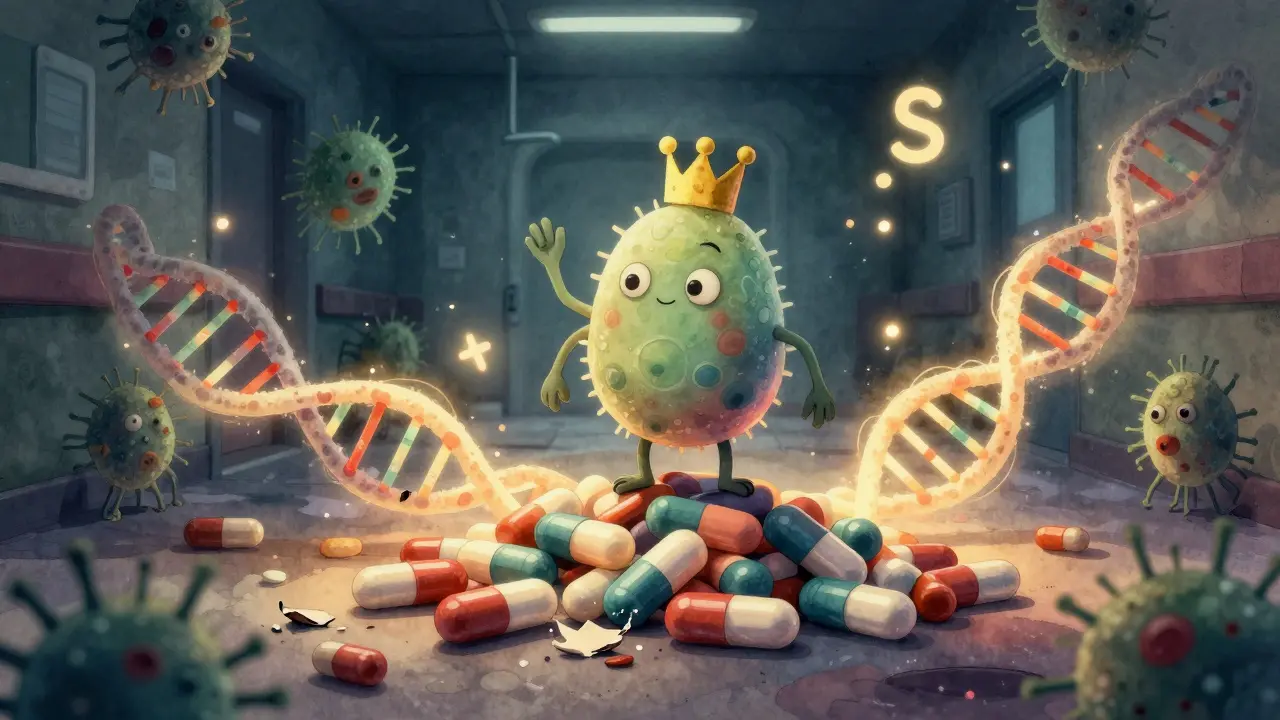
Antibiotics were once miracles. A single pill could cure a deadly infection. But bacteria don’t stay still. They evolve. Fast. When you take an antibiotic, most of the bacteria die. But a few-maybe just one or two-might have a random mutation that lets them survive. That’s not luck. That’s evolution in action.
These survivors multiply. And they don’t just pass their resistance to their offspring. They share it with other bacteria-even different kinds. This is called horizontal gene transfer. It’s like bacteria swapping cheat codes. One bacterium picks up a gene that blocks a drug. Within days, that same gene shows up in another species, in another hospital, in another country.
The result? Superbugs. Bacteria that laugh at antibiotics we once trusted. The CDC calls them drug-resistant bacteria. And they’re growing faster than we’re making new drugs.
The Real Numbers Behind the Crisis
Let’s talk numbers that matter.
In the U.S. alone, carbapenem-resistant Enterobacterales (CRE)-a group of bacteria resistant to nearly every antibiotic-caused 12,700 infections and 1,100 deaths in 2020. Between 2019 and 2023, infections from one specific type of CRE, NDM-producing CRE, jumped by 460%. That’s not a typo. It’s a red alert.
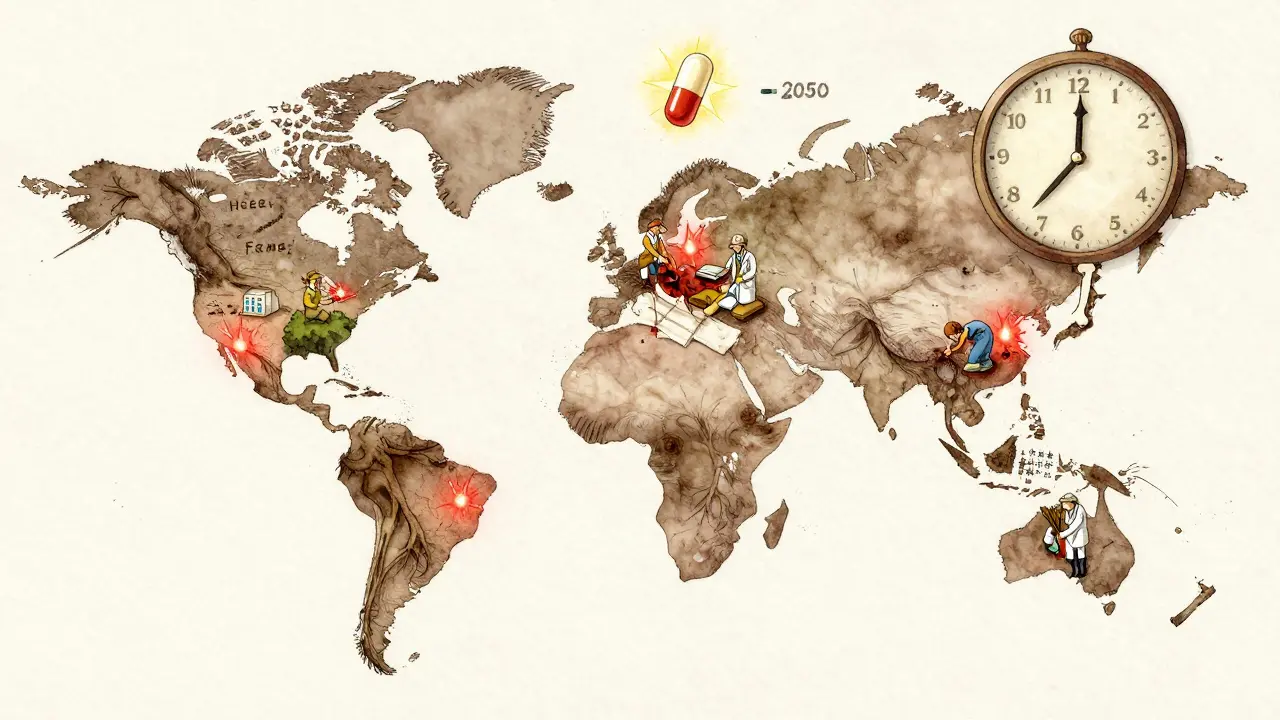
And it’s not just the U.S. The World Health Organization says antimicrobial resistance kills at least one million people every year. That’s more than malaria. More than HIV. And by 2050, if nothing changes, it could kill 10 million people annually-more than cancer.
Here’s another chilling stat: 1 in 5 urinary tract infections caused by E. coli no longer respond to first-line antibiotics like ampicillin or co-trimoxazole. That means if you get a UTI today, your doctor might not have a simple, safe treatment anymore.
Why Repeated Use Is the Biggest Problem
It’s not just taking antibiotics when you don’t need them. It’s taking them over and over-even when you do need them.
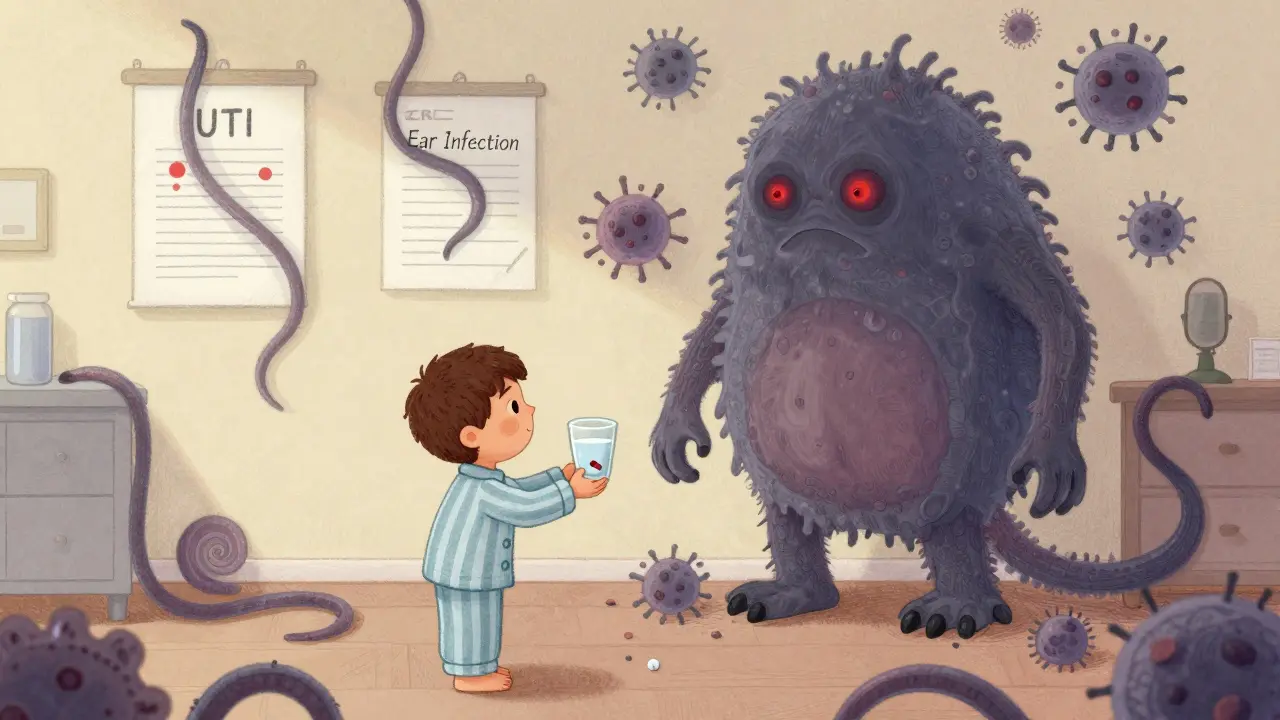
Think about someone with chronic bronchitis who gets antibiotics every few months. Or a child who’s on antibiotics for ear infections three times a year. Each course weakens the body’s natural defenses and gives bacteria more chances to adapt.
And it’s not just humans. In farms, antibiotics are fed to animals not to treat illness, but to make them grow faster. That’s a massive source of resistance. Bacteria from those animals spread into water, soil, and eventually our food.
Even worse? Some non-antibiotic drugs-like common painkillers and antacids-have been shown in recent studies to help bacteria become resistant too. We thought we were only fighting one battle. Turns out, we’re fighting many.
What Happens When the Last Resort Fails
Doctors have a last line of defense: carbapenems. These are powerful antibiotics used only when everything else fails. But now, bacteria are becoming resistant to them too.
The OECD predicts that by 2035, resistance to these last-resort drugs will double compared to 2005 levels. That means a simple kidney infection could turn into a death sentence.
And it’s not just bacteria. Fungi like Candida auris are now resistant to all three major classes of antifungal drugs. In 90% of cases, there’s no effective treatment. This fungus sticks to hospital surfaces, spreads between patients, and kills nearly half of those infected.
One patient in the UK spent six months fighting MRSA after hip surgery. Eleven different antibiotics. Three more operations. She said the worst part wasn’t the pain-it was the fear that nothing would work.
Doctors Are Running Out of Tools
Back in the 1980s, pharmaceutical companies discovered dozens of new antibiotics every year. Now? It’s been over 30 years since the last truly new class of antibiotic was found. Only two new classes have been discovered in the last 40 years.
There are only 39 antibiotics currently in development worldwide. Eight of them are truly novel. The rest? Minor tweaks on old drugs. They won’t help much against the toughest superbugs.
Why? Because antibiotics aren’t profitable. A course of antibiotics costs $20. A cancer drug costs $100,000. Companies make more money selling drugs you take for life than drugs you take for 10 days. So they’ve walked away. Seven of the 15 big drugmakers that made antibiotics in 1990 have completely left the market.
What’s Being Done-And What’s Not
Some places are fighting back. Sweden’s Strama program, started in 1995, cut antibiotic use by 28% and resistance by 33%. They did it with education, strict rules, and public awareness.
In the U.S., hospitals that follow the CDC’s seven-step antibiotic stewardship program saw a 22% drop in inappropriate antibiotic use and a 17% drop in deadly C. diff infections-all within 18 months.
But globally? Only 12% of countries have fully funded national plans to fight resistance. Two-thirds don’t even track resistance properly. In Southeast Asia, nearly 9 out of 10 people buy antibiotics without a prescription. In some places, you can walk into a pharmacy and walk out with a full course of amoxicillin-no questions asked.
And here’s the kicker: 62% of U.S. community hospitals still can’t run rapid tests to detect resistant bacteria. That means doctors are often guessing what to prescribe. And when they guess wrong, they keep trying-until the infection wins.
Hope Is Still There-But Time Is Running Out
In January 2025, the FDA approved a new antibiotic: cefepime-taniborbactam. It’s the first drug in decades specifically designed to fight NDM-CRE. In trials, it worked in nearly 90% of cases.
And there’s a new idea in Congress called the PASTEUR Act. Instead of paying for antibiotics by the pill, they’d pay for them like a subscription-guaranteeing companies a return no matter how many pills they sell. That could bring 300% more new antibiotics to market in 10 years.
But these are drops in an ocean. We need more. We need global surveillance. We need bans on over-the-counter antibiotics. We need funding for research. We need public pressure.
What You Can Do-Right Now
You don’t need to be a scientist to help. Here’s what works:
- Never demand antibiotics for colds, flu, or sore throats. These are viruses. Antibiotics do nothing.
- Take antibiotics exactly as prescribed. Don’t stop early, even if you feel better. Don’t save leftovers for next time.
- Ask your doctor: "Is this antibiotic necessary?" and "Are there other options?"
- Don’t share antibiotics. What works for your friend might kill your microbiome.
- Support policies that fund antibiotic research and ban non-therapeutic use in farming.
Every time you choose not to take an antibiotic you don’t need, you’re helping protect the next generation. That’s not just personal health. That’s global survival.
The Future Is in Our Hands
We’re at a turning point. We can keep treating antibiotics like candy-using them carelessly, wasting them, overusing them-and watch as common surgeries, chemotherapy, and even childbirth become deadly risks.
Or we can act-now-with the same urgency we used during the pandemic. Because this isn’t a future threat. It’s happening today. In hospitals. In homes. In communities.
The next antibiotic might be waiting in a lab. But it won’t save us if we keep breaking the ones we already have.
Can I get drug-resistant bacteria from someone else?
Yes. Drug-resistant bacteria spread easily-through touch, contaminated surfaces, food, water, and even air in hospitals. You don’t need to have taken antibiotics yourself to become infected with a resistant strain. That’s why infection control in hospitals and good hygiene at home are so critical.
Are natural remedies effective against resistant bacteria?
No. Honey, garlic, or essential oils may have mild antibacterial properties, but they cannot replace antibiotics for serious infections like pneumonia, sepsis, or resistant skin wounds. Relying on them instead of medical care can delay treatment and lead to life-threatening complications.
Why don’t we have more new antibiotics?
Developing a new antibiotic costs over $1 billion and takes 10-15 years. But because antibiotics are used for short periods and saved for emergencies, companies barely make back their investment. Most pharmaceutical companies have left the market because it’s not profitable. Without government funding and new payment models, the pipeline will stay empty.
Can I prevent antibiotic resistance by taking probiotics?
Probiotics may help reduce side effects like diarrhea after antibiotics, but they don’t prevent resistance. Resistance happens at the genetic level in bacteria-not in your gut flora. Taking probiotics won’t stop a resistant bacterium from evolving or spreading.
Is antibiotic resistance only a problem in hospitals?
No. While hospitals are hotspots, resistance is everywhere. Community infections like urinary tract infections, skin abscesses, and ear infections are increasingly caused by resistant bacteria. In fact, most antibiotic use happens outside hospitals-in homes, farms, and clinics. The problem is in the community, not just the ICU.
What Comes Next?
If you’ve ever taken an antibiotic, you’re part of this story. Not as a villain-but as someone who can change the outcome. The next time you’re offered a prescription, ask: "Do I really need this?" That simple question could save lives-your family’s, your neighbor’s, your child’s.
Antibiotics were a gift. But gifts can be wasted. We’re not running out of medicine. We’re running out of time to use it wisely.

doug b
January 29, 2026 AT 09:25Stop asking for antibiotics like they’re candy. If your kid has a cold, let it run its course. Your body’s got this. I’ve seen too many parents panic and demand pills. You’re not helping. You’re making it worse.
Mel MJPS
January 31, 2026 AT 03:45I had a UTI last year and my doctor actually asked me if I’d taken antibiotics before. I said yes, and she paused. Then she said, 'Let’s try something else.' That small moment changed how I think about meds. Thank you for saying this.
Howard Esakov
February 1, 2026 AT 02:19Of course the pharma giants don’t want new antibiotics. They make billions off statins, antidepressants, and erectile dysfunction pills. A 7-day course of $20? That’s not capitalism. That’s suicide.
And don’t get me started on the FDA’s slow-motion approval process. 🤡
Jess Bevis
February 2, 2026 AT 05:12Superbugs don’t care about borders. My cousin in Manila got a resistant infection from a tooth extraction. No antibiotics prescribed. Just bad water and bad luck.
Irebami Soyinka
February 3, 2026 AT 14:55USA thinks it’s the center of the world but Nigeria? We’ve been fighting this for decades. Pharmacies sell antibiotics like soda. No script. No shame. And now you’re surprised? 😒
My uncle died from a simple wound infection because the only drug left was $500 and the hospital didn’t have it. This ain’t news. It’s negligence.
Stop preaching to the choir. Fix your own damn system first.
Mindee Coulter
February 4, 2026 AT 11:08My mom’s on long-term antibiotics for recurrent kidney infections. She’s 72. I’ve watched her body break down. The worst part? The doctors keep prescribing the same ones. No testing. No alternatives. Just ‘take this.’
We’re not just losing antibiotics. We’re losing trust.
Kevin Kennett
February 6, 2026 AT 00:45Let’s be real. We treat antibiotics like toilet paper. Use it, flush it, grab another roll. We need to treat them like insulin. Precious. Limited. Life-or-death.
And yes, I’ve asked my doctor ‘Is this necessary?’ twice now. They were surprised. Then grateful. That’s the shift we need.
Jeffrey Carroll
February 7, 2026 AT 07:19The data is clear, and the urgency is undeniable. Antibiotic resistance is not a hypothetical future threat-it is a present-day public health emergency with quantifiable mortality. The erosion of our therapeutic arsenal demands a coordinated, science-driven, and ethically grounded response at both the individual and institutional levels.
Education, stewardship, and investment in novel antimicrobial development are not optional. They are imperative. The cost of inaction is measured not in dollars, but in lives-children, elders, and the immunocompromised who will bear the heaviest burden.
While innovation lags, we must fortify existing tools with discipline, not desperation.
Phil Davis
February 7, 2026 AT 23:36So we’re supposed to believe that a $20 antibiotic is the problem, but a $100,000 cancer drug is fine? Funny how capitalism works-until it doesn’t.
Meanwhile, the same CEOs who killed antibiotic research are now selling ‘AI-powered health diagnostics’ for $200/month. Of course they are.
Brittany Fiddes
February 8, 2026 AT 18:59Of course the Brits are the only ones who get it. We had Strama in the 90s. You had... what? A TV commercial? 🙄
Meanwhile, your ‘community hospitals’ still can’t run a basic test. That’s not incompetence. That’s negligence dressed as ‘budget constraints.’
And don’t even get me started on how you let Big Ag feed antibiotics to cows like they’re protein supplements. You’re not saving lives. You’re farming doom.
Rhiannon Bosse
February 9, 2026 AT 23:30They’re hiding the truth. The CDC’s numbers? Fabricated. The ‘superbugs’? Lab-engineered. Why? So they can sell you the next ‘miracle drug’ that costs $12,000.
Remember when they said glyphosate was safe? Now it’s linked to cancer. Same playbook. Antibiotics are the new tobacco. And they’re still selling them to your kids at Walmart.
Check the patent filings. The same companies that make antibiotics also make the ‘resistance tests.’ Coincidence? Or profit-driven genocide?
John Rose
February 11, 2026 AT 17:03What’s the real solution? We need a global antibiotic reserve-like the WHO’s vaccine stockpile. Countries that overuse get penalized. Countries that protect get funding.
And we need to pay doctors for stewardship, not prescriptions. Reward them for saying ‘no.’
It’s not about fear. It’s about redesigning the system.
Rose Palmer
February 11, 2026 AT 18:31As a public health administrator with over 25 years of experience, I can confirm that the most effective interventions are those grounded in evidence-based antibiotic stewardship protocols, integrated surveillance systems, and sustained funding for antimicrobial resistance mitigation.
Community-level education initiatives, when paired with laboratory capacity building and regulatory enforcement, yield statistically significant reductions in inappropriate prescribing and infection transmission.
It is not a matter of opinion. It is a matter of policy implementation, resource allocation, and institutional accountability.
matthew martin
February 13, 2026 AT 07:09My dog got a UTI last year. Vet gave her antibiotics. I asked if it was really needed. She said, ‘Yeah, but only because you asked.’
Turns out, it was just a bladder irritation. She healed with cranberry and water.
Turns out, we’re the problem. Not the bacteria.