5
FDA Sentinel Initiative: How Big Data Detects Drug Safety Issues
Drug Safety Signal Calculator
Calculate how the rate of adverse events compares between patients taking a drug and the general population. This tool demonstrates how the FDA Sentinel Initiative detects safety signals using real-world data.
The FDA doesn’t wait for patients to get sick before acting. Instead, it uses FDA Sentinel Initiative-a massive, real-time data network-to catch dangerous drug side effects before they become widespread. This isn’t science fiction. It’s happening right now, using billions of anonymized medical records from hospitals, insurers, and clinics across the U.S.
How the FDA Sentinel Initiative Works
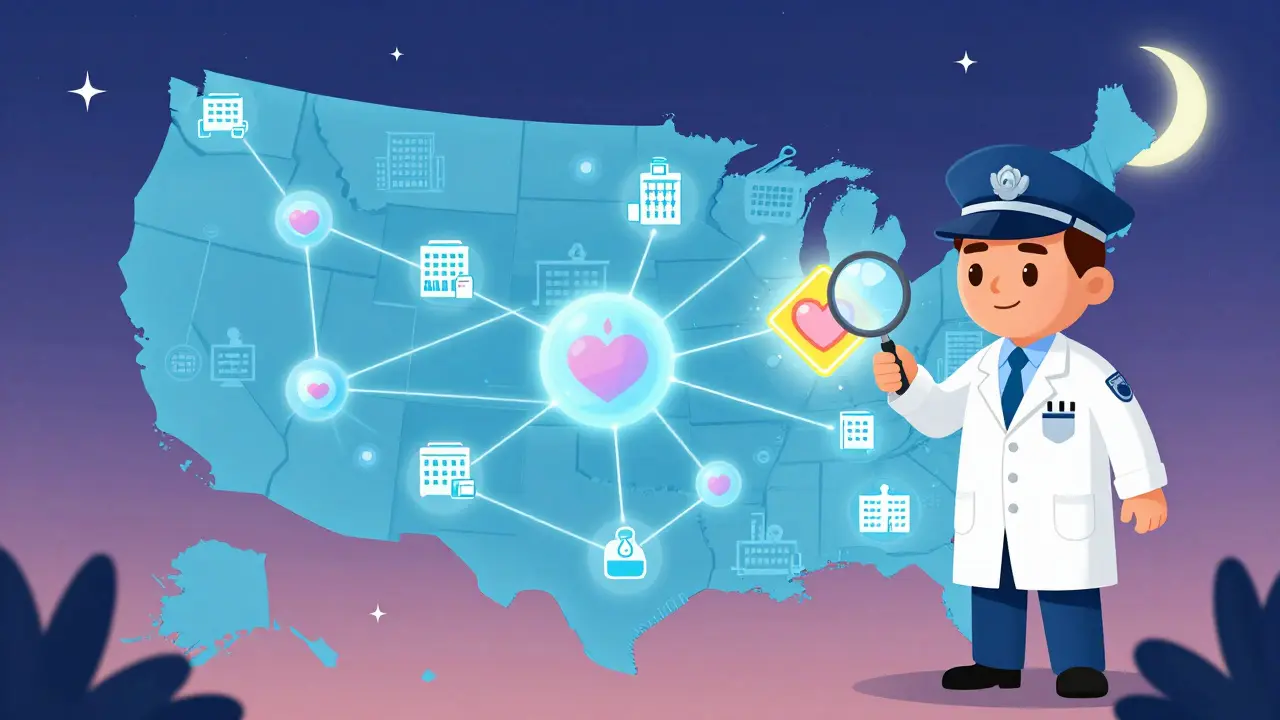
The FDA Sentinel Initiative isn’t a single database. It’s a network of 20+ healthcare organizations that keep their own data. When the FDA suspects a problem with a drug-say, a spike in heart attacks linked to a new diabetes medication-they don’t ask for files. They send a coded question, like a digital detective’s note, to the entire network. Each partner runs the same analysis on their own data, then sends back a summary. No patient names leave their systems. No raw records are shared. Just numbers: how many people got sick, how many were on the drug, and how that compares to people not taking it.
This distributed model solves a big problem: privacy. Hospitals won’t hand over your records. Insurers won’t give up their claims data. But they’ll answer a question if they know their data stays safe. That’s why Sentinel works. It turns fragmented, siloed health data into a unified safety net.
From Passive Reports to Active Monitoring
Before Sentinel, the FDA relied on FAERS-the FDA Adverse Event Reporting System. It’s a voluntary system where doctors, patients, or drug companies report side effects. But here’s the catch: only 1% to 10% of serious side effects ever get reported. Many people don’t know what to report. Others don’t connect their symptoms to a drug. And without knowing how many people took the drug in the first place, it’s impossible to tell if a side effect is rare-or common.
Sentinel fixes that. It knows exactly how many people used a drug because it pulls from billing records and electronic health records. If 500,000 people took Drug X and 120 had strokes, that’s a rate. If only 50 people took Drug Y and 10 had strokes, that’s a red flag. Sentinel sees the full picture. It doesn’t guess. It calculates.
The Data Behind the Scenes
The system started in 2008 with insurance claims data-things like doctor visits, prescriptions, hospital stays. That’s useful, but limited. It doesn’t tell you why someone went to the ER. Was it chest pain? Dizziness? A rash? That’s where electronic health records (EHRs) come in. Since 2020, Sentinel has been integrating EHRs from major health systems like Kaiser Permanente and Mayo Clinic. These records include doctor’s notes, lab results, and even free-text descriptions of symptoms.
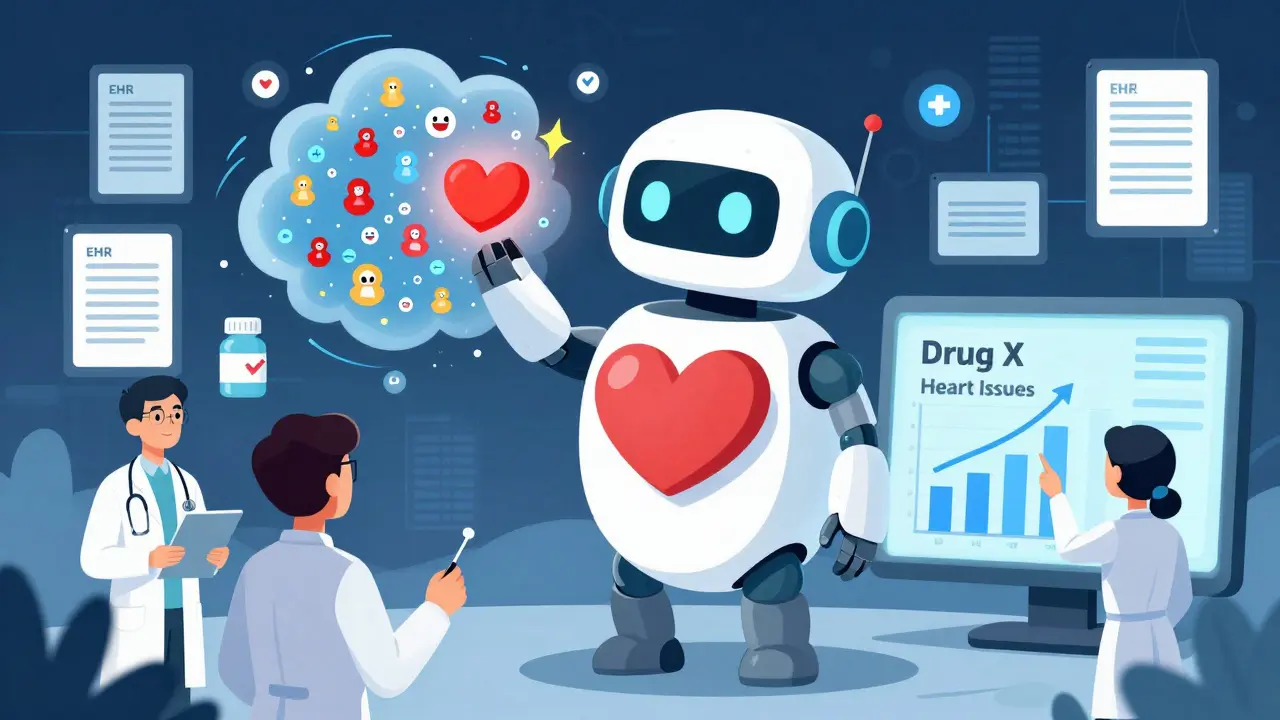
That’s a game-changer. Imagine a patient’s note says: “Patient reported sudden weakness in left arm after starting new blood pressure med.” A human might miss that. A machine learning model trained on Sentinel data can spot patterns like that across millions of records. The FDA’s Innovation Center is now using AI to scan unstructured notes, flagging signals that humans might overlook.
What Sentinel Has Found
Sentinel hasn’t just theorized-it’s acted. In 2017, it flagged a link between a popular osteoporosis drug and an increased risk of atrial fibrillation. The FDA reviewed the data and updated the drug’s warning label within months. In 2020, it helped identify a rare but dangerous reaction to a flu vaccine in older adults, leading to revised dosing guidelines. During the pandemic, the Sentinel system powered PRISM, a fast-track tool that monitored vaccine safety in real time. Within days of a new shot being rolled out, it could tell if there was an unusual spike in Guillain-Barré syndrome or myocarditis.
These aren’t isolated cases. Since 2016, Sentinel has completed over 500 safety analyses. Nearly half directly influenced FDA decisions-changes to labels, new warnings, or even product withdrawals.
Why It’s Better Than Traditional Studies
Traditional clinical trials test drugs on a few thousand people over a few years. But real-world use involves millions-people with multiple conditions, on multiple meds, over decades. That’s where side effects hide. Sentinel finds them because it watches what happens after a drug hits the market. It doesn’t need to wait for a study to be designed, funded, and approved. It runs on live data.
One study compared Sentinel’s findings on a diabetes drug to a 10-year observational study. Sentinel found the same risk-within weeks, not years.
Challenges and Limits
Sentinel isn’t perfect. Not all clinics use the same EHR systems. Some data is missing. Coding errors happen. A doctor might type “fatigue” instead of “exhaustion,” and the system might miss it. Also, rare side effects-like one in a million-still need huge populations to detect. Sentinel has millions, but not billions.
And it can’t prove cause. It can say, “People on Drug X had 2.5 times more kidney issues.” But it can’t say why. That’s where follow-up studies come in. Sentinel points the way. Researchers then dig deeper.
The Bigger Picture: A Global Model
The UK has the Clinical Practice Research Datalink. Canada has its own network. But Sentinel is the largest-and the only one built specifically to guide federal regulation. Other countries now look to it as a blueprint. The European Medicines Agency is testing similar models. The World Health Organization has called it “a landmark in post-market surveillance.”
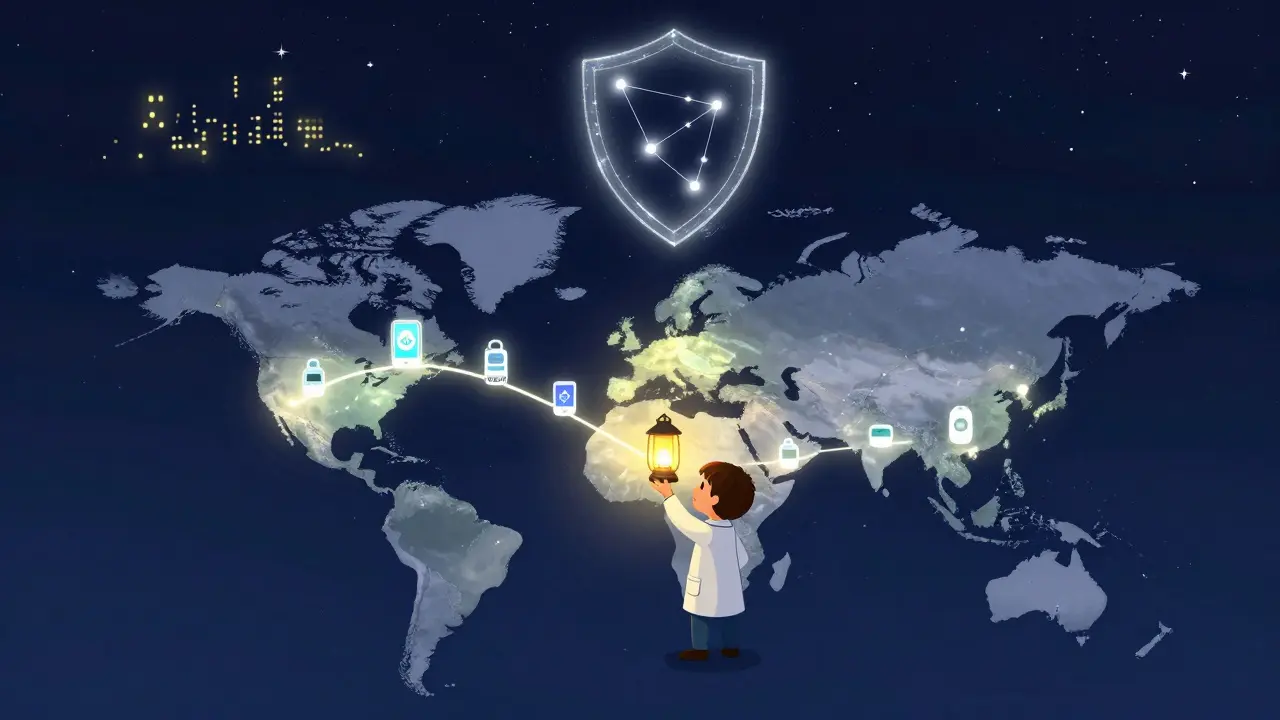
And it’s growing. In 2023, the FDA invested $304 million into the next phase-Sentinel 3.0. This version will use more AI, better integrate patient-reported data from apps and wearables, and expand partnerships with international regulators. The goal? A global network that can detect a dangerous drug trend in Tokyo, confirm it in Berlin, and alert the FDA in D.C.-all in days.
Who Uses It?
It’s not just the FDA. Drug companies use Sentinel to monitor their own products after launch. Academic researchers run studies through its platform. The CDC uses it for vaccine safety. Even Congress has requested Sentinel analyses to inform health policy.
It’s become the backbone of how modern medicine stays safe-not by waiting for tragedy, but by watching, learning, and acting before it’s too late.
Is the FDA Sentinel Initiative the same as FAERS?
No. FAERS is a passive reporting system where people voluntarily submit side effect reports. Sentinel is an active surveillance system that analyzes real-world data from millions of patients using insurance claims and electronic health records. Sentinel can detect patterns FAERS misses because it knows how many people took a drug, not just who reported a problem.
Does Sentinel collect my personal health data?
No. Your personal information never leaves your hospital or insurer. Sentinel only receives aggregated, anonymized numbers-like “1,200 people on Drug X had a stroke in the last quarter.” No names, no addresses, no Social Security numbers. The system is designed to protect privacy while still finding safety signals.
How fast does Sentinel detect a drug safety issue?
Typically, within weeks. Traditional studies can take years. Sentinel uses existing data, so once a signal is flagged-say, from a spike in ER visits-it can run an analysis in 30 to 90 days. For urgent cases, like a new vaccine, it can deliver results in under two weeks.
Can patients access Sentinel data?
Not directly. Sentinel is a regulatory tool, not a public dashboard. But the FDA publishes summaries of its findings on its website, including safety communications and label updates. If you’re concerned about a drug, check the FDA’s Drug Safety Communications page.
What’s next for the FDA Sentinel Initiative?
The next phase, called Sentinel 3.0, focuses on using artificial intelligence to analyze unstructured clinical notes, integrating data from wearable devices and patient apps, and building global partnerships. The goal is to make safety monitoring faster, smarter, and more predictive-so we can stop problems before they spread.




Katie Schoen
January 6, 2026 AT 08:08Beth Templeton
January 6, 2026 AT 21:29Pavan Vora
January 8, 2026 AT 05:13Ashley S
January 9, 2026 AT 11:24Cam Jane
January 9, 2026 AT 11:27Molly McLane
January 9, 2026 AT 19:51Ryan Barr
January 10, 2026 AT 04:03Leonard Shit
January 12, 2026 AT 00:38Amy Le
January 13, 2026 AT 03:09Tiffany Adjei - Opong
January 14, 2026 AT 08:10Harshit Kansal
January 15, 2026 AT 17:44Susan Arlene
January 16, 2026 AT 13:43Brian Anaz
January 18, 2026 AT 01:27Indra Triawan
January 19, 2026 AT 04:33Venkataramanan Viswanathan
January 20, 2026 AT 09:34