3
Pharmacokinetics and Side Effects: How Your Body Processes Drugs
Kidney Function Dosing Calculator
Input Your Information
How This Works
Your kidney function determines how quickly your body clears drugs. The Cockcroft-Gault formula estimates your creatinine clearance (CrCl), which helps doctors adjust doses for drugs like vancomycin. As shown in the article, patients with reduced kidney function (GFR < 60) are at higher risk of drug toxicity if standard doses are used.
Enter your information to see your adjusted dose calculation.
Ever wonder why a pill that works perfectly for your friend gives you a headache? Or why your grandma needs a lower dose of the same medicine you take? It’s not about strength or luck-it’s about pharmacokinetics. This isn’t just fancy science jargon. It’s the real reason some drugs save lives and others cause harm, even when taken exactly as directed.
What Happens When You Swallow a Pill?
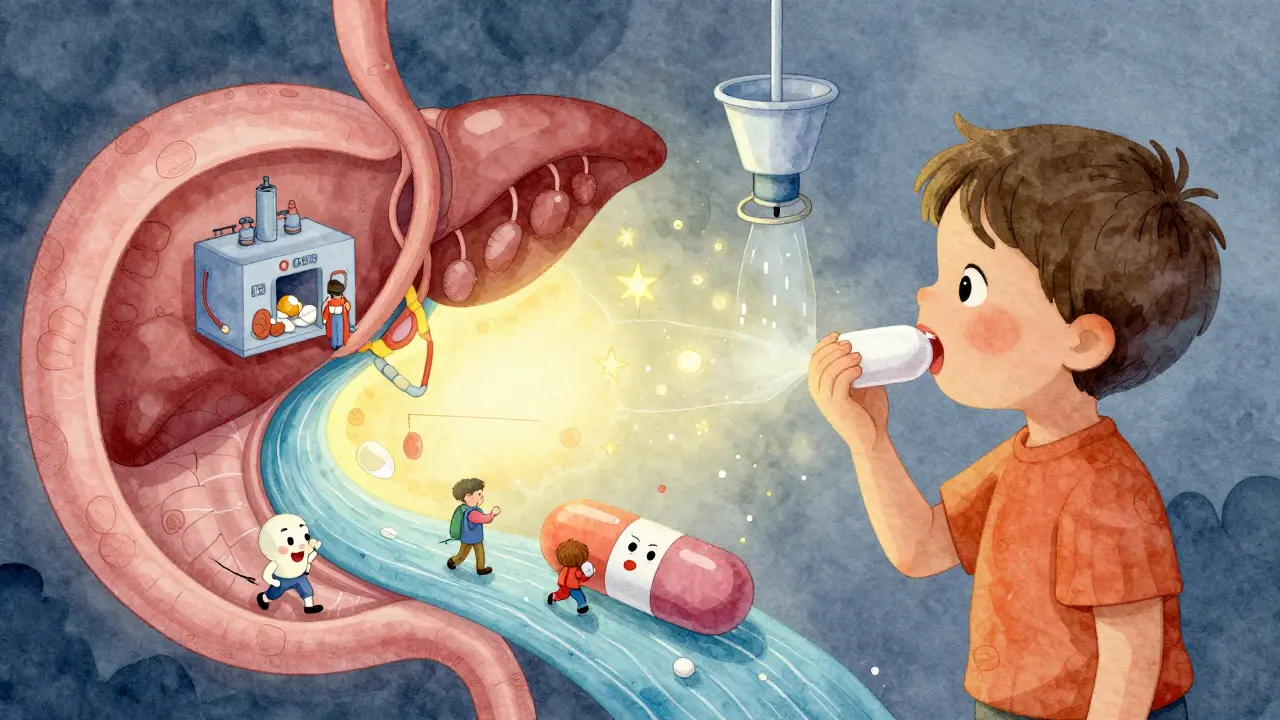
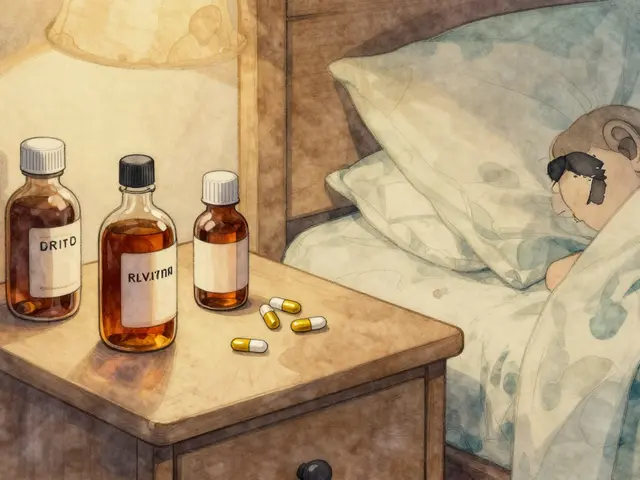
Your body doesn’t treat drugs like food. Once you take a medication, it doesn’t just sit there and work. It gets moved, changed, and kicked out-four stages in a precise order called ADME: Absorption, Distribution, Metabolism, and Excretion. Think of it like a delivery system with checkpoints.First, absorption. If you take a pill by mouth, it travels through your stomach and intestines. But not all of it makes it into your bloodstream. About 40-60% of most oral drugs get broken down by your liver before they even start working. That’s called first-pass metabolism. Some drugs, like nitroglycerin, are given under the tongue so they skip this step and hit your blood faster. IV drugs? They go straight in-100% bioavailability. No guesswork.
What’s absorbed depends on your stomach acid, how fast your gut moves, and even your gut bacteria. Some people have more of a protein called P-glycoprotein, which acts like a bouncer, kicking drugs back out of the intestines. That’s why two people taking the same dose of digoxin can have wildly different blood levels.
Where Does the Drug Go After It Enters Your Blood?
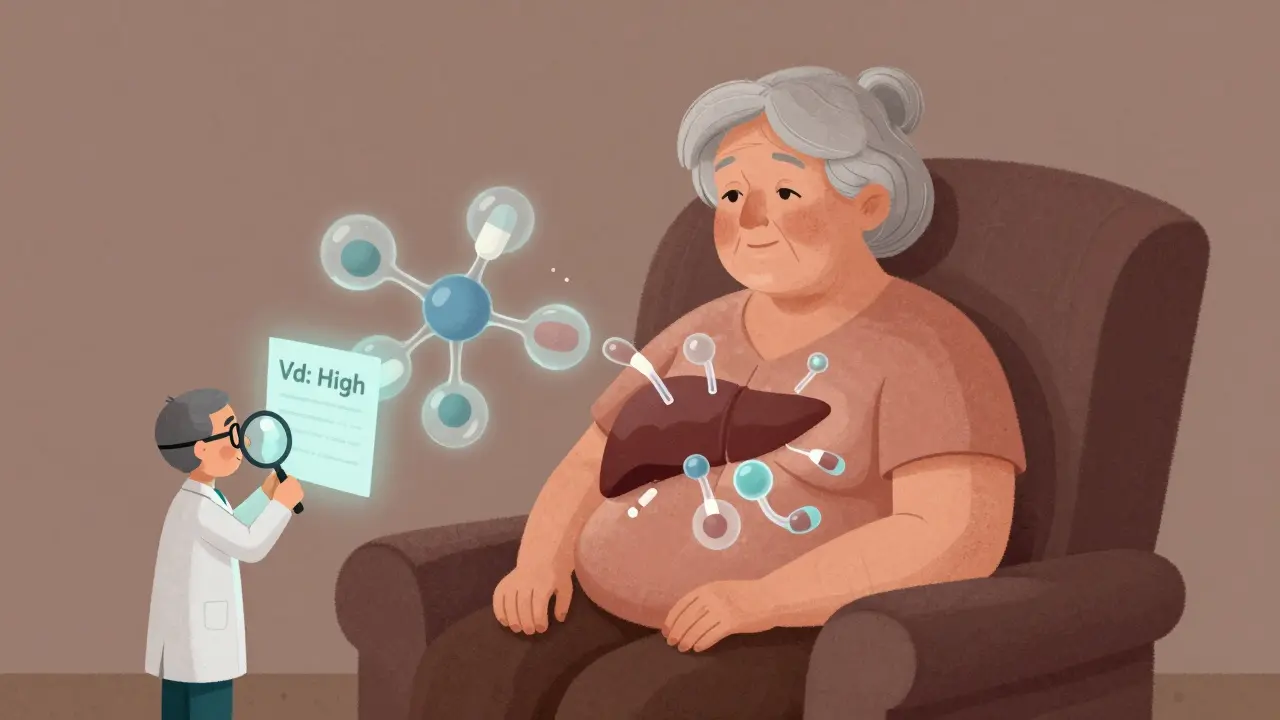
Once in your bloodstream, the drug starts spreading. This is distribution. Some drugs stay mostly in your blood. Others slip into fat, muscle, or even your brain. Scientists measure this with something called volume of distribution (Vd). A low Vd means the drug sticks close to your blood. A high Vd? It’s soaking into tissues.Proteins in your blood, especially albumin, grab onto many drugs like magnets. Warfarin, for example, is 98% bound. Only the 2% that’s free can actually work. If you’re sick, dehydrated, or on other meds that displace warfarin from proteins, that free amount spikes-and so does your risk of bleeding.
Age matters here too. Older adults often have less albumin and more body fat. That means drugs like diazepam (Valium) linger longer in their systems, making them more likely to feel dizzy or fall. It’s not the dose-it’s the body’s changed capacity to handle it.
Your Liver: The Drug Transformer
Metabolism is where things get personal. Your liver uses enzymes-mainly the CYP450 family-to break down drugs into metabolites. Some of these are harmless. Others? They’re the real cause of side effects.CYP3A4 handles about half of all prescription drugs. But here’s the catch: your genes decide how fast this enzyme works. About 3-10% of white people are slow metabolizers of CYP2D6. That means codeine, which needs to be turned into morphine to work, does nothing for them. Meanwhile, fast metabolizers turn it into morphine too quickly-risking overdose even at normal doses.
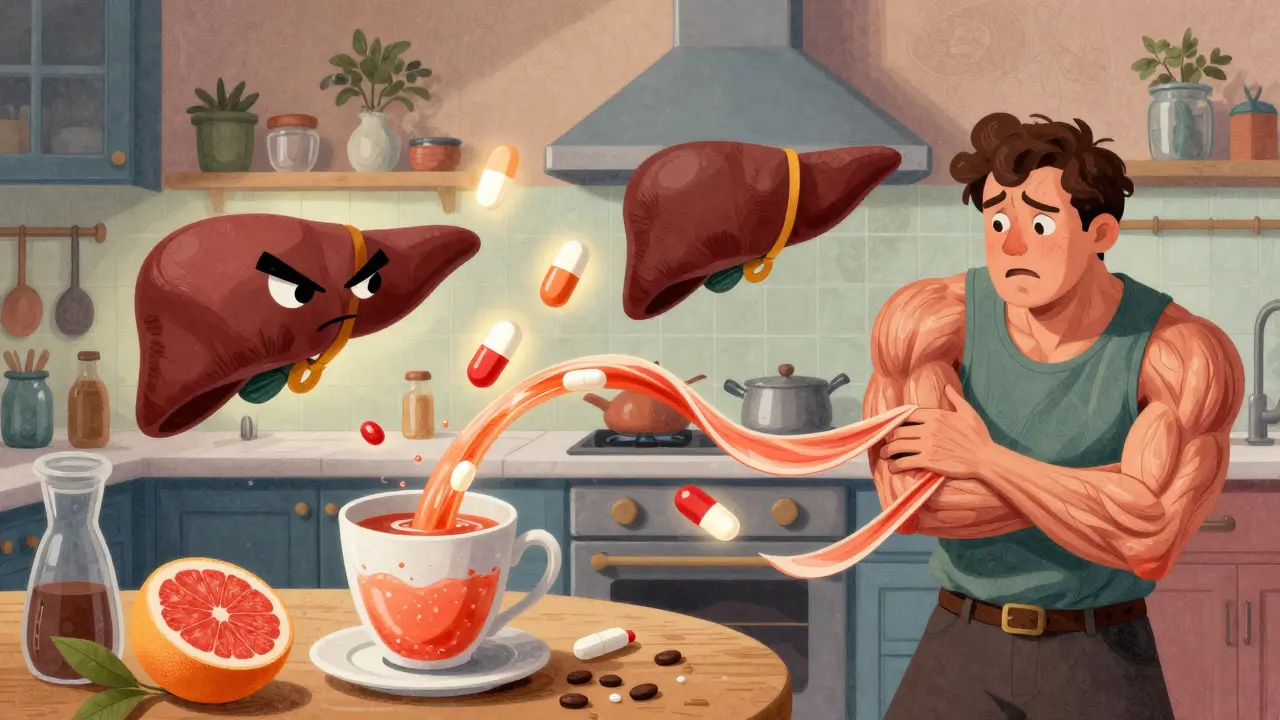
Drugs can also interfere with each other. Clarithromycin (an antibiotic) blocks CYP3A4. If you’re taking simvastatin (a cholesterol drug) at the same time, your body can’t clear it. Levels shoot up. Rhabdomyolysis-a dangerous muscle breakdown-goes from a 0.04% risk to 0.5%. That’s a 12-fold increase. And it’s not rare. Drug interactions like this cause 20-30% of serious side effects.
How Your Body Gets Rid of Drugs
Excretion is the final step. Most drugs leave through your kidneys. That’s why kidney function is so critical. A normal glomerular filtration rate (GFR) is 90-120 mL/min. If you’re over 70 or have diabetes, your GFR might be below 60. Many doctors still use standard doses for these patients. Big mistake.Vancomycin, an antibiotic, is a classic example. A 78-year-old patient with a GFR of 25 mL/min was given a standard dose. Her creatinine jumped from 1.2 to 3.4 mg/dL in days. She developed kidney damage. Her pharmacist caught it only after reviewing her labs. Adjusting the dose based on kidney function would’ve prevented it.
Some drugs are also cleared by the liver or bile. But if your liver is fatty, damaged, or genetically slow, those drugs build up. That’s why alcoholics or people with hepatitis need lower doses of many medications-even if their blood tests look fine.
Why Side Effects Aren’t Random
Side effects aren’t accidents. They’re predictable results of pharmacokinetics. When drug levels go too high, toxicity follows. Phenytoin, an epilepsy drug, has a narrow window: 10-20 mcg/mL. At 20+, 30% of patients show signs of toxicity-tremors, slurred speech, dizziness. At therapeutic levels? Only 2% have issues.Active metabolites are sneaky. Diazepam breaks down into desmethyldiazepam, which lasts up to 100 hours. In young people, that’s fine. In older adults with slower metabolism, it piles up. That’s why elderly patients on long-term benzodiazepines often feel foggy, fall, or break hips. It’s not the original drug-it’s the leftover pieces.
Genetics play a huge role. Warfarin users with CYP2C9 variants have a five times higher risk of bleeding at standard doses. That’s why genetic testing is now recommended before starting it. Abacavir, an HIV drug, causes a life-threatening rash in people with the HLA-B*5701 gene. Screening for that gene cuts the reaction rate by 90%.
Who’s Most at Risk?
Three groups are most vulnerable: the elderly, people with kidney or liver disease, and those on multiple drugs.People over 65 have 30-50% less liver function and 30-40% lower kidney clearance. They’re three times more likely to have a bad reaction. Yet, most prescriptions are still based on data from young, healthy men.
Polypharmacy-taking five or more drugs-is a red flag. Each new drug adds interaction risk. A 2022 Mayo Clinic study found 42% of patients with adverse reactions had at least one of these three risk factors: age over 65, poor kidney function, or five+ medications. And in most cases, the doctor didn’t adjust the dose.
Even something as simple as grapefruit juice can mess with drug metabolism. It blocks CYP3A4. If you’re on simvastatin, felodipine, or some anti-anxiety meds, a single glass can raise levels dangerously. No warning label? That’s because it’s not in the drug’s profile-it’s in the patient’s habits.
How Doctors Are Fighting Back
The field is changing. Therapeutic Drug Monitoring (TDM) is no longer just for hospitals. Blood tests for drugs like lithium, phenytoin, and vancomycin are now routine. But timing matters. Trough levels must be drawn just before the next dose. Yet, 22% of hospital labs get it wrong.AI tools like DoseMeRx are now FDA-approved. They use patient data-age, weight, kidney function, genetics-to predict the perfect dose. In one study, vancomycin dosing errors dropped by 62%. That’s life-saving.
Regulators are catching up too. The FDA now requires PBPK models for most new cancer drugs-virtual simulations of how the drug behaves across different body types. The EMA’s PK4All project is building global databases for rare diseases, where traditional dosing doesn’t work.
And the NIH just funded $185 million to fix a huge gap: 85% of past pharmacokinetic studies used Caucasian men aged 18-45. But that group makes up only 15% of actual patients. Women, older adults, Black and Hispanic populations, and people with obesity were left out. Now, research is finally being done on real people-not just lab models.
What You Can Do
You don’t need to be a scientist to protect yourself. Here’s what works:- Ask your doctor: “Is this dose right for my age, kidney function, or other meds?”
- Bring a full list of everything you take-including supplements and OTC painkillers.
- If you’re over 65 or have kidney/liver issues, ask if your meds need a lower dose.
- Don’t ignore new symptoms. A headache, rash, or muscle pain after starting a new drug? It might not be a coincidence.
- Ask about genetic testing if you’re on warfarin, clopidogrel, abacavir, or certain antidepressants.
Pharmacokinetics isn’t magic. It’s math, biology, and genetics-and it’s personal. Your body processes drugs differently than your neighbor’s. Understanding that isn’t just helpful. It’s essential for staying safe.
What does pharmacokinetics mean?
Pharmacokinetics is the study of how your body absorbs, distributes, metabolizes, and excretes drugs. It’s often summarized as “what your body does to the drug,” as opposed to pharmacodynamics, which is “what the drug does to your body.” This process determines how much of the drug reaches your target, how long it lasts, and whether side effects occur.
Why do some people have side effects and others don’t?
It’s mostly due to differences in how fast or slow your body processes the drug. Genetics affect liver enzymes like CYP2D6 and CYP2C9. Age reduces kidney and liver function. Other drugs can block or speed up metabolism. Even your gut bacteria can change how a drug is absorbed. Two people taking the same pill at the same dose can have completely different drug levels in their blood.
Can I test my own drug metabolism?
Yes, but not at home. Genetic tests for enzymes like CYP2C19 (for clopidogrel) or HLA-B*5701 (for abacavir) are available through your doctor. Blood tests for drug levels (like with warfarin or lithium) are done in labs. These aren’t routine for everyone, but they’re recommended for high-risk drugs or if you’ve had unexpected side effects.
Does grapefruit really interfere with medications?
Yes. Grapefruit contains compounds that block CYP3A4, a key liver enzyme that breaks down many drugs. This causes higher drug levels in your blood. It can affect statins, blood pressure meds, anti-anxiety drugs, and more. Even one glass can have effects for days. Always check if your medication warns against grapefruit.
Are side effects always dangerous?
No. Some side effects are mild and temporary-like nausea from antibiotics. But others signal toxicity: confusion, muscle pain, bleeding, or kidney changes. If a new symptom appears after starting a drug, especially if it’s persistent or worsening, it’s not just “normal.” It could mean your body is overloaded. Talk to your doctor or pharmacist right away.
How can I reduce my risk of drug side effects?
Keep a full list of all your medications and supplements. Tell your doctor about any changes in health-like weight loss, kidney issues, or new liver problems. Ask if your dose needs adjusting based on age or organ function. Don’t start new OTC meds or herbs without checking for interactions. And if you’re on a drug with a narrow safety window (like warfarin or digoxin), get regular blood tests.


Jacob Milano
January 4, 2026 AT 00:41Man, I never thought about how my gut bacteria could be the reason my ibuprofen doesn't work like it does for my buddy. I used to think it was just me being weak, but turns out my microbiome might be a tiny drug bouncer. Wild. I started tracking what I eat and my meds now - swapped my yogurt brand and my headaches dropped by half. Science is weird, but it’s also kind of cool when it finally makes sense.
Dee Humprey
January 5, 2026 AT 02:19My grandma took the same blood thinner as my cousin. She ended up in the ER with internal bleeding. He was fine. Same pill. Different bodies. No one told us to check kidney function or age-adjust. Doctors assume one size fits all. It’s not negligence - it’s outdated training. We need mandatory pharmacokinetics refresher courses for every prescriber. This isn’t optional safety. It’s basic medicine.
Jason Stafford
January 5, 2026 AT 03:37They’re hiding something. The FDA knows full well that 85% of drug studies use white men 18-45 - and they still approve drugs for everyone. Why? Big Pharma doesn’t want to pay for real testing. They’d rather kill a few old ladies than delay the next billion-dollar pill. And don’t get me started on grapefruit - they banned it in Canada for some drugs. Here? You’re on your own. Wake up people. This isn’t science. It’s corporate roulette.
Cassie Tynan
January 6, 2026 AT 21:02So let me get this straight - we’ve got AI algorithms that can predict your perfect dose based on your DNA, kidney function, and whether you ate a bagel this morning… but your doctor still just scribbles ‘50mg’ on a prescription like it’s 1983? 🤦♀️ I’m not mad, I’m just disappointed. We’re living in the future, but medicine is still stuck in the Dark Ages with a clipboard and a prayer.
Akshaya Gandra _ Student - EastCaryMS
January 6, 2026 AT 21:44i didnt know grapefruit did that to meds… i drink it every day with my pills… hope i dont die lol
en Max
January 7, 2026 AT 07:24It is imperative to underscore the clinical significance of pharmacokinetic variability, particularly in the context of CYP450 isoenzyme polymorphisms, which exert profound influences on bioavailability, clearance, and therapeutic index. The current standard-of-care dosing paradigms, predicated upon population averages derived from homogenous cohorts, are statistically and ethically indefensible. Therapeutic drug monitoring (TDM), when implemented with appropriate pharmacokinetic modeling, reduces adverse drug events by 40–60% in vulnerable populations. Institutional inertia, not scientific uncertainty, is the primary barrier to implementation.
Angie Rehe
January 9, 2026 AT 05:12So you're telling me my doctor didn't even check my kidney function before prescribing me vancomycin? I'm 71 and have diabetes - and he just gave me the 'normal' dose? That's malpractice. I'm calling the state medical board. This isn't just a mistake - it's a death sentence waiting to happen. And why didn't the pharmacist catch it? Where's the accountability? Someone needs to lose their license over this.
Enrique González
January 10, 2026 AT 02:59I used to think side effects were just part of the deal. Then my mom started taking that new antidepressant and she couldn't hold a spoon without shaking. We found out she was a slow CYP2D6 metabolizer - the drug built up like a clogged pipe. Changed the dose, she’s back to baking pies. It’s not about being ‘sensitive.’ It’s about biology. If your doctor doesn’t talk about this, ask. Seriously. Just ask.
Aaron Mercado
January 10, 2026 AT 06:09People need to stop blaming the drugs. If you're taking 8 different pills, drinking grapefruit juice, and you're 70 - you're asking for trouble. It's not the system's fault. It's YOUR fault for being lazy. You don't read the labels. You don't tell your doctor about your supplements. You think your 'natural remedies' are harmless? They're not. You're playing Russian roulette with your liver. And now you want the government to fix it? Take responsibility. Your body isn't a lab rat - it's your responsibility.