31
Specific IgE Testing: How to Identify Allergens and Understand Your Results
What Is Specific IgE Testing?
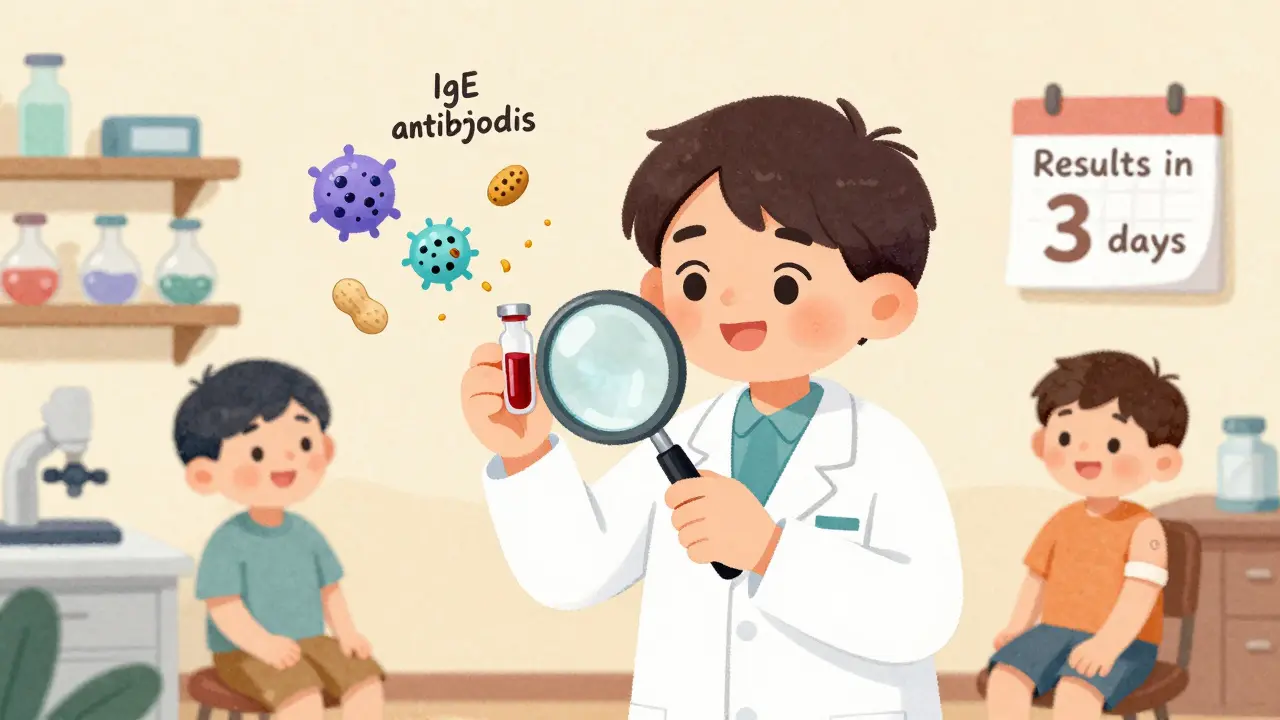
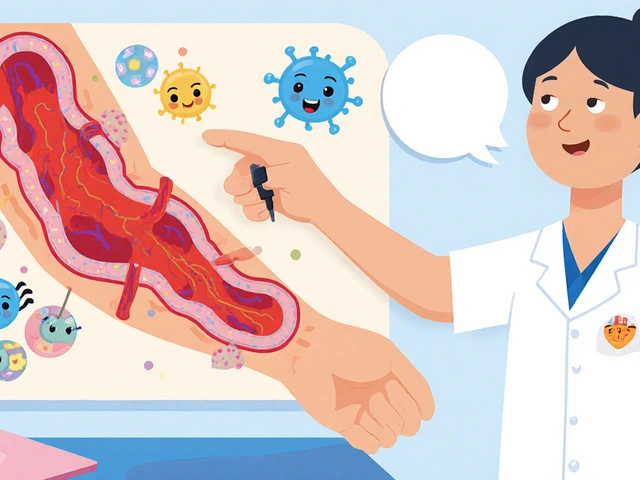
Specific IgE testing is a blood test that finds out which substances your body is allergic to. It measures the amount of immunoglobulin E (IgE) antibodies in your blood that react to particular allergens like pollen, peanuts, cat dander, or dust mites. Unlike skin tests, which show reactions on your skin, this test looks at what’s happening inside your bloodstream. It’s not a guess-it’s a lab-based measurement that gives a number, usually in kUA/L, showing how strong your immune response is to each allergen.
How It Works: From RAST to ImmunoCAP
Back in the 1970s, doctors used a test called RAST, which could only tell if you had an allergy or not-no numbers, no detail. Today, the gold standard is ImmunoCAP, a method developed by Thermo Fisher that uses a tiny capsule filled with a special polymer to catch IgE antibodies. This lets labs measure exact levels, not just presence. The test is done using Fluorescence Enzyme Immunoassay (FEIA), which is precise, reliable, and can detect levels as low as 0.1 kUA/L. Most major labs in Australia, the US, and Europe now use this method. In fact, 85% of UK labs switched to ImmunoCAP by 2023 because it’s far more accurate than older versions.
What Do the Numbers Mean?
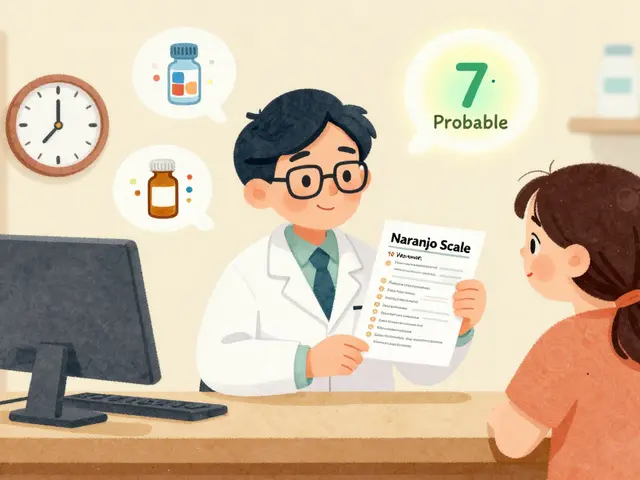
Your result will show a number: 0.35 kUA/L or higher means a positive result. But here’s the catch-a number alone doesn’t tell you if you’ll have a reaction. The specific IgE testing result must be read with your history. A value of 0.5 kUA/L might mean nothing if your total IgE is high, but it could be very significant if your total IgE is normal. For example:
- 0.35-0.70 kUA/L: Weakly positive-needs context
- 0.71-3.5 kUA/L: Moderate
- 3.5-17.5 kUA/L: Strong
- 17.5-50 kUA/L: Very strong
- Over 50 kUA/L: Extremely high
For peanut allergy, a result of 15 kUA/L or higher gives you a 95% chance of having a real allergic reaction. But at 0.35 kUA/L, that chance drops to just 50%. That’s why doctors don’t treat numbers in isolation.
When Is This Test Used?
This test isn’t for everyone. It’s used when:
- You have symptoms like hives, asthma, or anaphylaxis after eating certain foods
- You can’t stop taking antihistamines before a skin test
- You have severe eczema covering 40% or more of your skin
- You’ve had a serious reaction and doctors need to confirm the trigger
- You’re being considered for allergy shots (immunotherapy)
It’s also used when skin testing isn’t safe-like if you’re on beta-blockers or have unstable asthma. In children, about 27% get this test because they can’t pause their allergy meds for the 3-5 days needed for skin testing.
Why Skin Prick Testing Is Still Preferred
Even though blood tests are convenient, skin prick testing is still the first choice for most allergists. Why? Because it shows real-time reactions in your skin-your body’s actual response, not just a blood marker. Skin tests are about 15-20% more sensitive for common allergens like pollen or dust mites. They’re faster, cheaper, and give results in 15 minutes. But if your skin is covered in eczema, or you’re on medications that block the reaction, blood testing becomes the only option.

What Tests to Avoid
Not all allergy tests are created equal. Avoid these:
- Food mix panels-testing for 10 foods at once. These cause false positives and false negatives more than 30% of the time.
- Unproven tests-like hair analysis, applied kinesiology, or IgG testing for food sensitivities. These aren’t validated and can lead to unnecessary diet restrictions.
- Testing more than 12 allergens-if you test for 20 or more, the chance of a false positive jumps to nearly 60% just by random chance.
Guidelines from Australia and the US say: test only what makes sense based on your history. If you’ve eaten peanuts your whole life without issue, don’t test for them again.
Component-Resolved Diagnostics: The Next Step
Some labs now offer component-resolved diagnostics (CRD). Instead of testing for whole peanut extract, they test for specific proteins like Ara h 2-the one most linked to severe reactions. This helps tell the difference between a true peanut allergy and cross-reactivity with birch pollen (which can cause a mild oral itch but not anaphylaxis). CRD improves accuracy from 70% to 92% for nuts and legumes. It’s not for everyone, but if you’ve had confusing results before, it’s worth asking about.
How to Prepare and What to Expect
You don’t need to fast or stop any meds before a blood test. A nurse will draw about 2 mL of blood from your arm-same as a regular blood test. Results usually come back in 3 business days. If your doctor orders a rare allergen, it might go to a specialist lab and take longer. Your doctor will get the result and interpret it with your symptoms. Don’t try to read it yourself-numbers without context can scare you or give false reassurance.
What Happens After the Test?
If your result is positive and matches your symptoms, your doctor might recommend:
- Avoiding the allergen
- Carrying an epinephrine auto-injector
- Starting immunotherapy (allergy shots or tablets)
- Keeping a food and symptom diary
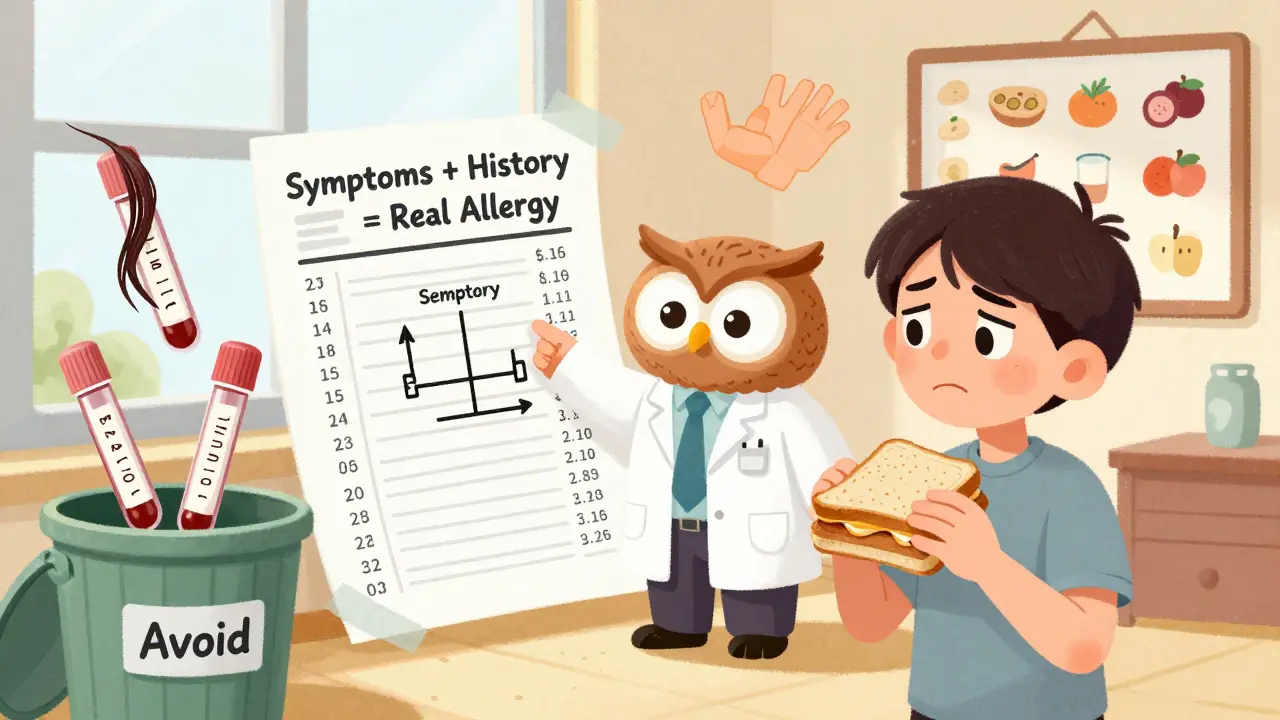
If the result is weak or doesn’t match your history, they may say it’s a false positive and advise you to keep eating the food safely. That’s right-sometimes the test is wrong, and the only way to know for sure is through an oral food challenge under medical supervision.
Why This Test Isn’t for Routine Screening
Doctors don’t test healthy people for allergies just because. A 2025 national guideline found that 22% of IgE tests in primary care are unnecessary. If you’ve never had a reaction to shellfish, testing for it won’t help-it just adds cost and confusion. Testing should only happen when the result will change what you do. If you’re not going to avoid the food or carry an EpiPen, why test?
How Total IgE Helps Interpret Results
Your total IgE level is often checked along with specific IgE. Why? Because a specific IgE of 0.5 kUA/L means something very different depending on your total IgE:
- If your total IgE is 1 kUA/L, then 0.5 kUA/L is half your total-very significant.
- If your total IgE is 100 kUA/L, then 0.5 kUA/L is just 0.5%-likely meaningless.
This is why labs now automatically check total IgE when a specific IgE is positive. It helps avoid overtreating minor results.
What’s New in 2026?
Some advanced centers are using multiplex platforms like ISAC, which can test for 112 allergen components from just one tiny blood sample. But these are still restricted to specialist allergy clinics because interpreting them requires deep expertise. For most people, the standard ImmunoCAP test for 15-20 common allergens is enough. The focus is shifting from broad panels to smart, targeted testing based on real symptoms.
Bottom Line: Test Smart, Not Often
Specific IgE testing is powerful-but only when used correctly. It’s not a magic bullet. A positive result doesn’t always mean you’re allergic. A negative result doesn’t always mean you’re safe. The key is matching the test to your history. If you’ve had a clear reaction to a food or pollen, the test can confirm it. If you’re just worried, it might not help at all. Always work with a doctor trained in allergy diagnosis. Don’t let a number dictate your life. Let your symptoms, your history, and your doctor guide you.




Donna Macaranas
February 1, 2026 AT 23:02This is actually super helpful. I’ve been avoiding nuts for years because of a vague history, but my IgE was only 0.8 - turns out it’s probably just cross-reactivity with birch. Learned that from this post. Thanks for laying it out so clearly.
Rachel Liew
February 3, 2026 AT 03:44I’m a mom of two kids with eczema and we’ve been through this maze. Blood tests were our only option because their skin was too raw for prick tests. I didn’t realize how much total IgE matters - my daughter’s 0.6 kUA/L looked scary until we saw her total was 98. Now we just eat peanut butter and breathe. 🙌
Lisa Rodriguez
February 4, 2026 AT 09:07So many people panic over a 0.5 result and start cutting out whole food groups. I work in a clinic and see this every week. The real magic is in combining history with numbers. One kid had a 12 kUA/L on milk but drinks it daily with zero symptoms - turns out he’s just sensitized, not allergic. We did a challenge and he’s fine. Testing without context is dangerous.
Also, CRD is a game changer for peanuts. If you’ve got a history of oral itching from raw apples and a positive peanut test, check for Ara h 2. That’s how you avoid unnecessary fear.
And yes, IgG tests are junk. Don’t waste your money. I’ve seen people go broke on elimination diets based on those.
Also, avoid those 20-food panels. My cousin got a 0.3 on 8 different foods and thought she was allergic to everything. Turned out she just had leaky gut and stress. No wonder she was miserable.
Doctors need to stop ordering broad panels like it’s a grocery list. Test smart. Test once. Then listen to the patient.
Lilliana Lowe
February 4, 2026 AT 09:47It’s mildly concerning that this article doesn’t mention the 2024 JACI meta-analysis showing ImmunoCAP has a 14% false negative rate for shellfish in adults over 50. Also, the 85% UK adoption stat is misleading - many labs use ImmunoCAP only for pediatric cases and fallback to older methods for adults. And don’t get me started on the industry bias toward Thermo Fisher’s proprietary caps. This isn’t science - it’s corporate synergy dressed up as progress.
June Richards
February 5, 2026 AT 06:01Anyone else think this is all just a scam to sell EpiPens? I’ve seen people get a 0.4 and start carrying injectors like it’s a survival kit. Meanwhile, they’re terrified of toast. The whole industry is built on fear. Skin tests are fine - if you’re not allergic, you don’t need a blood test. Period.
Lu Gao
February 6, 2026 AT 01:17Wait - so if I ate shrimp every day for 10 years and never reacted, but now my IgE is 0.7, does that mean I’m secretly allergic? Or is this just the medical system gaslighting us into thinking we’re broken? 🤔
Angel Fitzpatrick
February 6, 2026 AT 19:02They’re lying. IgE testing is controlled by Big Pharma and the FDA. The real cause of allergies? 5G radiation and glyphosate poisoning. Labs use ImmunoCAP because it’s designed to overdiagnose - so they can sell more epinephrine pens, gluten-free bread, and $300 ‘hypoallergenic’ air purifiers. They don’t want you to know that your body is just detoxing. Your ‘allergy’? It’s your immune system fighting back. Don’t suppress it - support it with colloidal silver and infrared saunas.
Also, they banned the real test - the Vega machine. It detected energy imbalances. But the FDA shut it down because it couldn’t be patented. Look it up.
Chris & Kara Cutler
February 7, 2026 AT 15:47THIS. Exactly this. Test smart. Don’t test everything. My husband was terrified of eggs until we did a challenge - he’s fine. Now he eats them daily. Life-changing.
Nidhi Rajpara
February 8, 2026 AT 20:20While the article presents a scientifically grounded perspective, it is imperative to acknowledge that the reliance on ImmunoCAP as a gold standard remains contingent upon standardized calibration protocols, which vary significantly across regional laboratories. Furthermore, the exclusion of IgE component testing in routine clinical practice, despite its demonstrable efficacy in reducing cross-reactivity misinterpretation, reflects a systemic underinvestment in diagnostic precision. The assertion that 85% of UK labs have adopted ImmunoCAP is statistically plausible, yet the absence of peer-reviewed longitudinal data regarding clinical outcomes post-implementation renders such claims insufficiently substantiated. Additionally, the conflation of sensitivity with clinical relevance remains a persistent epistemological flaw in contemporary allergology.
vivian papadatu
February 10, 2026 AT 13:02My allergist just started using CRD for my kid’s peanut test - turned out it was just Ara h 8 (birch pollen cross-reactivity), not the scary Ara h 2. We didn’t need to avoid peanuts at all. 🙏 I wish more doctors knew about this. It’s not magic, it’s science - but it’s hard to find unless you ask. If you’ve had confusing results, push for component testing. It’s worth the extra step.