31
SSRI Side Effects: Complete Overview from Mild to Severe

SSRI Side Effect Comparison Tool
How This Tool Works
Compare different SSRI medications based on side effect profiles relevant to you. Select your main concerns and see which SSRIs might be better suited for your needs.
Important: This tool provides general information. Always consult your doctor for personalized medical advice.
When you start taking an SSRI for depression or anxiety, you’re not just hoping for better moods-you’re also signing up for a list of possible side effects. Some are mild, some are annoying, and a few can be serious. The truth? Almost everyone experiences at least one. A 2023 study of 401 people on SSRIs found 86% had side effects, and more than half said they were disruptive enough to affect daily life. If you’ve been told SSRIs are "safe" or "well-tolerated," that’s only half the story. The real picture is more complex-and more important to understand before you start.
Common Side Effects: What You’re Likely to Feel
Most people on SSRIs feel something in the first few weeks. Nausea tops the list-about half of users get it, especially in the first week. It’s not just a stomach upset; it’s often sudden, intense, and can make you skip meals or feel dizzy. Taking the pill with food helps. One survey found 63% of people saw improvement just by doing that. Drowsiness and fatigue come next. Some SSRIs make you sleepy, others keep you up. Sertraline (Zoloft) tends to cause insomnia, while paroxetine (Paxil) often makes people feel sluggish. If you’re struggling to sleep, switching the dose to the morning can help. If you’re too tired to get out of bed, don’t assume it’s just depression-it might be the medication. Dry mouth, headaches, and dizziness are also common. These usually fade after a few weeks. But don’t ignore them. Dizziness isn’t just "feeling off." It can lead to falls, especially in older adults. And dry mouth isn’t just uncomfortable-it increases your risk of cavities and gum disease over time.Sexual Dysfunction: The Most Overlooked Problem
This is the side effect no one talks about until it happens to you. Up to 70% of people on long-term SSRIs report sexual problems. That’s not a small number-it’s the majority. It includes reduced libido, trouble getting or keeping an erection, delayed orgasm, or complete inability to climax. It’s not just frustrating-it can damage relationships and make people stop taking their meds. It’s not just "in your head." SSRIs increase serotonin, which can shut down the pathways in your spinal cord that control sexual response. This isn’t temporary for everyone. A Reddit survey of over 1,200 users found 42% still had sexual issues after six months. Some never fully recover, even after stopping the drug. There are ways to manage it. Lowering the dose helps in 40% of cases. Some doctors add bupropion (Wellbutrin), which doesn’t cause sexual side effects and can counteract them. Others prescribe sildenafil (Viagra) for men-studies show it works for 67% of those struggling. But none of these are perfect. Many people just quit the SSRI instead.Weight Gain: It’s Not Just About Appetite
You might think weight gain means you’re eating more. But with SSRIs, it’s more complex. Serotonin affects how your body stores fat and regulates insulin. Over time, SSRIs can slow metabolism and increase cravings for carbs. A 2023 meta-analysis found people on SSRIs gained an average of 2.5 kg (5.5 lbs) in six months-even without changing diet. Some SSRIs are worse than others. Paroxetine and fluoxetine are most linked to weight gain. Escitalopram and sertraline tend to be better. But even "better" doesn’t mean "safe." In one study, 49% of users reported noticeable weight gain. And it’s not just cosmetic. Weight gain increases risk for diabetes, high blood pressure, and heart disease-conditions SSRIs may already be making worse. The good news? Lifestyle changes help. A 2023 study showed people who combined diet and exercise gained 3.2 kg less over six months than those who didn’t. It’s not a cure, but it’s a buffer.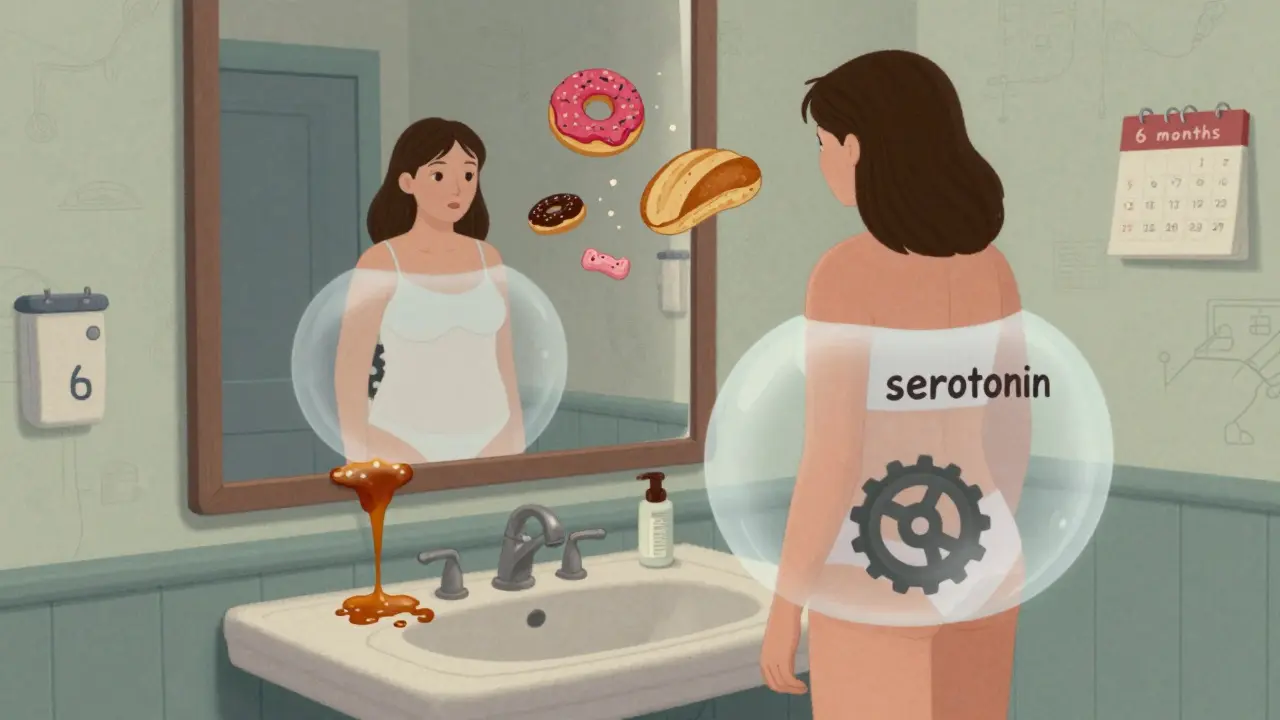
Severe Side Effects: When to Call Your Doctor
Most side effects fade. But some need immediate attention. Serotonin syndrome is rare but dangerous. It happens when too much serotonin builds up-often because SSRIs are mixed with other drugs like tramadol, certain painkillers, or even St. John’s wort. Symptoms start with shivering, sweating, fast heartbeat, and muscle twitching. If you get confused, have high fever, or uncontrollable movements, go to the ER. Left untreated, it can be fatal. Hyponatremia (low sodium) is more common than you think, especially in older adults. SSRIs interfere with how your kidneys handle water. Symptoms include nausea, headache, confusion, and in severe cases, seizures. The FDA updated SSRI labels in 2023 to warn about this risk. If you’re over 65, on diuretics, or have kidney issues, ask your doctor to check your sodium levels after a month on the drug. Extrapyramidal symptoms (EPS) include tremors, stiffness, restlessness (akathisia), and involuntary movements. These are more common in older people or those with Parkinson’s. Akathisia-feeling like you can’t sit still-is often mistaken for worsening anxiety. If you feel agitated, pacing, or unable to relax, tell your doctor. It’s not "just stress." It’s a drug reaction. Severe skin reactions like Stevens-Johnson syndrome are rare but life-threatening. If you get a painful rash, blisters, or peeling skin, stop the SSRI and seek help immediately. These reactions usually happen within the first few weeks.Discontinuation Syndrome: Quitting Isn’t Simple
Many people stop SSRIs because side effects are too much. But quitting cold turkey can make things worse. You might get dizziness, electric-shock sensations, nausea, anxiety, or insomnia. This is called SSRI discontinuation syndrome. It’s not withdrawal like alcohol or opioids. But it’s real. And it’s worse with drugs that leave your body fast-like paroxetine and fluvoxamine. The FDA says symptoms can start within a day or two of stopping. They usually fade in 1-3 weeks, but some people feel them for months. The fix? Taper slowly. Don’t cut your dose in half overnight. Experts recommend reducing by 10-25% every 2-4 weeks. For paroxetine, some doctors suggest switching to fluoxetine (which lasts longer) before tapering. Never stop without medical guidance.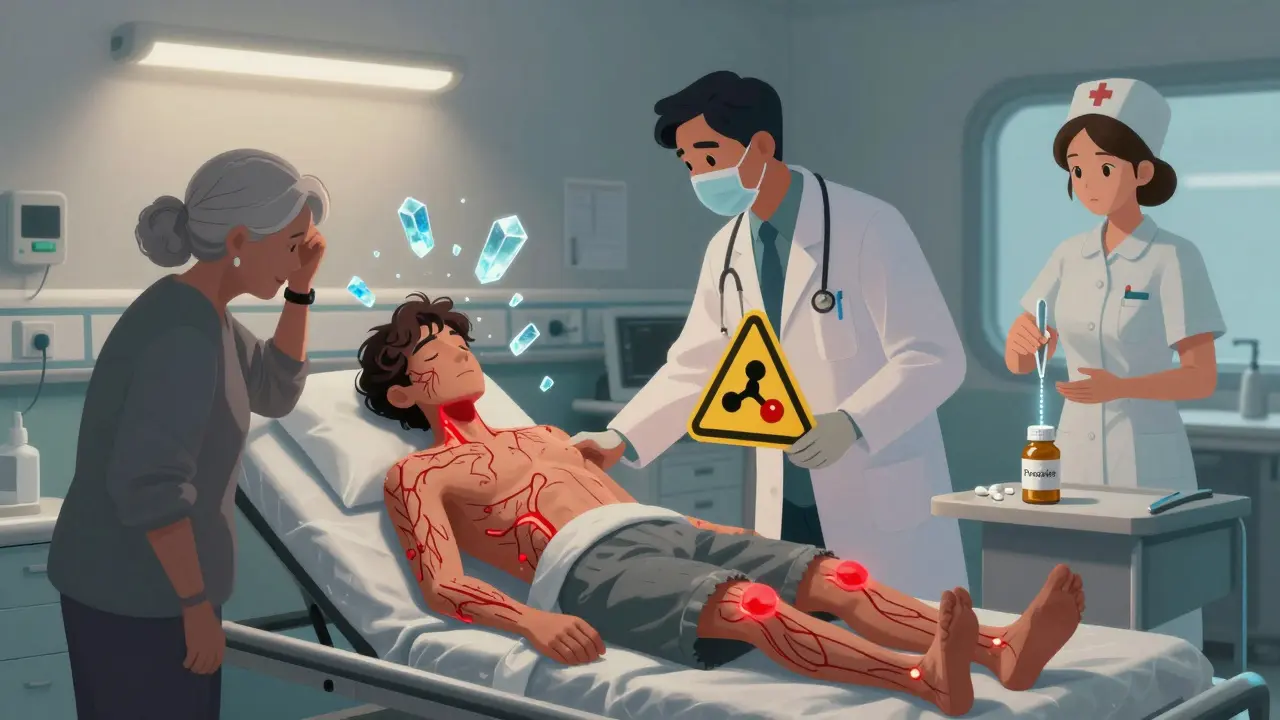
Why Some SSRIs Are Easier to Tolerate Than Others
Not all SSRIs are the same. Your doctor might say they’re all "similar," but the data says otherwise. Citalopram (Celexa) is generally the best tolerated. Fewest reports of sexual side effects and weight gain. Fluoxetine (Prozac) has a long half-life, so it’s easier to taper, but it can cause insomnia and agitation in some. Sertraline (Zoloft) is widely prescribed and has a balanced profile-though it’s linked to more nausea early on. Paroxetine (Paxil) is the worst for sexual side effects and weight gain. Fluvoxamine (Luvox) has the highest dropout rate in clinical trials due to side effects. A 2023 survey of U.S. psychiatrists found 63% now use pharmacogenetic testing before prescribing. These tests look at your genes to predict how you’ll metabolize certain drugs. It’s not perfect-but it’s better than guessing.What’s New in SSRI Research
Science is catching up to real-world problems. In 2023, the FDA added new warnings about long-term SSRI use increasing the risk of insulin resistance and type 2 diabetes by 24%. That’s not a small number. If you’re on an SSRI for years, get your blood sugar checked annually. Researchers are also testing new versions. Lu AF35700, currently in Phase III trials, cuts sexual side effects by 37% compared to standard SSRIs. Time-release formulas are being tested to reduce nausea and headaches by smoothing out blood levels. Meanwhile, mental health groups like NAMI are pushing for better communication. Their 2023 campaign helped 22% more patients report side effects to their doctors. That’s progress. Because if you don’t talk about it, nothing changes.What You Can Do Now
If you’re on an SSRI and having side effects:- Track them. Write down what you feel, when, and how bad.
- Don’t assume it’s "just depression." Side effects are real and measurable.
- Ask about alternatives. Bupropion, SNRIs, or even therapy might work better for you.
- Don’t quit cold turkey. Talk to your doctor about tapering.
- Consider lifestyle changes. Exercise, hydration, and diet can reduce many side effects.
- Request a metabolic panel if you’ve been on SSRIs for over a year.
- Ask your doctor: "Which SSRI has the least side effects for someone like me?"
- Ask about pharmacogenetic testing.
- Ask what to expect in the first month.
- Ask how to handle sexual side effects if they happen.
Do SSRI side effects go away over time?
Yes, many do. Nausea, headache, dizziness, and fatigue usually fade within 2-6 weeks as your body adjusts. But sexual dysfunction, weight gain, and some sleep issues often persist. If side effects haven’t improved after 6-8 weeks, talk to your doctor-don’t wait. You shouldn’t have to live with them indefinitely.
Which SSRI has the least side effects?
Citalopram (Celexa) is generally the best tolerated, with lower rates of sexual dysfunction and weight gain. Escitalopram (Lexapro) is similar. Fluoxetine (Prozac) has fewer immediate side effects because it stays in your system longer, but it can cause agitation. Paroxetine (Paxil) and fluvoxamine (Luvox) have the highest side effect rates. The "best" one depends on your genetics, age, and health history-so testing and discussion matter more than generalizations.
Can SSRIs cause permanent side effects?
For most people, side effects reverse after stopping. But some report lasting sexual dysfunction, emotional numbness, or movement disorders even after discontinuation. This is called Post-SSRI Sexual Dysfunction (PSSD) or Post-Antidepressant Syndrome. It’s rare, but documented in medical literature. If you experience persistent symptoms after stopping, seek a specialist familiar with these conditions.
Are SSRIs safe for long-term use?
SSRIs are approved for long-term use, but safety isn’t the same as risk-free. Long-term use is linked to higher risk of weight gain, insulin resistance, bone density loss, and gastrointestinal bleeding. The FDA updated warnings in 2023 to highlight metabolic risks. Regular check-ups-blood sugar, sodium, liver function, and bone density-are essential if you’re on SSRIs for more than a year.
Why do SSRIs cause weight gain?
SSRIs affect serotonin receptors that control appetite, fat storage, and insulin sensitivity. Over time, they can slow metabolism and increase cravings for sugary or carb-heavy foods. Studies show weight gain isn’t always due to eating more-it’s a direct metabolic effect. Some SSRIs, like paroxetine, are more likely to cause this than others. Lifestyle changes can help, but the effect is biological, not just behavioral.
Is there a better alternative to SSRIs?
Yes, depending on your needs. Bupropion (Wellbutrin) doesn’t cause sexual side effects or weight gain and can help with energy. SNRIs like venlafaxine may work better for some people. Therapy (CBT, ACT) is as effective as SSRIs for mild to moderate depression. For severe cases, a combination of therapy and medication often works best. There’s no one-size-fits-all. The key is matching the treatment to your body, not just your diagnosis.



Phoebe McKenzie
December 31, 2025 AT 20:12Wow. Just... wow. This is what happens when you let pharmaceutical companies write your mental health script. They sell you a chemical lobotomy and call it "treatment." You think you're getting better? You're just numb. And now your sex life is dead, your metabolism is in ruins, and you're told to "just push through." No one talks about how SSRIs are basically emotional tampons - they don't fix the leak, they just soak it up until you're drowning in side effects. And don't get me started on the doctors who still call them "safe." Safe for who? The shareholders?
Stop normalizing chemical suppression. We need real therapy, real food, real movement - not a pill that turns you into a zombie with a credit card bill.
Also - 70% sexual dysfunction? That's not a side effect. That's a war crime against intimacy.
gerard najera
January 2, 2026 AT 04:33Side effects are real. So is depression.
Stephen Gikuma
January 3, 2026 AT 14:06Did you know the FDA got pressured to downplay SSRI risks after Big Pharma donated $2.3 billion to lobbying in 2021? And now they're pushing this "metabolic risk" warning like it's new? Nah. They knew in 1998. They knew in 2005. They just needed you hooked first. Then they sold you "lifestyle changes" like it's your fault. Meanwhile, the same companies that make SSRIs also make the diabetes meds you'll need later. It's a closed loop. You're not sick - you're a customer.
And why is everyone talking about serotonin? What about the glyphosate in your food? The EMFs? The fluoride? They're all connected. SSRIs are just the tip of the corporate poisoning iceberg.
Bobby Collins
January 4, 2026 AT 00:52ok but like… i took zoloft for 3 years and i swear my brain just… never came back? like i forgot how to feel happy. not sad. just… nothing. like my emotions were on airplane mode. and now i’m off it and still feel like a ghost. my therapist said "it takes time" but what if it doesn’t? what if it’s permanent? i’m 28 and i feel 80. 😔
also i gained 30 lbs and now my jeans don’t fit and i hate mirrors. why is no one talking about this? why is it so taboo to say "this drug ruined my body?"
Lee M
January 5, 2026 AT 00:01Let’s not romanticize suffering. The mind is not a temple - it’s a biological machine. SSRIs modulate neurotransmitters. That’s not evil. That’s pharmacology. To call them "chemical lobotomies" is poetic nonsense. The real tragedy isn’t the drug - it’s the absence of alternatives. We don’t have enough therapists. We don’t have affordable care. We don’t have time. So people take pills because they’re the only tool left in the toolbox.
Yes, side effects exist. But so does suicide. And the data shows SSRIs save lives. Don’t let your outrage blind you to the fact that someone, somewhere, is alive today because they took this pill - even if it made them gain weight or lose libido.
Complexity is uncomfortable. But it’s true.
Dusty Weeks
January 6, 2026 AT 07:42bro i took citalopram for 6 months and my balls shrunk?? like literally i felt em shrink?? and i couldnt cum for 8 months after i quit?? like i was just… empty. no vibe. no spark. just a robot with a credit card.
also my mom said "just pray harder" so i stopped going to church.
🥺
Bill Medley
January 6, 2026 AT 16:32The data presented here is both comprehensive and clinically significant. The prevalence of sexual dysfunction, metabolic changes, and discontinuation syndrome aligns with peer-reviewed literature from the Journal of Clinical Psychiatry and The Lancet Psychiatry. While SSRIs remain first-line pharmacotherapy for moderate to severe depression, the ethical imperative for informed consent has never been more critical.
Patients must be offered not only risk disclosure, but also structured alternatives - including cognitive behavioral therapy, exercise protocols, and nutritional interventions - prior to initiation. The current standard of care often falls short of this standard.
Thank you for elevating this conversation with empirical rigor.
Heather Josey
January 8, 2026 AT 15:59I’m so glad someone finally laid this out clearly. I was on sertraline for two years and thought the fatigue and low sex drive were just "part of my depression." Turns out, it was the med. I tapered slowly with my doctor’s help - took 4 months - and slowly, my libido came back. Not 100%, but enough to feel human again.
Also - yes, weight gain is real. I lost it with strength training and cutting processed sugar. Not easy, but possible.
To anyone reading this: you’re not broken. You’re not weak. You’re just caught in a system that sells quick fixes. But you have agency. Talk to your doctor. Track your symptoms. You deserve to feel better - without losing yourself.
Olukayode Oguntulu
January 9, 2026 AT 05:23One must interrogate the epistemological framework underpinning psychopharmacological hegemony. The serotonin hypothesis - a reductive neurochemical mythos - has been empirically dismantled since the early 2000s, yet remains the ideological scaffolding for SSRI prescription. The clinical trials are industry-funded, publication bias rampant, and long-term outcomes systematically ignored.
One wonders whether the pharmaceutical-industrial complex, in its relentless commodification of affect, has rendered the human psyche a mere pharmacokinetic variable. The real pathology is not depression - it is the medicalization of suffering in late-stage capitalism. SSRIs are not treatment. They are pacification.
And yet - one cannot deny their utility for some. A paradox, yes. But only if one refuses to see the system as the disease.
jaspreet sandhu
January 9, 2026 AT 08:11Everyone is making this way too complicated. SSRIs are just drugs. They have side effects. That’s how drugs work. You want to feel better? Work out. Eat less sugar. Get sunlight. Stop scrolling. Talk to a friend. Stop expecting a pill to fix your life. I’ve seen guys on SSRIs for 10 years. They still cry in the bathroom at work. The pill didn’t help. The gym did. The walking did. The therapy did. The pill just made them fat and numb. Simple. No magic. No science. Just facts. You don’t need a 10-page article. You need to get off your ass.
Alex Warden
January 11, 2026 AT 05:57Look, I’m all for freedom, but this country is falling apart because we’re medicating away responsibility. You’re sad? Get a job. Join the military. Build something. Don’t pop a pill and call it healing. This is why America’s weak. We want easy answers. SSRIs are the opiate of the millennials. And now they’re telling us they cause diabetes and impotence? Surprise. The government knew. The doctors knew. But they kept selling it because it’s profitable.
Stop being a victim. Start being a man. Or woman. Whatever. Just stop taking the poison.
LIZETH DE PACHECO
January 12, 2026 AT 06:02Thank you for writing this. I wish I’d had this when I started my SSRI journey. I felt so alone with the weight gain and the numbness - like I was the only one. I’m 3 months off now and my body is slowly coming back. I still have days where I miss the numbness… but I’d rather feel everything than nothing.
If you’re on one and it’s not working - you’re not failing. You’re just not the right fit. There are other paths. You’re not broken. You’re just trying to survive in a world that doesn’t make space for pain. I see you. You’re not alone.
Kristen Russell
January 13, 2026 AT 02:15It’s fascinating how we’ve elevated pharmacological intervention to the status of moral virtue. The notion that emotional distress must be chemically neutralized reflects a profound cultural failure to tolerate ambiguity. The body is not a machine to be optimized - it is a phenomenological field. SSRIs do not heal; they suppress. And in suppressing, they create new forms of alienation - not just from desire, but from the self.
Yet I acknowledge their utility for some. The tragedy lies not in their existence, but in their ubiquity - a symptom of a healthcare system that prioritizes efficiency over depth. We have outsourced our inner lives to Big Pharma. And now we wonder why we feel so empty.
Bryan Anderson
January 14, 2026 AT 08:07This is an incredibly thorough and balanced overview. I appreciate how you included both the clinical data and the lived experience. As someone who’s been on an SSRI for five years, I can confirm the sexual side effects were the hardest to talk about - even with my therapist. It took me over a year to bring it up.
Switching to bupropion helped significantly, though I still have some fatigue. I also started walking 30 minutes a day - surprisingly, that helped more than I expected with both mood and weight.
Thank you for normalizing these conversations. It’s rare to see this level of honesty without judgment.
Matthew Hekmatniaz
January 15, 2026 AT 15:38As someone who grew up in a culture where mental health was never discussed, I’m grateful for posts like this. In my family, you didn’t talk about sadness - you prayed harder or stayed quiet. When I started SSRIs, I thought I was weak for needing them. This article helped me see that needing help isn’t weakness - it’s courage.
My side effects were mild - just nausea at first. But I didn’t know about the sexual side effects until it happened. I wish I’d known sooner. Now I talk about it openly with my friends. We all need to break the silence.
Thank you for being the voice that says: it’s okay to struggle. And it’s okay to ask for better.
gerard najera
January 16, 2026 AT 06:53People say "it’s not just in your head." But sometimes, it is. And that’s okay.
Not everything needs a chemical fix. But sometimes, it’s the only bridge you have to get to the other side.