26
Why You Must Tell Your Doctor About Supplements and Herbal Remedies
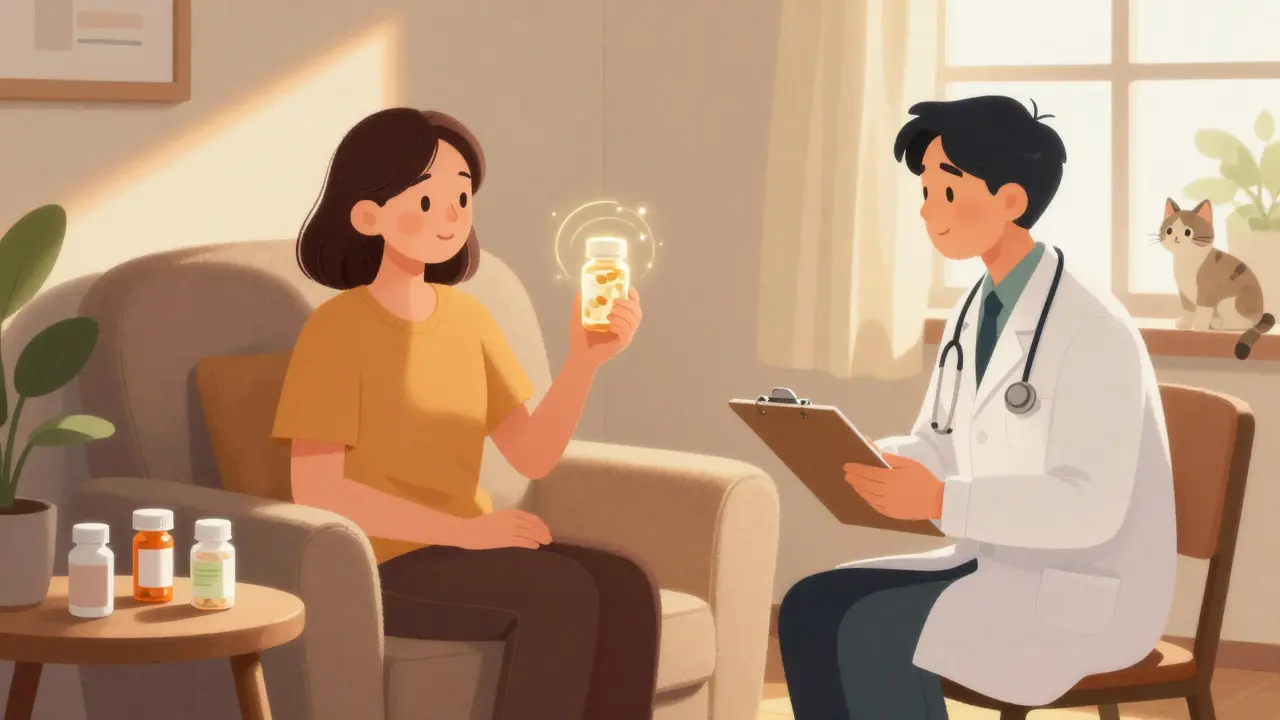
Every year, more than half of U.S. adults take vitamins, minerals, herbs, or other dietary supplements. Many believe these are harmless because they’re "natural." But here’s the truth: supplements can be just as powerful-and just as dangerous-as prescription drugs. And if your doctor doesn’t know you’re taking them, you’re putting yourself at risk.
Why Doctors Need to Know What You’re Taking
St. John’s wort, a popular herbal remedy for mild depression, can make your birth control pill useless. Turmeric, often taken for joint pain, can thin your blood so much that you bleed during surgery. Garlic pills? They can interfere with HIV meds. These aren’t hypothetical risks-they’re documented, real, and preventable.
Here’s the problem: only about one in three people tell their doctor about the supplements they use. Even among patients with chronic illnesses-people on multiple medications-disclosure rates stay below 40%. Meanwhile, 95% of patients report their prescription drugs. Why the difference? Because most people don’t think of supplements as "medicine." They see them as harmless snacks for the body. That’s a dangerous assumption.
The Hidden Dangers of Silent Use
The FDA doesn’t approve supplements before they hit store shelves. Unlike prescription drugs, they don’t have to prove safety or effectiveness before being sold. All they need is a label that says, "Not evaluated by the FDA." That’s it.
So what’s on the bottle? Sometimes it’s accurate. Sometimes it’s not. A 2022 study found that nearly 20% of herbal products contained ingredients not listed on the label-including prescription drugs, toxins, or allergens. One popular weight-loss supplement was found to contain a banned stimulant linked to heart attacks. Another turmeric product had heavy metals at levels 10 times above safety limits.
And here’s the kicker: your doctor can’t protect you from what they don’t know. If you’re on blood thinners and start taking ginkgo biloba, you could end up in the ER with internal bleeding. If you’re on an antidepressant and add 5-HTP, you risk serotonin syndrome-a life-threatening condition. These aren’t rare. They happen every day.
Why People Don’t Tell Their Doctors
Most patients don’t hide supplements out of rebellion or secrecy. They do it because:
- They assume their doctor won’t care
- They think "natural" means "safe"
- They’re afraid their doctor will judge them
- They’ve never been asked
A 2022 ConsumerLab survey found that 68% of supplement users believed their provider didn’t need to know because the products were "natural and safe." Forty-two percent worried their doctor would tell them to stop using them. But here’s what actually happens when people do speak up: 78% say their provider gave them useful advice, and 63% felt more trusted afterward.
Doctors aren’t against supplements. They’re against surprises. They want to know what’s in your system so they can avoid dangerous combinations, adjust dosages, or spot side effects early.

How to Talk to Your Doctor About Supplements
You don’t need to be an expert. You don’t need to memorize chemical names. Just be honest and prepared.
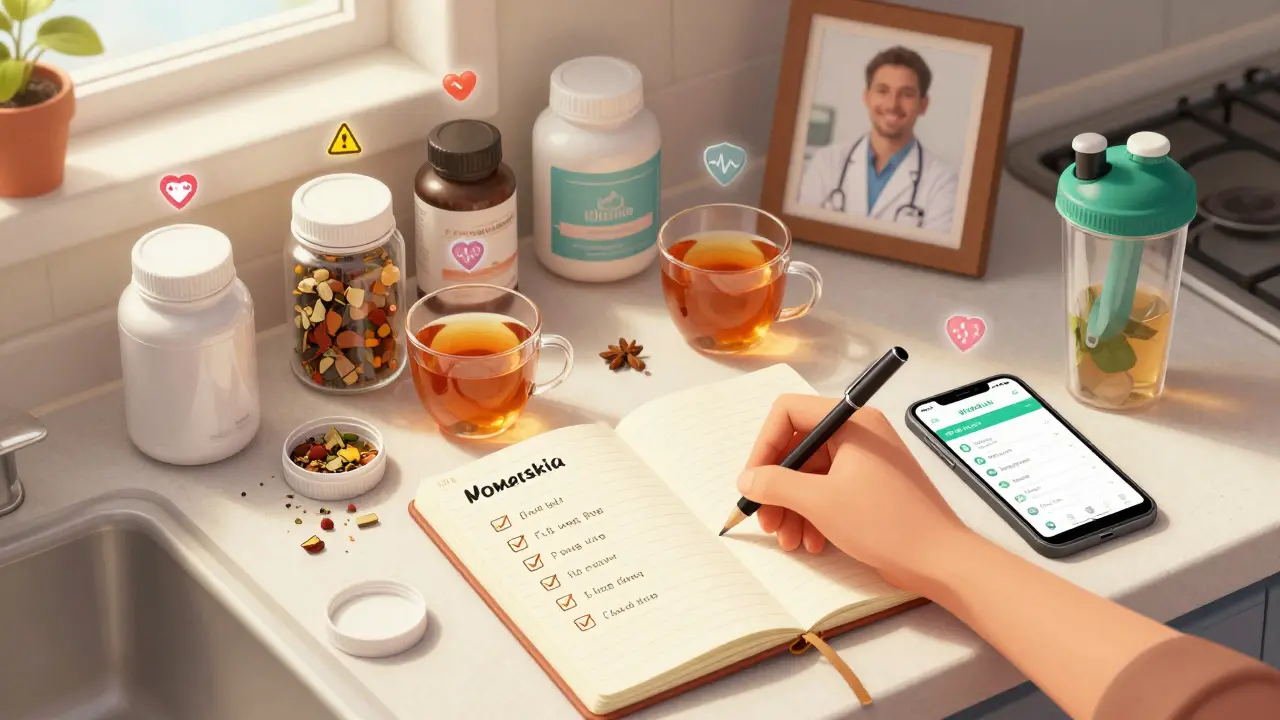
- Bring the bottles. Don’t just say "I take ashwagandha." Show the label. Ingredients vary wildly between brands. The bottle tells your doctor the exact dose, other ingredients, and whether it’s standardized.
- Include everything. Vitamins, fish oil, CBD, herbal teas, protein powders, even probiotics. If you swallow it, it counts.
- Ask direct questions. Say: "I’m taking X. Is it safe with my other meds?" Or: "Could this interfere with my condition?"
- Speak up during medication reviews. If your doctor changes your prescriptions, ask if your supplements still work with the new ones.
- Use a list. Keep a simple written or digital note of everything you take, including dose and frequency. Update it every time you start or stop something.
Some clinics now use a quick five-question screening tool during intake. It’s proven to boost disclosure from 33% to 78%. You can ask your provider: "Do you have a standard question about supplements during checkups?" If they don’t, you’re giving them the chance to start.
What Your Doctor Should Be Doing
It’s not all on you. Doctors need to ask-and they need to know what they’re hearing.
Only 27% of physicians feel adequately trained in supplement interactions. That’s changing. The American Medical Association now requires medical schools to teach herb-drug interactions. New tools like the MyMedList app help patients track and share their regimens, improving accuracy by 44% in clinical trials.
By 2026, federal guidelines expect all electronic health records to include a mandatory supplement field. That means your doctor’s system will soon prompt them to ask. But until then, don’t wait for them to bring it up.
Real Stories, Real Risks
One patient on Reddit shared: "My doctor never asked about supplements. I took garlic pills for years. When I had minor surgery, I bled for hours. Turns out, garlic thins blood. They had to stop the procedure."
Another, on HealthUnlocked, said: "I took turmeric for arthritis for two years. My cardiologist only found out when he asked. He told me it was raising my blood pressure meds’ side effects. We cut the dose-and my dizziness went away."
These aren’t outliers. They’re examples of what happens when communication breaks down.
It’s Not About Judging-It’s About Safety
Supplements aren’t evil. Many help people feel better. But they’re not harmless. They’re active substances with biological effects. Just like your blood pressure pill, your insulin, or your antibiotic-they interact. They compete. They amplify. They cancel out.
Your doctor isn’t trying to control you. They’re trying to keep you alive. And they can’t do that if you’re hiding part of your health picture.
The goal isn’t to stop using supplements. It’s to use them safely. Together. With full information. With trust. With open communication.
Next time you walk into your appointment, bring your supplements. Not because you’re being watched. But because you’re being cared for.




Marian Gilan
January 27, 2026 AT 23:12so like... what if i told you the FDA is just a front for Big Pharma to keep us docile? they dont regulate supplements because they WANT us to get sick so we buy more pills. i take 17 different herbs and i swear my aura is cleaner than a virgin's soul. my cat even smells better now. also my neighbor says my breath smells like enlightenment. dont tell your doctor. theyll just try to sell you more shit.
Conor Murphy
January 28, 2026 AT 06:48man this hit me right in the feels 😔 i used to hide my fish oil and turmeric from my doc like it was a secret club. one day he asked me outta nowhere and i just... started crying. he smiled and said 'good job being honest.' we adjusted my meds and now my knees dont scream when i get up. you're not weird for taking stuff. you're smart for asking. ❤️
Conor Flannelly
January 30, 2026 AT 00:04there's a philosophical layer here that rarely gets discussed: we treat supplements as 'natural' because we crave a return to something pre-industrial, something pure. but nature isn't kind-it's indifferent. poison ivy is natural. arsenic is natural. the real issue isn't the supplement, it's our romanticization of 'natural' as inherently good. medicine isn't the enemy; ignorance is. the body doesn't care if something comes in a pill or a leaf-it only cares about dosage, interaction, and context. if you're going to biohack your way through life, at least hack with awareness.
Patrick Merrell
January 31, 2026 AT 06:50you people are pathetic. if you're dumb enough to swallow random powders from a store shelf, you deserve to get sick. i don't take anything except coffee and water. if you're not on a prescription you wrote with a real doctor, you're just gambling with your organs. and don't give me that 'natural' crap-nature gave us wolves, not kale smoothies. stop being sheep.
bella nash
February 1, 2026 AT 22:53It is of considerable importance to note that the regulatory framework governing dietary supplements is fundamentally distinct from that of pharmaceutical agents. The absence of pre-market approval does not equate to an absence of risk, but rather reflects a legislative compromise predicated on consumer autonomy. One must, therefore, exercise epistemic humility when asserting the safety of unregulated compounds. The onus of epistemic responsibility rests not solely with the physician, but with the agent who ingests.
SWAPNIL SIDAM
February 3, 2026 AT 10:38i took ashwagandha for stress. my hands started shaking. i told my doctor. he said 'oh, that’s why your BP is all over the place.' we stopped it. now i sleep like baby. simple. no drama. just tell your doctor. they are not here to judge. they are here to help. 🙏
Geoff Miskinis
February 4, 2026 AT 23:56How quaint. The average American treats their supplement cabinet like a mystical grimoire, convinced that the word 'natural' is a talisman against consequence. The fact that 20% of these products contain unlisted pharmaceuticals is not a failure of regulation-it’s a failure of epistemic laziness. You don’t get to opt out of pharmacology because you don’t like the word 'prescription.' You are a biological organism. You are not a Pinterest board.
Ryan W
February 5, 2026 AT 06:39Look, I get it. You think you’re being 'proactive' by popping turmeric like it’s M&Ms. But here’s the reality: 87% of supplement claims aren’t backed by RCTs. The FDA doesn’t regulate them because they’re legally classified as food, not drugs. That’s not a loophole-it’s a statute. And your 'natural' CBD gummy? Probably contains less CBD than your morning latte has caffeine. If you’re not getting lab-tested, third-party verified, NSF-certified stuff, you’re just feeding your ego and your liver. Stop pretending you’re biohacking. You’re just overpaying for placebo with side effects.