26
Counterfeit Drugs in Developing Nations: How Fake Medicines Are Killing People and What Can Be Done
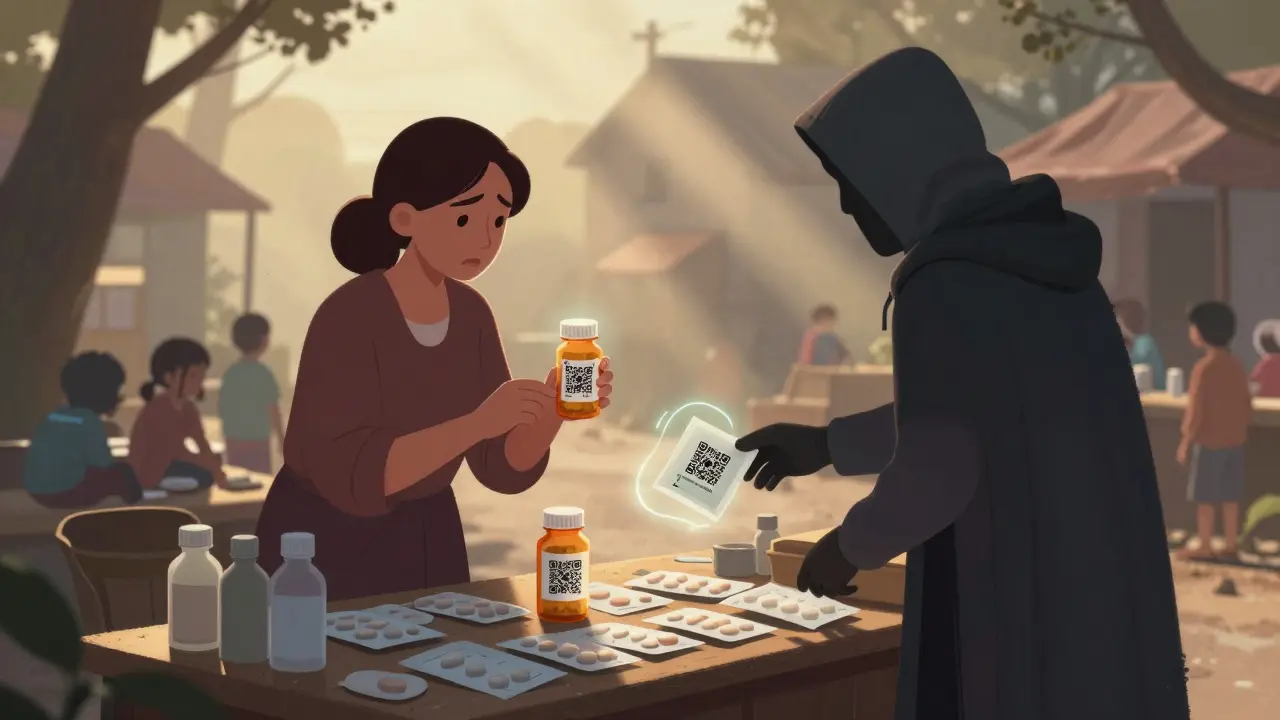
Every year, tens of thousands of people in developing nations die because they took a pill that looked real but contained nothing but flour, chalk, or worse-poison. This isn’t science fiction. It’s happening right now, in villages, markets, and even public hospitals where people have no choice but to trust what’s sold to them. The World Health Organization says 1 in 10 medicines in low- and middle-income countries are fake or substandard. In some regions, that number climbs to 1 in 3.
What Exactly Is a Counterfeit Drug?
A counterfeit drug isn’t just a cheap copy. It’s a dangerous lie. These products are made to look exactly like real medicines-same packaging, same logo, same color. But inside? They might have no active ingredient at all. Or too little. Or the wrong chemical entirely. The WHO defines two types: falsified (deliberately fake) and substandard (poorly made but not intentionally deceptive). Both kill.
Take malaria. In parts of sub-Saharan Africa, nearly half of the antimalarial drugs sold in some border towns are fake. A 2023 study found that 28% of artemisinin-based combination therapies-the gold standard treatment-failed quality tests. That means a child given these pills doesn’t get better. They get sicker. And worse, they develop drug-resistant strains of malaria that spread to others.
Why This Is Worse in Developing Nations
It’s not that people in these countries are careless. It’s that they’re trapped. Legitimate medicines often cost 300% to 500% more than the fake versions. A single course of real antibiotics might cost a week’s wages. A fake version? A few cents. When you’re choosing between feeding your family or buying medicine that might work, the math is brutal.
Regulation is weak or nonexistent in many places. In some countries, there’s no national drug authority with the power to inspect pharmacies. Even when there is, they lack funding, staff, or equipment. A 2024 report found that 85% of rural clinics in low-income countries don’t have the tools to test pills. No spectrometers. No chemical kits. Just eyes and trust.
And the supply chain? It’s a maze. Fake drugs pass through five to seven middlemen before reaching a patient. Each step is a chance for substitution. A truck carrying real insulin gets diverted. A warehouse in Bangladesh gets swapped. A website selling “Pfizer” cancer pills ships from a garage in China. By the time it reaches a village in Nigeria, no one knows where it came from.
The Human Cost
The numbers are horrifying.
- Over 116,000 deaths a year from fake antimalarials in sub-Saharan Africa alone.
- 72,000 to 169,000 child deaths from pneumonia linked to counterfeit antibiotics.
- 200+ people died in Lahore, Pakistan in 2012 from heart meds laced with toxic chemicals.
- One Reddit user from Nigeria wrote: “My brother died of malaria after taking counterfeit Coartem. The pharmacy had no way to verify it.”
It’s not just death. It’s slow suffering. People take fake HIV meds and develop resistance. They take fake TB drugs and spread untreatable strains. They take fake insulin and go blind. They take fake painkillers and never know why the pain didn’t go away.
How Fake Drugs Are Made-and How Hard They Are to Spot
Counterfeiters aren’t amateurs. They’re organized criminals with factories, logistics, and tech. In China, 78% of high-quality fake drugs are made. They use 3D printing to replicate blister packs with 99% accuracy. They copy QR codes. They even fake holograms. A 2025 Interpol report said 90% of counterfeit packaging is indistinguishable from the real thing without lab testing.
Here’s what you might find inside:
- 30% have no active ingredient at all.
- 45% have too little-enough to fool a quick test, but not enough to cure.
- 25% contain toxic substances like floor cleaner, rat poison, or industrial dyes.
And here’s the cruel twist: the most dangerous fake drugs are the ones that seem to work. A fake antibiotic might have just enough active ingredient to reduce fever for a day. The patient feels better-so they stop taking it. The infection comes back stronger. And now it’s resistant to real drugs.
Who’s Fighting Back-and How
Some solutions are working, but they’re not widespread.
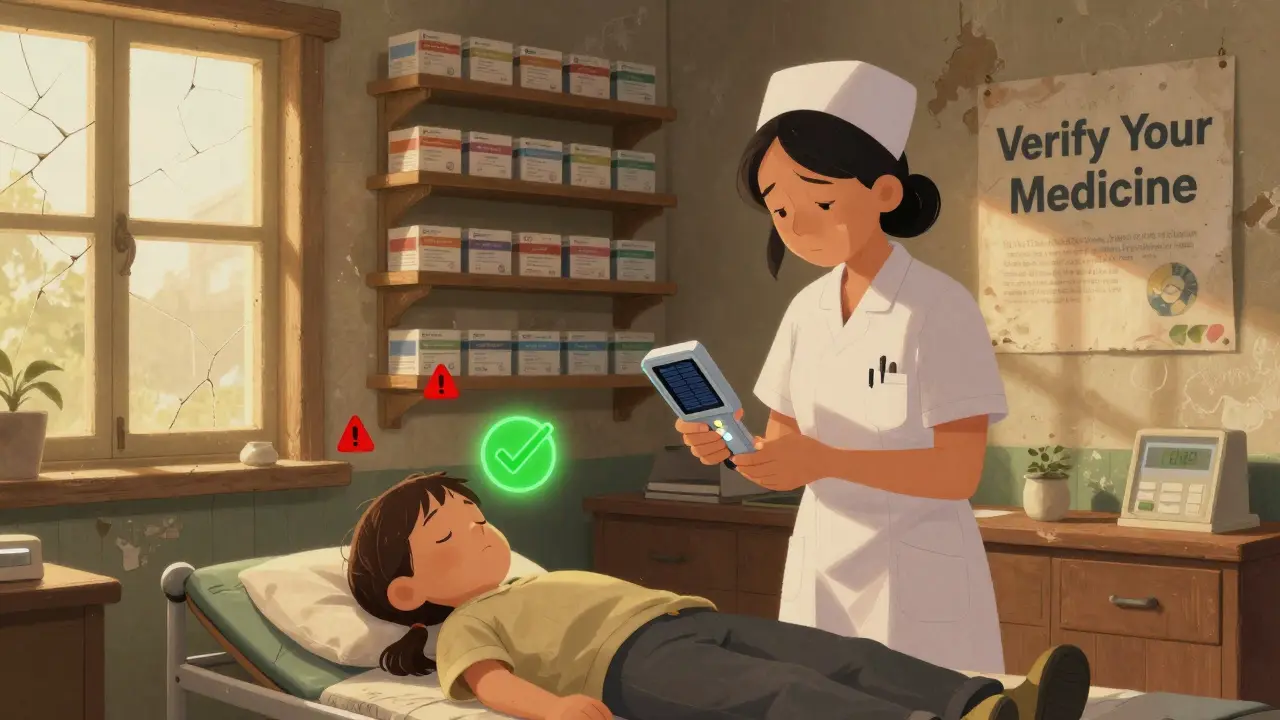
mPedigree is a simple SMS system. You scratch off a code on the pill pack, text it to a number, and get a reply: “Authentic” or “Fake.” It’s been used in Ghana, Nigeria, and Kenya. One user in Ghana said: “It saved my child’s life.” But only 28% of people in low-literacy areas can use it without help.
Blockchain tracking is being rolled out by the WHO’s new Global Digital Health Verification Platform. It tracks every pill from factory to pharmacy. So far, it’s live in 27 countries. It’s accurate to 99.9%. But it needs internet, electricity, and trained staff-things many clinics don’t have.
Solar-powered testing kits are being tested in rural Africa. They cost $5 per test, use no electricity, and give results in 10 minutes. They’re 70% accurate. Better than nothing. But they’re still rare.
Law enforcement is catching on. Interpol’s 2025 Operation Pangea XVI shut down 13,000 websites, seized 50 million fake doses, and arrested 769 suspects. But criminal networks adapt fast. They move to encrypted apps. They use cryptocurrency. They shift production from China to Bangladesh, Lebanon, and Türkiye.
Why Global Solutions Keep Failing
There’s a 76-country treaty called the Medicrime Convention. Only 45 have turned it into real law. Why? Because enforcing it costs money-and powerful interests don’t want to pay.
Big pharma companies like Pfizer have spent over $1 billion on anti-counterfeiting tech since 2004. They’ve blocked 302 million fake doses. But they can’t police every corner of every country.
Meanwhile, governments in developing nations are underfunded and overwhelmed. A 2025 MSF report found that only 38% of national verification systems have user manuals in local languages. Most healthcare workers get one training session and are left alone.
And the biggest problem? The market is growing. The fake drug industry is worth $83 billion a year-and it’s growing at 12.3%. The legal market? Only 5.7%. That’s not a coincidence. Crime pays better than cure.
What Needs to Change
There’s no single fix. But here’s what works when it’s done right:
- Train community health workers to spot fake packaging and use simple verification tools. Pilot programs in Ghana and Kenya reduced counterfeit use by 37%.
- Make verification tools free and easy-like SMS or QR codes that work on basic phones, even without internet.
- Link medicine prices to income-subsidize real drugs so they’re affordable. No one should choose between food and life-saving pills.
- Strengthen national drug regulators with funding, training, and authority. No more paper records. No more bribes.
- Hold online sellers accountable-shut down websites selling “Pfizer” or “Novartis” without proof. Most fake drugs now come from the internet.
The EU’s 2026 Anti-Counterfeiting Initiative promises €250 million to help 30 developing nations secure their supply chains. That’s a start. But it’s not enough.
What You Can Do
If you live in a wealthy country: demand that your government funds global medicine safety. Support NGOs that help train health workers. Don’t buy medicine online from unknown sellers-even if it’s cheap.
If you’re in a developing nation: learn how to verify. Ask your pharmacy if they use mPedigree or a similar system. If they don’t, ask why. Report suspicious drugs to local health authorities. Don’t assume the pill is safe just because it looks right.
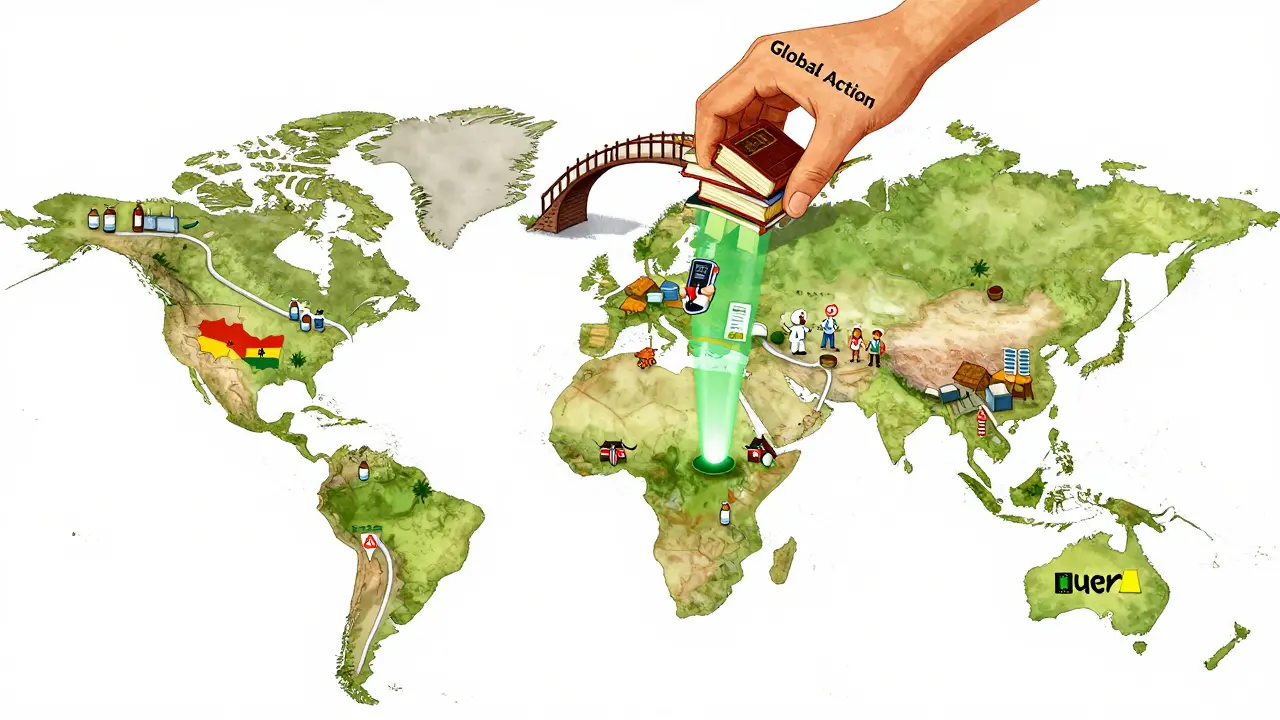
And remember: fake drugs aren’t a “them” problem. They’re a global problem. A fake malaria drug in Nigeria can lead to a drug-resistant strain that spreads to Europe. A counterfeit antibiotic in India can make a common infection untreatable in Canada. We’re all connected.
Hope Is Possible
It’s not all doom. In 2025, the WHO set a goal: reduce counterfeit medicine prevalence to under 5% by 2027. It’s ambitious. But it’s possible-if we stop treating this as a medical issue and start treating it as the criminal emergency it is.
Real medicine saves lives. Fake medicine doesn’t just fail-it kills. And we can’t afford to look away any longer.

astrid cook
January 27, 2026 AT 20:38This is why I can't stand how the West acts like it's above all this. You guys import half your meds from places with zero oversight, then act shocked when people die? Wake up. Your greed is literally killing kids overseas. And no, sending a few million in aid won't fix it. You need to stop outsourcing your entire pharmaceutical supply chain to the highest bidder and start caring about the people who actually use the drugs.
Patrick Merrell
January 28, 2026 AT 15:07Let me be clear: this isn't a humanitarian crisis. It's a failure of governance. If your country can't regulate its own pharmacies, that's your problem. Blaming Big Pharma or Western consumers is just moral cowardice. The real villains are the corrupt local officials who let this happen. Fix your own house before asking the world to clean up your mess.