11
Fiber for Weight Control: How Soluble and Insoluble Fiber Help You Manage Your Weight

When you're trying to lose weight or keep it off, fiber isn't just a buzzword-it's one of the most reliable tools you already have access to. But not all fiber is the same. Soluble fiber and insoluble fiber work in completely different ways, and understanding the difference can make or break your results.
What Soluble Fiber Actually Does for Weight Control
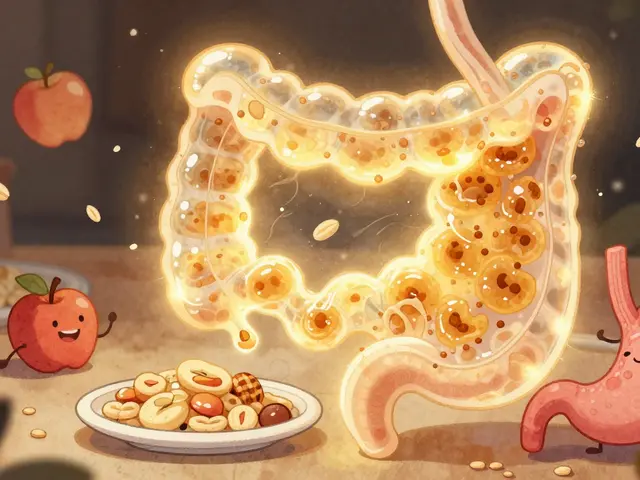
Soluble fiber doesn’t just pass through your system. It turns into a thick, gel-like substance when it meets water. Think of it like a sponge soaking up liquid inside your gut. This gel slows down how fast your stomach empties, which means you feel full longer. Studies show this delay can stretch meal satisfaction by 1 to 2 hours after eating.That’s why people who eat more soluble fiber tend to snack less. Psyllium husk, a type of soluble fiber, can absorb up to 50 times its weight in water. When taken before meals, just 5 grams of psyllium can reduce how much you eat by 10-15%. One 2023 study found that participants taking psyllium lost 3.2% of their body weight over 8 weeks-nearly three times more than those on a placebo.
It’s not just about feeling full. Soluble fiber also helps control blood sugar spikes after meals. Beta-glucans, found in oats and barley, lower post-meal glucose by 12-15%. Stable blood sugar means fewer cravings and less fat storage. Another benefit? It blocks about 15-20% of dietary fat from being absorbed, which adds up over time.
And here’s something most people miss: soluble fiber feeds your good gut bacteria. These microbes produce short-chain fatty acids that help regulate appetite hormones like ghrelin and peptide YY. When these signals are balanced, you naturally eat less without feeling deprived.
Insoluble Fiber’s Role-It’s Indirect, But Still Vital
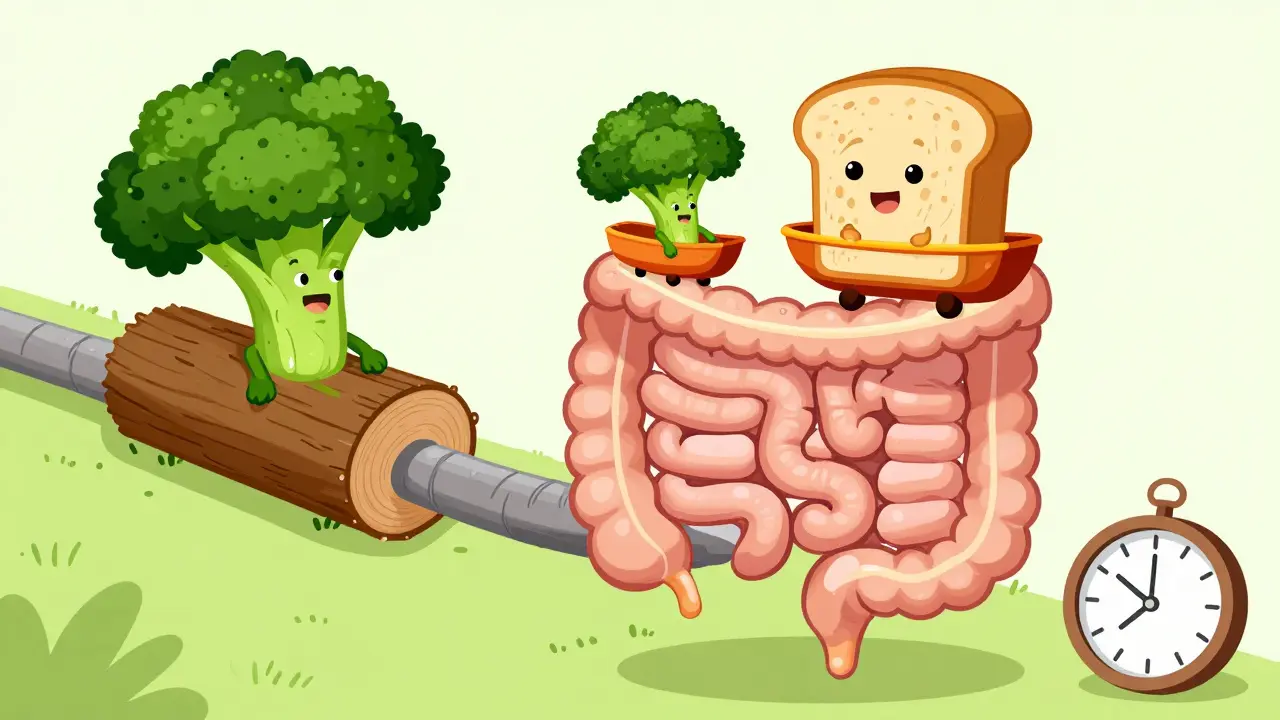
Insoluble fiber doesn’t dissolve in water. It keeps its shape, adding bulk to your stool and helping things move through your digestive tract faster. For every 10 grams you eat, you get about 3-5 extra grams of bulk. That means bowel movements become more regular, and transit time drops by 24 to 48 hours.But does that help you lose weight? Not directly. You won’t see a drop on the scale just because you ate more whole wheat bread or bran cereal. However, keeping your digestion running smoothly reduces bloating and discomfort, which makes sticking to a healthy diet easier. If your gut feels backed up, you’re more likely to reach for quick, processed snacks just to feel better.
Insoluble fiber also helps prevent constipation-a common side effect when you suddenly increase your fiber intake. That’s why experts recommend a 3:1 ratio of insoluble to soluble fiber. Too much soluble fiber without enough insoluble can backfire and cause blockages or discomfort.
The Best Sources of Soluble Fiber for Weight Loss
Not all soluble fiber is created equal. Some types are far more effective than others when it comes to weight control.- Psyllium husk - The most researched for weight loss. Used in supplements like Metamucil, it’s the top performer in clinical trials.
- Beta-glucans - Found in oats, barley, and mushrooms. Great for blood sugar and cholesterol.
- Glucomannan - Comes from konjac root. Expands dramatically in water, making it extremely filling.
- Pectins - Found in apples, citrus fruits, and berries. A natural gel that slows digestion.
- Guar gum - Often used in processed foods, but also available as a supplement.
Whole foods beat supplements every time. A medium apple gives you 2.4 grams of fiber-71% of it soluble. A cup of cooked lentils has 15.6 grams of fiber total, with nearly half being viscous soluble fiber. You get vitamins, minerals, and phytonutrients along with the fiber, which supplements can’t replicate.
What About Insoluble Fiber Sources?
These are the workhorses of your digestive system:- Whole wheat bread - About 75% insoluble fiber per slice.
- Brown rice - More fiber than white rice, and it moves things along quickly.
- Vegetables like broccoli, cauliflower, and carrots - High in cellulose, the main insoluble fiber.
- Nuts and seeds - Almonds, chia seeds, and flaxseeds have both types, but their outer shells are mostly insoluble.
Don’t skip these. They keep your system clean and prevent the bloating that can derail motivation. Plus, they’re filling in their own way-chewing crunchy veggies takes longer and naturally reduces how much you eat.
How Much Do You Really Need?
The Mayo Clinic says adults need 25-38 grams of total fiber daily. But for weight control, you need more than just the minimum. Aim for at least 10-15 grams of soluble fiber each day. That’s not as hard as it sounds:- 1 cup cooked oats = 4g soluble fiber
- 1 cup lentils = 6g soluble fiber
- 1 apple with skin = 1.7g soluble fiber
- 1 tablespoon psyllium husk = 5g soluble fiber
That’s 17.7 grams right there from just three foods and one supplement. You don’t need to count every gram-just make sure your plate includes at least one high-soluble-fiber food at each meal.
How to Use Fiber Without the Bloating
Most people who give up on fiber do it because they feel bloated, gassy, or constipated. The problem isn’t fiber-it’s how they added it.Going from 10 grams to 30 grams in a week? That’s a recipe for discomfort. Experts recommend increasing fiber by 5 grams per week until you hit your target. Give your gut time to adjust.
Hydration is non-negotiable. For every 5 grams of supplemental fiber, drink 16-24 ounces of water. Without enough water, soluble fiber can harden and cause blockages instead of helping.
Timing matters too. Take soluble fiber supplements 15-30 minutes before meals. That’s when the gel forms and starts working to slow digestion. Eating fiber-rich foods at dinner can also help you sleep better by keeping blood sugar steady overnight.
Supplements vs. Whole Foods: What the Data Says
Yes, psyllium supplements work. But they’re not magic.A 2023 analysis of over 1,200 people showed that 63% who successfully lost weight with fiber did it through whole foods-not pills. Beans, oats, apples, and vegetables kept them consistent because they tasted good, were easy to include in meals, and didn’t require extra steps.
Supplements have their place. If you struggle to eat enough vegetables or legumes, psyllium or glucomannan can help bridge the gap. But they’re meant to support, not replace, real food.
Harvard nutrition experts are clear: “Fiber from whole plant foods is better for weight loss than fiber supplements.” Why? Because food comes with fiber’s partners-antioxidants, vitamins, and natural compounds that work together to reduce inflammation and improve metabolism. Supplements give you one tool. Whole foods give you a whole toolkit.

What Happens If You Don’t Get Enough?
Only 5% of Americans hit the daily fiber goal. That’s not just about constipation. Low fiber intake is linked to higher obesity rates. Data from the NHANES survey shows people who eat 25+ grams of fiber daily have 27% lower rates of obesity than those eating less than 15 grams-even after accounting for exercise and other diet habits.If you’re stuck in a cycle of hunger, cravings, and bloating, low fiber might be part of the problem. It’s not the only factor, but it’s one you can fix quickly and safely.
Realistic Expectations: How Much Weight Can You Really Lose?
Let’s be honest. Fiber won’t make you drop 20 pounds in a month. The average result from 10 weeks of adding viscous soluble fiber? About 0.75 pounds lost and a quarter-inch reduction in waist size. That’s not flashy-but it’s steady.And here’s the key: those small changes add up. Losing half a pound a week means 26 pounds a year. Combine that with better sleep, fewer cravings, and more energy, and you’re not just losing weight-you’re changing how your body feels every day.
Think of fiber as the foundation. It doesn’t build the house alone, but without it, the whole structure wobbles. Pair it with protein, sleep, and movement, and you’ve got something that lasts.
Final Tip: Start Simple
You don’t need to overhaul your diet tomorrow. Just pick one thing:- Swap white toast for whole grain.
- Add a banana to your morning oatmeal.
- Have a side of steamed broccoli with dinner.
- Take 1 teaspoon of psyllium husk in water before lunch.
Do that for a week. Then add another. In 30 days, you’ll notice you’re not as hungry between meals. Your digestion will feel lighter. And you might find yourself reaching for an apple instead of a cookie-without even thinking about it.
Can soluble fiber help me lose belly fat?
Yes. Viscous soluble fibers like psyllium and glucomannan have been shown in clinical studies to reduce visceral fat-the dangerous fat around your organs. One 2023 study found participants lost 4.3% of visceral fat over 8 weeks using psyllium, compared to just 1.2% in the placebo group. This type of fat is strongly linked to insulin resistance and heart disease, so reducing it has benefits beyond weight loss.
Is psyllium husk safe for long-term use?
Yes, when used correctly. Psyllium is not absorbed by the body, so it passes through naturally. Long-term use is common in clinical settings for cholesterol and blood sugar control. The key is drinking enough water-16-24 ounces per 5 grams of psyllium-to avoid constipation. If you have a swallowing disorder or bowel obstruction, talk to your doctor first.
Can I get enough fiber just from supplements?
You can meet your daily fiber goal with supplements, but you won’t get the full health benefits. Whole foods contain vitamins, antioxidants, and phytonutrients that work with fiber to reduce inflammation and improve gut health. Supplements give you fiber; food gives you fiber plus its supporting team. For weight control, the synergy matters.
Why do I get bloated when I eat more fiber?
Bloating usually happens when you increase fiber too fast or don’t drink enough water. Your gut bacteria need time to adjust to more fiber. Slowly increase your intake by 5 grams per week and drink plenty of fluids. If bloating persists after 2-3 weeks, you might be sensitive to certain fibers like inulin or FODMAPs-try switching to psyllium or oats instead.
Should I take fiber before or after meals?
For weight control, take soluble fiber 15-30 minutes before meals. This lets the gel form in your stomach before food arrives, slowing digestion and boosting fullness. Insoluble fiber can be eaten with meals-it helps move everything along. Avoid taking fiber supplements right before bed unless you’re using them for overnight satiety.





Jessica Bnouzalim
January 12, 2026 AT 20:06I tried psyllium husk for a week and honestly? My cravings just vanished. I was snacking on cookies at 3pm like a zombie, now I’m sipping water and feeling full until dinner. No magic, just science. Also, I started eating apples with skin-best decision ever. I didn’t even think about dessert after that.
Sumit Sharma
January 13, 2026 AT 16:31While your anecdotal evidence is superficially compelling, the clinical data you cite lacks methodological rigor. The 2023 psyllium study you referenced had a sample size of n=87 with no intention-to-treat analysis. Furthermore, the 15–20% fat absorption blockade is a misinterpretation of bile acid sequestration mechanisms. Fiber does not 'block' fat-it modulates micelle formation. You're conflating correlation with causation. Peer-reviewed literature demands controlled trials, not Instagram nutrition hacks.
Lawrence Jung
January 14, 2026 AT 23:58People think fiber is the answer but they forget the body is a system not a machine. You add fiber like you add wood to a fire and expect the flames to behave. But the fire doesn’t care what you throw at it. It just burns. Same with your gut. It doesn’t care if it’s psyllium or apples. It just wants balance. You want to lose weight? Stop obsessing over grams and start listening. Your body’s been screaming for years. You just stopped hearing it.
Alice Elanora Shepherd
January 15, 2026 AT 02:24Thank you for this incredibly clear breakdown-I’ve been recommending soluble fiber to my clients for years, but rarely explain the ghrelin/peptide YY mechanism. It’s such an under-discussed piece! Also, the 3:1 insoluble-to-soluble ratio is critical. I’ve seen so many people overdo psyllium and end up with constipation because they ignored the bulk. One tip I give: mix psyllium with unsweetened applesauce-it masks the chalkiness and makes it palatable. And always, always hydrate. Water isn’t optional-it’s the co-pilot.
Ben Kono
January 15, 2026 AT 15:44Why are you all so obsessed with fiber? I lost 40 pounds eating steak and butter. Fiber is for people who can’t handle real food. You think your oats are magic? I ate bacon for breakfast for a year and my belly fat disappeared. Stop overcomplicating things. Eat meat. Move. Sleep. Done.
Cassie Widders
January 15, 2026 AT 18:08I added a banana to my oatmeal last week. That’s it. No supplements. No changes. And now I don’t feel bloated after lunch. Weird. I didn’t even notice until today. Maybe fiber isn’t as scary as people make it sound.
Konika Choudhury
January 16, 2026 AT 08:05You westerners always think your science is better. In India we’ve been eating dal and roti for centuries. Whole grains. Lentils. Vegetables. No psyllium pills. You buy expensive powders because you’re lazy. Our grandmothers didn’t need supplements. They had food. Real food. Stop buying into western marketing.
Darryl Perry
January 18, 2026 AT 06:58Insufficient evidence. No control variables. Anecdotal. Misleading correlation. You cite a single 2023 study without mentioning confounders like caloric intake or physical activity. The NHANES data shows association, not causation. This post is pseudoscientific fluff dressed as nutrition advice. Recommend retraction.
Rebekah Cobbson
January 18, 2026 AT 10:26Ben, I get where you’re coming from-protein and fat do keep you full. But fiber isn’t about replacing steak, it’s about making the whole system work better. I had a client who ate only meat and lost weight, but she was constantly constipated and had terrible skin. Once we added lentils and chia seeds, her energy improved, her skin cleared, and she didn’t even try to lose more weight. It’s not either/or. It’s both. You can have steak AND broccoli. You don’t have to choose.