22
Fracture Prevention: How Calcium, Vitamin D, and Bone-Building Medications Really Work
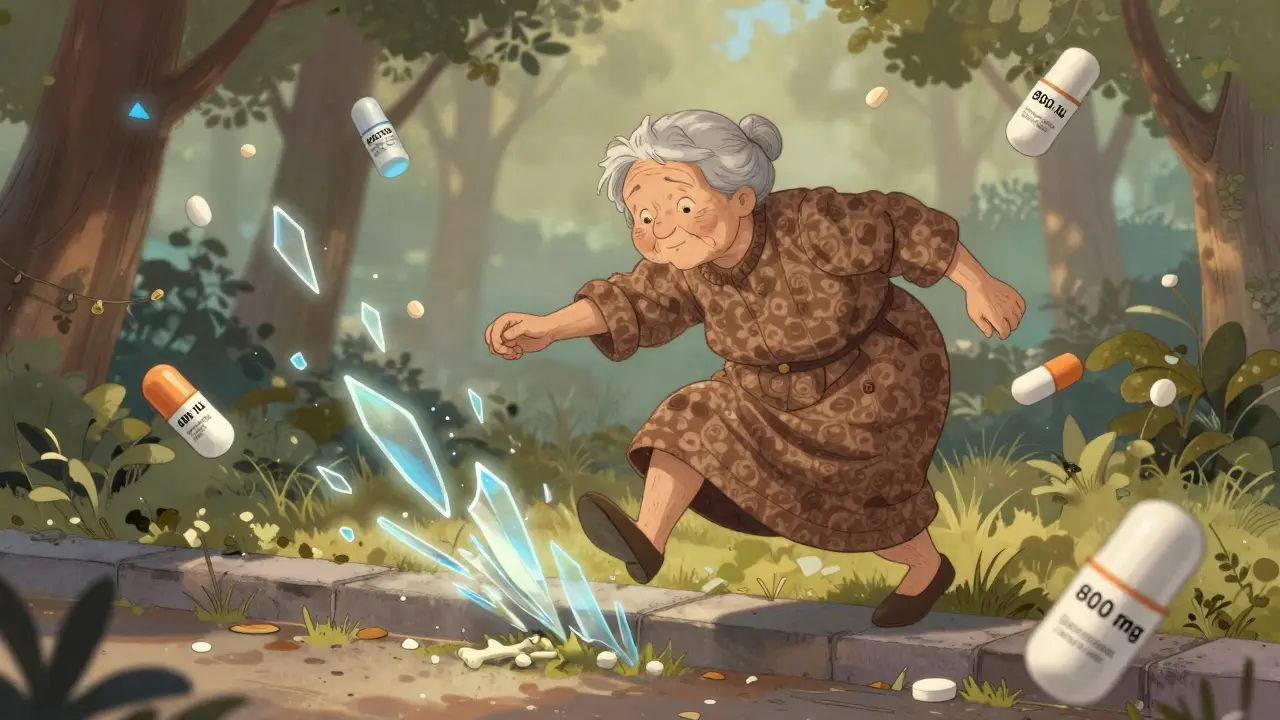
Every year, more than 2 million fractures happen in the U.S. because of weak bones. Most of these aren’t from car crashes or sports injuries-they’re from simple falls, like stepping off a curb or slipping in the bathroom. If you’re over 50, especially if you’re a woman, your risk goes up fast. The good news? You don’t have to wait for a break to happen. The right mix of calcium, vitamin D, and bone-building medications can make a real difference-but only if you use them the right way.
Calcium and Vitamin D: The Basics That Don’t Always Work
You’ve heard it a thousand times: “Take calcium and vitamin D for strong bones.” It sounds simple. But here’s the truth: taking low doses of both won’t stop fractures. The US Preventive Services Task Force looked at data from nearly 40,000 people and found that if you’re taking 400 IU of vitamin D or less than 1,000 mg of calcium daily, you’re not reducing your fracture risk at all. That’s not a myth-it’s science.
So what does work? Studies show that when you combine 800-1,000 IU of vitamin D3 with 1,000-1,200 mg of calcium every day, you cut your risk of hip fractures by about 16%. That’s not a magic number-it’s the minimum effective dose. The landmark 1992 study from France followed nursing home residents with severe vitamin D deficiency. Their average level was just 12.3 ng/mL. After adding 800 IU of vitamin D and 1,200 mg of calcium daily, hip fractures dropped by 43%. That’s huge.
But here’s the catch: if you’re already getting enough vitamin D from sunlight or food, or if you’re living independently and not severely deficient, the benefit shrinks. The RECORD trial in the UK found no benefit in community-dwelling older adults with baseline levels around 18.5 ng/mL. That means supplementation isn’t one-size-fits-all. If your blood level is below 20 ng/mL, you likely need it. If it’s above 30 ng/mL, extra pills won’t help-and might even hurt.
The Hidden Risks of Too Much Calcium
Calcium isn’t harmless. The Women’s Health Initiative found that women taking 1,000 mg of calcium daily had a 17% higher risk of kidney stones. That’s not rare-it’s common enough to matter. And it doesn’t stop there. High-dose calcium (over 1,000 mg/day) was linked to a 17% increased risk of heart attacks in the same study. The FDA flagged this in 2021. Why? When you flood your system with calcium from pills, your body doesn’t always know how to handle it. Instead of going straight to your bones, some of it ends up in your arteries.
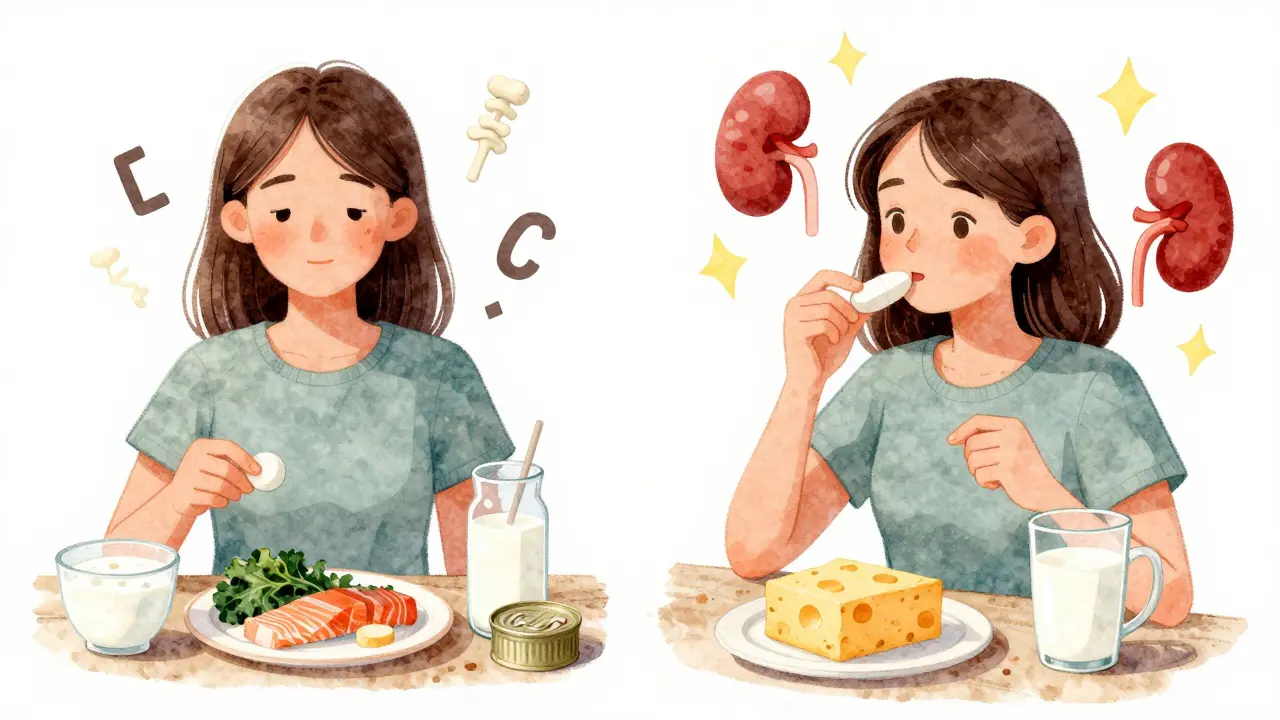
Food sources of calcium are safer. One cup of yogurt has about 300 mg. A glass of fortified milk? Another 300. Half a cup of cooked kale? Around 100 mg. You don’t need a 1,200 mg supplement if you’re eating dairy, leafy greens, tofu, or canned salmon with bones. The real problem? Most people don’t track their intake. They take a pill thinking it’s insurance, then eat cheese on their sandwich and drink a glass of milk-and suddenly they’re hitting 2,000 mg. That’s not protection. That’s overkill.
Bone-Building Medications: When Supplements Aren’t Enough
If you’ve already broken a bone from a minor fall, or if your bone density scan shows osteoporosis, supplements alone won’t cut it. That’s where medications come in. They don’t just slow bone loss-they rebuild it.
Bisphosphonates like alendronate (Fosamax) and zoledronic acid (Reclast) are the most common. In the Fracture Intervention Trial, alendronate cut vertebral fractures by 44%. Zoledronic acid, given as a yearly IV drip, reduced hip fractures by 41% over 18 months. These drugs work by blocking the cells that break down bone. Simple. Effective. But they come with side effects. About 68% of people on oral bisphosphonates report stomach upset. One in five stop taking them within a year because of it.
Then there’s denosumab (Prolia), a monthly injection that works differently. It targets a protein called RANKL, which tells bone cells to break down. It’s powerful-reducing spine fractures by 68% in trials. But if you miss a dose, your bone loss can rebound fast. You can’t just stop it cold. You need to switch to another medication.
Newer drugs like teriparatide (Forteo) and romosozumab (Evenity) actually build new bone. Teriparatide is a daily injection that mimics parathyroid hormone. In trials, it cut spine fractures by 65%. Romosozumab, given as a monthly shot, builds bone faster than any other drug. One study showed a 73% greater reduction in new spine fractures when used before switching to an antiresorptive like denosumab. But these are expensive. And they’re not for everyone. Teriparatide is limited to two years of use. Romosozumab carries a black box warning for heart attack risk.
Who Really Needs These Medications?
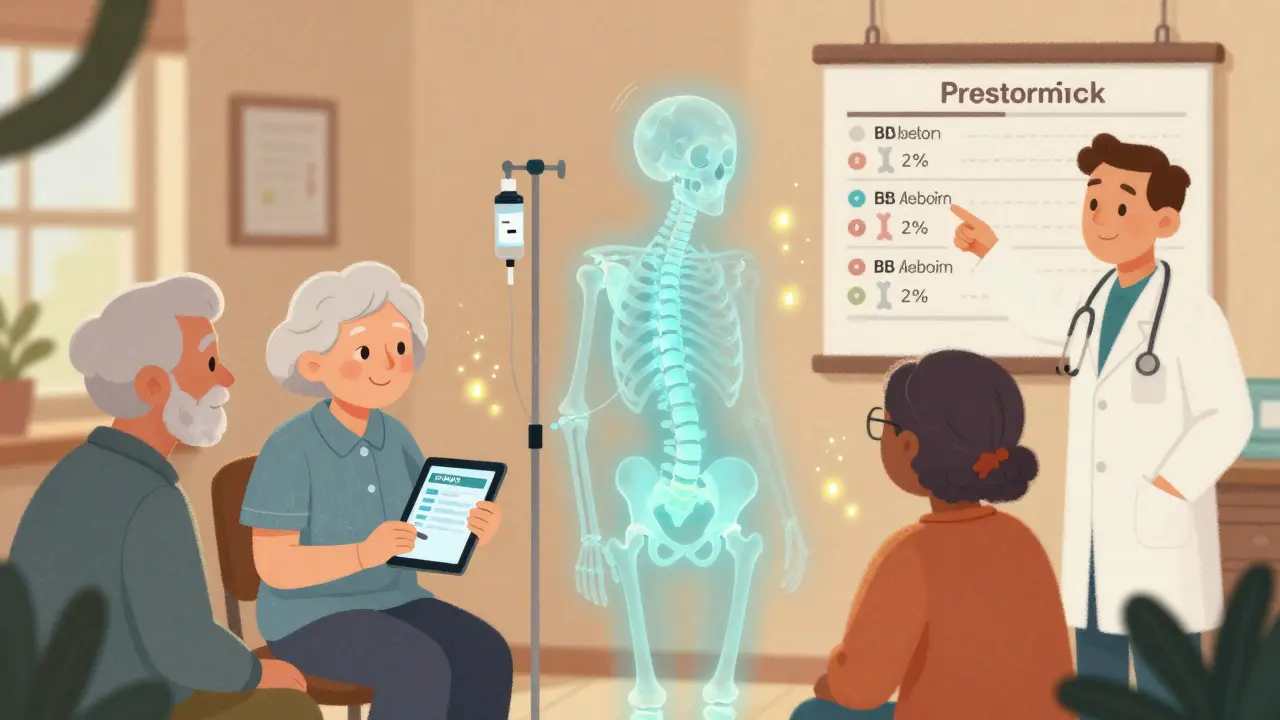
Not everyone with low bone density needs a prescription. The key is figuring out your real risk. That’s where the FRAX® tool comes in. It’s free, online, and used by doctors worldwide. You plug in your age, sex, weight, whether you’ve had a prior fracture, if you smoke, if you drink alcohol, and your bone density score. Then it calculates your 10-year chance of a major fracture.
In the U.S., if your risk is over 20%, treatment is recommended. In the UK, it’s 15%. If you’re 72, 5’2”, weigh 110 pounds, had a wrist fracture last year, and your bone density is -3.0, you’re a clear candidate. If you’re 60, healthy, active, and your score is -1.8? You’re probably fine with lifestyle changes and maybe vitamin D if you’re deficient.
And here’s something most people don’t realize: you need a dental checkup before starting bisphosphonates or denosumab. These drugs can rarely cause jawbone death (osteonecrosis). It’s extremely rare-less than 1 in 10,000-but it’s preventable. Get your cavities filled, your gums checked, and avoid extractions while on these meds.
Why People Stop Taking Their Medications
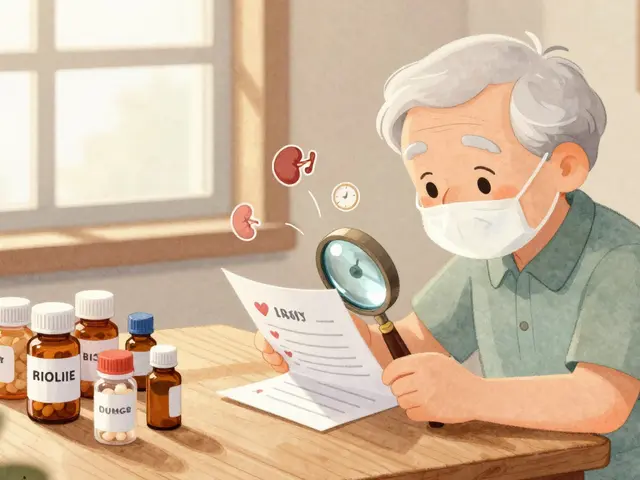
Even the best drug won’t help if you don’t take it. Studies show more than half of people stop bisphosphonates within a year. Why? Side effects. Confusion. Cost. Belief that “it’s just a supplement.”
One woman in Sydney told her doctor she stopped alendronate because she couldn’t remember to take it on an empty stomach every morning. She’d eat breakfast, feel fine, and think, “I’ll just take it later.” But that’s how it fails. Bisphosphonates need to be taken first thing in the morning, with a full glass of water, and you can’t eat or drink anything else for 30 minutes. If you mess up the timing, you absorb almost nothing.
IV zoledronic acid solves that problem. One 15-minute infusion a year. No daily pills. No stomach upset. But it can cause flu-like symptoms for a day or two. Some people hate that. Others love it because it’s one-and-done.
And then there’s the psychological barrier. Many think, “If I don’t feel pain, I don’t need it.” But osteoporosis doesn’t hurt until you break a bone. That’s why doctors need to explain it like this: “This isn’t medicine for pain. It’s insurance against disaster.”
What You Should Do Right Now
Here’s a simple plan if you’re over 50:
- Ask your doctor for a bone density test (DEXA scan). Don’t wait for a fracture.
- Get your vitamin D level checked. If it’s under 30 ng/mL, you likely need supplementation.
- Don’t take more than 1,200 mg of calcium daily from all sources combined-food and pills.
- If you’ve had a fracture or your FRAX score is high, talk about bisphosphonates, denosumab, or newer agents. Don’t settle for supplements alone.
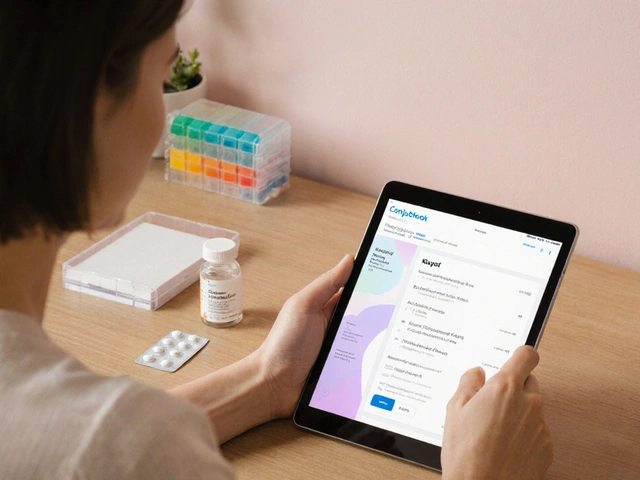
- If you’re on medication, stick with it. Set phone reminders. Ask for the injection option if pills are too hard.
- Move your body. Weight-bearing exercise (walking, lifting weights) is just as important as any pill.
Fracture prevention isn’t about taking more supplements. It’s about taking the right ones, at the right dose, for the right person. It’s about knowing your risk. It’s about not giving up when the first pill makes your stomach upset. It’s about realizing that a broken hip at 70 isn’t just a bad day-it’s a life-altering event. And with the right approach, you can avoid it.


Jillian Angus
December 22, 2025 AT 14:32My grandma took calcium pills for years and ended up with kidney stones. Then she started eating yogurt and kale and her bones were fine. No pills needed.
niharika hardikar
December 22, 2025 AT 19:26It is imperative to underscore that the pharmacokinetic efficacy of calcium supplementation is contingent upon serum 25-hydroxyvitamin D concentrations exceeding 30 ng/mL. Suboptimal dosing protocols, as elucidated in the USPSTF meta-analysis, demonstrate negligible impact on fracture risk reduction. Furthermore, the paradoxical association between exogenous calcium intake and cardiovascular events warrants rigorous clinical scrutiny.
Adherence to the FRAX algorithm remains the gold standard for risk stratification, and any deviation from evidence-based thresholds constitutes a deviation from best practice.
Steven Mayer
December 23, 2025 AT 12:52Let’s be real-pharma is selling you pills because they know you won’t walk. The real solution? Get outside. Sunlight. Movement. Grounding. No one talks about how bisphosphonates are linked to atrial fibrillation in 3% of long-term users. The FDA’s 2021 warning? A footnote. The real danger is the industry’s control over bone health narratives.
They don’t want you to know that osteoporosis is a symptom of chronic inflammation, not a deficiency. You think calcium fixes it? It just masks the real problem: your diet, your stress, your toxins.
Ajay Sangani
December 24, 2025 AT 06:18im thinkin maybe the body dosent need all that calicum from pills cause like... we used to live without em right? like grandpas in villages they never took pills and never broke hips. maybe its the processed food and sitting all day that makes bones weak? just a thought lol
CHETAN MANDLECHA
December 25, 2025 AT 14:55Man, I read this whole thing and I’m just sitting here thinking... I’ve been taking my calcium with breakfast because I forget. Turns out I’m doing it wrong. Also, I didn’t know vitamin D could be too much. I’ve been popping those gummies like candy. Guess I’m gonna get my levels checked.
Charles Barry
December 27, 2025 AT 14:45Let me guess-the pharmaceutical lobby wrote this. Bone density scans? FRAX? All tools to pathologize aging and sell drugs. Did you know the WHO reclassified normal bone density as 'osteopenia' in 1994 to expand the market? You’re being manipulated. The real epidemic? Sedentary lifestyles and vitamin D deficiency from living indoors. But no, let’s inject people with expensive biologics instead of telling them to go outside.
And don’t get me started on denosumab. Miss one shot? Your bones collapse faster than a house of cards. That’s not medicine. That’s a trap.
Rosemary O'Shea
December 28, 2025 AT 21:06How utterly predictable. Another article that treats the elderly as passive recipients of corporate medicine. Where is the discussion of cultural factors? In India, women consume curd, sesame, and leafy greens daily-yet they’re told they need supplements. In Ireland, we have the same bone density issues despite sunlight. This isn’t about biology-it’s about profit-driven reductionism.
And teriparatide? A $30,000/year injection for a condition that could be addressed with daily weight-bearing activity and sunlight. The medical industrial complex has turned aging into a disease to be monetized.
siddharth tiwari
December 29, 2025 AT 06:49wait so if u get a dxa scan and its -2.5 u r automatically told to take a drug? but what if u r 65 and walk 5miles a day and eat tofu and eggs? they dont talk about how lifestyle trumps meds for most people. i think doctors just wanna write prescriptions. also i heard the iv drugs make u feel like u got the flu for 2 days? no thanks i’ll take my chances
Bhargav Patel
December 30, 2025 AT 18:50The philosophical underpinning of this discourse reveals a fundamental tension between mechanistic intervention and holistic adaptation. The body, as a dynamic system, does not respond to isolated nutrient supplementation in the same manner as a machine to its constituent parts. The reduction of bone health to calcium and vitamin D levels neglects the broader ontological context-chronic stress, circadian disruption, and the erosion of ancestral movement patterns.
Medications like bisphosphonates, while efficacious in clinical trials, impose a metaphysical burden: they treat the symptom of decay without addressing the condition of disconnection from natural rhythms. Is it not more prudent to inquire not merely ‘how much calcium,’ but ‘how do we live?’
Diana Alime
December 31, 2025 AT 02:40i just read the first paragraph and was like oh cool but then i saw all the numbers and was like nah im out. i take my vitamin d cause my doctor said so and that’s it. if i break a bone i break a bone. life’s too short to stress about pills.
Adarsh Dubey
December 31, 2025 AT 08:04I appreciate the depth here. The key takeaway isn’t the drugs or the doses-it’s personalization. One size doesn’t fit all. My 70-year-old aunt lives in rural Kerala, eats fish and turmeric rice daily, walks barefoot, and has never taken a supplement. Her bone density is better than mine. Meanwhile, my cousin in Chicago takes three pills a day and still fractures. It’s not just about what you take-it’s about how you live.
Also, the dental checkup note? That’s gold. Most people have no idea. Simple, overlooked, life-saving advice.
Payson Mattes
January 1, 2026 AT 08:34Okay, but have you heard about the calcium scam? The FDA knows that calcium supplements are being used to mask the real issue: fluoride in the water. Fluoride leaches calcium from bones, then they sell you more calcium to fix it. It’s a cycle. And the IV zoledronic acid? It’s not just for osteoporosis-it’s used in cancer patients to prevent bone metastases. That’s why it’s so powerful. But they’re giving it to healthy people? That’s not prevention. That’s chemical control.
Also, the FRAX tool? It was developed by a company that sells bone drugs. Coincidence? I think not. Check the funding. Look at the authors’ conflicts. This isn’t medicine. It’s marketing dressed in lab coats.