4
How to Tell Food Allergies Apart from Medication Allergies
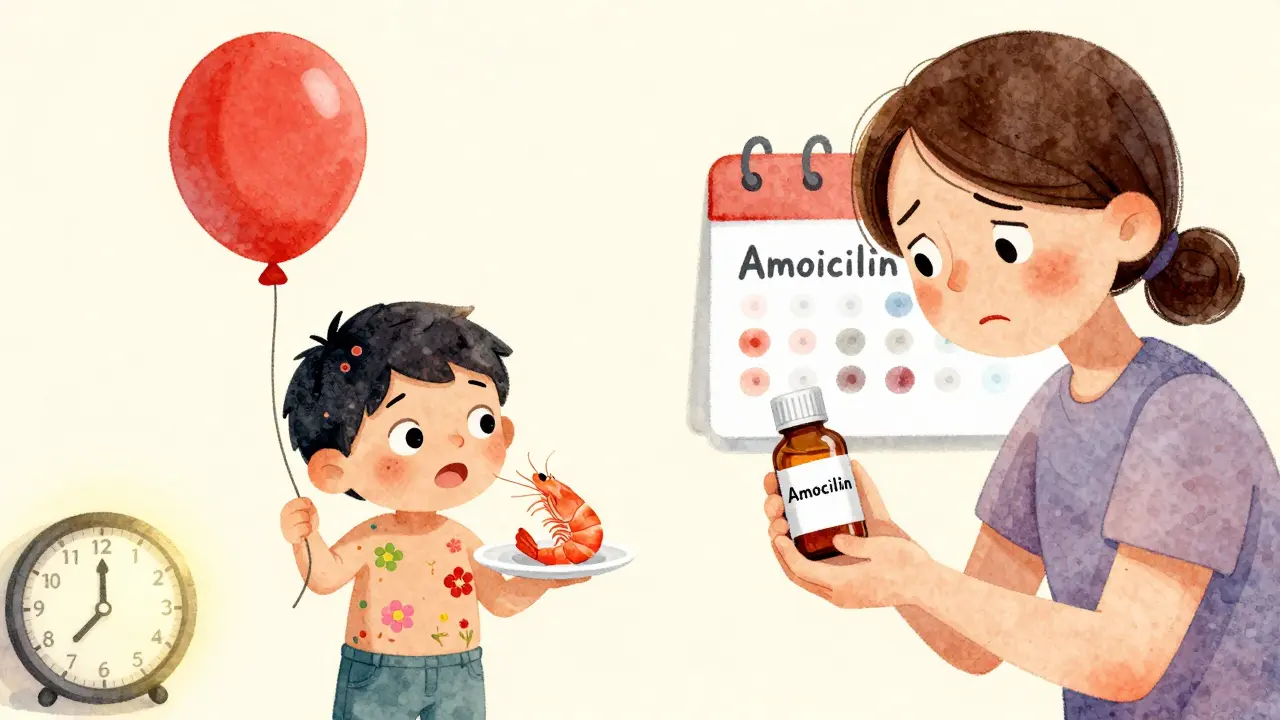
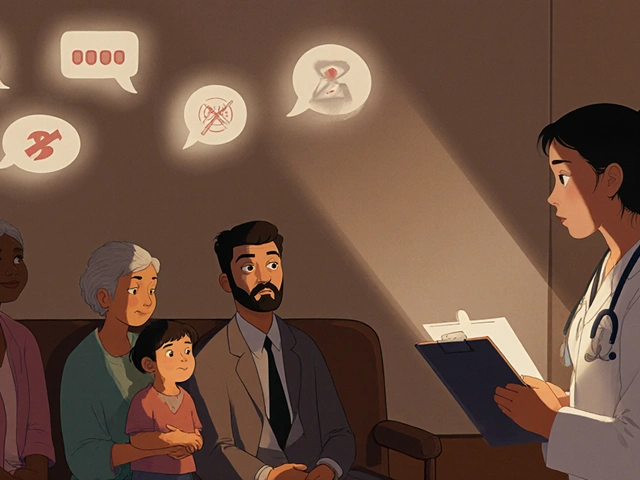
It’s easy to assume that if you break out in hives or feel sick after eating or taking a pill, it’s an allergy. But not all reactions are allergies-and mixing up food and medication allergies can lead to dangerous mistakes. One person avoids penicillin for life because they got a rash after taking amoxicillin as a kid, only to later find out it was a viral rash, not an allergy. Another avoids dairy for years because they thought their stomach cramps were an allergy, when it was actually lactose intolerance. These aren’t rare cases. In fact, up to 90% of people who say they’re allergic to penicillin turn out not to be when tested properly. And about 15-20% of people who think they have a food allergy don’t have one at all. The difference matters-not just for peace of mind, but for your safety and your health care.
How Your Body Reacts: Immune System Differences
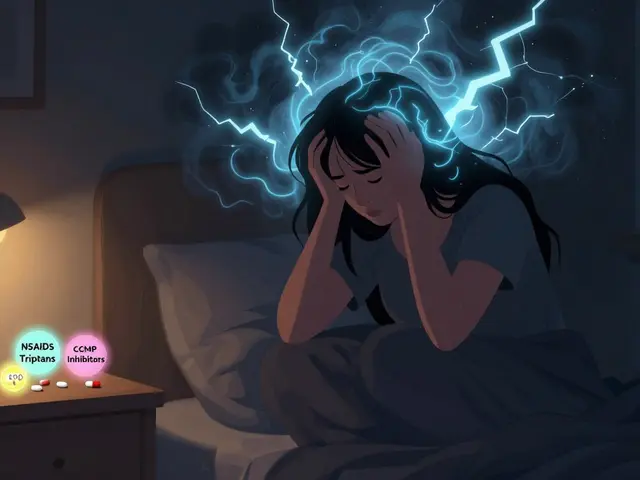
Food allergies and medication allergies both involve your immune system overreacting to something harmless. But the way it happens is different. Most food allergies-about 90%-are IgE-mediated. That means your body makes a specific antibody called immunoglobulin E that triggers a rapid response. When you eat peanut, milk, or shellfish, your immune system sees it as an invader and releases histamine and other chemicals. That’s why symptoms like swelling, hives, vomiting, or trouble breathing show up within minutes, usually under two hours. Medication allergies can also be IgE-mediated, especially with drugs like penicillin or cephalosporins. But here’s the twist: up to 20% of drug reactions are not IgE-driven. Instead, they’re caused by T-cells, which work slower. These delayed reactions can show up days or even weeks after taking the medicine. That’s why you might get a rash from amoxicillin three days after starting it, and your doctor might think it’s just a virus. But it’s actually a true drug allergy called DRESS syndrome or a maculopapular rash. These delayed reactions are far less common with food.Symptoms: Where the Signs Diverge
Both can cause hives, itching, or swelling. But the pattern of symptoms gives you clues. With food allergies, you’re more likely to see symptoms right in your mouth and gut. Oral allergy syndrome-itching or tingling in the lips, tongue, or throat-is common, especially with raw fruits and vegetables if you have pollen allergies. Vomiting and diarrhea happen in more than half of pediatric food allergy reactions. In adults, hives and swelling (angioedema) are the most frequent signs, followed by breathing trouble. Medication allergies, on the other hand, often hit harder on the skin and system. A widespread rash is the most common sign, especially with antibiotics. But you’re also more likely to see fever, swollen lymph nodes, or joint pain-signs your whole body is reacting. Respiratory symptoms like wheezing happen with both, but they’re more typical with food allergies during anaphylaxis. With drugs, you might also get liver or kidney problems weeks later, which rarely happens with food.Timing: The Biggest Clue
Timing is the single most useful tool for telling these apart. If you ate shrimp at 6 p.m. and your lips swelled by 6:20 p.m., that’s a classic food allergy. Almost all food reactions happen within 2 hours-95% of them, in fact. The median time? Just 20 minutes. Medication reactions? They’re all over the map. Immediate reactions happen within an hour-like hives after an IV antibiotic. But delayed reactions? They can appear 48 to 72 hours later, or even up to 6 weeks after you took the drug. That’s why a rash from a 5-day course of amoxicillin showing up on day 7 isn’t “just a coincidence.” It’s a hallmark of a T-cell-mediated drug allergy. If you’ve had the same reaction every time you took that drug, even weeks apart, that’s a red flag.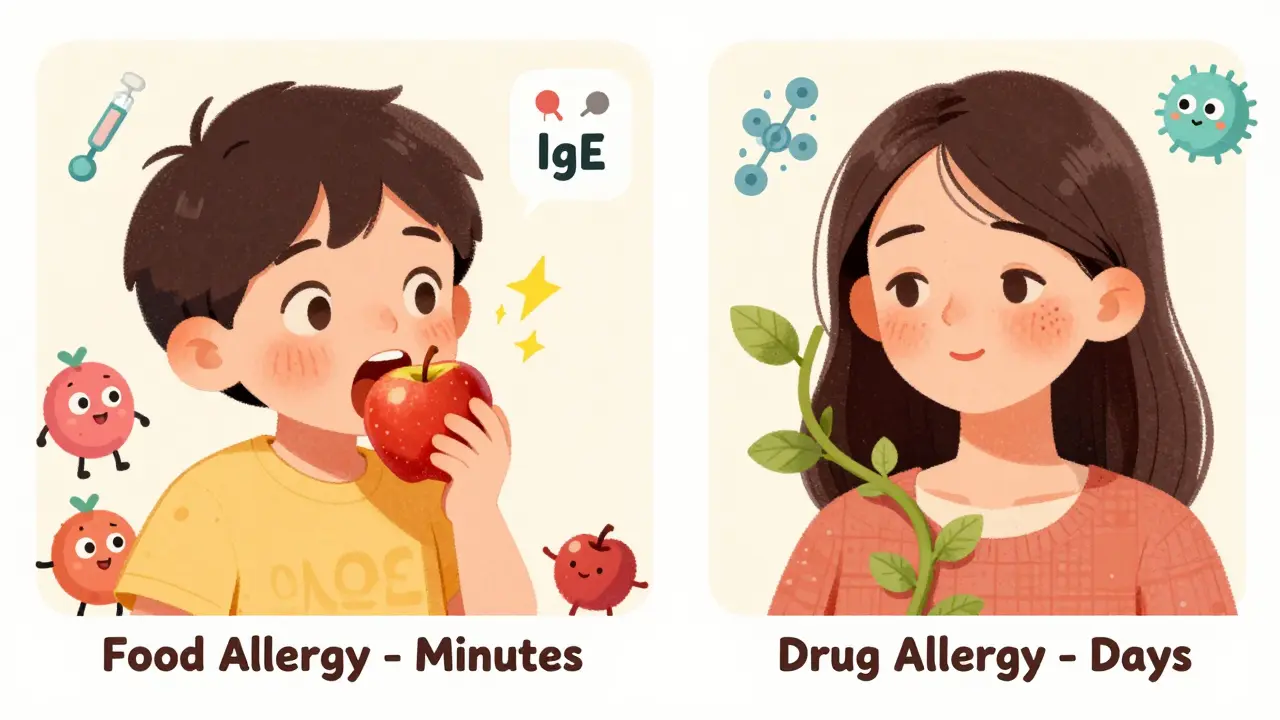
Diagnosis: What Tests Actually Reveal
For food allergies, the standard tests are skin prick tests and blood tests for IgE antibodies. But these aren’t perfect-they can give false positives. That’s why the gold standard is the oral food challenge. You eat tiny, increasing amounts of the food under medical supervision. If you react, you know for sure. And if you don’t? You can probably eat it safely. About 80% of kids outgrow milk and egg allergies by age 5, so retesting later is often recommended. For medications, it’s trickier. Penicillin testing is reliable: skin tests followed by an oral challenge can confirm or rule out allergy with 99% accuracy. But for other drugs-like NSAIDs, sulfa drugs, or chemotherapy-there’s no blood test. Diagnosis relies on your history, timing, and sometimes a controlled drug challenge in a hospital setting. Many doctors won’t risk it with high-risk drugs, so they rely on expert judgment and elimination. Here’s the kicker: up to 90% of people who say they’re allergic to penicillin aren’t. Many got a rash as a child with a virus, or had a side effect like nausea, and were labeled allergic. That label sticks-and it costs you. People with false penicillin allergies are more likely to get broader-spectrum antibiotics, which are more expensive, cause more side effects, and increase the risk of deadly infections like C. diff.Common Misdiagnoses and Pitfalls
One of the biggest traps is confusing intolerance with allergy. Lactose intolerance causes bloating and diarrhea, but it’s not an immune reaction. Same with gluten sensitivity-unless you have celiac disease, it’s not an allergy. Many people think “I feel bad after eating X” means allergy. But if your symptoms are only digestive, without hives, swelling, or breathing issues, it’s likely not allergic. Another trap? Blaming the drug when it’s the illness. Many viral infections, like mononucleosis or HIV, cause rashes when you take amoxicillin. That rash isn’t an allergy-it’s a side effect of the virus. But if you’re told you’re allergic, you might avoid penicillin for life. That’s why experts say: “Don’t assume. Test.” On the food side, people often dismiss early symptoms. A tingling tongue? “Must be spicy.” A little nausea after dairy? “Just bad stomach.” But if it happens every time, it’s not a coincidence. Anaphylaxis doesn’t always come out of nowhere. It often starts with mild signs you ignore.
What You Can Do: Practical Steps
If you think you have an allergy, keep a detailed record. For food, write down exactly what you ate, when, and what symptoms you got-and how long after. Note preparation methods: boiled peanuts vs. roasted, raw apple vs. baked. For medications, note the drug name, dose, time taken, and when symptoms started. Did you take it with food? Was it the first time? Was there a viral illness going on? Talk to an allergist. Don’t rely on old labels. If you were told you’re allergic to penicillin as a child, get tested now. If you avoid dairy because of stomach issues, see if you have lactose intolerance instead. You might be able to safely reintroduce something you’ve avoided for years. For parents: Children often outgrow food allergies. Don’t assume your child will have them forever. Follow up with testing every few years if advised. And never use an epinephrine auto-injector as a diagnostic tool. If you’re unsure whether it’s an allergy, get it checked-don’t guess.Why Getting It Right Matters
Getting food and medication allergies right isn’t just about avoiding discomfort. It’s about survival. In the U.S., food-induced anaphylaxis causes 150 to 200 deaths a year. Most happen because people didn’t recognize early signs or delayed using epinephrine. On the medication side, false allergy labels lead to worse outcomes. People with unverified penicillin allergies are 30% more likely to get a broader antibiotic. Those antibiotics are linked to higher rates of C. diff, a life-threatening gut infection. They’re also more expensive-sometimes 5 times the cost. Hospitals that implement formal penicillin allergy delabeling programs cut broad-spectrum antibiotic use by 25%. The bottom line? Don’t live with a label you haven’t verified. Whether it’s food or medicine, an allergy diagnosis should be based on evidence-not memory, fear, or a single bad reaction. Get tested. Ask questions. Know the difference.

Susan Arlene
January 5, 2026 AT 11:54so i thought i was allergic to shellfish because i got hives once after shrimp
turns out i just ate it with a beer and my liver was like ‘nope’
now i know its not allergy its just my body being dramatic
also i dont trust doctors who dont ask what else you ate
Vinayak Naik
January 6, 2026 AT 01:52bro i used to panic every time i took ibuprofen cause i got a rash
turns out it was a virus i had that week
got tested at an allergist and they laughed
now i take ibuprofen like water
stop assuming, start testing
Mukesh Pareek
January 7, 2026 AT 01:02the IgE-mediated response is the cornerstone of immediate hypersensitivity reactions
non-IgE pathways involving T-cell activation are often mischaracterized as ‘side effects’
this leads to catastrophic diagnostic drift in primary care settings
the data on penicillin delabeling is robust and underutilized
Indra Triawan
January 7, 2026 AT 18:50i dont care about your science
i know what my body feels
you think i’m just ‘misdiagnosed’ because you read a paper?
i’ve cried in emergency rooms
you don’t get to reduce my pain to percentages
Ashley S
January 8, 2026 AT 22:25why do we even let people self-diagnose? it’s like letting toddlers drive cars
if you think you’re allergic, go to a doctor
stop being a liability to public health
your ignorance is literally killing people with C. diff
Rachel Wermager
January 10, 2026 AT 20:58the differential diagnosis between IgE-mediated food allergy and T-cell-mediated drug reaction is clinically critical
delayed hypersensitivity reactions are often underdiagnosed due to lack of standardized biomarkers
epidemiological data from the CDC supports a 78% false-positive rate in self-reported penicillin allergies
Leonard Shit
January 11, 2026 AT 23:54my aunt was told she was allergic to eggs at 2
she’s 67 now and still won’t eat cake
she cried at her granddaughter’s birthday
we all just nodded and gave her gluten-free cookies
maybe she’s not allergic… maybe she’s just tired of being scared
Joann Absi
January 13, 2026 AT 19:52THE GOVERNMENT IS HIDING THE TRUTH ABOUT ALLERGIES!!! 🚨
pharma companies want you to stay sick so you keep buying antibiotics!
they don’t want you to know you can eat dairy again!
they’re lying to you through your doctor!! 💀
TEST YOURSELF OR DIE
Gabrielle Panchev
January 15, 2026 AT 07:32It’s not just about the medical accuracy, it’s about the cultural narrative we’ve built around illness-people cling to their ‘allergy’ labels like identity badges, because admitting you were wrong about something you’ve believed for decades is psychologically devastating, and so we double down on the misinformation, and then we blame the doctors for not believing us, even though they’re the ones trying to save our lives by asking us to face the uncomfortable truth that maybe, just maybe, we were misinformed as children by a panicked pediatrician who didn’t have time to explain the difference between intolerance and anaphylaxis.
Katelyn Slack
January 15, 2026 AT 17:29i got my penicillin test last month
turns out i’m not allergic
still kinda scared to take it
but i’m trying
thank you for this post
it helped me feel less alone
Melanie Clark
January 16, 2026 AT 03:58you think this is about allergies? no
this is about control
they want you to trust them
they want you to take their tests
they want you to believe their science
but what if they’re wrong?
what if the ‘gold standard’ is just a profit loop?
what if the ‘delabeling’ is just a way to sell more drugs?
you think you’re safe? you’re just another patient in their database
Harshit Kansal
January 16, 2026 AT 10:16my cousin was told she was allergic to peanuts at 3
she’s 22 now and eats peanut butter every day
she got tested last year
turns out she’s fine
she said she’s never felt freer
so if you’re scared, get tested
life’s too short to miss out on peanut butter
Lily Lilyy
January 17, 2026 AT 19:21You are not alone. Every person who has ever feared a food or a pill is brave just for trying to understand. Your body is listening. Your story matters. Please, if you’re unsure-talk to a specialist. You deserve peace. You deserve safety. And you deserve to eat that chocolate cake without fear. 💛