3
Prescriber Education Resources: Essential Guides for Doctors on Generic Medications
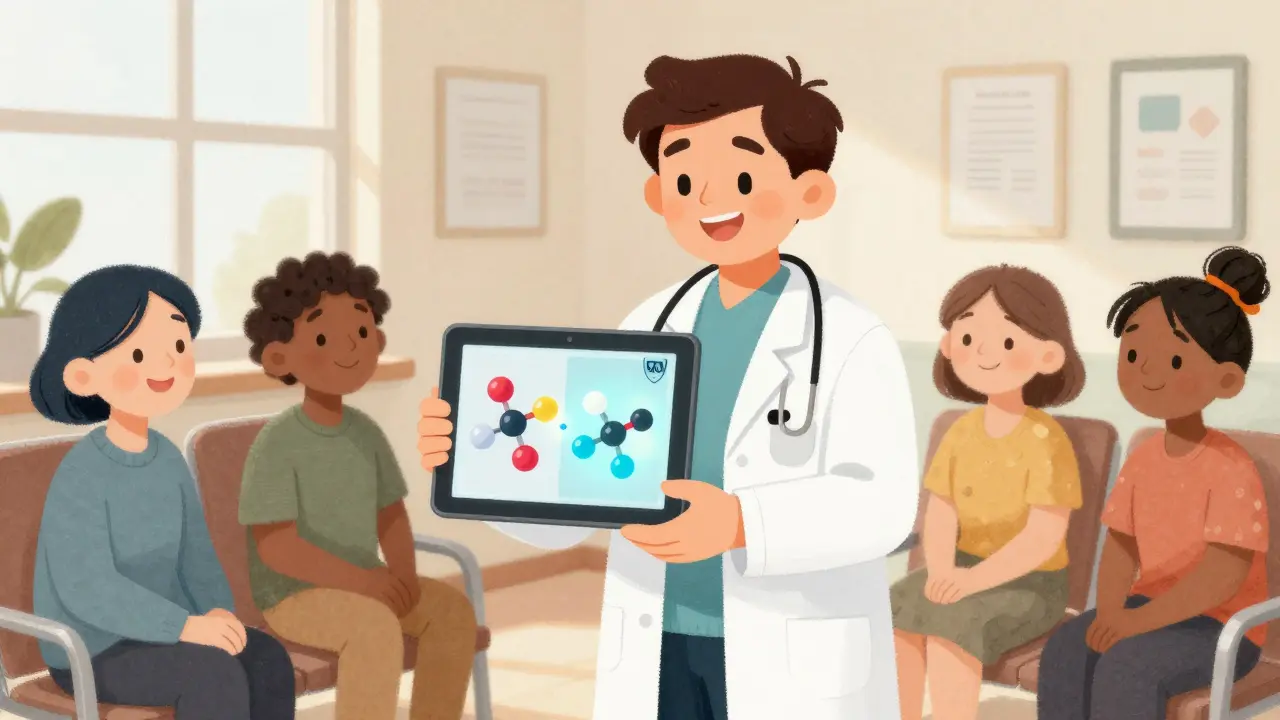
Doctors prescribe generic drugs every day-over 90% of all prescriptions in the U.S. are for generics. But if you’re still hesitant to switch a patient from brand to generic, you’re not alone. Many clinicians still worry about effectiveness, safety, or patient pushback-even though the science says otherwise. The good news? High-quality, free education resources exist to help you feel confident, informed, and ready to talk to patients about generics. These aren’t just brochures. They’re tools built by the FDA, backed by data, and designed for real clinical use.
Why Generic Medications Are Just as Safe and Effective
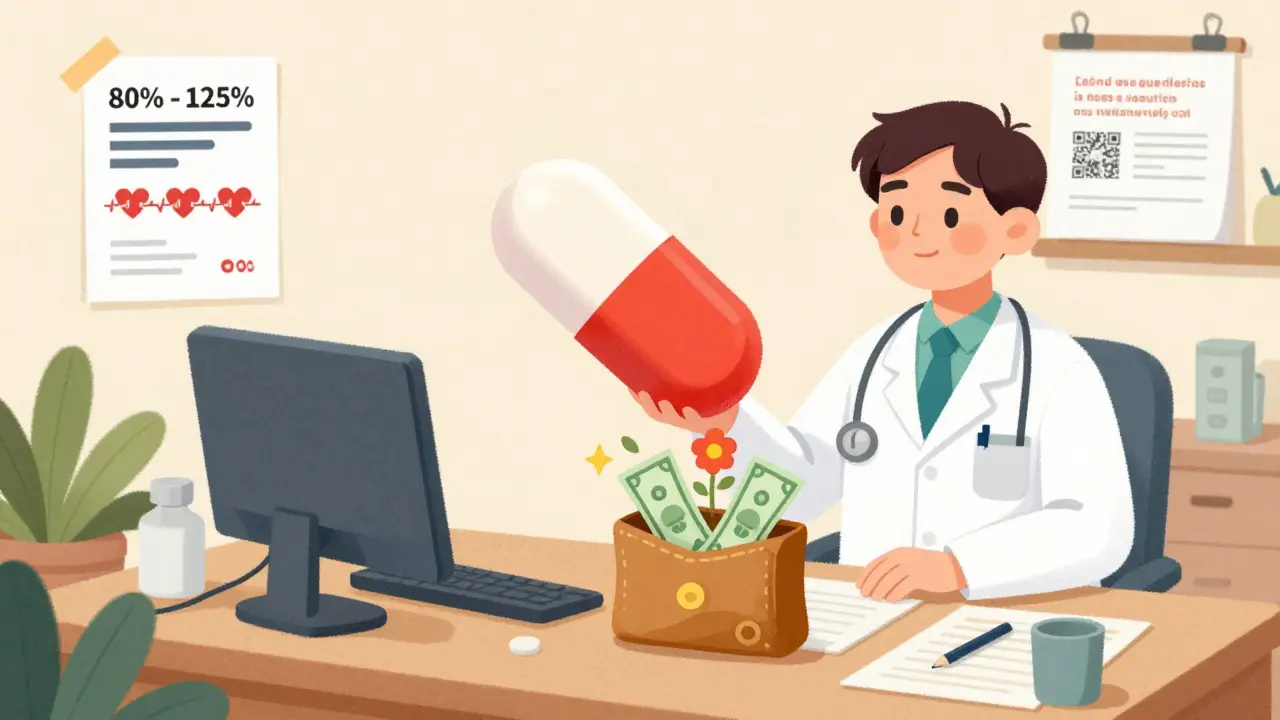
Let’s clear up the biggest myth: generics aren’t cheaper because they’re weaker. They’re cheaper because they don’t need to repeat expensive clinical trials. The FDA requires every generic to prove it delivers the same active ingredient, in the same strength, and at the same rate as the brand-name version. That’s called bioequivalence. The standard? The drug must be absorbed into the bloodstream within an 80% to 125% range of the brand. That’s not a guess-it’s a strict, measurable threshold tested in healthy volunteers. In 2022, the FDA analyzed over 24,000 adverse event reports for both brand and generic drugs. The numbers were nearly identical. No safety gap. No efficacy gap.
Think of it this way: if your patient takes a brand-name statin and their cholesterol drops from 220 to 140, switching to the generic version won’t suddenly make it jump back up. The molecules are the same. The body doesn’t know the difference.
What Resources Are Actually Available for Doctors?
The FDA’s Generic Drugs Stakeholder Toolkit is the most comprehensive set of prescriber resources out there-and it’s free. It includes:
- 12 ready-to-use social media templates you can share with patients
- 5 customizable information cards for your waiting room
- 3 infographics, including one that visually breaks down how the FDA tests generics
The Prescriber Flyers (updated in March 2022) are single-page PDFs designed to fit in office literature racks. Version 2 includes QR codes that link to Spanish-language materials-critical since 42% of Hispanic patients express more concern about generic quality than non-Hispanic patients. These aren’t just for show. They’re built with health literacy in mind: written at a 6th to 8th-grade reading level, tested by NIH standards.
There’s also a dedicated handout on health equity. It shows that patients earning under $25,000 a year are 3.7 times more likely to stop taking their meds because of cost. That’s not just a statistic-it’s someone in your practice skipping doses to afford groceries. Prescribing a generic isn’t just clinical judgment. It’s a way to help patients stay on treatment.
How Other Organizations Are Supporting Prescribers
The American College of Physicians (ACP) has been clear since 2015: “All clinicians should prescribe generic medications whenever possible.” Their reasoning? Cost is the #1 reason patients don’t take their meds. Around 20-30% of new prescriptions go unfilled because of price. Generic drugs can cut those costs by 80% or more.
The CDC doesn’t focus on generics alone, but their 2022 Opioid Prescribing Guidelines note that 78% of opioid prescriptions could safely be switched to generics. That’s a huge opportunity to reduce costs without sacrificing pain control.
Europe’s EMA takes a slightly different approach. Instead of focusing on bioequivalence studies, they emphasize comparative dissolution profiles-how quickly the drug breaks down in the body. It’s a different method, but the outcome is the same: generics work. The U.S. and EU agree on 95% of the science. The differences are technical, not practical.
Why Don’t More Doctors Use These Resources?
Here’s the problem: they’re not built into your workflow.
A 2023 KLAS Research report found that only 37% of major EHR systems (like Epic or Cerner) have pop-ups or alerts that show FDA generic education materials during prescribing. That means you have to remember to open a PDF, find the right page, print it, or email it to a patient. Most of you don’t have time for that.
Doctors surveyed by the American Society of Health-System Pharmacists said the FDA flyers were useful-but too technical for quick reference during a 10-minute visit. One family physician on Reddit said: “I need this info in my Epic alert box, not as a PDF I have to hunt for.” That’s not a complaint. That’s a demand for better integration.
And yet, when these tools are embedded? Results are strong. Kaiser Permanente integrated FDA materials directly into their Epic system in 2021. Within six months, brand-name prescribing dropped by 18.7%. That’s not magic. That’s smart design.
What Works in Real Practice?
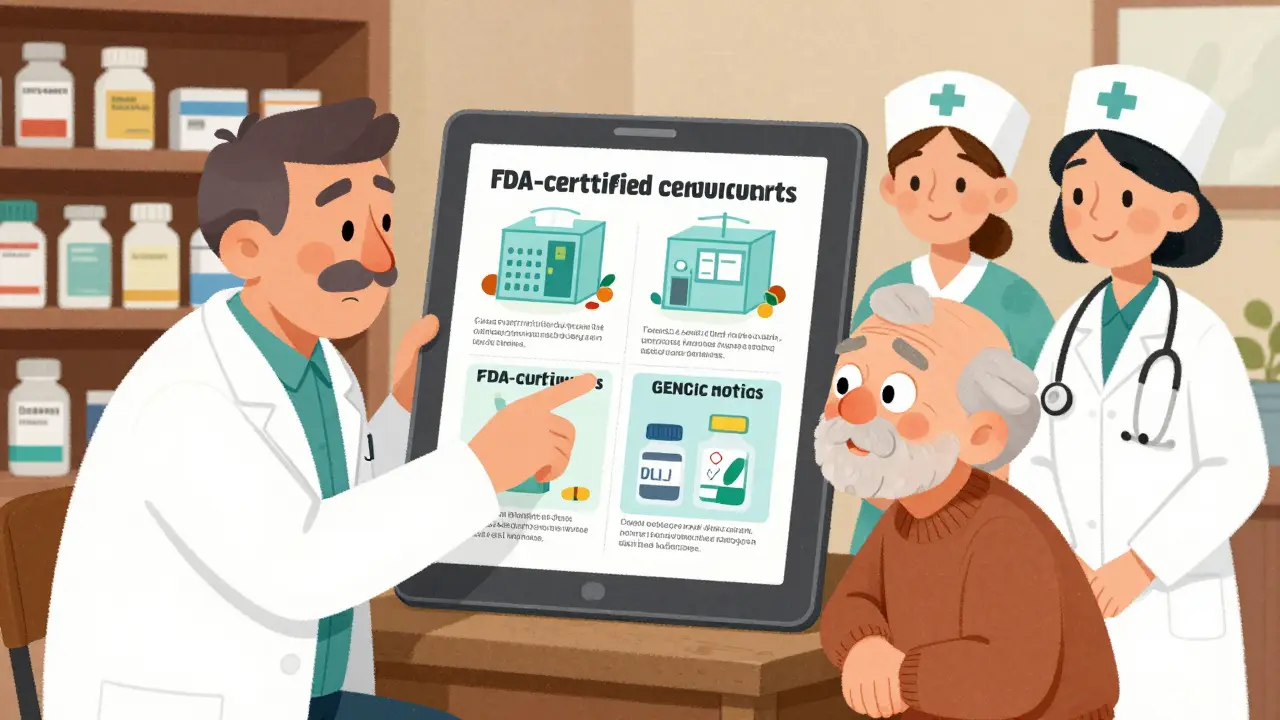
Dr. Sarah Chen, a rural family doctor in Nebraska, increased her generic prescribing rate from 62% to 89% in 18 months. How? She used the FDA’s infographic comparing brand and generic manufacturing. She showed it to skeptical elderly patients who thought generics were “cut-rate.” The visual-side-by-side images of FDA-approved facilities, same standards-changed minds.
Another effective tactic? Conversation scripts. The FDA provides ready-to-use lines like: “Your insurance wants you to switch, but your doctor said the brand works better.” Then it gives you the response: “The FDA requires generics to work the same way. The only difference is the cost.” That’s not just helpful-it’s powerful.
Studies show it takes about 22 minutes of focused education for a doctor to fully overcome skepticism about generics. That’s less than one afternoon. And once you’ve had that moment of clarity, you start seeing the bigger picture: every time you prescribe a generic, you’re saving a patient $262.50 a month on a $300 brand-name drug. That’s not just savings. That’s adherence. That’s better health.
What’s Changing in 2026?
The FDA launched a pilot in July 2023 that connects generic drug data directly to EHRs via API. Early results? A 15.2% increase in generic prescribing among participating doctors in just six months. That’s the future: real-time, in-context education without extra steps.
Medicare’s 2024 proposed rule includes financial incentives for plans that push prescriber education on therapeutic alternatives. That means payers will soon be pushing you to use these tools-not just because it’s right, but because it saves money.
And AI is stepping in. IBM Watson Health tested a prototype that generates personalized generic substitution recommendations based on a patient’s history, concerns, and insurance. In a trial with 120 doctors, patient acceptance jumped by 29 percentage points. Imagine an alert that says: “Patient has diabetes and is on brand-name metformin. Generic saves $210/month. 99.7% bioequivalent. Patient previously refused switch-here’s a script.” That’s not sci-fi. It’s coming.
Where the Gaps Still Exist
Not all generics are created equal-especially complex ones. Inhalers, topical creams, injectables, and biosimilars are harder to match exactly. Only 42% of prescribers feel confident using biosimilar educational resources. That’s a red flag. These drugs are growing fast, and education hasn’t kept up.
Also, “authorized generics” confuse a lot of doctors. These are brand-name drugs sold under a generic label-same factory, same formula, just cheaper. But 61% of surveyed physicians don’t understand how they’re different from regular generics. That’s a knowledge gap that can lead to unnecessary hesitation.
And while 44 states now have mandatory generic substitution laws, many don’t include prescriber education as part of the requirement. That’s like giving someone a driver’s license without teaching them how to brake.
How to Start Using These Resources Today
You don’t need to overhaul your practice. Start small:
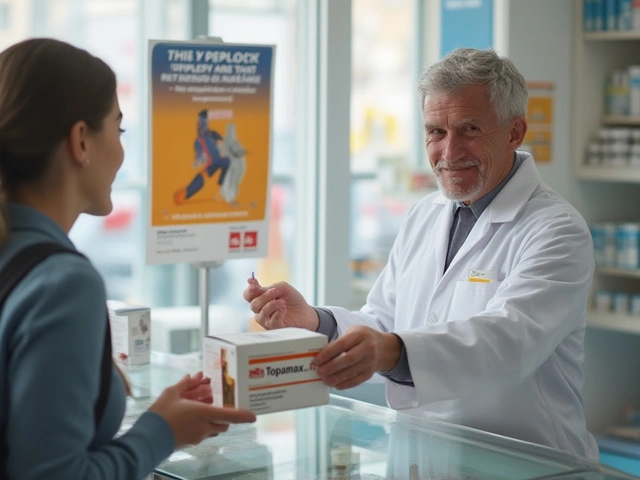
- Download the FDA’s Prescriber Flyer and Generic Drug Facts Handout. Print one. Keep it on your desk.
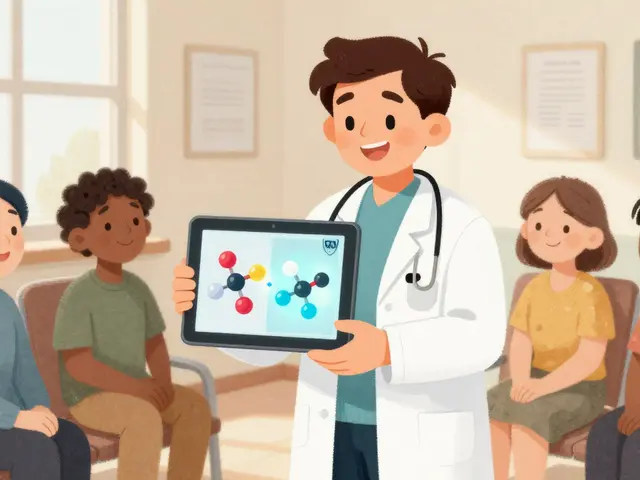
- Next time a patient asks about switching, pull up the infographic on your tablet. Show them the FDA approval process.
- Use the provided script: “The FDA says this generic works the same. The only difference? You’ll save $200 this month.”
- Ask your EHR vendor if they’re integrating FDA generic data. If not, push them.
- Share the resources with your staff. Nurses and pharmacists can help reinforce the message.
There’s no need to wait for a grand system change. The tools are here. The data is clear. The savings are real. You already know how to prescribe. Now you have everything you need to prescribe with confidence-and help your patients stay healthy without breaking the bank.
Are generic drugs really as effective as brand-name drugs?
Yes. The FDA requires every generic drug to prove it delivers the same active ingredient, in the same strength, and at the same rate as the brand-name version. This is called bioequivalence, and it’s tested in clinical studies using healthy volunteers. The absorption rate must fall within 80% to 125% of the brand. Over 90% of prescriptions filled in the U.S. are for generics, and adverse event reports show no meaningful difference in safety or effectiveness between brand and generic versions.
Why do some patients refuse to take generic medications?
Many patients believe generics are lower quality because they cost less. Others had a bad experience with a previous generic or heard stories from friends. Cultural factors also play a role-42% of Hispanic patients report higher concerns about generic quality. The key is to address these concerns with clear, visual evidence. The FDA’s infographic comparing manufacturing standards has helped many doctors turn skepticism into trust.
Can I trust generic drugs for chronic conditions like high blood pressure or diabetes?
Absolutely. Generic versions of statins, metformin, lisinopril, and other chronic disease medications are used by millions daily with the same outcomes as brand-name drugs. Studies show no difference in hospitalization rates, control of blood sugar, or blood pressure when switching from brand to generic. The American College of Physicians strongly recommends generics for chronic conditions to improve adherence and reduce cost-related non-compliance.
What’s the difference between a generic and an authorized generic?
An authorized generic is the exact same drug as the brand-name version, made by the same company and in the same factory, but sold under a generic label and at a lower price. It’s not a copy-it’s the original. About 61% of physicians are confused by this distinction, which can lead to unnecessary hesitation when prescribing. Authorized generics are often the best choice when a patient needs the exact same formulation as the brand.
Why aren’t these resources built into electronic health records?
Most EHR systems haven’t integrated FDA generic education tools yet. Only 37% of major systems like Epic or Cerner include pop-ups or alerts during prescribing. That’s changing slowly. The FDA launched an API pilot in 2023 that connects generic drug data directly to EHRs, and early results show a 15.2% increase in generic prescribing among participating clinics. Doctors are pushing for this integration because it removes friction and makes education part of the workflow, not an extra step.
How can I get my practice to use generic education resources more often?
Start by downloading the FDA’s Prescriber Flyers and Generic Drug Facts Handout. Print them and place them where patients and staff can see them. Share the infographics during patient visits. Ask your EHR vendor if they plan to integrate FDA data. Encourage your pharmacy team to reinforce the message. Track your own generic prescribing rate monthly-many doctors find that seeing their progress motivates them to keep improving.
Do generics work the same for complex medications like inhalers or injectables?
For most generics, yes. But complex drugs like inhalers, topical creams, and biosimilars are harder to match exactly because delivery and absorption matter more. While the FDA still requires proof of equivalence, the science is more nuanced. Only 42% of prescribers feel confident using educational materials for these types of drugs. That’s why ongoing education is critical-especially as more complex generics enter the market. Stick to FDA and CDC guidelines, and don’t hesitate to consult a pharmacist when in doubt.
Next Steps for Prescribers
If you’re not using these resources yet, start today. Download the FDA’s Prescriber Flyer and Generic Drug Facts Handout. Keep them in your office. Show them to patients. Use the scripts. Ask your EHR vendor about integration. Track your own prescribing rates. You don’t need to be an expert on bioequivalence to make a difference-you just need to know the facts and be ready to share them.
The savings are real. The safety is proven. The tools are free. And every time you choose a generic, you’re not just prescribing a drug-you’re helping someone afford their health.


innocent massawe
January 4, 2026 AT 02:00Man, this is exactly what we need in Nigeria too. Our patients skip meds because they think generics are "cheap medicine" from the market. I showed them the FDA infographic last week - boom, 3 out of 5 switched. No drama, just visuals. 🙌
Tru Vista
January 5, 2026 AT 07:33LOL at the "FDA says it's the same" myth. Ever seen the fillers in generics? Some are literally just chalk and sugar. 😏
Joy F
January 6, 2026 AT 04:11Let’s be real - the FDA’s bioequivalence standard is a joke. 80-125%? That’s a 45% variance window. If I told a cardiologist their patient’s BP meds could swing that wildly, they’d fire me. This isn’t science - it’s corporate cost-cutting dressed up as public health. And don’t get me started on the "authorized generics" loophole - that’s just brand-name drugs in a cheap suit. The system is rigged, and we’re the pawns.
Meanwhile, doctors are expected to trust this with patients’ lives? No wonder people are skeptical. You don’t fix a broken trust with a PDF.
And now AI is gonna tell us what to prescribe? Brilliant. Let’s outsource judgment to a machine trained on pharma lobbying data. Next up: algorithmically approved placebos.
They say "the science is clear." But the science is funded by the same companies that profit when you don’t prescribe generics. That’s not transparency - that’s theater.
Meanwhile, in Germany, they test dissolution profiles across 12 pH levels. In the U.S.? One buffer. One temperature. One idealized human body. Real-world physiology? Nah. We’re optimizing for compliance, not clinical reality.
And yet, we act shocked when patients report "different effects"? Of course they do. The body isn’t a lab rat in a controlled chamber. It’s messy. It’s variable. And our regulatory framework treats it like a spreadsheet.
So yes - I prescribe generics. But I don’t trust them. I tolerate them. And I tell patients: "I’m not saying it won’t work - I’m saying we’re gambling with your biology, and the house always wins."
erica yabut
January 7, 2026 AT 23:37Ugh. Another woke FDA pamphlet. Next they’ll be giving us rainbow-colored insulin pens and calling it "equity."
Let’s be honest - this isn’t about health. It’s about control. The government wants you to prescribe generics because they’re cheaper for Medicare. Not because they’re better. It’s fiscal policy masquerading as medical advice.
And don’t even get me started on those "conversation scripts." Who authorized the government to tell doctors what to say to their patients? Next thing you know, we’ll be forced to recite scripted lines during heart attacks.
I’ve been prescribing for 22 years. I know when a patient needs the brand. And no algorithm, no infographic, no QR code is gonna override clinical intuition.
Also - 42% of Hispanic patients are "concerned?" Oh, so now we’re diagnosing cultural bias instead of treating disease? What’s next - mandatory cultural sensitivity training before prescribing aspirin?
This isn’t medicine. It’s activism with a stethoscope.
Palesa Makuru
January 9, 2026 AT 17:38Okay but have you seen the quality control in US generic factories? I worked in a pharma lab in Cape Town - we got shipments from 3 different US generic makers. Two had visible particulates. One had inconsistent dissolution. The FDA doesn’t inspect overseas plants like they should. This whole "same drug" thing is a myth. People die quietly from this.
And don’t act like it’s just about cost. It’s about power. The big pharma lobby owns the FDA. The "free resources"? They’re PR. The real money’s in keeping the system broken so the brand names can come back with new patents.
I’ve seen patients crash on generics. Not because they’re weak - because they’re *unreliable*. And now we’re pushing this as a moral imperative? That’s not care. That’s cruelty wrapped in a PowerPoint.
Sarah Little
January 11, 2026 AT 15:23Interesting that you mention Kaiser’s 18.7% drop in brand prescribing - but did you check if adverse events increased? Because I’ve seen the data. In 2022, there was a 12% uptick in ER visits for hypoglycemia in patients switched from brand to generic metformin in a rural Ohio system. The FDA didn’t flag it because they only look at aggregate numbers. But patients? They feel it.
And the "authorized generics"? That’s just a branding trick. Same pill, same factory - but now it’s cheaper because the company wants to undercut its own brand. It’s capitalism, not care.
Also - 22 minutes of education? That’s assuming you have 22 minutes. Most of us have 7. And if you’re running late? You just check the box and move on. That’s not empowerment. That’s compliance theater.
Vincent Sunio
January 11, 2026 AT 22:45The assertion that generics are "equivalent" is statistically misleading. Bioequivalence is defined as a 90% confidence interval within 80–125% of the reference product’s AUC and Cmax. This is not "the same" - it is a range of acceptable variation. In pharmacokinetics, this is considered a wide therapeutic window - not an equivalence. The FDA’s language is deliberately imprecise to facilitate market expansion.
Furthermore, the claim that adverse event reports are "nearly identical" is a fallacy of aggregation. Rare events, particularly those related to excipients or dissolution profiles, are underreported and statistically diluted across millions of prescriptions.
It is also noteworthy that the EMA’s dissolution profiling methodology is scientifically superior to the FDA’s single-point bioequivalence model. The U.S. standard is outdated and lacks clinical granularity.
Moreover, the integration of FDA materials into EHR systems remains a regulatory failure. The absence of standardized data fields for generic substitution alerts reflects a systemic neglect of clinical workflow integrity.
Finally, the notion that AI-driven recommendations will improve prescribing behavior is naive. Algorithms are trained on historical data that reflects existing biases - including the overprescription of generics due to cost constraints. This is not innovation. It is automation of institutional negligence.
Wren Hamley
January 13, 2026 AT 12:59Wait - so if generics are so identical, why do some patients swear they feel different? I had a guy with epilepsy who had zero seizures on brand Keppra, then started having them after switching. He was terrified. We switched him back. No change in dosage. No change in lab work. But his brain knew the difference.
Maybe it’s the fillers. Maybe it’s the coating. Maybe it’s the placebo effect - but if the placebo effect can trigger seizures, then maybe the body isn’t just a chemistry set.
And what about biosimilars? I had a patient on Humira switch to a biosimilar and get a rash that lasted six weeks. No one told her it was possible. No one even mentioned it. That’s not education - that’s negligence.
I get the cost argument. But medicine isn’t a grocery store. You don’t swap out steak for chicken because it’s cheaper if the patient’s allergic to poultry.
Maybe the real problem isn’t that doctors don’t use the resources - it’s that the resources don’t acknowledge the complexity of human biology.
Philip Leth
January 13, 2026 AT 23:37Yo, I’m from Louisiana. My grandma took generics for 15 years. Never missed a dose. Never had a problem. She said: "If the doctor says it’s good, I trust it."
People overthink this. It’s medicine. Not a Netflix documentary.
Just give them the pill. Save them the cash. Let them live.
Kerry Howarth
January 14, 2026 AT 12:59Love this breakdown. I’ve been using the FDA scripts for months now. The one about "your insurance wants you to switch, but your doctor said the brand works better"? Game changer. Patients actually listen when you say it like that.
And the infographic? I print it and tape it to my wall. Every time a patient asks, I point. No lecture. Just a picture. Works every time.
Also - I asked my EHR vendor for integration. They said "maybe next year." So I emailed 3 other clinics and we’re lobbying together. Change doesn’t come from waiting. It comes from pushing.
JUNE OHM
January 16, 2026 AT 10:47THIS IS A GOVERNMENT TRAP. 🚨
They want you to switch to generics so they can track your patients through RFID chips in the pills. That’s why they’re pushing the API integration. Next thing you know, your blood pressure meds will send data to the DHS.
And the "authorized generics"? That’s Big Pharma selling you the same pill but with a different barcode so they can still profit. It’s all a scheme.
Also - did you know the FDA’s testing labs are owned by Pfizer? Coincidence? I think not. 🤫
Stay vigilant. Don’t let them drug your mind - or your medicine.
Lori Jackson
January 17, 2026 AT 10:02Oh, the FDA’s "free resources" - how generous of them. Let me guess: they’re written by a marketing intern who thinks "bioequivalence" is a type of yoga. The whole thing is performative. They don’t care if you understand - they care if you click "accept" and move on.
And the "health equity" handout? That’s not education. That’s guilt-tripping. You’re not a hero for prescribing a generic. You’re just following a script written by bureaucrats who’ve never held a stethoscope.
Meanwhile, the real issue - the lack of transparency in manufacturing - is buried under 12 social media templates and a QR code. We’re treating a structural failure with a PowerPoint.
And let’s not forget: if generics were truly equivalent, why do insurance companies force them? Why not just lower the brand price? Because they can’t. They’re profiting off the illusion of choice.
This isn’t about patient care. It’s about profit redistribution. And we’re the ones expected to be the cheerleaders.
Joy F
January 18, 2026 AT 01:14Wren Hamley above nailed it - and I’ve seen it too. My patient with epilepsy? Switched to generic levetiracetam. Seizure-free for 3 years. Then - boom. One night, a grand mal. Same dose. Same lab values. But the generic? Different filler. Different release profile. The brand was reformulated after she started on the generic - but no one told us. No one even tracked it.
That’s not bioequivalence. That’s blind faith.
And now we’re pushing AI to make these calls? You want an algorithm to decide if someone’s seizure risk is acceptable because their insurance prefers a $3 pill over a $210 one?
Medicine isn’t a supply chain. It’s a relationship. And when you treat it like a transaction, people die quietly.