24
Common Manufacturing Defects in Generic Medicines and How They Affect Patient Safety
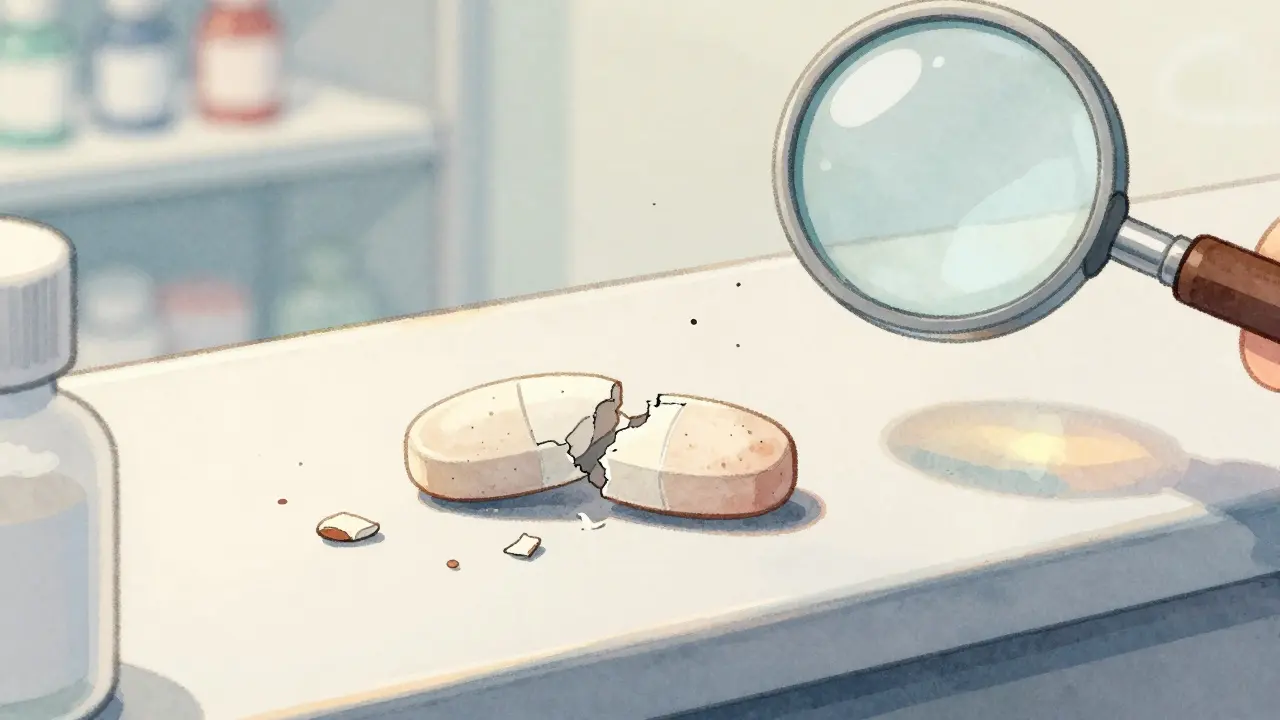
When you pick up a generic pill from the pharmacy, you expect it to work just like the brand-name version. But what if that pill is cracked, discolored, or contains the wrong amount of medicine? These aren’t rare mistakes-they’re common manufacturing defects in generic drugs, and they’re putting patients at risk.
What Exactly Are Generic Drug Manufacturing Defects?
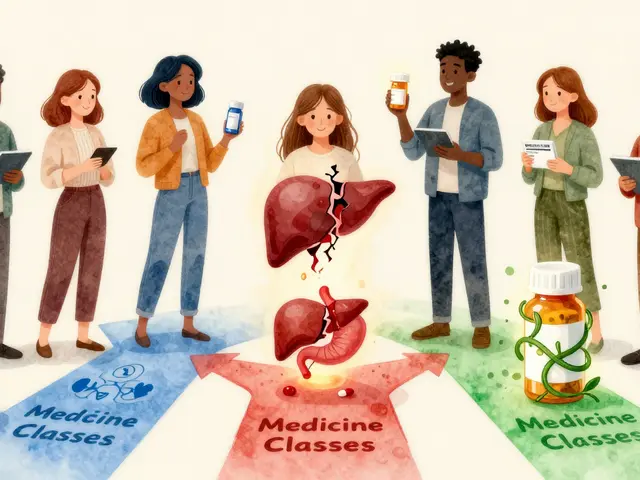
Generic drugs are copies of brand-name medications. They’re supposed to have the same active ingredient, strength, and effect. But unlike brand-name drugs, which often come from well-funded companies with modern factories, many generics are made in older facilities under intense price pressure. That’s where things go wrong. Manufacturing defects happen when the drug doesn’t meet its own design specs. This isn’t about the formula being flawed-it’s about how it’s made. Common problems include:- Capping: The tablet splits horizontally, like a cookie breaking in half.
- Lamination: Layers peel apart, sometimes visible as thin flakes on the surface.
- Sticking: The drug material clings to the machine’s punch, causing uneven shapes or missing pieces.
- Mottling: Uneven coloring-patches of light and dark on the tablet.
- Weight variation: Some pills have too much or too little active ingredient.
- Particulate contamination: Tiny foreign particles, like metal or glass, in injectable drugs.
Why Do These Problems Happen So Often in Generics?
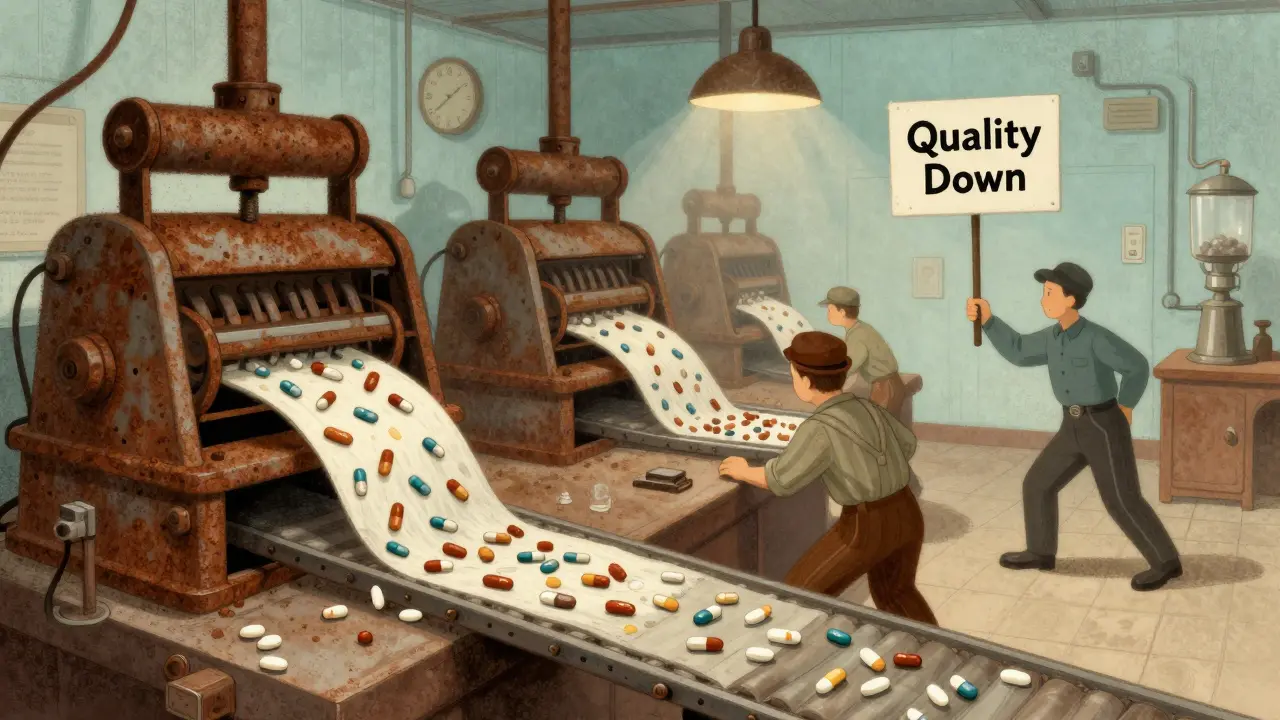
The answer is simple: money. Generic manufacturers compete on price. The cheaper the drug, the more volume they sell. But cutting corners on quality saves money in the short term. Branded drug companies spend 15-18% of their production costs on quality control. Generic makers average just 8-10%. That gap shows up in inspections. In 2023, 57% of generic manufacturing facilities failed FDA checks, compared to 28% for branded ones. Many factories still use equipment from the 1980s or 90s. Tablet presses that haven’t been upgraded can’t maintain the precision needed. Compression forces need to be within ±10% of target. Punch lengths must stay within ±0.05 mm. Outdated machines can’t hold those tolerances. Cross-contamination is another big issue. The same line might make five different drugs in a week. If cleaning isn’t perfect, traces of one drug can end up in another. That’s dangerous if you’re allergic or taking something that interacts badly.Defects by Drug Type: Some Generics Are Riskier Than Others
Not all generics are created equal. The complexity of the drug affects how likely it is to have defects.- Immediate-release tablets: 9.3% defect rate. Simple formulas, stable ingredients. Least problematic.
- Extended-release tablets: 14.7% defect rate. These are designed to release medicine slowly. If the coating cracks or the granules don’t mix right, the drug dumps all at once-or doesn’t release at all.
- Inhalers: 18.2% defect rate. Tiny doses. Even a 1% variation can mean the difference between relief and an asthma attack.
- Sterile injectables: 8.7% defect rate. Contamination is the biggest risk. A single particle in an IV bag can cause sepsis.
Real-World Impact: What Pharmacists and Patients Are Seeing
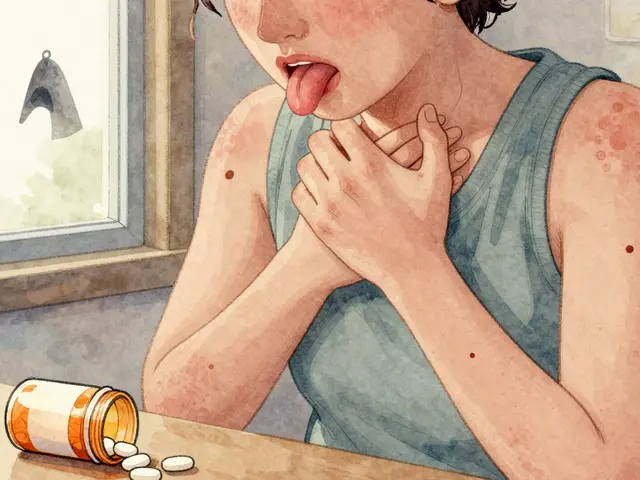
This isn’t theoretical. Pharmacists are reporting it daily. A 2023 survey of 1,247 U.S. pharmacists found 68% had seen quality issues with generics in the past year. Forty-two percent said patients complained about tablets that crumbled, looked weird, or tasted different. Twenty-nine percent reported patients saying the generic just didn’t work like the brand did-even though it’s supposed to be the same. One pharmacist on Reddit described receiving a batch of metformin ER that fell apart during dispensing. Another noted multiple patients switching between different levothyroxine generics and reporting sudden fatigue, heart palpitations, or weight changes. The FDA’s MedWatch system logged 1,842 adverse events in 2023 tied directly to generic drug quality. Over 300 involved visible defects: chipped pills, dark spots, crumbling tablets. In hospitals, 17.3% of requests to substitute a brand drug with a generic were rejected because of quality concerns. Nearly 10% of those cases led to permanent use of the brand drug-because the generic couldn’t be trusted.How Manufacturers Are Trying to Fix This
Some companies are stepping up. The FDA’s Emerging Technology Program has helped 47 generic manufacturers switch to continuous manufacturing. Unlike old batch systems, this runs 24/7 with sensors monitoring every second. Defect rates drop by 65%. New AI-powered inspection systems can spot defects as small as 0.1 mm-way better than human eyes. One pilot program at Sandoz and Dr. Reddy’s caught 92% of flaws, compared to 78% with traditional methods. Good manufacturers now use real-time weight monitors. If a tablet is even 5% off target, the machine rejects it automatically-no human error involved. They also track compression forces every 15-30 minutes and adjust on the fly. But these upgrades cost money. Bringing all U.S. generic facilities up to modern standards would take $28.7 billion. Right now, the industry spends just $1.2 billion a year.
What You Can Do as a Patient
You can’t control the factory, but you can protect yourself.- Check your pills. If they look different-color, shape, markings-ask your pharmacist. Don’t assume it’s just a new batch.
- Report odd reactions. If a generic suddenly doesn’t work, or you feel worse, tell your doctor and file a report with the FDA’s MedWatch system.
- Ask about the manufacturer. Not all generics are made equal. Some companies have far better track records. Your pharmacist can tell you who makes the version you’re getting.
- Don’t panic, but don’t ignore it. Most generics are safe. But if you’ve had consistent issues with one brand, switch to another. Your health isn’t a cost-cutting experiment.
The Bigger Picture: A System Under Strain
Generic drugs make up 90% of prescriptions in the U.S. but only 23% of spending. That’s why they’re so cheap. But cheap doesn’t mean safe if quality is slipping. Regulators are trying. The FDA is pushing for modernization. The Drug Supply Chain Security Act is improving traceability. But enforcement is slow, and resources are thin. Experts warn: without major investment, 15-20% of generic manufacturers could leave the market in five years. That means fewer suppliers, more shortages, and even higher prices for the drugs we rely on. This isn’t about blaming manufacturers. It’s about a system where profit is prioritized over safety. And the cost? Patient trust, health outcomes, and sometimes lives.What’s Next?
The FDA’s 2024-2027 plan aims to cut quality-related shortages by 30%. That’s a start. But real change needs funding, stricter oversight, and accountability. Until then, stay informed. Ask questions. Report problems. And remember: just because a drug is cheap doesn’t mean it’s safe.

Lindsay Hensel
December 25, 2025 AT 11:41The systemic neglect of generic drug quality is a moral failure. Patients are not data points-they’re people with chronic conditions who rely on consistency. When a thyroid pill crumbles in your hand, it’s not a ‘batch variation’-it’s a betrayal.
I’ve seen patients cry because their blood pressure spiked after switching generics. No one should have to gamble with their life because a corporation chose profit over precision.
Ben Harris
December 26, 2025 AT 06:19So what you’re saying is we should pay 10x more for the same pill because it has a fancier logo? The FDA approves these things so why are you acting like every generic is a death trap? You people need to chill.
My cousin takes generic metformin and he’s fine so your whole thing is just fearmongering
Justin James
December 26, 2025 AT 15:29Did you know the FDA doesn’t inspect most generic factories? They rely on paperwork sent from China and India. The same companies that make your cheap phone chargers make your heart medication.
There’s a whole underground network of ‘shadow labs’ that repackage expired brand-name pills and relabel them as generics. The FDA knows this. They just don’t have the budget to stop it.
And don’t get me started on the black market for ‘premium’ generics sold on dark web forums. People pay $200 for a bottle of ‘German-made’ levothyroxine because they know the US versions are rigged.
They’re testing your blood, your DNA, your microbiome-all to track who’s getting sick from bad generics. It’s not paranoia. It’s a pattern.
Every time you refill your prescription, you’re rolling the dice. And the house always wins.
Zabihullah Saleh
December 28, 2025 AT 08:40It’s strange how we accept this. We’ll spend hours comparing coffee beans or sneakers but hand over our health to a pill stamped with a name we’ve never heard of.
There’s a quiet dignity in medicine-it’s supposed to be sacred. But now it’s just another commodity, packed in plastic and shipped across oceans. We’ve turned healing into a supply chain problem.
Maybe the real defect isn’t in the tablet. It’s in how we’ve stopped caring enough to ask where it came from.
Rick Kimberly
December 29, 2025 AT 04:58While the data presented is compelling, it is imperative to acknowledge that the FDA’s post-market surveillance system remains one of the most robust globally. The 57% failure rate cited reflects heightened scrutiny, not necessarily increased defect prevalence.
Moreover, the statistical correlation between manufacturing age and defect rate does not establish causation. Many older facilities operate under ISO-certified protocols that exceed regulatory minimums.
It is also worth noting that 89% of recalled generics are voluntarily withdrawn by manufacturers upon detection-demonstrating a functional self-correcting mechanism.
Terry Free
December 30, 2025 AT 09:37Oh wow look at this dramatic article. Let me grab my tin foil hat and cry into my $12 generic blood pressure med.
Meanwhile, people in Europe pay $1 for the same pill and live longer. Maybe stop whining and learn to live with imperfect systems.
Also your pharmacist is probably just trying to make quota. Chill out. You’re not dying. Probably.
sagar patel
December 30, 2025 AT 10:58India produces 60% of global generics. Our factories follow WHO-GMP. If your medicine is bad, it is because you bought from unlicensed pharmacy. Not our fault. You should check label. Check batch number. Report to FDA. Not write emotional essays.
Also, you Americans pay too much for everything. This is not a crisis. It is economics.
Linda B.
January 1, 2026 AT 08:06They’re putting microchips in the pills now. That’s why the generics taste different. The government is tracking who takes what. The same people who gave you the vaccine are the ones letting the bad pills through.
I checked my metformin under UV light. It glows. It’s not supposed to. They’re mixing in lithium. For mood control. They know you’re depressed. They’re trying to keep you docile.
Don’t take any more. Burn your bottle. Call your senator. This is bigger than medicine. It’s control.
Christopher King
January 2, 2026 AT 23:13Let me tell you something. I used to work in a pharmacy. I saw it. I saw the pills. I saw the patients. I saw the tears. I saw the ER visits. I saw the families who lost someone because the generic didn’t dissolve right.
This isn’t about money. It’s about the soul of healthcare. We turned healing into a spreadsheet. We turned patients into line items. We turned doctors into order-takers.
And now we wonder why people don’t trust medicine.
It’s not the pills. It’s the people behind them.
They stopped caring. And now we’re paying the price-with our lives.
Bailey Adkison
January 4, 2026 AT 17:56Everyone’s acting like this is new. It’s not. This has been going on since the 1990s. The real scandal is that we keep pretending it’s fixed.
Also, the FDA’s ‘recall’ numbers are misleading. They count a single bad batch as one recall even if it affects 500k pills. Meanwhile, branded drugs get zero scrutiny because they pay for FDA consultants.
And no one talks about how insurance companies force pharmacists to dispense the cheapest generic-even if the patient had a bad reaction last time.
So yes, the pills are bad. But the system is worse.
Gary Hartung
January 4, 2026 AT 23:18Let’s be honest: the entire generic drug industry is a Ponzi scheme disguised as healthcare.
Pharmaceutical conglomerates create the original drug, patent it, milk it for 20 years, then sell the formula to a third-world manufacturer for pennies, then profit again from the ‘generic’ version through shell companies.
The same CEOs who own Pfizer own the ‘generic’ brand you’re taking. They’re not competing-they’re colluding.
And the FDA? They’re just the PR department for the boardroom.
You think you’re saving money? You’re paying twice. Once in your co-pay. Once in your hospital bill.
Carlos Narvaez
January 5, 2026 AT 16:50Interesting. But you didn’t mention that most of these defects are caught before the pills leave the factory. The real issue is distribution-poor storage, temperature abuse, counterfeit diversion.
Also, ‘crumbling tablet’ doesn’t mean ‘wrong dose.’ It could be humidity. Ask your pharmacist to check the lot number.
And yes, some generics are bad. But most? Fine. Stop overreacting.