21
Generic vs Brand-Name Drugs: Key Differences Explained
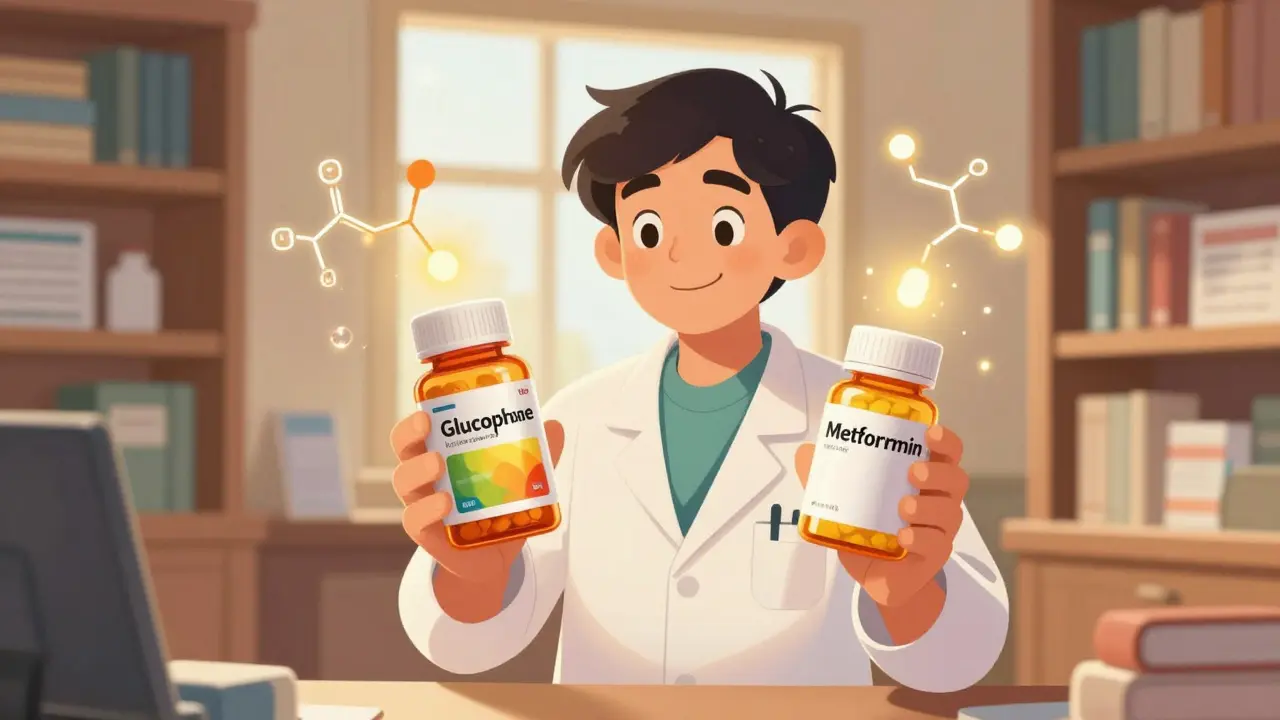
When you pick up a prescription, you might see two names on the bottle: one you recognize from TV ads, and another that looks completely different but costs a fraction of the price. That’s the generic drug-and it’s not a cheaper knockoff. It’s the same medicine, approved by the FDA, and just as safe and effective as the brand-name version. Yet, many people still wonder: Is there really no difference? Should you stick with the name you know?
They’re the same medicine, just cheaper
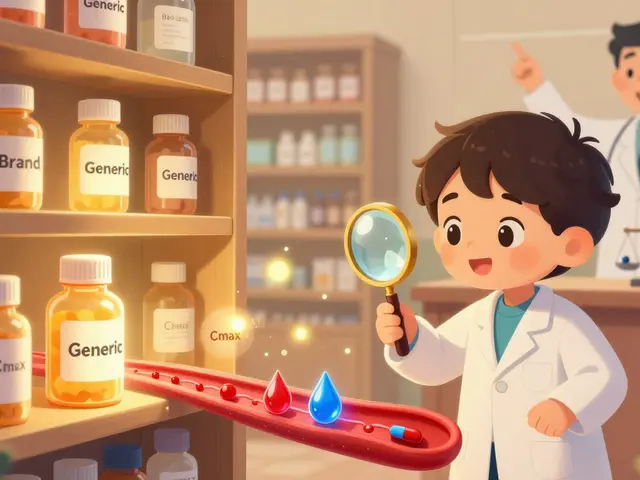
Generic drugs contain the exact same active ingredient as their brand-name counterparts. That means if you’re taking metformin for diabetes, the generic version has the same chemical structure, dosage, and strength as Glucophage. The same goes for lisinopril versus Zestril, or atorvastatin versus Lipitor. The FDA requires generics to deliver the same amount of medicine into your bloodstream at the same rate. This is called bioequivalence-and it’s not a suggestion. It’s a legal requirement. The acceptable range? Between 80% and 125% of the brand-name drug’s absorption. For drugs with narrow therapeutic windows, like warfarin or levothyroxine, the standard is even tighter: 90% to 111%.Why are generics so much cheaper?
Brand-name drugs cost a lot because the company that developed them had to pay for years of research, clinical trials, and marketing. Those costs can run into billions. Once the patent expires-usually after 20 years-other companies can step in and make the same drug without repeating all that expensive work. All they need to prove is bioequivalence. That cuts development costs dramatically. The result? Generics typically cost 80% to 85% less. In 2022, the average out-of-pocket cost for a generic prescription in the U.S. was $12.50. The brand-name version? $68.30. That’s a $55 savings per fill. For someone taking a medication daily for years, that adds up to thousands.What’s different about generics?
Outside of the active ingredient, generics can look different. They might be a different color, shape, or size. They might have different fillers, dyes, or flavors. That’s because U.S. trademark laws prevent generics from looking exactly like the brand-name product. But those differences don’t affect how the drug works. The inactive ingredients are chosen to be safe and stable. If you have a known allergy to a dye or filler, your pharmacist can check the label and suggest an alternative-whether brand or generic.Are generics as safe?
Yes. The FDA holds generic manufacturers to the same quality standards as brand-name companies. The same facilities can produce both. The FDA inspects them regularly. Every generic drug must meet the same requirements for purity, strength, stability, and performance. The agency doesn’t treat generics as second-tier. In fact, their official stance is clear: “All drugs, including brand-name and generic, must work well and are safe.”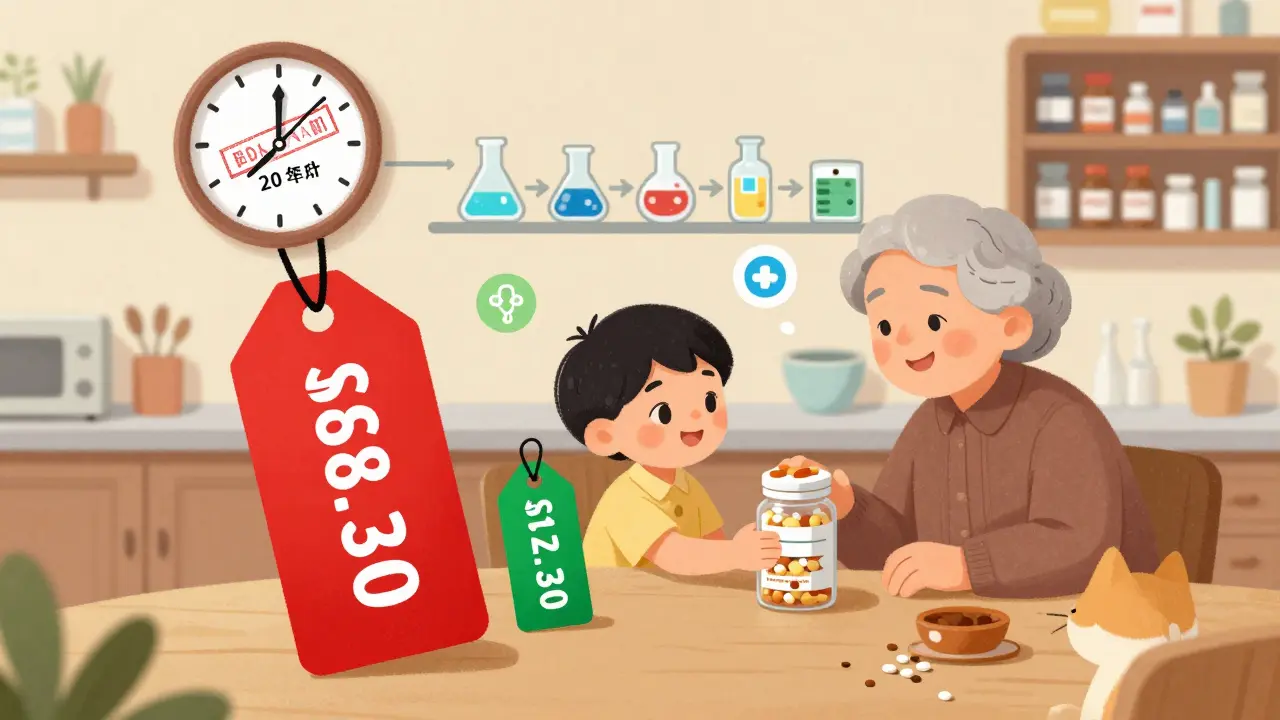
When might you stick with the brand?
Most people switch to generics without any issues. But there are exceptions. For drugs with a narrow therapeutic index-where even tiny changes in blood levels can cause side effects or reduce effectiveness-some doctors and patients prefer to stay with the brand. This is especially true for medications like levothyroxine (for thyroid), warfarin (a blood thinner), or certain seizure drugs like phenytoin or lamotrigine. A small number of patients report feeling different after switching. In one Reddit thread with over 140 responses, 86% said they noticed no difference. But 14% reported issues, mostly with seizure medications. One user wrote: “My mom’s seizures came back after switching from Lamictal to generic lamotrigine. We had to go back to the brand.” The FDA acknowledges these reports but says large studies don’t show consistent differences. A 2019 JAMA study of 38,000 patients on levothyroxine found no increased risk of hospitalization or abnormal lab results when switching between brand and generic. Still, if you feel something’s off after switching, talk to your doctor. Don’t assume it’s all in your head. Your experience matters.How often are generics used?
Almost all the time. In 2023, generics made up 90% of all prescriptions filled in the U.S. But they accounted for only 25% of total drug spending. That’s because brand-name drugs, though prescribed far less often, are priced much higher. The savings are massive. From 2007 to 2016, generics saved the U.S. healthcare system $1.67 trillion. In 2022 alone, they saved an estimated $253 billion. That’s money that stays in patients’ pockets and reduces pressure on insurance systems.Can your pharmacist switch your prescription?
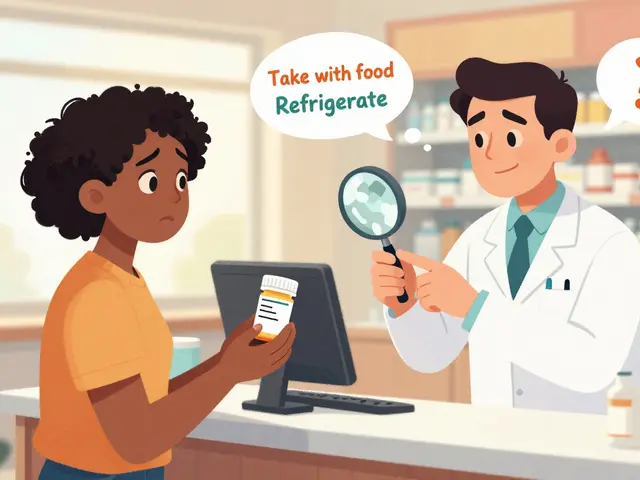
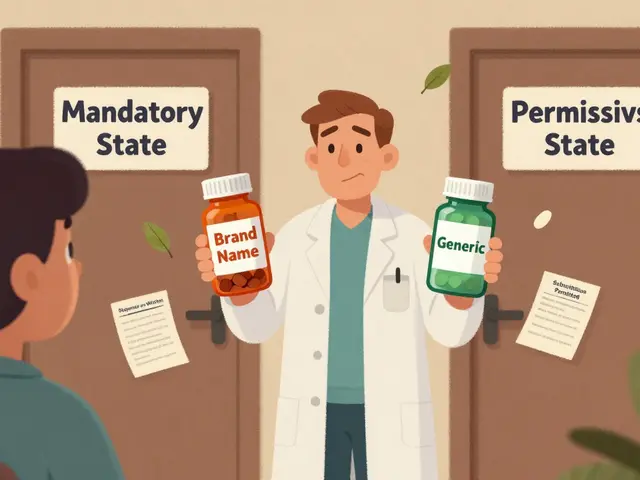
In 49 out of 50 U.S. states, pharmacists are legally allowed to substitute a generic for a brand-name drug unless the doctor writes “dispense as written” on the prescription. That means if you don’t say otherwise, you’ll likely get the generic. Some people don’t realize this is happening. That’s why it’s smart to check your bottle every time you refill. Keep a list of both brand and generic names for your meds. If you’re on a medication where consistency matters, tell your doctor and pharmacist upfront.
What about new drugs?
Not every drug has a generic version yet. About 30% of brand-name medications still have patent protection or face complex manufacturing hurdles. Biologics-drugs made from living cells, like insulin or rheumatoid arthritis treatments-are especially hard to copy. But the FDA has created a special pathway for “biosimilars,” which are highly similar versions. These are starting to enter the market, and prices are already dropping. The FDA’s 2023 report identified over 150 “complex generic” opportunities-like inhalers, eye drops, and topical creams-that could save billions if successfully developed.What’s changing in 2025?
The FDA is working to speed up generic approvals. Under its GDUFA III program, review times for generic applications are being cut to 10 months by 2027. The 2022 Inflation Reduction Act also includes measures to encourage faster generic competition for high-cost drugs. More than 450 brand-name drugs are expected to lose patent protection by 2028. That means more savings ahead. But challenges remain. Some companies use “evergreening”-making tiny changes to extend patents-and supply chain issues still exist. Around 80% of active ingredients for generics are made in India and China, which can lead to shortages during global disruptions.Bottom line: Save money, don’t sacrifice care
For the vast majority of people, generic drugs are the smart choice. They’re just as effective, just as safe, and dramatically cheaper. If you’re on a long-term medication for high blood pressure, cholesterol, diabetes, or depression, switching to generic could save you hundreds-or even thousands-each year. Talk to your doctor if you have concerns, especially with medications where small changes matter. But don’t let fear of the unknown keep you from saving money. The science is clear: generics work.





Herman Rousseau
December 21, 2025 AT 22:25Just switched my blood pressure med to generic last month. Saved $45 on my last refill. No side effects, no weird dreams, just same results. 💯
Gabriella da Silva Mendes
December 23, 2025 AT 02:45Oh please. I’ve been on brand-name meds since 2010 and I’ll be damned if I let some Chinese factory make my heart medicine. I don’t care if it’s ‘FDA-approved’-I’ve seen the videos. They use dirt from the Ganges to press the pills. 😤💩
Johnnie R. Bailey
December 23, 2025 AT 17:55Let’s be real-this isn’t about science, it’s about trust. The FDA’s bioequivalence standards are solid, but the human body isn’t a lab. Some people metabolize drugs differently, and when you’re on a narrow-window drug like levothyroxine, even 5% variation can feel like a whole new diagnosis. I’ve seen people crash after switching. It’s not paranoia-it’s physiology. The system should let patients opt out without penalty, not treat them like cost centers.
Kathryn Weymouth
December 25, 2025 AT 10:11There’s a common misconception that generics are ‘inferior’-but the data says otherwise. A 2019 JAMA study of 38,000 levothyroxine patients found zero significant difference in hospitalization rates or TSH levels between brand and generic. The FDA’s approval process is among the most rigorous in the world. If you’re experiencing issues, it’s worth discussing with your doctor-but don’t confuse anecdotal experience with population-level evidence.
Vikrant Sura
December 27, 2025 AT 05:37generic = government scam. pharma owns both. they make the brand, then the generic. same factory. same people. just cheaper packaging. you think you’re saving? you’re being played.
Art Van Gelder
December 27, 2025 AT 20:14My grandfather took generic statins for 12 years. Never missed a beat. My cousin? Switched to generic lamotrigine and had three seizures in a week. We went back to Lamictal. Same molecule. Different filler. One had talc. The other didn’t. He’s fine now. But here’s the thing-no one told us the fillers might matter. Pharmacies don’t warn you. Doctors don’t explain. We treat medicine like cereal. ‘Oh, it’s just the store brand.’ But your brain isn’t a box of Cheerios.
Ajay Brahmandam
December 28, 2025 AT 14:41in india, generics are life. my dad takes insulin, blood pressure, diabetes meds-all generic. cost less than chai. no problems. if it works for 1.4 billion people, maybe it works for you too. don’t be scared of cheap. be scared of expensive lies.
jenny guachamboza
December 29, 2025 AT 09:03ok but did you know the FDA gets funding from pharma? like, literally. they get paid by the companies they’re supposed to regulate. and the ‘bioequivalence’ range? 80-125%?? that’s like saying a 100mph car is ‘equivalent’ to a 125mph one… if you squint. 🤡 #FDAcorrupt #genericdangers
Aliyu Sani
December 29, 2025 AT 10:47you see, the real issue is not the drug-it’s the pharmacokinetic variability in populations. in sub-saharan africa, we’ve seen altered CYP450 metabolism due to dietary cofactors-so even if the active ingredient is identical, the bioavailability profile can diverge. this is why we advocate for therapeutic drug monitoring in resource-limited settings. it’s not about brand vs generic-it’s about precision medicine.
Tony Du bled
December 29, 2025 AT 11:06I used to buy brand-name. Then I got a $2000 deductible. Now I take generic. My cholesterol’s better. My wallet’s happier. No side effects. No drama. I don’t need to know the dye color. I just need it to work. Simple.
Jeremy Hendriks
December 29, 2025 AT 21:07Capitalism doesn’t care if you live or die-it cares if you pay. Generics are a loophole in the profit machine. The real crime isn’t that generics exist-it’s that we had to fight for them. The patent system was designed to incentivize innovation, not to create permanent monopolies on human survival. If you’re still scared of generics, ask yourself: who benefits from your fear?
Candy Cotton
December 30, 2025 AT 23:19While I appreciate the colloquial tone of this article, I must emphasize that the FDA’s regulatory framework for generic pharmaceuticals is grounded in Title 21 of the Code of Federal Regulations, Part 314.107, which mandates rigorous analytical validation of dissolution profiles, impurity thresholds, and stability-indicating methods. To dismiss this as ‘just a cheaper version’ is not merely inaccurate-it is scientifically negligent.
Kiranjit Kaur
January 1, 2026 AT 13:33My sister switched from brand to generic antidepressant. Said she felt ‘flat’ at first. Took 3 weeks. Then she said it felt like her old self again. Turns out the brand had a weird filler that made her nauseous. She didn’t know until she tried the generic. So… maybe the brand was the problem all along? 🤔❤️
Johnnie R. Bailey
January 2, 2026 AT 06:35That’s the thing-people think ‘same molecule’ means ‘same experience.’ But biology isn’t math. We’re not identical machines. One person’s inert ingredient triggers a mild immune response. Another’s gut microbiome breaks down the drug faster. The FDA’s standards are minimums, not guarantees. That’s why I always tell patients: if you feel different, track it. Journal it. Bring it to your doctor. Your body isn’t wrong. The system just isn’t designed to listen.